Tuesday, November 17, 2026

Heads and Faces

I had one last wander around London yesterday and visited some favourite spots. I stopped by Shakespeare's Globe again to look around their gift shop. Shakespeare merchandise is generally disappointing. It so often seems to be his head. Alice in Wonderland merchandise never seems to be Lewis Carroll's head. It's rare to see Tolkien's head or Arthur Conan Doyle's head plastered on things, fashioned into plushies, stitched into socks. Why have Shakespeare's bald pate when you could have Hamlet or Macbeth or Viola or any of his fascinating characters? I finally found a Romeo and Juliet lapel pin I liked. I've been collecting lapel pins on my travels. There seem to be a lot more of them in England than in the US.

I also visited Bread Street, birthplace of John Milton. It's all anonymous, postmodern monoliths now filled with hamburger joints and H&M. There is a John Milton Passage which for some reason has a statue of John Smith at the end of it, the (in)famous settler. I wandered around nearby St Paul's Cathedral and Paternoster Square. I noticed a Five Guys in the shadow of the cathedral. I overheard a guy walking by telling his friend the hamburger and chips at Five Guys are twenty pounds. Five Guys is hardly the common man's burger joint anymore. The common man's fish and chip shop seems to be scarce, too. The cheap meal in England now seems to be sandwiches from shops like Sainsbury's or Tesco Express.

I was amazed how expensive the pubs are. Movies and songs make it sound like the average man goes to a pub at least once a week but I never found a pub where I could get fish and chips and a beer for less than thirty pounds. But I only ate at three pubs. They were all deserted when I went in, prompting me to ask the barman if they were open for business. The one busy pub I went in was a place called the Robin Hood in Bexleyheath and I left because I couldn't get a seat.

I've been staying in Cricklewood the past two weeks, around a two hour walk north of the Thames. The launderette situation is much better here. Yesterday I chatted with the proprietor of the one I've been using. She's from Iraq and has been in England for about fifteen years. I asked if she missed Iraq. She'd lost her voice so it was a little difficult for me to understand her reply but I gathered she did. She said sometimes the Co op across the street was all right. I told her about living in Japan and how my two bedroom apartment was around 300 pounds a month and she laughed, saying you can't get a room for a week at that price in London.

When I was in Southwark, visiting Shakespeare's Globe, I thought I might as well walk over to Waterloo Station, where I'd recently heard about some graffiti art of Tom Baker as the Fourth Doctor.
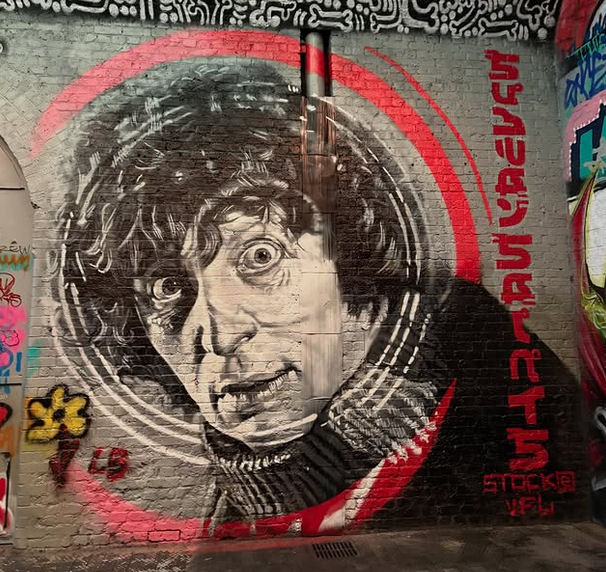
Normally I'm not a fan of graffiti but this is more like unpaid artistic labour. The graffiti tunnel under Waterloo is an area legally reserved for graffiti, anyway, which makes me wonder if graffiti is even the right word for it. I was pleased to see my favourite Doctor yet I wondered why it was oddly perfect, almost like a photograph. The paintings of famous characters in the tunnel generally look more like this:
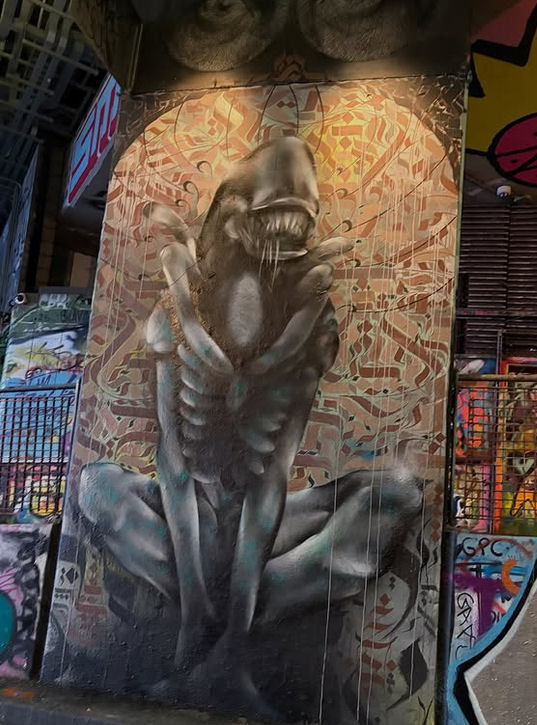
The Fourth Doctor was painted by an artist who goes by the name of Stocke. This blog has a number of other examples of his street art from various other locations in London. It's all really impressive.

Appropriately enough, over the past week I've been watching The Face of Evil, one of my favourite Fourth Doctor serials, in which the Doctor visits a planet where he finds a mysterious impression of his own face in the side of a mountain has earned the moniker of "The Evil One" from a local tribe. Meanwhile, an AI using the Doctor's voice is worshipped as a God. The Doctor himself turning up naturally causes confusion and turmoil. I always thought the story was a nice exploration of how the superficial, physical aspects of an individual can become appropriated symbols quite removed from their true nature. Not unlike Shakespeare's head, I guess.


Sunday, November 15, 2026

So Long Piccadilly, Farewell Leicester Square

To-day will be my last full day in England before I leave for Ireland to-morrow. I am looking forward to Ireland but I kind of don't want to leave. Not just because the hotels are a lot cheaper in England but I've seen so many magnificent things here and feel like there's so much more I haven't seen.

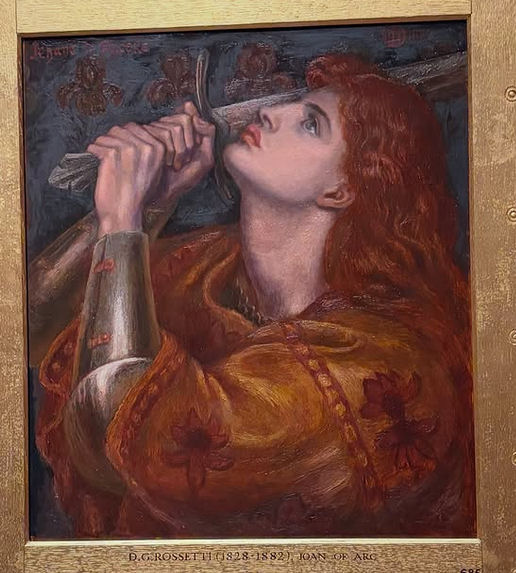
Last week, I visited both Cambridge and Oxford. I went to the Fitzwilliam Museum in Cambridge where I saw their exhibition of William Morris and the Pre-Raphaelites.

This included works by Morris as well as several works by Dante Gabriel Rossetti and Edward Burne-Jones. Of the three, as far as painters of figures and scenes, I generally prefer Burne-Jones but seeing Rossetti's paintings in person made me appreciate them more than I ever had before. There's a warmth in them that doesn't come through in photographs.

In Oxford, I wanted to go to the pub where the Inklings met, the group that included JRR Tolkien and CS Lewis, but it turns out the place is closed for renovations or something until next year. I mainly visited the former haunts of Lewis Carroll and Alice Liddell instead, the area around Christ Church.

I bought a bunch of little knickknacks at the Alice memorabilia shop where Alice Liddell herself used to buy sweets. The day before, I'd visited a shop in Covent Garden called Alice Through the Looking Glass, a little shop that mainly sold vintage Alice books. I spent a lot of time chatting with the proprietor and was astonished by the prices he quoted me for some of the things in his collection. A little hardback copy of Alice's Adventures in Wonderland from the 1920s was being sold for 300 pounds! I overheard him telling another customer that a book about ballet was 10,000 pounds! I thought back to the prices I've paid for some of the books in my vintage collection. I have a first edition of Gustave Dore's illustrated version of John Milton's Paradise Lost which I paid 75 dollars for and I thought I was splurging! How many great vintage books have I bought for dirt cheap prices? Some of them just pennies. I guess it's nice to see England evidently values books more highly than the US. Mainly the disparity is, I think, due to the great purging of the American libraries as they were being converted into community centres for people who don't read.

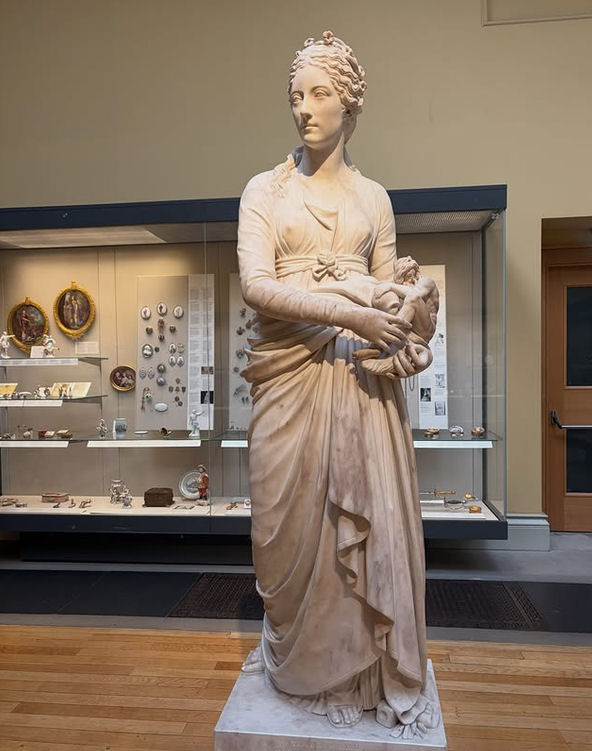
I visited the British Museum on Saturday where I enjoyed the famous room filled with artefacts from ancient Egypt and Mesopotamia but of course I mainly had eyes for the 17th century stuff.

Maybe this is an unpopular opinion, but looking at it all together, it's hard not to feel like 1600 to 1800 in western Europe was the peak of human culture. Of course, I love movies, but there's such incredible, delicate beauty in the sculptures and vases that I just don't think has been equalled before or since.

For all this, it was an American book I've had on my mind the past couple months, Washington Irving's The Sketchbook of Geoffrey Crayon, which I couldn't find a copy of in New York or in England. Not even in the Piccadilly Waterstones, which is the largest bookstore in Europe. I wished again I could've found my beautiful illustrated copy from the '30s, which I think I paid forty dollars for. I suppose I could get at least a thousand pounds for it in Covent Garden, though maybe not since it's obviously not in high demand. It's the anthology of short stories in which Rip Van Winkle and The Legend of Sleepy Hollow were originally published but most of the essays and stories in the book are about Irving's visit to England and his observations of the culture. I finally broke down and read the digital copy on the train back from Oxford. As I expected, his observations take on a greater significance for me now. This, in which he compares the charms of America and Europe, in particular is very well said:

But Europe held forth all the charms of storied and poetical association. There were to be seen the masterpieces of art, the refinements of highly cultivated society, the quaint peculiarities of ancient and local custom. My native country was full of youthful promise; Europe was rich in the accumulated treasures of age. Her very ruins told the history of the times gone by, and every mouldering stone was a chronicle. I longed to wander over the scenes of renowned achievement—to tread, as it were, in the footsteps of antiquity—to loiter about the ruined castle—to meditate on the falling tower—to escape, in short, from the commonplace realities of the present, and lose myself among the shadowy grandeurs of the past.

A Pacino's Lynch Impression

I've seen yet another 2026 movie about someone trapped in a hotel. That makes five now. This latest one is I Live Here Now, the debut film of Julie Pacino, daughter of Al, and it certainly feels like something that could only come from the child of someone rich and famous. It's an amateurish imitation of a David Lynch movie that happens to have one of Lynch's stars, Sheryl Lee, in a minor role.

Rose (Lucy Fry) is a young woman who becomes pregnant by her boyfriend, Travis (Matt Rife), despite the fact that Rose believed she'd been physically unable to have children since she had invasive surgery as a child, which we see clips of in brief flashbacks. When Rose tells Travis about the pregnancy, her previously good and amiable relationship with the guy abruptly disintegrates as she discovers his wealthy mother (Sheryl Lee) has a dominating psychological hold on the boy and she won't tolerate his offspring coming from just any woman.

Meanwhile, Rose is trying to make it in Hollywood and checks into a mysterious hotel to record an audition in her room. The quirky staff and significant shots of her radiator show the undeniable marks of David Lynch influence but even the best filmmakers who imitate Lynch tend to fall flat on their faces and Pacino clearly skipped more film school than she should have. She should have had a dozen or so student films under her belt before attempting a feature length film. She has a message about resentment between women and a woman's agency over her body but the mannerisms she borrows from Lynch do not serve her message, instead they act as obtrusive diversions from her ideas, which aren't particularly deep ideas to begin with. The ideas aren't strong enough to survive her mannerisms and her mannerisms aren't individual enough to make it a stylistically interesting film.

The performances weren't bad. Cara Seymour has a minor role, an actress who will be familiar to fans of indie movies of the '90s, like American Psycho and Dancer in the Dark.

Sonnet 2017

The tangled tunnels draw magnetic trains
They stick and scream and fail to open doors
A curving top results in shoulder pains
They blunder over tracks like wild boars
A train for Wembley goes to Baker Street
Detectives couldn't find the scheduled course
Sardines in scores descend from Oxford Street
In twice the time it took to go by horse
A normal ticket jams the ticket booth
Again, a manual override is called
The locomotive circles round the truth
The whole of London transit wants recall
And yet they charge ten times the Brooklyn price
As flaws exceed Japan in grains of rice

Saturday, November 14, 2026

More than Their Weight in Wool (or Mutton)

A shepherd dies and it's up to his flock to find out why in 2026's The Sheep Detectives. Like a lot of people, I enjoyed this movie a lot more than I expected and was surprised not to find a run of the mill Pixar imitation. Instead, I found a film with a surprisingly bold, inventive story.

For one thing, characters are allowed to die, starting with Hugh Jackman, the shepherd, whose name is George. He cares for his sheep, only profiting off their wool and refusing to allow them to be butchered. Not that the sheep know anything about that. One of the ground rules established in this film is that sheep have the ability to erase their own memories, which they do if they find something to be too unpleasant. I absolutely loved this plot detail. It's more evocative of human behaviour than most people would care to admit. That's the kind of mirror art ought to be holding up.

The investigation into George's death is led by a sheep called Lilly (Julia Louis-Dreyfus), who always managed to solve the murders in the detective stories George read to the flock in the evening. But is she really worldly enough to solve a real murder, especially since she, too, erases her unpleasant memories? Sebastian (Bryan Cranston), the literal black sheep, doesn't think so. Once a carnival prize fighter whom George rescued, Sebastian now spends his time wandering the hills alone.

There's a little slapstick comedy in the film but it's not obnoxious. On the human side of the story, there's an inexperienced policeman (Nicholas Braun) investigating the murder. His weak skills and poor insight are played for laughs but never so broadly that you don't believe it when he gradually does start to build a case. It's just nice to see a movie for children that doesn't insult everyone's intelligence.

The Sheep Detectives is available on Amazon Prime.

Thursday, November 12, 2026

Murder in Successive Containers

Happy Friday the 13th, everyone. I watched a fairly appropriate movie for the day recently, 2023's Red Rooms, a French Canadian movie about a fashion model obsessed with a man who's on trial and for the killing of three teenage girls. The gruesome footage of his killings, which had been posted on the dark web, are part of the evidence used against him. It's an effectively creepy film and an intriguing character study of the unusual woman at the centre of it.

Kelly-Anne (Juliette Gariepy) is a very comic-bookish character, she's almost like a variant of Batgirl. She's a beautiful fashion model whose primary income comes from online gambling, which she's a genius at. She's also made herself an AI sidekick whom she's named Guinevere. But while Batgirl's motives would be clear from the start, Red Rooms allows Kelly-Anne's motives to remain a mystery for most of the film. Maybe she's more of a Catwoman. She's shot as the point-of-view character but we're kept at some distance from her. The audience is compelled to fill in the blanks by how they react to the scenes unfolding. Is Kelly-Anne trying to fight crime, or is this just a fetish for her?

We're invited to sympathise more with Clementine (Laurie Babin), an innocent, guileless girl who's developed a fixation on the man on trial and believes he's been framed. This fixation is so clearly mixed up with Clementine's anxiety and sexuality as a young misfit just entering adulthood that it's easy to sympathise with her. Kelly-Anne becomes more human thanks to her very natural but somewhat reluctant compulsion to take Clementine under her wing.

There's a robust history of films that probe the line between repulsion and attraction, for crime and other things. This is a elegant, handsomely shot example with good performances.

I Have Seen Things You People Wouldn't be Interested In

I expected the last episode of VisionQuest to be underwhelming yet somehow it fell below my expectations. I remember now that I never even finished watching Iron Heart, it was so bland. I don't know what's wrong with Disney. Agatha All Along wasn't so bad. Andor was great, of course. Why can't they maintain or build on quality when they have it?

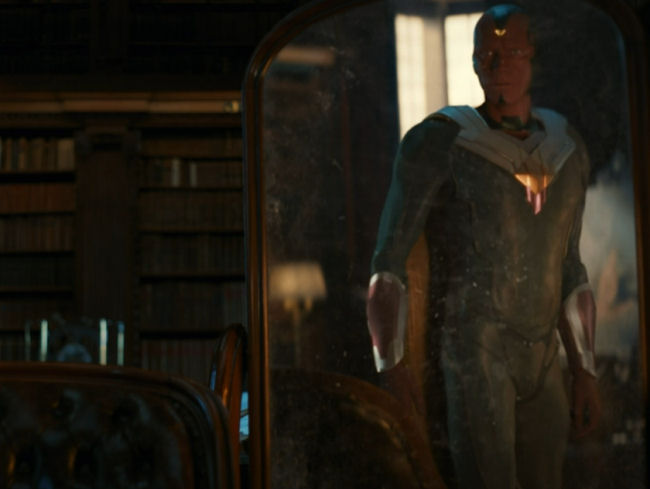
One of the chronic problems of the weak Disney+ shows is that episodes often don't seem to flow naturally from one to the next. The previous episode ended with Vision and Jocasta discovering that there's a human creator for Ultron also played by James Spader. This episode begins with Vision and Jocasta already enslaved by him, acting as waiting staff. And then the human James Spader is quickly killed so we can get a brief, movie quality special effects fight between Ultron and Vision, which seems to exist just to meet a quota. Then there's a kind of amusing sitcom parody in which Ultron ends up being the more sympathetic character because he's visually impatient with it.

Paul Bettany must really hate the Vision makeup because he's in it far less than seems reasonable. On WandaVision, he was wearing it whenever he and Wanda were alone together. Now it seems no makeup is the default Vision. It feels really cheap and sad.

The big cameo we get is from Billy, reuniting the two Maximoff brothers. I noticed they borrowed the jittery camera technique from Twin Peaks season three for Tommy's experience in the alternate reality. I appreciated the reference at least but Billy just being a cameo, without any chance of developing the relationship between the two, felt like the standard stunt appearances that we so often get in place of substance on these shows. When are we going to see these two together again? Four years from now? Ten? If they're in the new Avengers movies I can't see much time being spared for them. It's yet another pointless tease, more for the Island of Unfulfilled Characters along with Hulk's son, Thor's daughter, Harry Styles at the end of The Eternals, and probably a whole heap of characters I can't even recall.

Paul Bettany and James Spader both gave good performances on this series. Spader seemed to be amusing himself a lot. I wish they were working with better scripts.

VisionQuest is available on Disney+.

Tuesday, November 10, 2026

Stacy Keach

Stacy Keach has died at the age of 85. When I was younger and saw him on sitcoms like Titus, I thought of him as sort of a Robert Goulet type, a character actor with the stereotypical announcer voice who often cameoed as dandyish authority figures. Imagine my surprise years later when I saw Fat City, John Huston's raw and dirty movie about boxing in a corrupt little town starring Stacy Keach. He parlayed his physical size and vigorous reflexes into a role that conveyed a real sense of dangerous desperation.

Then, ten years later, he starred in one of the greatest pulp road movies of all time, 1981's Road Games, in which he put his reflexes and intense features to work in a great action movie.

In any movie, Keach brought so much energy, at times he risked overpowering everything else, but I'm always happy when he turns up. Few actors so electrify a screen. In 1984, he started playing Mickey Spillane's detective character, Mike Hammer, in a television series, a role Keach because associated with ever after, coming back to it for audiobooks and a revival series. On stage, he frequently appeared in Shakespeare productions. He played Falstaff multiple times, starting in the 1960s. I sure would love to have seen that.

Here's a clip of him as Falstaff from a 2014 production of Henry IV part 2 in which he sings a song with lyrics loosely based on Shakespeare's original lines. I sure like the costumes in this production but I am a sucker for those rare productions that set Shakespeare plays in the time and place Shakespeare intended. Of course, I'd prefer they'd have stuck to Shakespeare's lines . . .

The AIs Have It

I watched this video a few days ago in which conservative journalist Mary Harrington speaks to a Times of London columnist, James Marriott, about the decline in reading. They get to talking about a new Dark Age, which is a discussion that did not originate with them. The idea is that, like art and culture was lost for a time after the fall of the Roman Empire, we're entering an era in which critical thinking is falling so much by the wayside that we'll lose all sense of which narratives are true or false, effectively leaving us as a culture in which the news of the day is composed of gossip, rumour, and folktales.

Marriott dismissed the idea that some version of Homer's Odyssey will be crafted on TikTok. I don't know if I would categorically rule it out but I've written before about how I feel the real loss as short videos replace full length movies is the loss of crafted sequence, the loss of a thread of logic or feeling replaced by senselessness. So something like TikTok would seem inherently antithetical to a long form story such as The Odyssey. But in another sense, I can see it. A few days later I saw a short AI video of a cat using a prawn to bait and then catch an enormous bass. This particular video was labelled as AI but it was a particularly good AI video. If it hadn't been labelled I imagine it would have fooled a lot of people. I thought back to a time when if you saw a video of something amazing on the internet, you could be reasonable sure it was real. Now I automatically ignore everything that looks extraordinary. But at the same time, I wonder how many people don't care. Someone might say, "Hey, I saw a cat catch this huge bass!" If someone tells him, "Dude, that was AI," well, if anything could be AI, then does it matter? We might get to a point like in antiquity when someone heard a story about Heracles they'd probably take it as true because, well, you have to believe something and is there anything better?

The Renaissance was largely for an elite, educated class. We may be losing that class as education is deteriorated on two fronts, by students cheating using AI and students using the internet to bully and stalk teachers. Teachers themselves coming out of a degraded higher education will lack the skills and emotional discipline to deal with problem students, exacerbating problems that make unruly students, who have been treated without sensitivity and compassion, feel more justified in attacking their teachers, both physically and psychologically. The dimensions of this Pandora's box are hard to see in their totality. So yeah, I can see us heading for a Dark Age (a term many historians shy away from these days but it seems quite appropriate here). The only solution I can imagine is to somehow isolate students from AI and social media until a certain age. There are so many impediments to such a thing, though.

Monday, November 09, 2026

Stray Calico

I remembered another thing I love about England is Diana Dors. One of her best movies, 1958's Tread Softly Stranger, is on Amazon Prime in the UK. It was hard to find in the US and Japan whenever I looked (when I didn't have a VPN). I watched it again, it being November, which seems to have become the official month for films noir, a genre of which Tread Softly Stranger is a prime example.

It's a love triangle story in which Dors plays Calico, a young lost soul who gets mixed up with two brothers, Dave and Johnny, in a Yorkshire steel town. Johnny (George Baker) is a gambler who's been living in London but he hightails it back to the safety of his little northern hometown when his tough debters start to get impatient. Dave (Terence Morgan) is the meek, younger brother who got the straight arrow, normal job of clerk at the steelmill. His trouble is he can't resist buying expensive things for Calico, whose inferiority complex comes from growing up without a family and stable home.

Despite this, she's normally cool and collected, and when things go south and Dave starts to panic constantly, she observes the two of them and commands Dave to listen to his cleverer brother.

Gambling's not illegal in England so although Johnny's positioned as the bad boy, the worst things he ends up doing are just in the interest of cleaning up what turns out to be Dave's much bigger mess. The tension between free will and fate here is present in both Johnny's character and Calico's. Are his choices to blame for this crisis or is it fate? Is she the inevitable product of a broken home or did she manipulate Dave to his downfall of her own free will?

She looks amazing in this movie which has cinematography by Douglas Slocombe, who went on to do the cinematography on the first three Indiana Jones movies. A lot of comments on the YouTube clip of her introduction focus on her very noticeable cameltoe and I do have to wonder if it was an accident. Surely someone must have noticed at the time.

Sunday, November 08, 2026

English Mead

Last night I dreamt I was drunk driving at night and drove off the side of a freeway onramp and onto a hill into a residential area. There were no street lights and it was pitch black. As I was trying to back slowly down the hill, because the road was too narrow to turn around, I lost the use of one of my eyes, the brakes stopped working, and the steering wheel refused to turn left. I thought, "That's it, I'm waking up," and I did.

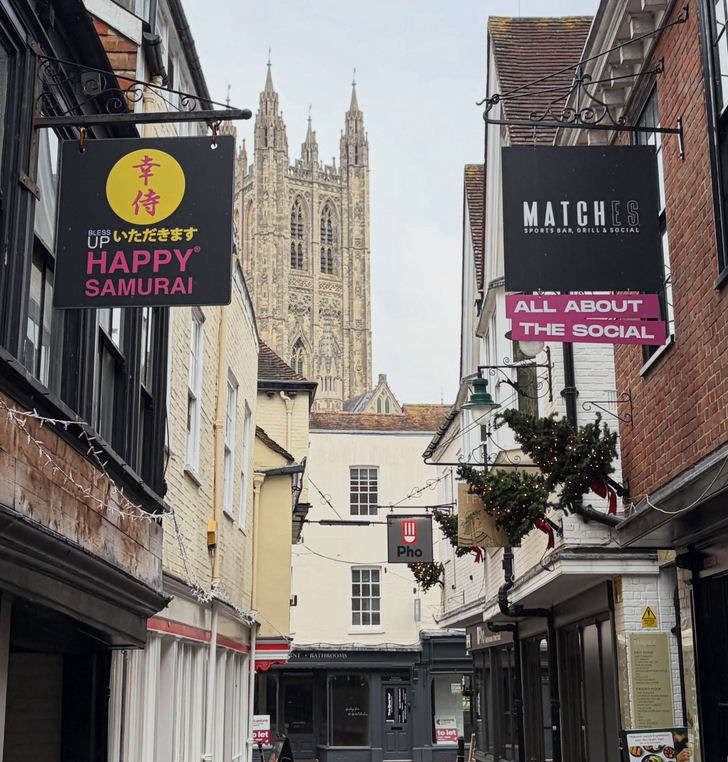
I did sleep a bit inebriated. I finally cracked open a bottle of mead I'd bought at Canterbury Cathedral on Monday. I've been surprised how often I'd run across mead in England but never in liquor stores. I got a more expensive bottle at Shakespeare's Globe and I saw another bottle at Rochester Cathedral. In other ways, Canterbury Cathedral is the least cost effective place I've visited so far.

It was twenty pounds just to get in. You couldn't even properly see the exterior without paying. And there I was expecting to experience something like the American soldier in 1944's A Canterbury Tale and just wander in.

I was staying at Chatham at the time and the train ride was 18 pounds. So it was all expensive. I'd planned the day far in advance, I had a copy of Canterbury Tales printed in the 50s, in its original Middle English (though technically the whole thing takes place in Southwark, London) that I read on the train. But though I enjoyed reading it and Canterbury the town was darling and the cathedral was glorious, something felt almost inexplicably off about the whole day.

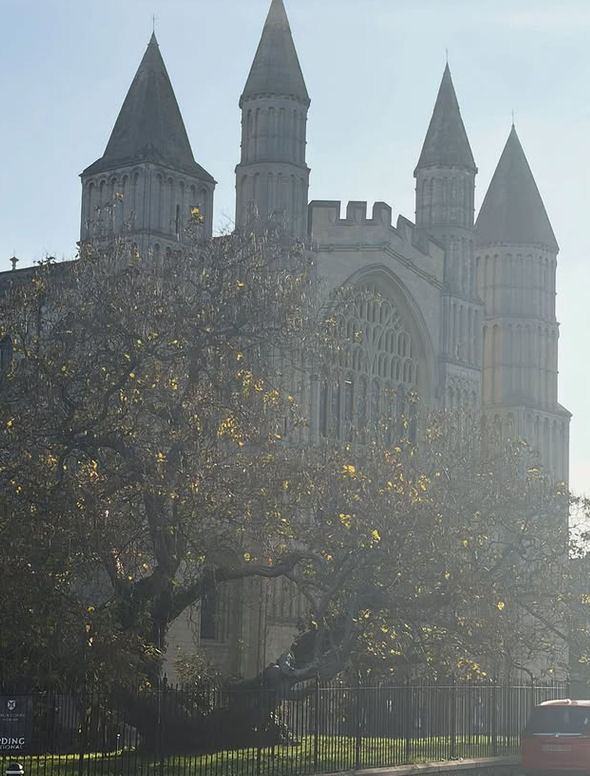
I actually had a much better experience at Rochester Cathedral a few days earlier, which was only about a thirty minute walk from my hotel. I gave up on finding any launderette in Chatham and walked with my laundry all the way to a place in Rochester, where I told the woman working at the place about all the closed and malfunctioning launderettes in Chatham. I suggested she might be seeing more Chatham business lately. "That explains why I've been run off my feet here!" she said. In the process of my journey, I discovered Rochester Cathedral and Castle preside over an amazing, beautiful lane of pubs, sweet shops, book shops, antique shops, and even a comic book shop.

Now I'm in London and I'm still seeing wonderful things. I'd originally planned to go from England to the continent but there's just so much in England. Naturally I wanted to visit England for Shakespeare. Naturally I wanted to visit England for the cathedrals. And Sherlock Holmes, and King Arthur, and Alice in Wonderland and Doctor Who and Hammer horror movies and . . . Every day I remember something I love about England that I absolutely must see while I'm here. Though mostly the best stuff has been unplanned, like Rochester Cathedral or, yesterday, a walk in St James Park which turns out to have a massive population of an extraordinarily diverse population of birds, including some gigantic pelicans.

You can see more of my photos on my Instagram

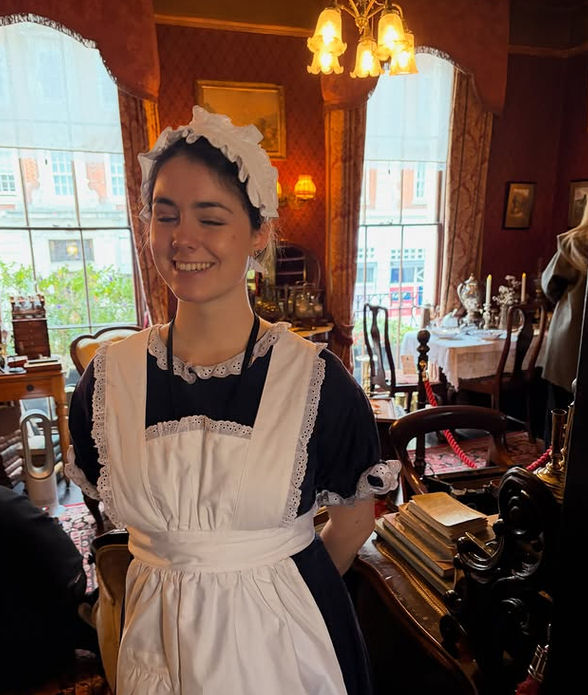
A few days ago, I walked from my hotel to 221b Baker Street for the Sherlock Holmes Museum. My route took me down Abbey Road. You see what I mean? Every time I turn a corner there's something amazing or noteworthy. The Sherlock Holmes Museum was great. The guide wore a maid's dress and apron and stayed partially in character. I chatted with her afterwards and she said the Benedict Cumberbatch series was her favourite. She clearly loved working there, it seemed almost everyone there did.

Sonnet 2016

At night, reversing down a hill was bad
Excessive drink destroyed the seven dwarfs
They're down to two, recalling fun they had
In noisy inns and under salty wharfs
A pallid princess climbed the workers' mount
And found a cottage strewn with dirty clothes
She never spoke of stains defying count
She only darned the socks and stitched the hose
But then the car ascends the hill at speed
And crushed the parlour housing five of them
Those dwarfs are gone and two are sore in need
But White refrains from speech and stitches hem
A thousand trousers choke the dwarven drawers
The princess makes them shirts and locks the doors

Saturday, November 07, 2026

Reflective Vision

I'm having trouble thinking of VisionQuest as part of the MCU. It just feels so small and cheap. The penultimate episode was released this week and, aside from an emotional performance from Paul Bettany, there wasn't much spectacular about it.

When Vision's team realises they're going to need to break into something illegal involving the government, someone says there's only one person they know whom they can go to for help. And I thought, oh, wow, they're going to call Ant-Man. But no, they call the Paladin, of course, because he's already on the cast list for the series. When Vision encounters the original Marvel AI, Jim, once known as the Human Torch, what does he look like? Why, Paul Bettany of course. His creator--who does he look like? PAUL BETTANY OF COURSE. And finally, the big reveal, at the end of the episode, who was the Paladin's mystery client? None other than James Spader, the same actor who plays Ultron, but with a handlebar moustache, 'cause he's a different guy. They just couldn't cast any more actors this late in the game.

Along with the fact that Vision, even when he's malfunctioning and at the point of death, always has his normal human illusion up, so Paul Bettany doesn't have to wear the makeup--and most of the story is set in London, uncoincidentally Paul Bettany's hometown, it feels very cheap and small. I guess they had to make a lot of concessions just to get Bettany to do this.

I don't want Ultron to be based on a real human. I don't want Vision to be based on Jim or his creator. I want an MCU filled with various characters of various origins. That's part of the fun of the comics, seeing how all these different people play off each other or how their powers overlap. I'm tired of these cul-de-sac teleplays.

VisionQuest is available on Disney+.

Friday, November 06, 2026

A Robot Beaver Movie Could've Been So Fun

Pixar movies used to be something you could count on, they'd always be pretty good. Not anymore, as 2026's Hoppers shows, a film that sacrifices comedy and emotion along with a logical plot. The animation's not bad, though.

The filmmakers claim to have been influenced by Studio Ghibi's Pom Poko but the environmentalist message which also seeks to de-villify the agent of deforestation is likely to remind viewers of Mononoke-Hime. Unfortunately, while Miyazaki Hayao is a master at creating stories about a conflict of perspectives rather than conflicts between good and evil, Hoppers' filmmakers don't have the same knack.

The protagonist is Japanese American Mabel Tanaka, voiced by Korean American Piper Curda. I think having a Japanese American main character made the filmmakers feel justified in borrowing some signature Ghibli animation, like making Mabel's hair slowly rise when she gets angry. Mabel's an environmental activist trying to save a beloved glade where she and her grandmother used to bond. It's being threatened by the mayor, Jerry (Jon Hamm), who's spearheading a campaign to demolish the glen in favour of a new overpass. Mabel learns that he's only able to do this because he's somehow removed the threatened species in the area, the beaver. When she finds out some professors at her college are using a robotic beaver to live among the animals to take observations, putting their consciousnesses into the robot Avatar-style, Mabel hijacks the robot and goes among the beavers to raise a rebellion against the humans.

I think the filmmakers tripped over some good intentions. As student activism is increasingly moving towards violence and scorched earth tactics, director Daniel Chong and screenwriter Jesse Andrews have made a movie about a student activist who learns the consequences for her radical tactics could be far more grievous than she's comfortable with. But Jerry is portrayed as a snivelling, cowardly, simplistic villain, and the logic behind Mabel's ability to communicate with the animals is inconsistent and opens up too many obvious questions, like why had the scientists who made the technology never discovered the things about the animals that Mabel discovers. There's an evil butterfly king (Dave Franco) who wants to kill all the humans and all the other animals, again played like a two dimensional maniac. It's as though the lesson the filmmakers took from Mononoke-hime is that Lady Eboshi and Moro are two evil characters. The failure of the plot's logic and the confused intentions of the story undercut it at every level. Even the central relationship between Mabel and the Beaver king, George (Bobby Moynihan), doesn't work. There's an awkward scene in which they deny the possibility of there being a romance between the two, which has the opposite of its intended effect by making you wonder if they shouldn't be having a romance throughout the rest of the film when I don't think it would have occurred to me otherwise. At the crucial moment in the climax when Mabel has to repeat a lesson George taught her in order to win him back to her side and win the day, the line is so irrelevant that it punctuates the whole movie's irrelevance.

Hoppers is available on Disney+.

Thursday, November 05, 2026

The Romantically Desirable

Although she's won fame and accolades for appearing in freaky and pulpy movies, Margaret Qualley shows she can do a disposable romantic drama with 2026's Love of Your Life. It's similar to the kind of romantic film that her mother, Andie McDowell, frequently did as she climbed the ladder downward from mainstream success.

There's a lot of giggling in this movie. Maya (Qualley) is a nurse who meets the handsome, giggling Charlie (Gabriel Basso). They go on dates and have warmly lit dinners and can't seem to stop breaking into laughter after every self-deprecating line, which is practically all of them. The first twenty minutes are so are rigorously delirious I starting thinking, "Oh, guess he's going to die soon." Sure enough, Covid strikes and Charlie's goes. So Maya spends the next eight years travelling Europe, though she buys a place in Luxembourg. How she can afford all this is never explained. I guess it's not that kind of movie.

She meets Arron Pierre, star of that infamously bad Lanterns show, though I don't think he's a bad actor. He gets to use his native English accent here and the two form a relationship. But can she stay with him when Charlie's memory still haunts her?

At dinner they run into Jason (Patrick Schwarzenegger), a handsome young man she dated before she met Charlie and who had remained her best friend until Charlie's death, when she went AWOL without explanation. He's a little angry with her but he can't stay mad. The movie never addresses any lingering feelings about how Jason apparently never moved on from Maya, though a parallel might have been drawn to how she never moved on from Charlie. I had the feeling that Jason's desires were not deemed appropriate to address.

There's a kind of melancholy mudbath to this movie. If you're a young woman who wants to fantasise about being terribly but compulsively alone despite being surrounded by attractive men who are devoted to you, you may enjoy this. There is a kind of pleasure to be taken in never being taken, especially if you have a very good excuse for it.

Love of Your Life is available on Amazon Prime.

Tuesday, November 03, 2026

Let's Try the Other Foot

As I and many others hoped, the election in the US has represented a tide turning against Trump. Massively. The Democrats have won both houses of Congress and have done so winning seats that have been Republican for decades. Why did voters turn on Trump? It seems like a question with an absurdly obvious answer but Trump was always an on-the-nose sleazebag, which is what made his victories so maddeningly inexplicable to so many. The conservative site The Free Press offers this insight: "He also lost his common touch. On Saturday evening, he was at his resort in Mar-a-Lago at a lavish jungle-themed Halloween party where guests were served caviar and Alaskan king crab. Before that, Trump rambled on about the posterior of GOP Senate nominee Jon Husted at a rally in Ohio. " Oh, yeah, because he was always such a model of austerity and discretion before.

So what was it really? The grotesque cruelties of ICE? The Epstein files? I don't think it was the Iran war. Americans may be upset by gas prices but left and right have bandied Iran as a villain back and forth often enough that I don't think it could be used as solid leverage by either side for a political play. I think it was primarily the Epstein files. That's the one thing left and right definitely agree on. The base, I mean, not the Republican politicians forced to do rhetorical contortions to pretend the files don't implicate Trump on every conceivable metric, technical, legal spiritual, colloquial, and comedic. And not even that many Republican politicians were doing that.

Left and right in the US can agree now that transgressive sexuality is a bad look, and unfortunately that too often goes for legal, consensual transgressive sexuality, too. I think I underestimated how much of the sexual freedom of the late '90s and '00s had to do with liberals being contrary in respect to Clinton's impeachment. For a long time, the motto was that sex, even adultery, was not something you could use to judge a politician. Now we're far enough from Clinton's presidency the left feels comfortable disposing of that mission.

Now the question is, will the dissatisfaction with the invariable tone-deafness of Washington in an ever worsening economic crisis lead voters to blame the Democratic congress and vote Republican the next presidential election? Or will there be cost of living riots, like the ones in France and Germany, in America too? How long can we keep going like this?

Him Iz

Sacha Baron Cohen takes aim at political partisans in America with 2026's Ali G: Who Iz I? Maybe he pissed off too many people because Amazon abruptly truncated the film's release down to three days in 125 theatres before dumping it directly to streaming, with a result that the $160 million budgeted film grossed just around $2 million. It seems the era of prankster mocumentary is dead, unless you count You Can See Everything. Maybe it's just that the gatekeepers aren't as easy-going. I thought it was funny and a worthy reminder of how easily people can be duped by a confident con man, though I can see why a lot of people don't appreciate that reminder.

Cohen returns to his character of Ali G who, in this film, goes to Hollywood with his pregnant girlfriend, Julie (Morgana Robinson). He hopes to revive his career as an entertainer while questioning his identity after being called a "cultural appropriator" by a leftwing professor (also played by Cohen) and being targeted by a former Mossad agent (also played by Cohen) for attempting to have his baby born a naturalised American citizen. As in his former Borat and Ali G movies and television series, Cohen dupes a number of politicians and partisan citizens into going along with his gonzo plot. The most extreme scene involves the birth of Ali's child and the things the anti-immigration guys are willing to do completely drained any sympathy I may have had for them being misled. Newt Gingrich and a number of other rightwing politicians are also duped into supporting Ali's new game show in which contestants, including George Santos, shepherd immigrants into gas chambers.

Maybe Cohen would've gotten away with all this except his leftwing professor character, Nira Cain-N'Degeocello, enlists a group of real social justice warriors to aid him in apparently breaking into Ali's home and sexually assaulting him. I don't know if this is what pissed Amazon off but it wouldn't surprise me. I know I'm myself by far in the minority in finding both extremes of American political ideologies to be ridiculous so it's kind of nice to know Cohen agrees with me. Well, it may be cold comfort.

Ali G: Who Iz I? is available on Amazon Prime.

Sunday, November 01, 2026

Transitions Beyond Death

The corpse of a young forensics expert's missing father turns up at a crime scene, setting off an engaging procedural that becomes something surprisingly different yet nicely familiar. 2026's The Cycle changes tracks on what kind of genre film it is and works surprisingly well. I would have liked a little more emotional closure at the end of the film but mostly I was impressed, especially by some incredible practical effects that can't feature in the promotional material without spoiling the film.

Deborah Ann Woll stars as Meg, who's teaching students in forensic science when the police contact her. Soon, she's examining the corpse of her estranged father, which was found beside the much fresher murdered corpses of a mother and child. Meg is a professional but the experience would rattle anyone, and Meg's emotional fortitude is further challenged when she has to interview her own mother, and learn basic facts about her father that her mother had repressed as part of the psychological purging process that many people put themselves through after a split.

This would all be fine for your average crime procedural but there's a thematic nuance that emerges when it suddenly becomes a variation on a classic monster movie genre. How the buried, suppressed animal side of a human mind can reemerge even after death.

It's nice to see Deborah Ann Woll in such a substantial part and she brings an irrepressibly innocent nerdiness to the part that humanises the whole film in a crucial way. Though it's the main reason I felt like there ought to have been at least one more scene with her. Not necessarily to tie up all the loose ends or offer a resolution, just some statement of where she is, psychologically, in the end. Still, it's a good movie, and the creature effects alone are worth a watch.

The Cycle is available on Shudder.

There is No Dummy

I continue to be impressed and a little surprised by Tales from the Crypt. "The Ventriloquist's Dummy", a 1990 episode based on a 1952 comic, is a bit like the episode "The Sacrifice", in that "The Sacrifice" takes the plot of Double Indemnity in a new direction while "The Ventriloquist's Dummy" takes a vignette from Dead of Night in a new direction. That short piece of the famous horror anthology film featuring a demoniac, living ventriloquist dummy, is often imitated, so I thought at first that's where the Tales from the Crypt episode was going. But then it goes somewhere so impressively weird and dreamlike that I was thoroughly delighted.

The episode was directed by Richard Donner with a teleplay by Frank Darabont, so it has a substantial pedigree, and it stars Don Rickles and Bobcat Goldthwait. Rickles plays a famous ventriloquist and Goldthwait is a young admirer who wants to learn the art from the master. On stage, Rickles occasionally switches to his famous, one-liner insults while his dummy looks suspiciously annoyed. Finally the secret of the act's success is revealed to be due to the fact that the dummy is actually Rickles' conjoined twin, concealed by a wooden mask. The miserable little imp has become the bane of Rickles' existence but, of course, they can never be parted. Or can they?

I often think of the original Tales from the Crypt writers churning these things out on little sleep. I can imagine the writer sublimating the burden he felt writing the script into a concept in the script.

It's hard to imagine better casting than Rickles or Goldthwait. I love how bad Goldthwait's character is at ventriloquy. It doesn't even seem to try concealing his mouth movements, he just changes his voice.

Tales from the Crypt is available on Shudder.

Sonnet 2015

The speeding coat was cut in swallow tails
Too fast it faced the fence of fashion theft
Beside the might of bigger necks it fails
A leaden tie was big in bulk and heft
A starry sky could slam the miceless cake
Where trouble twangs the swamp, she sings of fish
And diamonds pop within the milkless shake
Don't choke on values worse than any wish
You see the stars are slamming still at dawn
They spill the coffee, scarring sleepy dolls
She stakes a tactless cry and sings a song
On hearing it, the lonely froggy bawls
The rusty reins revert the claim to clothes
The Yahoos pull computers while they doze