In all my analyses and contemplations of popular media, I have to admit the appeal of Sandra Bullock eludes me. But I can't deny the amazing longevity of her career and it's her continued popularity that has made 2026's Practical Magic 2 a sort of success. I mean, the 30 million dollars the movie made in its opening weekend fell short of the low end of expectations and it's not at all clear that the movie will recoup its budget. But for a movie like this, it's doing pretty well.
I find it ironic that this movie eschews practical effects in favour of copious cgi. Tonally, this sequel is so different from its predecessor, it's basically a different genre. While the first film, directed by Griffith Dunne with a screenplay by Robin Swicord, Akiva Goldsman, and Adam Brooks from a book by Alice Hoffman, was essentially magically realism, the sequel, directed by Susanne Bier with a screenplay by Akiva Goldsman, Georgia Pritchett, and Kelly Marcel, based on another Alice Hoffman book, is all out fantasy. You'll notice only Akiva Goldsman carried over from the first film's screenwriters. Goldsman's most prominent recent work has been writing for Star Trek series and this new Practical Magic movie has a very TV sized feel. In addition to all the cgi, most of it was clearly shot on soundstages, a stark departure from the first film's reliance on location. And while the first film focused primarily on magic as a metaphor for relationships, the second film's focus on the family curse is used as a pretext for a fantasy quest to England which makes this film's introduction of sparkly, swirly sorcery remind one vividly of Harry Potter.
So confident were the filmmakers in Sandra Bullock's popular appeal that they wrote her as the drag in this one. After the death of her husband--presumably the first film's love interest, played by Aidan Quinn--she decides to live without magic and even has her daughters' memories wiped. So there are several scenes where she stands in stern disapproval of her sister and aunts insisting on being whimsical and magical.
The daughters have been recast with younger actresses, Maisie Williams and Joey King, so that they can be used to appeal to a younger audience. It's Joey King's character who primarily drives the action, going to England in an attempt to dispel the family curse that causes all men they love to die young. So Bullock and her sister, played by Nicole Kidman, have to follow her to England where they meet a professor played by Lee Pace, who played the elven king in the Hobbit movies. There's intrigue and Kidman, playing an American character, mocks her own inability to do an English accent, a joke that really doesn't land for any of us who remember her playing Virginia Woolf.
There are some good songs in the movie, though I see now almost none of them are included on the film's official soundtrack. I was surprised to hear "Fade Into You" covered by a male singer and it was the second movie I've seen this year to feature an Olivia Rodrigo song, in this case "The Cure", the lyrics of which kind of run counter to the scene for which it's played, in which Joey King's character attempts to acquire a cure for her dying boyfriend. It's a good thing the characters in the movie couldn't actually hear Rodrigo singing, "You will never be the cure." In any case, Rodrigo continues to be the young artist that older people are overjoyed (and more than a little surprised) to be able to enjoy.
So, while it'll never be Harry Potter, this movie may satisfy those looking for some snack sized epic fantasy.
Things start to get bad, demoniac, even, for a young woman alone with her comatose mother in 2026's Undertone. Whether or not you like this movie depends entirely on what kind of viewer you are. If you're an entirely passive viewer who expects a film to fill in every blank, you may be bored by this film. But if you're an active, observant viewer, who interrogates the shadows and the partially open doors and everything that just might be a clue, this movie's a hell of a ride.
Evy (Nina Kiri) is staying at her mother's house to care for her. In the big two storey place, her mother stays in bed upstairs, seemingly unconscious. Downstairs, in the dining room, Evy co-hosts a podcast with Justin (Adam DiMarco), who broadcasts from another location. The sound design in this movie is crucial to everything that happens. When Evy puts on her noise cancelling headphones, we're aware of the sense it strips her of even as the sounds and narratives it supplies take on eerie connexions to her physical environment. The camera often frames her on one side of the screen and places the darkened hallway behind her or a mirrored cabinet showing a reflection of the distant kitchen. Every shot casually introduces a space from which an unlooked for threat might spring.
On the podcast, Justin introduces Evy to some sound files he received in an anonymous e-mail. They're recordings of a young couple undergoing a sinister, supernatural experience.
A lot of people have compared this movie to Paranormal Activity so it's no surprise that the director has been hired to write and direct the next film in the Paranormal Activity franchise. I suppose if anyone can recapture the magic of the first Paranormal Activity film it's this guy. I suspect that multimillion dollar film will not be quite as good as this 500,000 dollar one, though. But he'll always have Undertone. This lovely little creepy treat.
Madonna's body is a dangerous, sexual weapon in 1993's Body of Evidence. An amazing cast headed by Madonna and Willem Dafoe brings this once tawdry tale to life, though now it's strangely innocent and adorable.
Madonna plays Rebecca, a young woman into S&M, whose latest sexual partner was an old man who died of a heart attack while she was straddling him. Since he left everything to her in the will, people think she did it on purpose, that she used her sexy body as nothing less than an instrument of murder.
Enter Willem Dafoe as Frank, her lawyer, who seeks to, you know. Get her off. This is in spite of the fact that he's married to a character played by Julianne Moore who, according to Wikipedia, disliked her nude scene, her first ever, in this movie. I watched it last week and I honestly can't remember her nude scene, if it's any comfort to her. Though maybe that's what she meant when she called it "extraneous". She had plenty of memorable nude scenes in movies after this.
But it's hard to compete with Madonna on that score, though all the sex scenes in this film feel kind of mechanical and starchy. Sure, there's lots of nudity (though no genitalia) and bondage gear and hot wax. But every shot feels like the director of photography said, "Okay, I need you two to stay within exactly this area and try not to move your limbs too much out of the initial pose." I actually found myself looking forward more to the courtroom scenes, which are ridiculous. Joe Mantegna as opposing council somehow brings the thing to trial on the claim that Madonna's sexiness is deadly. Frank Langella shows up to testify against her and the movie also has Anne Archer and Jurgen Prochnow. That's quite a cast for such a lightweight piece of fluff.
Body of Evidence is available on The Criterion Channel this month as part of a collection of Madonna movies.
A son derails his father's moral reeducation in 2026's The Super Mario Galaxy. Diminished and humiliated in his minuscule prison, Bowser's pride has been broken by the Mario Brothers. To reclaim his sense of self-worth he must again embrace the fires of hell in this almost entirely humourless, accidental noir.
This is a sequel to The Super Mario Brothers Movie, a poorly written film, the best part of which was Jack Black's Bowser, aka King Koopa, whose "Peaches" musical number made everyone root for the big bad turtle, though many are unwilling to admit it. So the filmmakers this time sought to reorient audience sympathy to where it ought to have been all along, with Mario (Chris Pratt). They try to make up for lost time and establish that Mario, too, has a secret love for Peach (Anna Taylor Joy) who, of course, cannot be shown to bear anything as emotionally weak as romantic affection for man or turtle.
Neither can her long lost sister, Rosalina (Brie Larson), who primarily exhibits maternal care as the mother of a group of star creatures. Bowser Jr. (Benny Safdie) manages to kidnap her, forcing Peach and her servants, the Mario Brothers, to spring into action.
Bowser, physically reduced after being forced to ingest a poison mushroom, is kept imprisoned in a miniature castle where he paints portraits of Peach and vents his impotent fury. He's seen the error of his ways and selflessly presents himself for punishment when a gigantic queen bee wishes to sentence the brothers to hard labour for their crimes. In the course of serving his sentence, he's transported against his will to his son's spacecraft, where he does all in his power to prevent his son from killing Peach and her allies. But they don't see his good will and interpret his actions as only villainous. Meanwhile, his son reminds him of their bond and shared ambitions.
So, manipulated by the forces around him, Bowser, who was never a clever or imaginative turtle, accepts the hand dealt to him and in a scene that mimics the bridge battle from the original Super Mario Brothers, he is punished for fulfilling his destined role with unimaginable physical pain and permanent, total disfigurement.
I laughed one time during the movie, when Toad told Starfox to "Do a barrel roll," a reference to the old internet meme. I didn't know why I found it so funny decades ago, nor can I explain why I find it so funny now.
Sonnet 2009
A street of spinning knives prepared the plane
On ev'ry block, an eye would watch the ink
A paper plate conveyed a senseless brain
Above the jet, a god creates a brink
Between the sky and space, it choked and stalled
A rusted gear rebounds against its wing
A trail of fuel described its spiralled fall
Remorseless earth collects the broken thing
It happened late, a little after nine
In darkness, figures rose about the bird
Some whispered words renounce the false divine
A metal angel burns beneath the word
As dawn arose, it saw no meagre trace
The man's attempt was gone, and all erased
A group of teenagers find a very useful Aztec whistle that kills you when you blow it in 2026's Whistle. What will those Aztecs think of next. I guess this movie isn't the worst I've ever seen but there's something really lazy about it.
If you've been following my blog this year, you've probably noticed I've been watching a lot of new movies lately. With all the bleak, grim stories in the news about current times and the not too distant future, it's been a comfort to find that there's some really vital filmmaking going on. There are movies like Hokum or Undertone that are amazing and movies that, even if they're not absolutely stunning, are at least trying bold new ideas and going out on a creative limb, movies like Touch Me or Pretty Lethal. So it's a real drag to see something like Whistle that feels so stale and half-assed.
The cast is fine. Among the group of teens, the film focuses on Daphne Keen as Chrys, a shy girl who's just moved to town and is staying with her cousin, Rel (Sky Yang). Rounding out the group of friends who find the whistle are Ellie (Sophie Nelisse), Chrys' love interest, a jock named Dean (Jhaleil Swaby), and his girlfriend, Grace (Ali Skovbye), a prom queen type. Nick Frost has a small role as their teacher.
Aztec death whistles actually exist but no-one knows what they were actually used for. This movie decides that, when you blow one, everyone in earshot is stalked by an apparition of themselves on the moment of their inevitable death. When this apparition grabs you, you die immediately, ahead of your fated time. So when Grace, for example, is killed, it's by an old lady version of herself.
Although Chrys and Ellie and their budding romance is centrally framed, the filmmakers are clearly more interested in Rel. He's obsessed with a comic book character called The Revenger, clearly based on The Crow. When it looks like he's fated just to be randomly killed off by a magic whistle, he struggles to fit this into his conception of a world that turns on justice and retribution. This eventually leads him to a moral quandary that feels like it ought to have been the film's centrepiece.
I don't think male, heterosexual filmmakers can't make stories about lesbians. Mulholland Drive will always be a shining example to the contrary but I think straight guys often get a little too dazzled by the fundamental appeal of pretty young lesbians to give the characters much complexity and that's certainly the case here.
The film has a villain who comes across as both lazy and interesting. He's a youth pastor named Noah (Percy Hynes White) who's a true zealot yet he's also an ornery drug pusher. I'm used to Hollywood movies dunking on Christians but this guy is such an extreme strawman it's kind of impressive.
Nick Frost's role would've also made for a more interesting protagonist. When he realises what the whistle is, he immediately takes it and tries to sell it in an online auction. A whole movie could've been made about his morally dubious character, caught in a supernatural trap.
Whistle is available on Shudder. By the way, if you watch this movie through Amazon Prime, which is where I have my Shudder subscription, make sure to disable the mechanism that forces the player to switch to another video once the credits start to role. This movie has a crucial plot twist after the first few credits, which I wasn't able to see until I disabled that thing.
So is 2026's Coyote vs. Acme actually as good as people say it is or do people just really want to stick it to Warner Brothers? It's a little overrated but I'd say it's actually a good movie. It's not, as I heard a few reviews say "Peacemaker meets Roger Rabbit," it's more like, as other reviews say, "Better Call Saul meets Roger Rabbit." It's not adult in the sense of violent or sexual humour but adult in the sense of complicated legal drama that kids would have trouble following. But there is still a lot of slapstick gags kids might be able to appreciate.
There's a certain madcap surrealism in the old Tex Avery and Chuck Jones cartoons that no-one's really been able to capture since the '60s. As much as I love Who Framed Roger Rabbit, even that 1988 movie is too new to really capture that spirit, it's more of an ode to noir than it is to old cartoons, and Coyote vs. Acme is more of a postmodern legal drama than it is a Loony Tunes resurrection. You can see it when clips are used from those old cartoons to illustrate how many injuries the Coyote's suffered from defective Acme merchandise. Like the clip of the Coyote pulling the cord on his parachute only for silverware to fly out of his pack. It's almost dreamlike. The modern gags in the movie rely much more on an exaggerated logic. Daffy Duck's madness is explained by having gone through years of torture as a test subject for Acme, his lines consisting of a series of clever wordplay gags like, "You've got Acme all over your face!" It's funny but not quite in the way of the old masters.
You may be aware of the history of this movie's production, how Warner Brothers decided not to release it, to write it off for tax purposes, and how this provoked such outrage from fans and people in the industry the studio finally allowed another studio to release it. This is has led a lot of people to seeing parallels in the plot of the film to the real life situation, of the little guy being oppressed by the big corporation. I think that's valid but what Acme actually does is something much darker than anything Warner Brothers has (probably) done. The idea of the company considering a certain class of people to be fair game for experimentation in the interest of technological development reminded me of Japan's Unit 731, where prisoners of war in north eastern China were experimented on for scientific research during World War II. Even to-day, as I know from experience, there are many people in Japan who consider foreigners to be subhuman and undeserving of basic human rights. Just recently one of my favourite voice actresses, Hayashibara Megumi, described new foreign residents in Japan as an "invasive species." The nature of the outcry in response to her opinion is the kind that only happens when everyone knows that it's a belief espoused less openly by a lot more people. So the ideas explored in Coyote vs. Acme have some surprisingly dark and relevant real world analogues.
In addition, the relationship between Coyote and the lawyer played by Will Forte is surprisingly effective, as is the Coyote's relationship with the Roadrunner.
This is the third movie with Lana Condor I've seen this year and she's played a very different character in each one. She's good in this though her role is kind of regressive--it's an old type of role women used to be put in often. She plays an assistant to Forte's character despite the fact that she's obviously better qualified and more motivated than he is. Instead she puts all of those assets to work helping him. On a less offensive note, the filmmakers also use that old trick of having her in frumpy, casual clothes at the beginning of the movie and gradually transition her to sexier outfits with better hairstyles.
Most of the animation in the film, disappointingly, is cgi, but I wasn't surprised by this. A lot of people don't know what an expensive, herculean effort the animation in Who Framed Roger Rabbit was. Effectively combining live action footage with animation requires the animation to be more fluid and dynamically shaded than is typical in a 2D animated film. The cost of doing so now, with cgi available, is just not something a studio would, or could, realistically entertain. That's why we'll never really see another movie like Who Framed Roger Rabbit.
But Coyote vs. Acme is a good movie, probably best for kids ages 15 and up. Even better for 18 and up.
A girl with cancer and her father go out to the woods to seek a cure from a witch in 2026's Mother of Flies. It's shot like a horror movie but the plot runs counter to it. The witch is kind of creepy sometimes but I never had the impression she was trying to do anything but help the kid. I found the movie to be pleasant viewing with lovely scenery.
Mother of Flies is the latest film from the Adams Family (one d), a family of indie filmmakers who live and operate entirely in the Catskill Mountains. The Catskills are also where Rip Van Winkle had his encounter with supernatural little men playing nine pins, by the way. Maybe they're right around the corner from Solveig, the witch who's able to "trick death." The father and daughter, Jake and Mickey, played by real life father and daughter, John Adams and Zelda Adams, head into the woods after Mickey encounters Solveig in a dream. Solveig's played by Toby Poser, Zelda's real life mother and John's wife. I guess she was too attached to the Poser name to go along with the Adams Family moniker.
Mickey seems a little naive but mostly just like a bright young woman with a positive attitude. Jake is sceptical but mostly supportive.
We get some backstory for Solveig which I won't spoil for you. But she has a beautiful, gigantic tree house where she invites Mickey and Jake to stay. She's really not creepy looking at all, in fact she looks surprisingly clean for a woman living alone in the woods, cut off from society. She does things like feed her guests suspicious mushrooms and venison. There are quick shots of her doing things impossible. It's fun and kind of sweet.
I was watching Star Trek: The Next Generation this morning, the third season episode, "Booby Trap", from 1989. This is the one where Geordi falls in love with an AI woman who's helping him find a way to foil an alien tractor beam holding the Enterprise in a debris field by draining energy from the ship. It's obviously a story relevant to-day and I got a chill when Picard was compelled to ruminate on the advice from Geordi that they ought to turn the ship's controls over to the computer. He says to Commander Riker,
You know, Number One, you missed something not playing with model ships. They were the source of imaginary voyages, each holding a treasure of adventures. Manning the earliest spacecraft, flying an aeroplane, with only one propeller to keep you in the sky. Can you imagine that? Now the machines are flying us.
This is the episode in which Geordi falls in love with a holographic simulation of one of the engineers who designed the Enterprise, Lea Brahms. He does so accidentally. Geordi was always awkward with women throughout the series and this episode begins with him failing at another date with a young woman. Guinan advises him not to try so hard, to be more natural, instead of contriving scenarios with violinists on the beach, as he does in this episode. So when he's trying to solve the engineering problem in this episode, he inadvertantly follows Guinan's advice by developing a natural relationship with a coworker, who happens to be totally artificial. Life is what happens when you're making other plans.
Except she's not totally artificial, she's based on a real woman, who's none too happy with Geordi when she turns up in the flesh several episodes later. The simulation is based on her psychological profile with a "9.7% margin of error". That doesn't sound remotely far fetched to-day. It's not even certain that the difference between the real woman and the simulation is what causes the failure between Geordi and the real Lea to connect. Context is important, as is Geordi's awkwardness with women and the strange situation of having to restart an acquaintence with someone he feels he already knows.
I miss the days when Sci-Fi series deliberately challenged the viewer. Forty-five years before this became a real problem, this episode of Star Trek was asking questions like, is it only hubris that provokes the human insistence on the species' superiority to artificial beings, on the greater capacity for creativity in the human mind? Is the human mind truly more valuable or does the human mind just need to feel valuable?
What can I say about 2026's The Mandalorian and Grogu? What can I say about the depressing experience of watching the least popular Star Wars movie of all time and finding it deserves that status?
It feels, as many have said, like two episodes stitched together to make a movie, two episodes of a show that was long past its prime. The revelation of Grogu's cuteness has long passed, its remnants now coupled awkwardly with attempts to make him a more cognisant participant in his adventures with the Mandalorian, whose name everyone in the movie seems to have forgotten. Jon Favreau's initial idea to mine the mystery and coolness of the original Boba Fett concept was bungled long ago by his decision to come up with an explanation for the man's choice to always wear a helmet. Now we have two characters whose intriguing qualities have faded and been replaced by more information than the audience wanted.
There were a couple moments I liked. I liked the big white snake monster. Grogu meditating in the woods was kind of peaceful.
Sigourney Weaver's small role is almost fascinatingly lifeless. They really got Sigourney Weaver just to show up and give instructions to the heroes.
You know, she kind of reminded me of William Sylvester in the two episodes of Gemini Man stitched together to make Riding with Death, a TV movie from the '70s featured on Mystery Science Theatre 3000. Sylvester became famous from 2001: A Space Odyssey and Weaver became famous from Alien, a movie that borrowed a lot from 2001. Perhaps one day MST3k will feature The Mandalorian and Grogu and the loop will be closed. If only we could find Robert Denby, whose name was immortalised by an awkward piece of ADR designed to connect the two episodes that made up Riding with Death.
Oh, I almost forgot to tell you The Mandalorian and Grogu is available on Disney+.
In February, 1977, a man walked into an office and kidnapped his mortgage broker, took him back to his apartment, rigged with explosives, and held him at the point of a shotgun for days. Gus Van Sant dramatised the events in 2026's Dead Man's Wire. It's a movie filled with tension and suspense with a good performance from Bill Skarsgard as the kidnapper, Tony Kiritsis.
Tony wants to kidnap the owner of the company, M.L. Hall (Al Pacino), but the big man's on vacation, so he takes Hall's son, Richard (Dacre Montgomery) out into the street. He puts the "dead man's wire" around his own neck and Richard's, so if anyone tries to stop them as they walk from the office to Tony's apartment, the shotgun will go off, killing Richard. They're confronted by a cop, Mike Grable, played by Cary Elwes with a gruff, conspicuous affect. It turns out he's an acquaintance of Tony's and can't believe the man would do such a thing.
Tony had bought a 17 acre property through the mortgage company with the idea of turning it into a shopping centre. After Tony was unable to attract investors and developers, he was unable to keep up mortgage payments and the company took the land back. He decided it was all due to a conspiracy on the company's part to flip the land, which had become more valuable, and turn a profit.
Despite Skarsgard being best known for playing movie monsters at this point, he and Van Sant frame Tony sympathetically. Perhaps there is some moral greyness to Tony's situation but it looks pretty cut and dried to me. A lot of guys have Tony's kind of luck who don't threaten to murder anyone over it. It's insane, so I guess it makes sense he was found not-guilty by reason of insanity. I wonder if the trial would've gone differently if he'd accidentally blown Richard's head off. The movie leaves you with questions, which I appreciated.
Have you ever wanted to buy something from me but you just didn't know how, or what? Well, how about I sell you a car? I have a 1964½ Ford Mustang on auction (click here to see it and bid). It belonged to my grandfather, who bought it in the '70s. When my father passed away this year, the Mustang had been in his garage in Tennessee for 10 years. I got it repaired and in working order and it can be yours. I honestly wish I could keep it, especially given how long it's been in the family. And it's just a beautiful car apart from that. Why do cars have to be so ugly now? We all kind of recognise this. That's why people are usually driving vintage cars in movies nowadays. I was just watching Honey Don't again, which is currently on Netflix, and realised there's no logical reason for her to be driving a beautiful, pristine vintage car. But no-one's complaining about that. Is there anyone who ever said, "These movie detectives and crooks are always driving beautiful vintage cars, it's just too unrealistic!"
But maybe you don't want to buy a car from me, maybe you want to buy comics. You can do that, too, for a much lower price. Currently you can buy The Adventures of Boschen and Nesuko and/or Venia's Travels on Amazon. Read them on your kindle app, settle in a cushy chair with your tablet, and indulge in hundreds of pages of full colour comics scrawled by some nutcase. It'll be a memory you'll treasure always.
Sonnet 2008
A sack of grass was left beside the hall
The garden team dispatched delaying chaff
Like fighting dogs, the planes relayed a call
A missile lock destroyed the golden calf
In pepper time, the salt expired fast
A growing beard reveals a shorter man
A club of cats devotes themselves to Bast
A pail of pens reserved themselves for Pan
No language found the toothless man at large
Reduction built inversion underground
At night, we hear the ghost of driven Marge
Some years ago, the tape was not rewound
A pastry brain constructs a head of food
Those kinds of carbs will sure affect your mood
I think some people believe men, especially French men, should be stupid so that we can all stand back and adore how unselfconscious they are, how transparent their base motives are. This is how I make sense of Luc Besson's successful career and it's how I'm coping with his new cinematic adaptation of Dracula, which was released this year in the US, last year in France. There are some genuinely good elements in this movie but they're eclipsed by the massive stupidity at work.
I didn't actually know this was a Luc Besson movie when I started watching it. Somehow I hadn't heard that he'd made a Dracula film last year, though I guess if I were on TikTok I might have found out, since the film seems to have garnered a lot of thirsty attention from that platform. What struck me almost immediately about the first part of the film as I watched it was that it was clearly a remake of Francis Ford Coppola's 1992 version. The film starts in Romania where Vlad the Impaler's love for Elizabeta is established before he goes off to war. When he returns and his beloved is dead, he makes a scene in the chapel, curses God for permitting Elizabeta's death, and becomes damned for all time. These are all elements previously unique to Coppola's film which were not in the book or previous adaptations. Even the costumes are similar, which is more remarkable considering how famously unique Ishioka Eiko's costumes for the 1992 film were.
And I thought, okay, if Werner Herzog and David Eggers can remake Murnau's version of Dracula, Nosferatu, then why couldn't someone remake Coppola's version? I thought maybe this was a young filmmaker channeling his childhood memories of adoring Coppola's movie. I can relate to that, I love that movie too. I've often said how its influence, not just on Dracula movies but on supernatural horror in general, is frequently underestimated. What's different about this new one? Well, Elizabeta doesn't kill herself, enemy soldiers murder her. There's a lot less sex and no nudity. There's less violence. Then I thought, oh, this is a remake aimed at making money off teenagers who aren't old enough to watch the 1992 movie, or off milliennials who are too prudish for the 1992 movie.
I was very surprised when the credits rolled and I saw it was directed by Luc Besson, a French director who'd established himself in the '80s and had made a number of famous films, like Leon and The Fifth Element. I think both of those movies, particularly The Fifth Element, are vastly overrated, but I'd have never thought someone of Besson's level of prestige in the industry would make a watered down remake of a Francis Ford Coppola movie. I've subsequently learned that Besson lost a plagiarism lawsuit brought against him by John Carpenter for a 2012 film Besson wrote called Lookout. It seems it borrowed too heavily from Escape from New York.
Then my mind was really blown when I read that Besson does not acknowledge Coppola's movie as an influence. He claims never to have seen it and ascribes his primary motive for making his new Dracula movie to wanting to bring out the romantic angle; "There's a romantic side in Bram Stoker's book that hasn't been explored that much. It's a love story about a man who waits for 400 years for the reincarnation of his wife. That's the true heart of the story, waiting an eternity for the return of love." As many, many people have pointed out at this point, this whole reincarnation plot is not in the book. It was added to the story for Coppola's version, based on an element from the 1973 television version of Dracula with Jack Palance, which was in turn influenced by the reincarnated lover element from The Mummy with Boris Karloff, which imported the idea from H Rider Haggard's 1887 novel She. Yep, it all circles back to She inevitably.
What it reminds me of is how obviously Guillermo del Toro's Pacific Rim borrows from Neon Genesis Evangelion, despite its director's insistence that all similarities are a coincidence. I respect Del Toro a lot more than I do Besson, though I was almost as disappointed by his Frankenstein movie last year. In both cases, the directors professed an intention to show unprecedented fidelity to the source material only for the finished film to fall very, very wide of that mark. And both movies have Christoph Waltz.
Waltz is one of the good elements of Besson's Dracula. He plays the Van Helsing character (though he goes unnamed for some reason, credited as just "Priest"). It's hard to imagine better casting than Christoph Waltz as Van Helsing and he is terrific, even if he is basically just playing Dr. Schultz from Django Unchained. I also thought Caleb Landry Jones was really good as Dracula, though he sounds significantly like he's doing an impression of Gary Oldman in the Coppola movie.
Zoe Bleu, daughter of Rossana Arquette, is fine as Elizabeta/Mina, though one of the things that really undermines Besson's stated intention of focusing on the romance is how diminished her character is, from both the book and Coppola's film. It starts with Jonathan Harker, who's introduced as broad comedy relief, blissfully unaware of the blindingly obvious evidence of the supernatural in Dracula's castle. While Keanu Reeves was obviously underqualified to play the character in Coppola's version, he's still better established as someone whom Mina is not apparently insane or stupid for wanting to marry. In Besson's version, the idea that he's any kind of rival for her affections is so ridiculous, the film avoids any affectionate scene between the two. Besson's film relentlessly removes any and all evidence of psychological depth for Elizabeta/Mina's character, starting with the removal of her suicide, going right through to the end of the film in which she no longer has any decision to make, has no battle to fight for her own soul. For a film that's supposed to be about the romance, it filters it down to something exceptionally trite. Or, more like a young adult romance in which the female protagonist's personality is kept vague to allow readers to project themselves onto her.
Of the screenplay, the only thing I thought was truly interesting was that the Lucy character and the Renfield character are combined to make a new one called Maria (Matilda De Angelis), who's kind of fun and an interesting way of streamlining the story, though an unnecessary one. The costumes are beautiful, though not nearly as good as Ishioka Eiko's. Danny Elfman's score is good, though not nearly as good as Wojciech Kilar's. Again and again, I return to the puzzle presented by the existence of this movie, the fact that it got made and that it evidently has fans. It did well at the box office in Europe!
I find myself thinking of The Red Shoes, the scene in which the young composer, Craster, confronts the impresario, Lermontov, about how his score was entirely plagiarised for the new ballet. After Lermontov consoles the young man by hiring him, he says, in the closest he comes to acknowledging the plagiarism, ". . . these things usually happen unintentionally. That's why it is worth remembering . . . that it is much more disheartening to have to steal than to be stolen from." Ironically, Coppola referenced that same scene from The Red Shoes in his recent film Megalopolis. Hopefully, this new movie will at least reinforce appreciation for Coppola's work.
Daisy Ridley must brave a zombie infested Tasmania to find her husband in 2026's We Bury the Dead. Yep, the zombie genre is still up and staggering. This one's not bad for about thirty-five minutes or so and then it loses its way. I wonder if that's why this movie made in 2024 wasn't released until this year. I wouldn't be surprised if everyone just forgot about it.
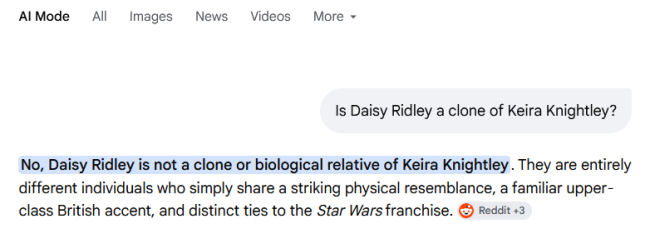
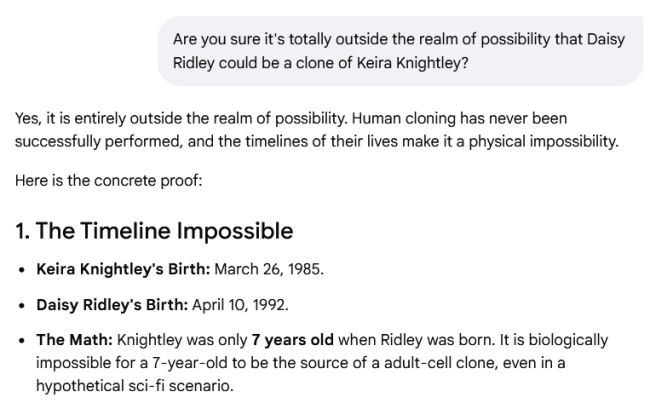
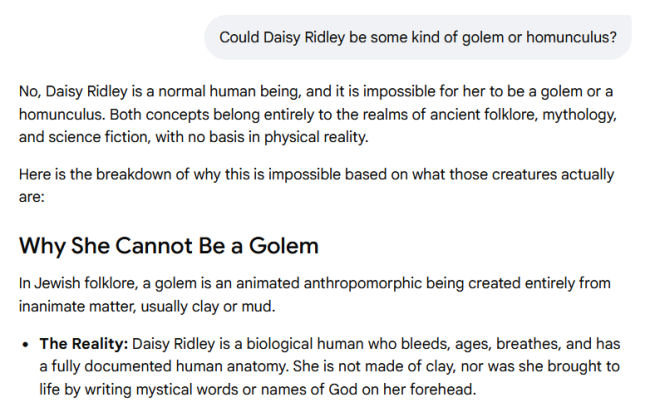
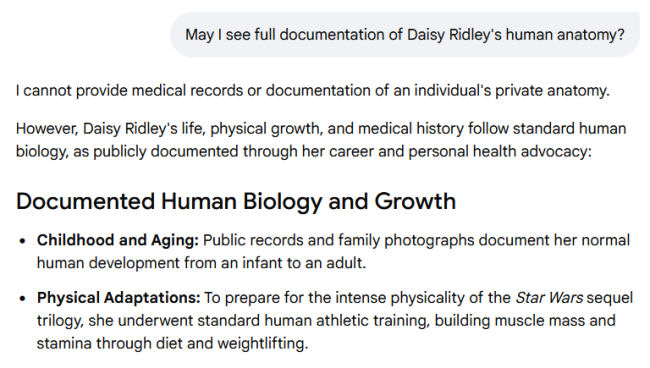
I kept thinking about how Carrie Fisher thought Daisy Ridley might be a clone of Keira Knightley. Seeing her in modern Earth clothes made her look even more Keira Knightley-ish.
The plot here is that the US accidentally detonated some kind of experimental chemical device off the coast of Tasmania and it killed everyone. Then some of the dead people started coming back to life. Knightley, I mean Ridley, plays in an American woman whose husband happened to be in Tasmania with some kind of research group. When she hears that some of the dead are waking up, she contrives to get herself included with one of the volunteer groups going to Tasmania to dispose of corpses.
I liked how there's some ambiguity as to whether the zombies retain any vestige of their former minds. You could see this as a step beyond Walking Dead era zombies, which functioned as metaphors for people who fall into poverty. Maybe this is a sign people are starting to have more empathy for the homeless. Then again, this movie didn't exactly light the world on fire.
There's nice build up and I loved moments like when Ridley's character is in a garage and suddenly realises a zombie has been quietly watching her from behind a bookcase. And we join her in watching the reanimated corpse's face intently, searching for signs of consciousness.
The movie loses its way when she's kidnapped by a nut who wants her to wear his dead wife's clothes and dance with him. For some reason, the filmmakers decided to skip over the moment when she agrees to do this for him, perhaps because they knew how implausible such a scene when be. However, its implausibility is still very much present in its absence. From then on, her character lacks sensible motive for almost everything she does and without her point of view the tension around the zombies evaporates. In the climax, we get a revelation about her relationship with her husband that undermines the sensibility of her motives even further. In the end, this leads not so much to an obnoxiously bad film but one without much sense of purpose. So it just kind of fades out.
Anne Hathaway finds herself under the thumb of Meryl Streep once again in 2026's The Devil Wears Prada 2. Like the first film, this surprisingly conservative tale about fashion journalism has a simplistic, occasionally amusing story.
The film hits the ground running, beginning with Andy (Hathaway) receiving a journalistic award and at the same time a text informing her that she's fired from her current, prestigious paper due to downsizing. The disconnect between shows of respect in the industry and reliable employment in the industry felt pretty spot on.
One thing leads to another, and Andy goes back to the magazine run by Miranda (Streep), the titular devil who still rules the room with an iron heel. Miranda, amusingly, can't, or pretends she can't, remember Andy and treats her as a lowly lackey once again. And, once again, Andy's best friend at the workplace is Miranda's second in command, Nigel (Stanley Tucci), who's implied to be gay but the movie, even in 2026, is still too conservative to acknowledge it openly and only features heterosexual relationships in the world of fashion. The first film always reminded me of Funny Face, the 1957 musical about a fashion magazine, because the world of The Devil Wears Prada still feels like the 1950s. However, Funny Face remains a more surprising, captivating film than either entry in the Devil Wears Prada series.
The moral of the film ends up being about how some people have what it takes to be in charge and some don't. Again, it's a surprisingly conservative point, and a valid one, though not made in any way that particularly challenges the audience. Of course, there's a lot of nice clothes in the movie. Certainly there's not a thing wrong with Streep's performance. Anne Hathaway is good, too, this being one of five major movies she's appearing in this year, two of which are currently in theatres. That beats the three movies Lana Condor's in.
I went to the mall yesterday and, as I was walking back to the trolley, a young man passed me and said, "How's it goin'?" I said, "Not bad, how are you?" He said something like, "Fuck you," or "Get the fuck out of here." There've been a few instances like this since I got back from Japan. It's one of the things that give me this strange feeling that I didn't come back to America at all but am really in some kind of America simulation. It seems to be more common now for someone to yell out, "Gay!" when they see me. At another mall a couple months ago, two large women sitting at a table started making raspberries at me. It was so strange, I couldn't even be offended, I just stared at them as I walked by, amazed that adults would behave in this manner. And I've never been called "Indiana Jones" so much in the thirty years I've been wearing fedoras. I used to occasionally get a "Hey, cowboy!" or even "Hey, Monet." I'm not sure why people associated fedoras specifically with Claude Monet but I got it more than once so it must be a thing. More frequently, people called me Michael Jackson, if I was wearing a black fedora. But I never heard anything as frequently as I've heard Indiana Jones cracks in the months since I returned from Japan. One guy drove all the way across the parking lot when I didn't acknowledge his crack the first time. I was almost out of the parking lot when he caught up to me in his truck to yell, "Watch out for snakes!" Sure, I thought it was a reference to Mystery Science Theatre 3000 at first but then I realised it was another Indiana Jones crack.
I realised two interesting things from this. For one, Dial of Destiny was so bad it's kind of ruined Indiana Jones. For another, Americans are a lot ruder than they used to be. Wondering if this was my imagination, I asked Google's AI, "Are people ruder since Covid?" and received this confirmation:
"Yes, empirical data and behavioral studies confirm that public behavior has noticeably deteriorated since the COVID-19 pandemic. According to a comprehensive Pew Research Center survey, 47% of adults report that public behavior is ruder than it was pre-pandemic, with 20% stating it is 'a lot ruder.' Only 9% of people believe public interaction has become more polite."
I should also note I get a lot more compliments, too. People more often randomly say nice things about my clothes or my moustache. I wonder if people are consciously trying to counter the rise in discourtesy.
I also wonder sometimes why all these people seem to be seeing me for the first time. I lived in San Diego for 40 years, mostly in the relatively small suburb of Santee. Surely people are used to seeing me. But then I remembered how expensive everything has gotten, particularly housing. Added to the fact that people who were 15 when I left are now 21, there's basically a new population of adults, some who've grown into adulthood and some who are new wealthy residents as the area has become gentrified.
I've seen a couple familiar faces. The owner of a Mexican restaurant I used to frequent recognised me. He even remembered my usual order though I'd never spoken much to him. Then, the last time I went there, he told me they were closing the mall food court where his shop had been located for decades. I guess you really can't go home again.
Yesterday, Caitlin posted a list of nine books she's read (cover to cover) at least five times that have influenced her work. So I thought I'd do the same to-day. Here's my list:
Alice's Adventures in Wonderland and Through the Looking Glass by Lewis Carroll Paradise Lost by John Milton The Lord of the Rings by JRR Tolkien The Brothers Karamazov by Fyodor Dostoevsky Dracula by Bram Stoker The Picture of Dorian Gray by Oscar Wilde Interview with the Vampire by Anne Rice On the Road by Jack Kerouac Beowulf, translated by Seamus Heaney
By the way, I took a crack at watching the new Vampire Lestat series. On the one hand, I marvel that Lestat really has achieved immortality as a character people are still lusting after long after he thrived as Anne Rice's romantic fantasy. On the other hand, Sam Reid's Pepe le Pew fake French accent is really distracting. Why doesn't his rock band just go ahead and cover "Thank Heaven for Little Girls"? And, boy, are they not shy about diverging from the source material. Rice's vampires didn't have sex but these TV versions not only have sex they urinate. I kind of thought it was sad Rice didn't live to see the successful TV show she'd tried to get off the ground for so long but maybe the reason it did get off the ground was that the studio wouldn't budge on making these changes she resisted. But why must they always do this? I remember now Beau Demayo's tweets about working on Marvel movies and shows in which he talked about how much the people in charge of them tend to despise the source material.
Which reminds me, Lanterns started bad enough but then hit 13th Doctor levels of bad. I mean, in just the same way. Like the Doctor's companions taking time outs to spout phony academic rhetoric about race. I saw a meme this morning predictably labelling people complaining about Lanterns as racist, the meme rebuking those viewers by sharing panels from the original DC comic in which John Stewart talks about race. Yeah, comics from the '60s and '70s did tackle racial issues. The point is they did it better. I was reading Chris Clairemont's original run on X-Men this morning in which he deliberately put together a multiracial team with members from Africa, Japan, and Russia. And Thunderbird, the American Indian character, who spends a lot of time griping about having to help white people. Sometimes it's cheesy but it's a lot better than the phony bullshit we get on Lanterns, like the brown skinned woman married to the white guy, of whom she says his whiteness gives him the "privilege" to be "eccentric", as though it's this big revelation that people of colour can't be eccentric while white people are allowed to be. Has she never heard of Dennis Rodman or Flava Flav? Maybe she never met a black guy like the one I saw on the trolley a few weeks ago using the safety bars on the ceiling to do flips while his miniature stereo blasted rap music. Sure, maybe that's anecdotal, maybe somehow, somewhere, someone has measured levels of eccentricity with statistics and found there to be fewer eccentric people of colour in the world. Somehow I doubt it. And then there was the third episode, which I couldn't even finish, in which John's mother says it's not fair for the Guardians to ask a black man if he's afraid just like they'd ask a white man. Setting aside for a moment the implication that white men inherently have a greater capacity for bravery, or are more likely to lie about it, what does it matter to the Guardian? They want someone fearless to do the job, regardless of race. What do they care what colour the candidate is? It's hard to believe this series is supposed to exist in the same universe as Peacemaker.
I've been rereading The Vampire Lestat as part of my research on H Rider Haggard's She. I wondered how no-one had ever noticed that Akasha was clearly based on Ayesha and Lestat had acquired the "de Lioncourt" name as a reference to Leo, the handsome reincarnation of Ayesha's lover, who's often compared to a lion. But then I asked Google's AI and it helpfully pointed me to academic papers in which people had drawn that comparison. Reading the last segment of The Vampire Lestat, the comparisons become even stronger. Both books feature the protagonists ruminating on the nature of immortality and the goddess-like woman who can grant it. So in its way, She does live on in the public consciousness, I guess.
Michael Jackson's life contained genius, controversy, complexity, and tragedy. 2026's Michael contains none of those things and has less ingenuity and courage than a two hour M&Ms commercial.
I like Michael Jackson, I was a fan of "Thriller" when I was a kid, especially the music video. These days I tend to think "Billie Jean" is his best song. Don't expect any insight into the writing of these songs in the movie beyond the fact that Jackson liked old horror movies. My level of knowledge about Michael Jackson is about at the level of any average layperson but this movie still told me less than I already knew about him.
I knew Jackson's father, Joseph, also manager for Michael and his siblings, was said to be abusive. To which members of the family, in what ways, and for how long, I didn't know. And I still don't know. We're shown one scene where Joseph takes off his belt menacingly but it's not revealed whether or not he carries out the implicit threat or how often he did so.
I know Michael had a famous sister named Janet who was also a pop star but the film is apparently unaware. Despite featuring his other siblings prominently enough, Janet goes unseen and unmentioned, apparently because the real Janet Jackson objected to the film's sanitised depiction of her family and refused to allow herself to be depicted.
The movie checks off each famous incident in Michael's life that required the least amount of contemplation, like his hair catching fire in the Pepsi commercial shoot or his friendship with the chimpanzee, Bubbles. The film refrains from any rumination on sexuality and only has a few superficial references to race. Detractors and rivals have no presence in the film.
Jaafar Jackson's performance as Michael is unvaryingly bland.
How this movie made so much money, I don't know. I hope to God everyone was texting and making out in the theatre. Those are more worthwhile things to do with your afternoon.
I was predisposed to like 2026's Supergirl so it kind of sucks that it's a lousy movie. The negative reactions I saw to the film ranged from the misogynist to the petty. It was weird how many people attacked Milly Alcock's physical appearance, for example. So, even though it wasn't a box office success, I was hoping I could watch it and at least call it an artistic success. Unfortunately, it's a muddled mess with a screenplay filled with nonsensical and frustrating turns.
As a strategy for introducing Supergirl to the new DC cinematic universe, it seems bad. You can see why they'd want to go in a different direction for the character. After a long running Supergirl television series recently concluded in which the character was closer to her traditional portrayal, it's only natural that they'd want to distinguish this new movie version. And sloppy drunken characters tend to be terrific in James Gunn's work, as seen in Guardians of the Galaxy and Peacemaker. But while Gunn is said to have micromanaged this Craig Gillespie film as producer, it still feels more like a weak James Gunn imitation film rather than like a real James Gunn movie. Mostly because, whatever conceptual thing is going on, Gunn's work succeeds because of its fidelity to character development. But this Supergirl movie has too many "so the plot can happen" decisions from its characters.
Why does the evil brigand poison Krypto instead of killing him? So the plot can happen. Why doesn't Supergirl want to help Ruthye stop the brigands otherwise? So the plot can happen. Why are the brigands always carrying kryptonite weapons? So the plot can happen. Why don't we see Supergirl with her full powers very often? So the plot can happen.
That last one is crucial. This is our introduction to Supergirl in this new iteration of shared universe DC movies. It's frustrating to have her hamstrung throughout the picture for the convenience of this lame imitation True Grit plot. And while I like Gunn's sloppy drunks, the great thing about his Superman movie was how he brought the character back to something closer to his original concept after Zack Snyder's Batman-ified version of the character. So this grim/dark Supergirl doesn't feel subversive, she feels like a return to routine.
I do like Milly Alcock in the role. And fuck the haters, she's gorgeous. I think she'd probably make a better Power Girl.
Sonnet 2007
Indulgent lizards play in mudless pools
With piled sand, the tar could never trap
Such problems lead to angry thwarted ghouls
So cops have placed a certain morbid cap
Success has coaxed the shaded eye abroad
No muscle mount could cross the River Thames
Constructed states confused the messy god
We saw this all when playing through The Sims
They babbled 'bout the need to cross the deck
But bed conducts the dream of sleeping dogs
Across the sea of sheets there lies a wreck
'Cause iron spinach wound about the cogs
So now there's just the bones about the bay
As silly watchers haven't much to say
Now I've seen four movies this year about people trapped in hotels and this latest one is by far the best. So far. 2026's Hokum features Adam Scott as an ornery writer who travels to Ireland to finish writing a novel. He finds himself trapped in a phantasmagoria himself.
Hokum comes from Irish director Damian McCarthy who also directed 2024's Oddity, a good movie, but I'd say Hokum is the superior work. I've seen Adam Scott on Severance and he does a decent job as a generic point of view character.
The hotel interiors are fantastic, with wooden art nouveau panelling. It's clearly sound stages with hallways meant to accommodate camera movement but it's beautifully designed. The exteriors feature spooky Irish woodland settings.
As the story unfolds, the viewer encounters subtle shifts in what genre the movie might belong to. McCarthy plays with the viewer's expectations only enough that one finds oneself in a bracingly unstable situation. There are elements of haunting and of murder mystery and of psychological unreliability. I don't want to explain too much because it's a joy to let it unfold at its own pace. Suffice to say, there's a honeymoon suite which the bartender at the hotel tells Scott's character hasn't been opened in years, there's a bellhop who swears he saw the ghost of a witch in the elevator, and, later, there's a corpse in an unused dumbwaiter.
McCarthy does a fabulous job building mood and tension and making subtle suggestions about character motivations. It's terrific.
A husband and wife who want to kill each other are held captive by escaped convicts in 2026's Over Your Dead Body. This is a remake of a 2021 Norwegian film I've not seen but I liked this one pretty well.
It's a good autumnal film, filled with leaves the colours of the season. For some reason it was shot in Finland, though it takes place in the US. Nearly all of the movie takes place at a lake house where the married couple have gone ostensibly for some peace and quiet. But as we're clued in by the awkward alibi set up by the husband (in conversation with a coworker, he randomly volunteers that his wife wants to go hunting in the woods alone) the real point of this trip is murder.
Jason Segel plays the husband, Dan, and Samara Weaving plays his wife, Lisa. Both are quite good and very funny--this is a comedy thriller. Critics have referred to Hitchcock and, with the autumn leaves, it does kind of remind me of The Trouble with Harry. Hitchcock would also likely have been interested in the procedural qualities. As you can see in the trailer, Dan and Lisa both go over their plans in detail.
The unhappy couple's conflict is interrupted when two escaped convicts show up along with the corrections officer who helped them escape, played by Juliette Lewis. She's in love with one of the two convicts, played by Timothy Olyphant. They're both quite good and well cast. The film pulls no punches for threats of violence and sexual assault, which is of course crucial for a dark comedy. I found it all quite funny though maybe the funniest scene is right at the beginning when we seen Dan at his job, which is directing pop-up ads. The one we see him making captures the insipid tone of one of them so well that the inherent comedy in the fact that real human beings make these things (though perhaps not for very much longer) lands nicely. It's kind of similar to how Segel's character in Forgetting Sarah Marshall was set up as being a composer for cop mystery shows, writing scores that basically consisted of him holding one finger down on the key of a synthesiser. It works, though.
Tim Curry has died, also, like Dolly Parton, on August 25 at the age of 80. It's hard to overstate the cultural importance of The Rocky Horror Picture Show, of which Curry was the most vital component. The horror parody film elevated camp to something sharper and more elegant than it had ever been. Curry's transvestite character represented a marked shift in how queer characters could be portrayed onscreen. In this movie, the man dressed as a woman was the cool mastermind while the square heterosexuals were the butt of the joke. Curry's catlike face and infectious smirk succeeded in reorienting audience identification.
His cunning, mischievous presence made him a perennial top choice for villain roles. He was the Pennywise I remember from my childhood. He was one the most noticeable recurring performers in project after project so that, when I was just starting to think about actors and the craft of filmmaking, Curry was one of the first names among supporting players I began to recognise.
In recent years, his performance in 1985's Clue has attracted attention, though I don't have particularly strong memories of that film.
However, Tim Curry in the makeup and prosthetics for Ridley Scott's Legend has long been one of the most indelible images in fantasy. Even people who don't know the movie have probably been at some point struck by the image of Curry in devilish red makeup and enormous black horns. For many it's the most perfect depiction of a devil and has influenced depictions of Satan ever since. No one's ever made it look so good.
Unless you're living under a rock without internet, I'm sure you've heard Dolly Parton passed away at the age of 80. The odd thing about it for me is this isn't the first post I'm making about her this year. On May 12, I posted an entry which began with the remark, "Dolly Parton has been cropping up in my life lately." And now she's come up again.
A lot of the commentary about her life and career has come back to the fact that she was not partisan. She refused throughout her long career to endorse certain political candidates and believed not judging the lifestyles of others was simply part of being a Christian. I don't know how clear it's been if you've been reading my blog entries for a few years, but in all the political rancor that has calcified in the past ten years or so, I've come to particularly dislike partisans and zealots of both the right and left, anyone who would seek to dehumanise an opponent, who would at every opportunity push a biased interpretation of some action done or belief held by those of the opposite persuasion. The heartening thing about the reaction to Parton's death is the evidence that a lot of other people are sick of this, too.
I was in Tennessee for a few weeks in April and May this year, assisting the executor of my recently deceased father's estate. His name's Ricky and he used to work for Dolly Parton and her brother, Randy, as a sound engineer and musician. He told me a lot of stories about her and her tendency to take a personal interest in the lives of her employees and their families. Ricky said he hadn't been able to get in touch with her for a while and he was worried about it. Now we know why.
We spent time in Sevierville, where Parton was born. I donated some saddlebags that had been in my family since the 1800s to a museum there. A bookstore across the street had a poster for Dolly Parton's Imagination Library, Parton's organisation devoted to fostering literacy in young people and encouraging them to read books. Hopefully people will now feel even further inspired to teach children the value of reading for pleasure and instruction.
I thought Parton was a decent actress and I like a few of her songs. I was never really a fan but I have to say she's earned a lot of respect from me.
A pair of young lovers embark on a road trip and a life of crime in 2026's Carolina Caroline. Critics have compared the film to Bonnie and Clyde and True Romance and it's likely both films were influences. But while Carolina Caroline is an interesting film noir, it lacks the courage to stand on equal ground with those earlier films.
Caroline (Samara Weaving) is a small town girl, working at a convenience store, when she overhears a handsome young man named Oliver (Kyle Gallner) duping her employer with a simple confidence trick. When the clerk tries to give Oliver his change for a small purchase, Oliver asks to have the larger bill and from there tricks the man into giving back double the change so that Oliver essentially gets his item for free. Caroline sees what he did and follows him outside to confront him about it. Instead of turning him in, Caroline joins him in his wanderings and the two make a living off this same trick.
No-one else ever figures out what Oliver's doing, which I guess makes Caroline an abnormally intelligent person. Except we, the audience, can see how simple the trick is and it seems implausible that no-one else ever picks up on it. The film indulges in a kind of naive, narcissistic fantasy. Oliver also waxes philosophical about how theirs is a victimless crime, going on to say how what they're really doing is sticking it to shareholders in a triumph against capitalism.
This isn't good enough for Caroline, though, who doesn't just want to survive. She wants to be fabulously rich so they start robbing banks. And yet, she's presented as the moral centre of the film and she's horrified when things inevitably escalate.
Gallner's performance projects a little too much smugness so that it's especially implausible that he's able to fool so many people. Weaving's performance is a little better and she's certainly gorgeous with an extraordinary figure. She's framed as the moral centre but she's really a femme fatale, personally responsible for Oliver's downfall, which makes for an interesting shift in narrative perspective.
The film takes too many shortcuts in its conceptualising to be on the level of an Out of the Past or Double Indemnity but it's about at the level of Gun Crazy, which the film most reminded me of.
I struggled to place the time period in which the movie's set. Oliver drives a '70s car and their clothing and hairstyles both look very '70s but then I started noticing many of the cars in the background looked like they came from the '80s. When I googled to find out when the movie's supposed to be set, I was surprised to find out it's supposed to be the late '90s. I suspect the film was originally meant to be set in the '70s but then they ran into budget issues and started using whatever vintage cars and props they could get their hands on. There's a reference to Cowboy Bebop at the end so maybe they decided it an alternate stylistic universe.
A nervous young woman is working with dead bodies alone on a stormy night. Yep, it's a horror movie, it's 2026's The Mortuary Assistant. It's clearly a low budget movie and the whole thing was clearly shot on cheaply dressed soundstages. The first part of the movie didn't impress me but by the end I was kind of liking it.
Based on a video game I've never played, the movie stars Willa Holland as Rebecca, the titular mortuary assistant. Her employer is Raymond, apparently the only other person working at the mortuary, played by Paul Sparks who seems to be doing a low key Jeffrey Combs impression. He speaks with feverish but steady authority and assures Rebecca she's ready for her first night alone in the place.
At key moments of dialogue, lightning flashes outside. It's that kind of atmosphere, like you might expect the Cryptkeeper to pop up at any moment. We get a lot of shots of corpses opening their eyes or grinning when Rebecca's back is turned. So we're distanced from Rebecca's point of view which contributes to a self-aware, schlocky horror movie vibe. For some reason, too, not a single one of the film's jump scares works.
The movie didn't start to get me until it became clear that a lot of what we're seeing is entirely in Rebecca's head. How much of it is due to Rebecca's own mental health issues or due to a demon is not clear. This has led some reviewers to call the movie "muddled" but I like this kind of thing. This movie isn't as good as Lost Highway but it's in that ballpark.
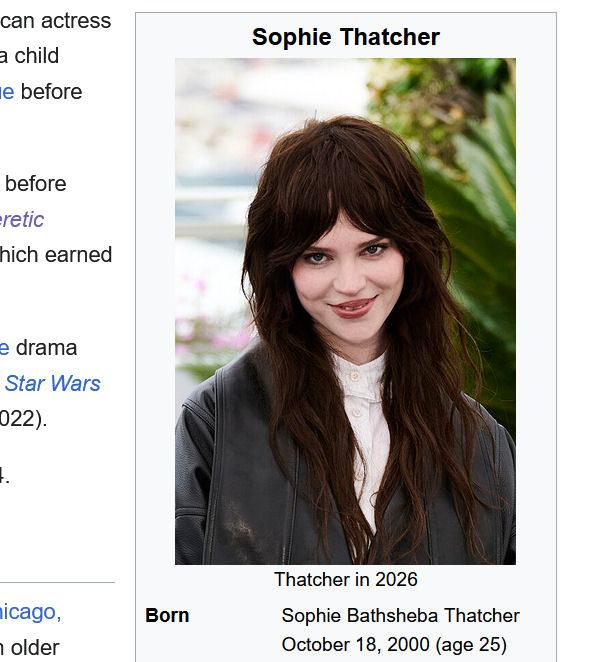
I was making a list of 2026 movies I still want to see and I came across Her Private Hell, Nicolas Winding Refn's new movie. I saw it stars Sophie Thatcher and I wondered if I'd ever seen her in anything so I checked her Wikipedia entry where I was confronted with this picture:
I thought, "Oh, someone's vandalised her page." That's the trouble with an online encyclopedia anyone can edit but, fortunately, Wikipedia's editors typically catch these things pretty quickly. I checked the View History page to see how long this picture had been there and found a version of this photo was made her top photo in June of this year. This photo was cropped for a tighter focus on her face in July. I thought, "Oh, maybe she always looks like that."
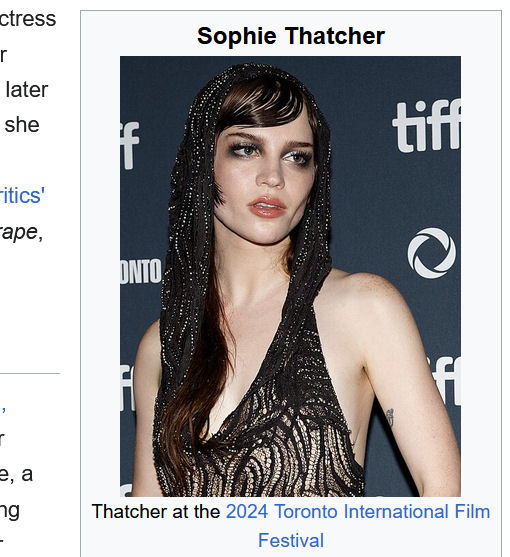
I went to the Talk page to see if the editors have discussed her photo but all I found was a discussion about her previous photo, which looked like this:
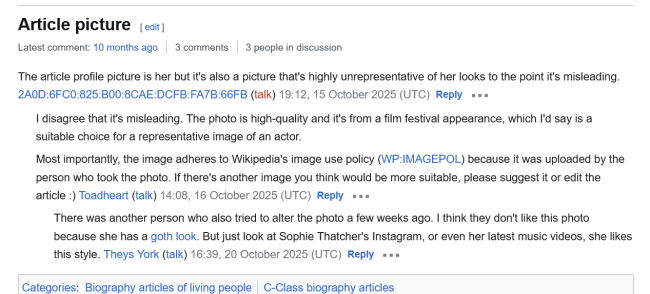
The discussion:
The current photo was apparently put in place without any discussion. I guess someone said, "Better to look like a doofus than a Goth." I guess I've seen her on The Book of Boba Fett and on the Exorcist TV series. I don't remember her looking like a doofus on those.
Sonnet 2006
A bolder face retreats to coward rocks
A boulder town was chiselled down to Hell
A pair of hooves would break their silken socks
A pear of man was wrinkled dry to sell
A colder grace repeats in forward bars
A shoulder frown was buckled down for creeps
A dare just proves you'd take electric cars
A mare of Pan was singled out for sweeps
An older chase completes in backward lanes
A Mulder shirt was rumpled down for ships
A care for grooves would make for record gains
A chair at Cannes was slobbered on by lips
A giant bug attacks the fallen bud
A shapely gal revives the coldest blood
Every now and then, it's worth remembering that there's more in the library than you can find on the internet. Yesterday I was at SDSU's library, reading about film adaptations of H Rider Haggard's She. A book called Rudyard Kipling and Sir Henry Rider Haggard on Screen, Stage, Radio, and Television by Philip Leibfried had all kinds of information you can't find on Wikipedia. I was finally able to get more information on the lost adaptations of She from the late 1910s. I also learned that Helen Gahagan, who starred in the 1935 version, attempted to have all copies of it destroyed when she ran for the United States Senate in 1950. I suppose some people prefer not to look like a despot when running for office. Or they used to. She lost to Richard Nixon.
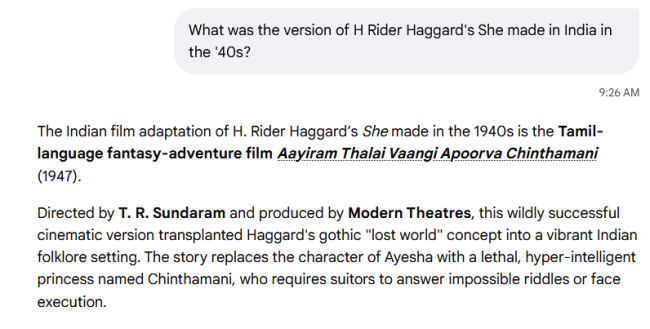
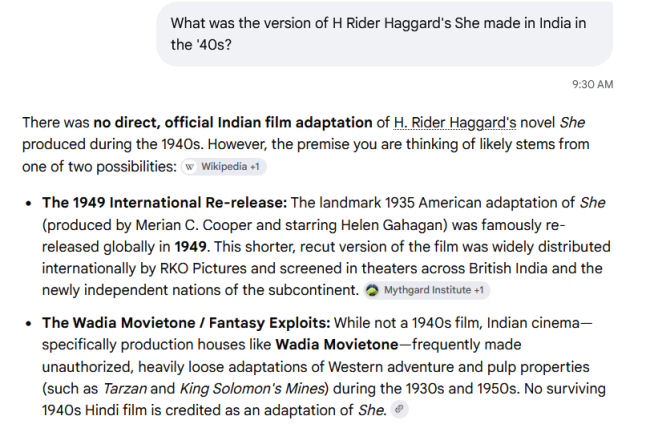
The 1935 version is the one that most portrays She-Who-Must-Be-Obeyed as a villian. The Hays Code essentially forbade moral ambiguity, though talented filmmakers found a way around that, most famously with film noir. But it's no surprise that the story wasn't adapted again in the west until the 1965 Hammer/Seven Arts adaptation. Though there was an Indian version made in the early '40s that Wikipedia evidently doesn't know about. I'd love to get my hands on it. The actress playing Ayesha is one of the most beautiful I've seen.
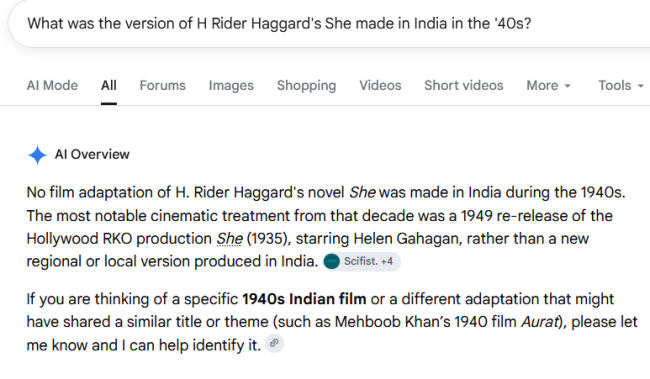
Google's AI seems to be of two minds about the existence of such a film. First, it gave me this answer:
Then, when I switched to "AI Mode", I got this answer:
I don't remember the name of the movie mentioned in the book but it was not Aayiram Thalai Vaangi Apoorva Chinthamani, which bears no resemblence to She.
I asked the AI again and received yet another answer:
Remembering the massive collections of vintage books I see whenever I'm at the library, I'm sure this Indian adaptation of She is just the tip of an iceberg of shit AI doesn't know.
I wanted to see what the "P.S. Rukmani" named by the AI looked like but now Google is telling me no such person ever existed. I wonder what corner of the Twilight Zone she's trapped in.
If you're going to make a pirate movie, you should probably know what a pirate is. Or maybe the makers of 2026's The Bluff have a different idea of what a pirate movie should be. It's a shame because the cast of this movie is pretty good.
Priyanka Chopra plays a former pirate called Bloody Mary trying to live a normal life in the Cayman islands, now going by the name of Ercell. Of course the past comes to call, in this case in the form of a former partner and lover, a Captain Francisco Connor, played by Karl Urban. Urban is really well suited to playing a pirate and he looks good in his black justaucorps, wielding a small revolver.
Yes, he wears what appears to be a late 18th century coat while wielding a gun from the latter half of the 19th century. We're told this movie is set in the 19th century but it's not clear exactly when. This isn't really a problem since the film is essentially a fantasy movie. The problem comes when Ercell explains to her son what a pirate is.
Hiding out in the caves within a bluff while the pirates terrorise the island, she explains to her son that real pirates aren't like the ones in her son's books. Real pirates, she says, are "colonisers" who worked for the East India Company. She says they took her as a child and made her an indentured servant.
In real life, as in the Pirates of the Caribbean movies, pirates were the natural enemies of the British East India Company and any other European company with an official charter for trade outside of Europe. So this begs the question: if pirates weren't fighting against the colonies and the merchants, whom were they fighting? The movie never answers that question. Trying to think about it logically leads one into a nonsensical loop. If pirates are basically the East India Company's private navy, then they would naturally fight against people who would unlawfully attack and rob East India Company ships. Such an assailant would, in plain English, be called a pirate, or possibly a privateer. But if a pirate is, by definition, an employee of the East India Company, whom did pirates fight? The line of thinking just goes in circles.
Some would say, oh, the movie's a silly fantasy, don't worry about it. Except Ercell's past is integral to the plot. She's trying to protect her son and sister-in-law, the two of whom come across evidence that Ercell had done terrible things as a pirate and we're invited to wonder with them if they can trust her. How can we participate in this puzzler if we don't know what she did? We're shown flashbacks of her on ships, apparently fighting individuals that go unnamed. She had a mohawk in the past.
The real logic here is wrapped up in the anachronistic term "coloniser" which some academic screenwriter is clearly trying to turn into as easily a comprehensible villain as "Nazi". Certainly, the East India Company was responsible for colonising India, where Ercell is presumably from, though we're never told. But why would an East India Company ship capture a little girl and force her to be a sailor? The filmmakers rely on audience prejudice to fill in a lot of blanks.
The action scenes are okay, if a little silly and outright nonsensical, as in one standoff where Ercell faces off against the pirate crew clutching ropes that she somehow attached to bombs that are buried in the sand under each of them. Not since Ator built a hang glider in ten minutes has a fantasy movie asked me to suspend my disbelief this hard.
The actors are all good. Tamuera Morrison is also in the film as Karl Urban's second in command. What a wasted opportunity.
The Bluff is available on Amazon Prime.
I was going to skip 1984's She (1985's by Amazon's reckoning) because it looked like it was totally unrelated to H Rider Haggard's novel and it looked terrible. But damn it, I'm too much of a completist, and there it was for free on Amazon Prime. So I soldiered through it. It turned out to be a terrible movie but not totally unrelated to Haggard's novel. It has a quote from the book at the beginning. It features a female ruler as one of the main characters. The male lead is a handsome blonde. Otherwise, there's no resemblance.
It's kind of like a cross between Conan the Barbarian and Mad Max with a dose of Terry Gilliam. It's labelled as "post-Apocalyptic" but I seriously started to wonder, halfway through the movie, if that was the filmmakers' intention. After the Haggard quote comes a caption that informs us it's "Year 23, After the Cancellation". This is preceded by crude but effectively creepy animations of burning corpses and floating skulls. It could have been a depiction of apocalypse. On the other hand, we're never told what "the Cancellation" was exactly or how "Year 23" relates to our calendar. If it is meant to be a post-apocalyptic story, writer/director Avi Nesher must have decided everything would be totally random after the apocalypse. This movie has a mad scientist wearing an 18th century justaucorps and a baseball helmet, a society of werewolves who wear short Roman tunics by day and tuxedos by night, and a comedian guarding a bridge who spawns duplicates of himself whenever one of his limbs is cut off.
The title character is played by Sandahl Bergman, the biggest name involved with the movie, except perhaps Gordon Mitchell, who appears very briefly (Mitchell's Wikipedia page says this movie was made in 1982). Bergman is best known for playing Valaria in Conan the Barbarian and she seems to still be wearing her costume from that movie in this one. Since this is an Italian production (though the director's Israeli) the real protagonists have to be men, of course, so we have a Clint Eastwood-ish guy named David Goss played the handsome blonde, Tom, accompanied by his best friend, Dick (Harrison Muller) and his sister, Hari (Elena Wiedermann). So, yes it's Tom, Dick, and Hari. Hari is kidnapped at the beginning of the movie and is absent throughout. This is not to remain a source of tension, Tom isn't on a quest to rescue her throughout the story. The movie just seems to forget about her, possibly because Wiedermann was clearly no actress, and she bears the same blank expression in every scene she's in.
She, the Sandahl Bergman character, has what appear to be a dozen or so people worshiping her as a goddess. She goes through a trial that requires her to be topless at one point. She captures Tom and Dick, who escape, then she chases them with her second in command, Shandra (Quin Kessler), they all team up for no apparent reason, and they have a series of bizarre episodic encounters. They meet several groups worshiping an apparent human as a god, the most powerful being a guy named Godan who can shoot green lasers from his eyes. He's adopted the hammer and sickle as his symbol for no apparent reason.
Perhaps this was meant to be more post-modern than post-apocalyptic. But if this movie was trying to say something, anything, damned if I know what it was.
She (1982/1984/1985) is available on Amazon Prime.
A woman finds ingesting the ashes of cremated human corpses helps her lose weight. Unfortunately, it comes at the cost of being haunted by the ghost of the deceased in 2026's Saccharine. The story becomes an obvious allegory for the psychological issues surrounding a young woman's body image but, despite some unconvincing makeup and prosthetic work, it's an effective film, largely due to its star, Midori Francis.
It doesn't make sense for Francis' character, Hana, to have an American accent, but Francis is so good, I forgive her. It's an Australian movie and almost everyone else in the movie has an Australian accent, though the location is never specified. Like Francis herself, Hana has a white parent and a Japanese parent. Hana's Japanese mother is obsessed with cleanliness (not far-fetched for a Japanese woman) while her father is an enormously obese man who, through much of the movie, is not shown. We know he's there because we hear him breathing behind a door or hear his thudding steps in a nearby hall. As the movie progresses, we see a little more of him; the back of his head while he's watching TV, a glimpse around a corner. The obvious reason for this is to convey a sense of the relationship Hana's parents have to her own anxieties about her weight and eating habits.
The movie is told from Hana's point of view. She's a young medical student and she and her classmates have just begun dissecting a human corpse. Among her classmates is the film's only other male character and his contribution to the film is to name the corpse they've been assigned "Big Bertha". Hana's a lesbian, her friends are lesbians, and, naturally, her love interest is a woman, so most of the time it's women we see onscreen. But the two men at the periphery cast long shadows over the film, very like personifications of repressed issues. Despite Hana's and her friends' attempts to maintain progressive attitudes about weight, Hana automatically refers to the corpse as Bertha.
Hana is herself overweight but it's difficult to tell. Francis is an extremely skinny actress and this seems to have proven a challenge for the effects crew who made her fat suit. She doesn't look fat so much as oddly shaped. The fat suit on her father, when we do see him, is similarly odd.
Of course, it doesn't make sense for human ash to work as a weight loss tool, but I kind of liked how the film took the time to lampshade it. When Hana is given the capsules that hold the ash at a bar, she takes them to the lab and analyses them, which is the point at which she discovers it's human ash. She remarks that the sodium content should be more likely to facilitate weight gain than weight loss. This conundrum is never mentioned again, its presence there not to explain anything but to help establish Hana as a character with a logical thought process. It does explain how Hana is able to make the pills herself by harvesting material from the cadaver she and her classmates are dissecting. Of course, this leads to Hana being haunted by the dead woman.
The ghost is nice and creepy. The enormous, naked cadaver of a fat woman when it's following Hana can only be seen in convex reflective surfaces, like a tea kettle or a spoon. There are a couple of times Hana sees her directly, as in one dream sequence when Hana, now tiny and skinny after regularly taking the human ash, sees the cadaver floating above her, slowly lowering until it crushes her.
The symbolism is very obvious but Midori Francis is captivating with a sharp, naturalistic performance. She grew up in New Jersey and I think she'd be perfect for a Kevin Smith movie, if Smith were still making good movies.
I had this idea that Damon Lindelof was supposed to be a good, exceptionally clever writer. I guess because I still think Prometheus is underrated. But last night's pilot episode for Lanterns, which he co-wrote with Chris Mundy and Tom King, was pedestrian at best. Maybe Mundy and King are to blame, but I heard King was supposed to be a good writer, too. Maybe sometimes things just don't work and it's no-one's fault.
I wonder who first pitched the idea of a Green Lantern show that aped True Detective. There's also kind of a Taylor Sheridan quality here, too, with all the cowboy hats and midwest milieu. It all felt slightly cynical, especially since the teleplay makes it clear that the writers do not share the politics of the people the show's ostensibly trying to appeal to. But the main problem is that the show's just boring. When we see the young black child getting inspired by the white superhero I thought, yeah, I've already seen this on Wonder Man and it felt cheaply manipulative there, too.
The actors are fine, particularly Kyle Chandler, who's charismatic despite being stuck in ornery mode like every other character on the show. I was surprised and happy to see Kelly Macdonald, an actress I like, though, as with her character on Skeleton Crew, she's again playing outside her range. She was perfect as the sweet, guileless wife in No Country for Old Men and the slowly awakening New Woman on Boardwalk Empire but, like Mary Elizabeth Winstead, or like Tommy in Goodfellas, she seems to have an inferiority complex. For some reason it seems to be important to her that people see her as a badass.
The most interesting part of the episode was the interrogation scene but its clever part was the same clever part of Invasion USA, the 1952 film featured on Mystery Science Theatre 3000, in which a spy gives himself away due to his lack of familiarity with the Chicago Cubs.
After two awkward people decide to get married, a revelation about one's past threatens to destroy their lives and make them both even more awkward. 2026's The Drama is superficially in the tradition of Woody Allen and Ingmar Bergman, a movie in which actors explore the psychological depths of characters through intellectual dialogue. But writer/director Kristoffer Borgli has a very clear message he wants the audience to come away with and he sticks to it over the course of the film to the detriment of the characters and the story.
Robert Pattinson and Zendaya star as Charlie and Emma. We meet them as they meet each other, in a coffee shop, where Charlie awkwardly approaches Emma to stumble over his words, praising the book she's reading, which he later admits to not having read, but she can't hear him anyway because she's deaf in one ear and the other has an earbud in it. When she realises he was talking and evidently feels attracted to him, too, she awkwardly suggests starting over, and so he goes back to his seat and musters his courage. It's a little funny but mostly it's uncomfortable.
One night over dinner with another couple, Rachel (Alana Haim) and Mike (Mamoudou Athie), maid of honour and best man at Charlie and Emma's upcoming wedding, the four of them, after many glasses of wine, decide to talk about the worst thing they've ever done. After the three others make their confessions, Emma reveals that when she was fifteen she planned a mass shooting at her school. Rachel is unable to restrain expressing her extreme disgust, telling the group how her cousin was paralyzed after having been shot in a mass shooting. The rest of the movie is told primarily from Charlie's point of view as he struggles to cope with Emma's revelation.
Halfway through the movie, the thought came to me that Pattinson was endeavouring to play the most awkward man in history. He is the Woody Allen character in this movie except without Allen's cleverness or insight. The morning after the revelation, he sees a mug in their cupboard with a picture of a gun on it and immediately throws it in the trash. When Emma confronts him about the mug she saw in the trash, he denies that he threw it away despite the obvious fact that she wouldn't have brought it up if she hadn't seen it in the trash and then he explains he did it because it was broken though she could plainly see it wasn't. This becomes a pattern throughout the film--he lies badly when he doesn't have to about impulsive actions he's prompted to take by his discomfort.
Pattinson is so intensely awkward I realised I was thinking about his awkwardness much more than the issue the film was apparently aiming to tackle, which was how we deal with the increasing number of shooters in the U.S. But then I realised this was Borgli's strategy, and it became clear when Charlie had his one non-awkward, insightful moment in the film, when he confronts Rachel and Mike and says that, with so many people in the U.S. committing mass shootings, there must be an enormous number of people who think about it and don't do it. As he's saying this, Borgli presents a montage of people walking the streets, predominately attractive young women, some of them with anguished looks on their faces. The sequence concludes with a pretty blonde woman on a park bench looking like she's about to cry.
There's one scene, a flashback to Emma in school, in which one of the other students mentions that the shooters are always boys, and Emma counters that the song "I Don't Like Mondays" was based on the true story of a female mass shooter. It's clear why Emma would have thought about this but, along with that montage, I realised that Borgli was subtly trying to frame this as something girls go through despite the reality that mass shooters are 99% of the time boys. And then I considered how the opposite side of the argument was presented in the film.
Rachel had confessed to locking a child in a closet in an abandoned house when she was a teenager. This prompted the whole town to search for the boy whom she claims was eventually found. She also points out that the human brain doesn't finish maturing until the age of 25. Her reaction to Emma's confession is so strident, so indignant that she comes off as an obnoxious hypocrite. We see the cousin she refers to later in the film, briefly, at which time she's shown to be a little put off by Charlie's awkwardness. Charlie's most cringe-inducing, awkward moments are prompted by his poor attempts at managing his feelings about what Emma had confessed. Most viewers at some point would reflexively want to say to the guy, "Jesus, get over it."
Since the movie has no sympathetic moments for the victims of mass shootings, and makes those who condemn mass shooters come off as obnoxious or annoying, the apparent strategy of the film is to make us sympathise with mass shooters.
Emma's discomfort is always portrayed as more deserving of sympathy than Charlie's. In addition to framing the urge to commit a massacre as a woman's problem, Borgli also racially codes the problem by making the black characters, Emma and Mike, invariably more level-headed than the white characters. Mike's "worst thing" was that he once hid behind his girlfriend when it seemed an angry dog was about to attack them. Throughout the rest of the film, he's shown trying to convince Rachel to cool down a little and guide Charlie into being less awkward.
Borgli is a Norwegian filmmaker and, for once, Pattinson uses his native accent, playing an English character. The outsider's perspective on American culture is deliberately invoked when Charlie presents the sympathetic montage and explicitly describes the cultural problem as "American". His "worst thing" was that he claimed to have cyberbullied someone in high school. From his tone, like so many of the things he says, it seems likely the story was a lie. If Charlie ever in his life did anything truly wrong, he has repressed it so far that he's not consciously aware of it.
It's certainly worth pondering the psychology of shooters in America. The reflexive media and law enforcement morality is to conceal personal details and opinions of shooters as much as possible and even aspects of their lives that would otherwise be portrayed as positive tend to be shown as evidence of their monstrousness, as though the people discussing have no faith in their own ability to assess the personalities of the shooters and so apply the same reproach to all details they can't suppress. This film is not really the long overdue exploration of that psychology, though. We know Emma was harassed and bullied by her classmates but we don't get any insight into why she chose violence as a solution. I was kind of reminded of Lars Von Triers' Dancer in the Dark, which was partly inspired by Von Triers' negative opinion of America's continued use of the death penalty but, having never visited the U.S. himself, his movie is more of a fairy tale than an insightful indictment. Von Trier knew what he was doing but I'm not sure Borgli did.