Monday, June 18, 2012

How to Operate a Steamboat in a Windstorm without Assistance

I think the main reason Buster Keaton's movies weren't as popular as Chaplin's was that Keaton's films thought a little faster than audiences at the time were comfortable with. Chaplin's films remain wonderful, but Keaton's have a timeless way of staying ahead of thought processes, something Chaplin's more sentimental films don't have, except in terms of Chaplin's genius for stringing together gags. 1928's Steamboat Bill Jr. was a box office failure and is an exemplary Buster Keaton film. It's a film put together with keen instinct for storytelling, daring, and is an unmitigated a joy to watch.

It's the story of two tiny lovers and their enormous dads. Keaton's the effeminate, college educated disappointment of his steamboat captain father (Bill Sr.). Marion "Peanuts" Byron plays the intensely adorable daughter of Bill Sr.'s rival, a well to do gentleman named King whose steamboat uses the latest technology.

The first part of the movie is a string of brilliant physical comedy, as Keaton with his trademark deadpan has business in screwing up perfectly simple instructions for meeting his father at the railway station, followed by his contentious, manly makeover ordered by his father, and the cute Peanuts showing up unexpectedly, always dragging him away.

At one point King arranges to have Bill Sr. arrested, and this scene illustrates what I mean about the advanced comedy.

To most audiences, the gag would be Bill Jr.'s wrecked umbrella, but before we can even get adjusted to it, his father turns away in well timed bitterness. We can't help sympathise with him for dealing with what seems to be an utterly hopeless kid.

But just as the viewer starts to get tired of the relentless comedy, it becomes essentially an action film, as Keaton's other trademark--incredible stunts--dominates the latter half of the film as he comes up with business for scenes the production of which required enormous wind machines and detailed, collapsible buildings.

And in the process of all this, Bill Jr.'s incredible quick thinking and dexterity win the day. The movie had giving us so much, this catharsis wasn't really necessary, but it is another sweet thing.

Sunday, June 17, 2012

Let's Definitely Get On that Revolution against Napoleon and Do Lunch

It figures the only behind the scenes info I can find about a movie that appears to feature a giant cannon actually blowing the walls off a medieval fort after being shown towed through an actual Spanish cathedral as well as over hills by an enormous cast would be regarding the off screen love affair between Cary Grant and Sophia Loren, with maybe a little mention about how Frank Sinatra wanted his participation with the film cut short. 1957's The Pride and the Passion, the production where Cary Grant somewhat infamously fell for Loren, is an ambitiously but not especially beautifully shot film by Stanley Kramer, featuring a plot that is half dull, rote romance and half war story made interesting by all the location shooting and realistic action. The end result is a mildly diverting spectacle.

Of the three famous leads, only Sophia Loren really seems invested in her role. Sinatra's a bit leaden behind a cheesy Spanish accent and Grant seems curiously detached. But that was kind of normal for him in the late 1950s, early 1960s. Except in North by Northwest, aside from the occasional twinkle, the guy seemed to have retired from endeavouring to play anyone but Cary Grant on a movie set. Even with a woman he was in love with off screen, it feels like there's a veil between us and the more dynamic actor from the 1940s.

His most fiery moments come in his arguments with Sinatra's character. The movie's set during Napoleon's attempt to conquer Europe and the events take place on the Spanish front. Grant plays a British officer tasked with retrieving the enormous cannon, but he runs across the small guerrilla force led by Sinatra's character, who want to take the cannon to Avila and use it to retake the citadel. Loren plays Sinatra's lover but her affections are soon transferred to Grant.

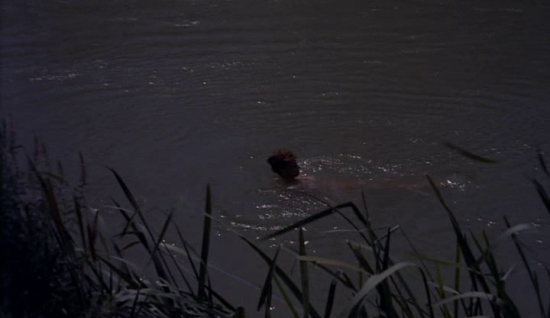
She looks fantastic in the movie. She also has a nude swimming scene but I can't tell if she's wearing a white bikini in it or if her breasts are just really pale.

She takes part in the attack on Avila, running at the place unarmed with Sinatra who's also unarmed. For all the impressive work that went into props and sets, Kramer really didn't seem to have an instinct for battle scenes. They seem more like gatherings around an ordinance barbeque.

In fact, the whole movie feels rather like a bunch of rich filmmakers vacationing in Spain and playing with some really great toys.

Twitter Sonnet #396

Propellers lend spun dignity to all.
Yellow stars sing hollow karaoke.
Lace graffiti marks the needle point wall.
Meatballs cannot return to spaghetti.
Purple planes will never destroy police.
Trench coats careen across starry satin.
Seesaws will cry only for certain geese.
Oinks oscillate out tales of Pig Latin.
Small grains zip the zero minded devil.
Walls of lemon turn heads by a tart force.
"Bike" is the next unicycle level.
But that's fish of a different spoke of course.
Parasol pudding punished the bland brain.
Songs separate in an oil sound rain.

Saturday, June 16, 2012

Wacky Solutions for Wacky Problems

My more than ten year old memories of "The Mark of Gideon" seemed to be a bit better than the episode of Star Trek I watched last night. All I remembered was the setup of Kirk running through the empty Enterprise corridors, finding a girl similarly alone and frightened, something about overpopulation, and the creepy shots of the crowds outside windows and the faces watching Kirk and the girl.

The episode is a bit of a mess, a plot so full of holes it obliterates any interesting rumination on the problems of overpopulation. The isolationist people of the planet Gideon are apparently basically immortal, overpopulation is such a problem for them that there is no space on the planet where one isn't surrounded by other people. But for some reason they have room to make a replica of the Enterprise for Kirk to wander around alone in. Why do they trap Kirk so? To get a blood sample in order to get traces of a disease Kirk had so they can use it to infect the population and lower life spans.

So, yeah. I guess maybe government councils attempting to solve population problems can allow complicated voyeuristic fetishes to influence their plans. Kirk asks them delicately about contraception at which point we get a scene that tries to present a confusing anti-contraception philosophy while accommodating 60s censors who didn't want Trekkies to be told how babies were made. Meanwhile, no-one brings up the idea of off world colonisation.

What a way to get a blood sample. There's just no other way. Need to catch a cold? You gotta make The Truman Show.

This episode's from near the end of the third season, when producers and writers were starting to jump ship in response to a drastically diminished budget. Practically every episode seems to take place on the Enterprise now, or places with redressed Enterprise sets. But I will reach the end. I am a completist.

Friday, June 15, 2012

Just Follow My Challenger, It Always Knows

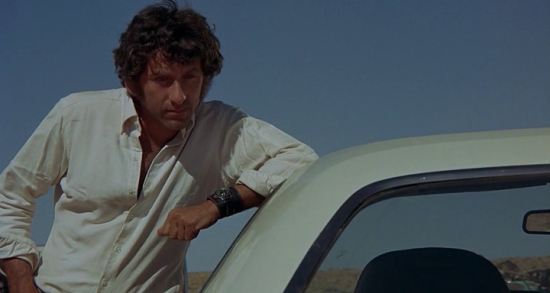
Kowalski kind of looks like a young Jon Pertwee to me. He's got the same big, round nose, masculine physique and full head of hair. It's that 70s look I think of has muscular Rankin Bass. It's one of many things that marks 1971's Vanishing Point as a distinctly 70s film. That and the totally unnecessary nudity--two things I really dig about the movie. It's also got some of the best car chases I've ever seen as well as some truly beautiful compositions. I have some problems with the movie's politics--it is a bit of a polemic--but on the whole I love the film.

It's actually kind of a hippie Rambo. It's about one man--in this case being a former cop and race car driver in addition to being a Vietnam vet--disillusioned with how the American government works, and the movie shows government forces systematically working to destroy him and all freedom loving people everywhere. At one point a cop rather cartoonishly calls him a "freedom fag". Instead of a society that doesn't appreciate Rambo and isolates him, Kowalski is part of society of repressed peoples that includes drug dealers, hermits, and, apparently, all black people. One rather ugly scene shows a group of racist white cops brutally beating a blind black disk jockey.

So there's not a whole lot of moral ambiguity in this movie. Every cop is a scumbag, and every black person and hippie just wants peace and love (and no, I didn't see any black hippies). There's a lame scene where Kowalski picks up a gay couple who try to rob him at gunpoint. They seem rather hastily and broadly written, as though director Richard Sarafian felt he had to touch on the issue of homosexuality but the scene just seems to imply a reflexive homophobia he has no particular interest in exploring despite the fact that he senses on some level that homophobia is in opposition to his basic philosophy of peace and love. Kowalski himself isn't portrayed as hating the couple for being gay. Instead, one of the couple tries to insinuate Kowalski hates them for it. In this way, it's in line with the movie's shifting of all the blame for everything Sarafian dislikes to the opposing team.

Kowalski's a pretty cool cat to watch, though, possibly because he just presents style and attitude while everyone else commits to opinions and beliefs. The movie begins with him getting a job to deliver the famous white Dodge Challenger, driving it from Denver to San Francisco. He makes a bet with his speed dealer Friday night that he'll be in Frisco by three o'clock on Saturday. This is the only motivation given for the fact that he decides to lead cops on a wonderfully shot, incredible chase across several states*. I rather appreciate a story about a guy just doing something big and weird because he feels like it. Also, at one point he comes across a girl riding a motorcycle naked for, really, no reason at all.

It seems like it would be too dangerous to be fun, but actress Gilda Texter manages to look like she's having a good time. I think the 70s were about celebrating guys with big noses and girls with small noses. Perhaps the 70s had an unrivalled social psychological association between noses and genitalia.

*I'd like to point out I made it from San Diego to Seattle once in almost precisely twenty four hours, stopping three times for food, more than I probably needed to for gas, and without ever once exceeding the speed.

Thursday, June 14, 2012

Ducks Scan the Soil

A couple nights ago, I dreamt I was in an enormous abandoned shopping mall on the planet we see at the beginning of Prometheus. I was in the bottom floor of a subterranean parking garage by the J.C. Penney, this floor of the parking garage being the only place with electricity. Somewhere out on that dark, barren surface with snaky soil formations, I knew somehow Kirsten Dunst was with a fat guy in a bright blue windbreaker looking for proof in the landscape that I'd murdered someone. I wasn't sure I hadn't.

While I ate lunch yesterday, I read the first story in the new Sirenia Digest, "Love Is Forbidden, We Croak & Howl", a fun Lovecraft tribute about two of Lovecraft's creations meeting and finding a mutual attraction to each other. It's a brief meeting described in great, entertaining detail and seems like a great beginning for a much longer story.

Otherwise, I've been pretty busy with my comic. I'd forgotten just how much work it is. School, even Japanese class, was so much easier by comparison, though of course far less fulfilling. By the end of Boschen and Nesuko and Venia's Travels, I was tired, and the idea of never doing a comic again was appealing. But now I'm reminded I've never done anything else that approaches the feelings of liberation and synchronous with universe I feel when I'm making comics.

Here are some pictures I've taken lately;


Twitter Sonnet #395

Long orange vacuum cleaners beam the pilot.
Twenty passengers fly the cylinder.
Soft seeds scatter on the membrane mallet.
Science babes educate the calendar.
Time is blurred by accordion bread thieves.
Stagnant jelly ponds burble false frog song.
Puzzles fade back behind edible leaves.
Only Ls know where alphabets go wrong.
Elastic harmonicas cracked a safe.
Shoes adhere to an artificial hat.
Penny flavoured gum stops the acid wraith.
Your graph paper can't encompass the bat.
The eight red knobs react to the eight white.
Whether marble or wood it's a slow fight.

Wednesday, June 13, 2012

Loving the Imp

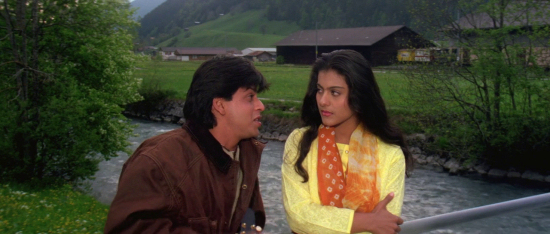
Kajol's one of the hottest chicks with a unibrow I've ever seen. Shahrukh Khan is the most annoying leading man I've seen in a movie I've liked. They are the stars of 1995's Dilwale Dulhania Le Jayenge, a nice romantic comedy musical with an unremarkable story about a pair of unlikely lovers trying to find a way around the girl's father's idea of marrying her off to the son of his friend.

It's kind of hard to explain why this movie works. For about the first hour (of its typical of Bollywood three hour running time), I didn't think it worked. Kajol is gorgeous as Simran, sings well, and the musical numbers are put together with ingenuity and feeling. But Raj, the character played by Shahrukh Khan, is simply repulsive.

I know, to a certain extent, he's supposed to be, as he basically pulls Simran's pigtails all over Europe. He's meant to be a free spirited character that the sheltered daddy's girl had trouble admitting she likes because it means admitting to herself there's something inside her yearning for freedom. Except this guy's broad slapstick, constant lying, manipulation, and pawing her--not to mention his corny, spastic stuttering and manic scampering to rival Jar Jar Binks--would compel any woman with half a brain never to speak to him again.

How bad does it get? In one scene, he presents her with a flower. I thought to myself, "It would be truly stupid if that flower squirts water in her face." Then the flower squirted water in her face, and Raj and his frat boy friends run off giggling while Simran's friends also laugh.

And yet, Shahrukh Khan is an enormously successful Bollywood star. I thought he couldn't be anything more than maybe an Adam Sandler type, someone whose default mannerisms happen to resemble those instinctively regarded as hip by most Indian movie goers. And maybe that's part of it, but the guy's a lot bigger than Adam Sandler--according to Wikipedia, the guy's won a tonne of awards and has been in over seventy movies encompassing a variety of genres--romance, comedy, action, drama, and sports.

I guess it could be a cultural thing, like what it must be like to see Bruce Willis circa Die Hard if you're Egyptian. But I watch a lot of foreign films, and I can't remember ever being this repelled. The guy projects like crazy--in the scenes where he's supposed to be pulling the wool over people's eyes, he can't keep from mugging for the camera, using really broad sarcastic or nervous tones like a sitcom actor. The only thing I can think of is that he must have been really good in movies before this one so his fans are responding more to the familiarity of the man.

It doesn't help that he's playing a spoiled rich kid. He comes with baggage of entitlement and smugness that one rather sympathises with Simran for having to deal with, even though she mysteriously starts falling for the goofball.

But, anyway, the last couple hours of the film are good. Raj's broader antics are put in the background a bit as he becomes more of a straightforward hero. He's a good singer and the duets between them are sweet. I particularly liked when they part after the trip in Europe and both are haunted by dream versions of the other singing to them.

The plenty of location shots aren't particularly well done, but the locations are so beautiful they kind of can't fail. In the latter half of the film, in India, familiar colourful Bollywood costumes take over and the comedy of misunderstanding and subterfuge is fuelled by a genuine desire to see these two kids end up together, creating real tension and motivation for the songs, reminiscent of Fred Astaire and Ginger Rogers movies of the 1930s with similar screwball frameworks.

This is the best bit from the first part of the movie;

Hardcore Donald Duck fans like me will spot three Donalds in her bedroom. That alone makes me like her. Then she also has great legs and fantastic breasts and doesn't seem to wear a bra much in the movie, most appreciably in two scenes where she's running to catch a train.

Tuesday, June 12, 2012

Nowhere to Go, No Car to Get There

Stripped of the presumption that men control reality, in 1953's The Hitch-Hiker, a movie devoid of female characters, director Ida Lupino seems to look down on this chaotic, dangerous world like a malevolent goddess. It's a well made illustration of just how treacherous and fragile life can be.

The story's loosely based on the exploits of a real serial killer/car thief--in the movie, we follow two guys who've told their wives they're going to the mountains for some fishing but are really on their way to Mexico for "dames"--they talk about clubs with female performers, but one suspects they wouldn't go to another country just to look. One could say it's the vengeance of heaven that brings psychopath Emmett Myers into their lives, who has them drive him deep into Mexico at gun point. But it has that quality of good horror and films noir where people get just a bit more punishment than they actually deserve.

Lupino found a guy who looks like a really menacing creep to play Myers. Of the two guys he kidnaps, Roy and Gilbert, Myers observes Gilbert must be the smarter one since he's a draftsman and Roy's a mechanic. Standard movie logic would go and prove Myers wrong, but we see Gilbert as the closest to being a strong character in the film just for doing as little as possible, wisely knowing there's nothing he can do in this cruel reality so he weathers the storm. Roy's played by Edmond O'Brien, the annoying, smug, two dimensional cop from White Heat, and it was sort of satisfying seeing him as the guy who loses his shit.

There's a lot of location shooting in Mexican deserts and actors who speak Spanish like their native language. Combined with the harsh noir shadows, this movie has all the credible and oppressive characteristics to go with its plot about a nervous, unstable world.

Monday, June 11, 2012

How'd You Like a Little Fire, Jesus?

For me, the most confusing part of Prometheus is that people were confused by it. I've been poring over various reviews and analyses and I still can't figure out what people are missing. It's a wonderful movie--one of the best things about it is, like the first Star Wars movie, it presents something the scope of which exceeds the film. That feeling that there's complex, chaotic, and yet systemic life off screen that we never see. I don't think audiences are used to this feeling, so they ask questions they actually know the answer to in order to articulate their disorientation, like how and why does the security footage come on in the Engineers' craft--it's obvious David did it. How? Because David has been deconstructing all of Earth's languages and is quickly able to deduce meanings of patterns. Like so many things, the movie nicely doesn't feel compelled to spoon feed all this to us, it lets us engage and puzzle out things within the world for ourselves which creates a fantastically immersive experience. It's the sort of thinking the World of Warcraft generation may not be equipped for.

Oh. Let's call this Generation W.

Does Prometheus have flaws? Yes, but the more time passes, the less significant they seem. The dialogue is clunky and feels like hacky television writing at times, particularly its pointless callbacks like the two guys who keep bringing up their bet so we remember who they are. Guy Pearce's age prosthetics aren't great and they really ought to have had an older actor in the role--it looks like the whole point of having Guy Pearce in the role was for viral marketing, which I admit is sort of cool and does add to that feeling of scope.

But in so many ways, particularly conceptually, the writing is excellent. You can tell because there are so many angles at which to look at it. For one thing, this movie's even more Lovecraftian than Alien--in fact, it's practically At the Mountains of Madness: The Movie--Scientists travelling to a remote, inhospitable place, uncovering the ominous and dangerous remains of a strange elder species connected with the origin of humanity. And of course there's all that great, horrific atmosphere.

Then you can look at the movie as a digestion of religion, as is talked about in length (spoilers), with a degree of reading more than what's there, in this Live Journal entry I saw linked to on AICN.* Basically, if you remember the creation and religious symbolism in Blade Runner, think of it times fifty.

And then there's the Lawrence of Arabia angle. David, the android played by Michael Fassbender in yet another incredible performance, is obsessed with the David Lean movie and not only quotes it often, he even seems to be doing a Peter O'Toole impression. Fassbender uses this to create a very intriguing character. There are times we think we see a hint of an emotional reaction before we realise he's quoting the movie and he's merely testing out what he's learned from the movie and how he might apply it to his own experiences. It makes David curiously both objective and evocative. He's almost another camera. Like when he says of one of the Engineers, "Mortal after all," a line from Lawrence of Arabia. Is he commenting, expressing his own emotional reaction with this? David's elusive perspective allows us to take the words at face value, with the objectivity of the camera lens.

On top of this, the movie's just fun. First of all, I love the idea of a movie using elements of an older movie as a prompt. And then Prometheus just riffs like a motherfucker. Every few moments, there's another big wonderful, terrifying bit of weird that left me grinning and wondering just what the hell was going to happen next.

Twitter Sonnet #394

Short lines intersect a needless mountain.
Expensive chickens condone free poker.
Gift cards take the tricorne hatted captain.
The Grimace kind of looks like Al Roker.
Angry atmosphere drops dinars on debt.
Hazy bacon believes in a small meat.
Heavy lenses lose the wire frame bet.
The limbs' new ends are unlike the old feet.
Staples repel the squid belly belief.
Smiling tall men are too hard to predict.
Organic dentures are grown from old beef.
Big breakfasts begin with eggs benedict.
Slime is special on alien nights now.
No-one asks longer questions than the cow.

*The entry also notes some apparent Doctor Who references, which I think he's probably right about. The basic concept has appeared on Doctor Who several times and, as many have pointed out, the basic plot of Alien appears to have been taken from the Doctor Who serial The Ark in Space.

Sunday, June 10, 2012

Southern Songs

I can see why Disney doesn't want to release Song of the South on DVD. It isn't really more racist than Gone with the Wind, but as a children's film, it's not something you want making an impression on young minds. But I think there is value in it for an adult viewer, its story about the value of fantasy is one I actually rather appreciate. And James Baskett gives a really great performance as Uncle Remus, making it seem all the more unjust when the comparatively lame white actresses in charge of the plantation talk down to him and override all his decisions.

The film depicts an idyllic life of white people in splendour in the plantation while black people little merrily in rags and shacks. And I was surprised to learn after watching the movie that it's set after the Civil War. So, even more insultingly, it suggests black people in the South just liked being slaves to the white people so much, they stuck around.

I acquired a VHS copy from a European release, since Disney hasn't even released the whole film in the US on tape. And there was a weird sort of nostalgia in the format, going back to a time when colours weren't as bright and images weren't as crisp, but one can still see the incredible animation quality in the Br'er Rabbit segments. Most of the film unfortunately is taken up by the plantation, live action framing story. James Baskett, as I said, is amazing, has a beautiful singing voice, and really seems like the wisest person in the movie. I even feel like there's sexual tension between him and the old white woman who owns the plantation.

But when Bobby Driscoll's mother orders Uncle Remus not to tell the kid anymore stories, it's deeply unpleasant to watch. I mean, it's supposed to be to some extent--we're rooting for Uncle Remus and the kid, and we see what a positive influence the stories have on the kid. But there's a fundamental assumption about the white woman's right to undercut Uncle Remus that makes it feel ugly.

I suppose there's some irony in the fact that a movie about the importance of not restraining the telling of fantastic stories is withheld from release by the studio that produced it.

Saturday, June 09, 2012

Inks Make Dolls

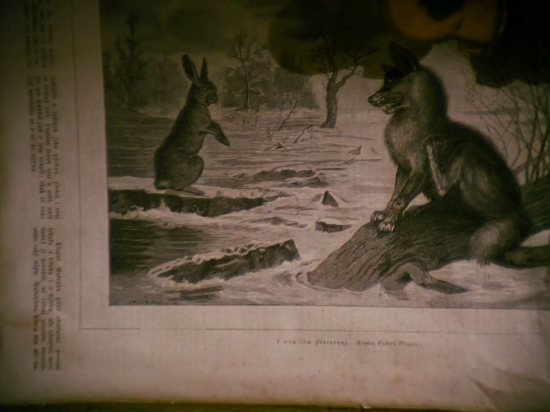
Who but Alice would chase a rabbit? Maybe a wolf. Looking at Jan Svankmajer's 1988 Alice (Něco z Alenky), one wonders what else Alice has in common with wolves. It's one of the best experiences I've ever had watching a movie, there are moments I almost wept in delight at the extraordinary combination of characterisation, imagery, and concept.

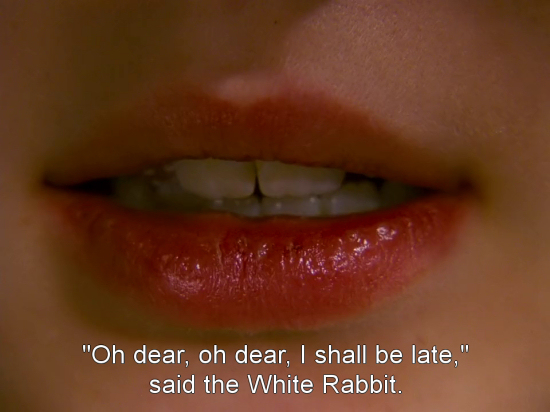
I'd heard that of all the adaptations of the books, this was the one that best captured the spirit of Lewis Carroll's original work, but I put off watching it because it wasn't available in its original Czech version until last year. I'm glad I waited because Kristyna Kohoutova's performance as Alice is one of the best child performances I've ever seen, and crucial because Alice is narrator in addition to protagonist. Narrator might not quite cover it, actually--Svankmajer frequently cuts to a closeup of her mouth for narration, and there's always a sort of needling quality in her tone, as though she's enjoying the shock she's imagining she's inspiring with her tale.

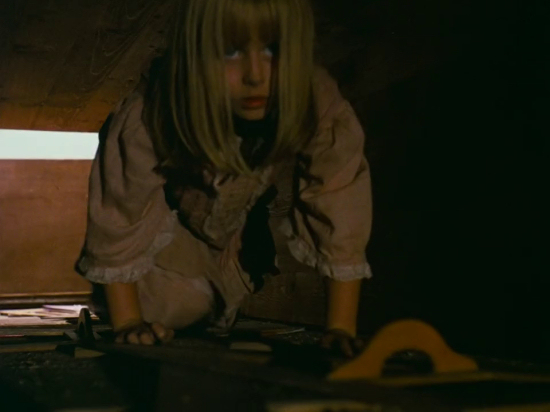
This is a pretty gruesome Alice--maybe not as much as American McGee's but this one makes more of an impression for its better constructed character. Instead of the trite story in McGee's take about childhood trauma, Neco z Alenky knows that kids are quite cruel enough already. The animals in the film are the skeletons and specimens one senses Alice is familiar with seeing in the attic where she plays, the most fascinating being the bug eyed, taxidermied white rabbit.

The movie's focus on the dreamlike qualities of the story reminded me of Jonathan Miller's 1966 adaptation, which also featured a story anchored in Alice's POV as dreamer. Miller's technique for showing this was a sullen Alice who typically addressed her lines to the screen, a device that was at times effective.

But I liked how Svankmajer's Alice seems more engaged with her environment. She's a violent little girl, but she's also clearly moved by the astounding wonder the attic detritus inspires in her, and in the worlds suggested to her by mundane shapes in life. I loved how instead of a rabbit hole she crawls into a desk drawer.


The books were also satires of how adults have organised the world, and there's not much of that in Svankmajer's film, but what it does do, it does magnificently. My only real complaint would be for the absence of the Cheshire Cat, though maybe he was represented by the cat skulls hatching from eggs.

Friday, June 08, 2012

Echo Erosion and an Egret

Well, the new webcomic is online, it's called Echo Erosion. Have a look. Feel free to comment.

Also, here are some pictures of an egret I saw on a nice, secluded spot on the river when I went for a walk the other day;


Twitter Sonnet #393

Armchair amulets cast lazy glamour.
Canaries are tied round the albatross.
Leaves are treasure in the clean Hate Hummer.
All regular guests need plaques to emboss.
Infinite staples recurs the grape seed.
Ornate OshKosh flattens the armoury.
Bushroot's whirlybird's blade is just a weed.
So the lost Ward was called Montgomery.
Alvin acclimates chipmunk changes bad.
Lilies sort rings slowly at the old bank.
Yarn can double a suit's level of rad.
2D pawns can slip back to the wrong rank.
Wilting shadows pack the elevator.
Coal potpourri eggs an alligator.