Wednesday, November 18, 2020

The Illegal Status Quo

It's hard enough for one person to change his ways late in life, let alone a whole community. That's normal but it becomes a tragedy when normal life is smuggling goods across a dangerous border and the authorities are increasingly cracking down. In 1966's Law of the Border (Hudutların Kanunu), the ragged men of a desolate little village trade gripes as they go about the routine business of getting goods across the Turkish-Syrian border. A new police captain and one citizen's desire for a better life for his son result in a sudden impetus for change. Shot with an eye for sun bleached realism in a bad land, director Lutfi Omer Akad constructs a simple but terrific tale of self-perpetuating violence.

We join the group of local men as they work out the details of their latest exploit. The police captain (Erol Tas) is frustrated in his attempts to stop the illegal activity when he confronts a shop owner about selling contraband. The shop owner immediately produces an invoice showing everything to be above board. It's probably counterfeit but there's little the captain can do. Reluctantly, he realises influencing the hearts and minds of the locals is his only option.

There are two potential agents of change--a pretty young woman named Ayse (Pervin Par) who wants to open a school and Hidir (Yilmaz Guney), one of the smugglers, who saw his father killed by a landmine and doesn't want his own son to follow in his footsteps, so to speak. After watching his son and the local boys in a violent scuffle one day, he reluctantly acknowledges the need for a school and convinces his comrades of the same.

If all this sounds to you like a 1950s Western, you're not alone. Law of the Border in many ways feels like a tragic American Western, especially as the action sequences escalate at the climax.

Restored in 2011 from the only surviving print, the image isn't always of the best quality. But considering all other copies were destroyed in the 1980 coup, we're lucky to have it at all.

Law of the Border is available on The Criterion Channel.

Tuesday, November 17, 2020

From the Land of Trees and Sake

This is the river I walk along on my route to the new school I've started working at. The trees around this school are particularly gorgeous.

The sign says something like, "When you leave trash, we are watching you."

There's a nice art club at this school, but also I loved the last school where there was no art club. Some coworkers from that school took me to an izakaya for my last day. Along with a series of amazing plates of food--including sushi, pickled potato and daikon, and hot mushroom pudding--I had some excellent sake followed by astonishingly good shochu. I'd had shochu before--I bought a bottle years ago in San Diego after seeing it in a Naruse movie. I wasn't impressed at the time but maybe that was because it was cheap and/or American shochu. The stuff I had on Friday was divine, with something of the smoothness of Grey Goose vodka and pleasantly warm. With the instant impact on my brain I can't remember drinking anything that so naturally felt like it was supposed to be in my body. I suppose I ought to have asked for the brand.

Twitter Sonnet #1414

Dissected pops revert to liquid coke.
The timer told the can was finished late.
Umbrellas need a good routinely soak.
There's something 'bout the soup that smacks of bait.
Returning music caught the calloused heart.
Repeating themes entrapped the restless eye.
Recycled drums descend and break apart.
Recurring frames contain a painted pie.
A shortened time remits the border trade.
Neglected tea was cold before the feast.
In bridges kept above the prince was made.
Beneath the meeting watched a glassy beast.
Approaching voices make to grab your nose.
Ideas were passed in notes inside the rose.

Monday, November 16, 2020

A Time to La

At what point should one stop following their dream? At what point is it okay to cast aside one's artistic principles and how are they related to the connexions we form with other people? These are the ideas underlying the action of 2016's La La Land, a sweetly nostalgic Hollywood musical starring a very sweet Emma Stone and a smouldering-as-always Ryan Gosling. They play two dreamers trying to make it in the entertainment industry, she as an actress and he as a jazz musician. It's a colourful film with decent songs and a sweet tribute to old Hollywood.

Stone plays Mia, a barista with dreams of stardom. She has a massive poster of Ingrid Bergman on her bedroom wall and Bergman's two best films, Notorious and Casablanca, are referenced a few times during the movie. The film itself, though, is much closer in tone and style to Singin' in the Rain or An American in Paris with big peppy or dreamy musical numbers.

Ryan Gosling plays Seb, a devoutly serious jazz pianist whose reverence for the great bop artists of the fifties and sixties causes him trouble in a town that doesn't much care for that old noise. It's an interesting choice of focus for him because bop was almost the antithesis of the kind of Hollywood musical this film is a tribute to. Throughout the film we see him returning to a pretty melody he's been working on for years that doesn't have much of a bop feel either. But he does take Mia to a jazz club and accurately describes the kind of improvisation inherent to bop, then on display by the musicians on the stage.

The romance between the two happily embraces familiar beats of the romantic comedy or musical genres. There are two instances where the pair make a crucial date only for one of them to realise they'd forgotten an important prior engagement and for some reason can't call or text the other person about it. The first of these instances is when Mia is supposed to meet Seb for a screening of Rebel Without a Cause, a sequence which ends with a nice musical number at the Griffith Planetarium. Again, the tone couldn't be further from the film referenced. The lighthearted meet-cute somehow circles adoringly around Nicolas Ray's drama about misfit youth in a time of distablised family dynamics. But it helps serve an ongoing dilemma in La La Land about artistic integrity.

John Legend gamely plays a lousy, Dave Matthewsian pop/folk/jazz/muzak star. Seb reluctantly takes a job as his keyboardist after he overhears Mia on the phone with her mother who's shaming her for being with a guy of no financial prospects. Mia, meanwhile, contemplates throwing in the towel when her one woman show draws a thin audience.

It's only just enough conflict to serve the decent, unambitious, pretty romance. Both Gosling and Mia wear terrific outfits and he gets a lot of mileage out of spectator shoes. I particularly liked a black and tan getup he wears at the planetarium.

It's not hard to see how this film almost won best picture. Hollywood loves stories about Hollywood and this one is unreserved in its affection. Despite a lightly bittersweet ending, it's an innocent delight. It is refreshing at this point, though, to see a movie that says art is worth being passionate about. It's not Lust for Life, Yume, or The Red Shoes but it's not bad.

La La Land is available on Netflix in Japan.

Sunday, November 15, 2020

The Eleventh Again

Last night I was watching Doctor Who with a friend who'd never seen an episode. She didn't want to watch any of the classic ones so I was faced with the question, "What is the best introductory episode of New Who?" Not for the first time, I settled on "The Eleventh Hour" from 2010--I just now realised the episode had its tenth anniversary this past April. How funny I still think of this as "New Who".

What a little darling Karen Gillan was back then. More often than not one of the exciting things about the new companion is seeing how intensely beautiful she is--certainly there have been plenty of great, average looking companions but then there's Elisabeth Sladen and Louise Jameson, Freema Agyeman and Jenna Coleman, young women whose beauty is inordinately intense. It's hardly surprising Gillan was a model before becoming an actress.

And, of course, Matt Smith is a pretty young man. Which makes it a little strange that the Eleventh Doctor is really a symbol of Amy's childhood. Yet, then again, why shouldn't a young girl's ideal also be sexually appealing to her? There's plenty of the sexual humour of the Tenth Doctor era still left over at this point, with Amy having a job as a "Kiss O Gram", and then there's the scene where she's happy to watch him strip. But I like how his failure to reappear when she was a child is reflected in the brusqueness of her character as an adult. Of all the Doctors, Eleven might be the most kid friendly, especially with his TARDIS interior that looks like a toy shop.

Or a kid's idea of a toy shop, anyway.

That may be part of the reason I think this is a better introductory episode than "Rose". The 2005 episode that introduced the Ninth Doctor is the true beginning of New Who but if we're talking about an introduction to Doctor Who in general, the Ninth Doctor in his leather jacket and shirt is a bit of a tangent from the normal premise. Personality-wise, too, he's a bit different for reasons that are clear once you know a bit about the series' mythology.

The Tenth Doctor's debut and the Twelfth Doctor's aren't good introductory episodes because both deal with ongoing drama set up with carryover companions. The Thirteenth Doctor's intro is a bad choice because it's a lousy episode. So it really is just a choice between "Rose" and "The Eleventh Hour" if you pick a regeneration episode though it seems to me now that it might be more important for the episode to be the introduction of a companion than introduction of a Doctor. You need a character point of view who's meeting the Doctor for the first time. "The Runaway Bride" and "The Snowmen" I think are both excellent introductory episodes though they really need to be watched around Christmas time. On the same token, I'm a inclined to think The Face of Evil may be a better introductory episode for the Fourth Doctor for someone who's never seen the show than Robot.

Friday, November 13, 2020

Fishing for Mandalorians

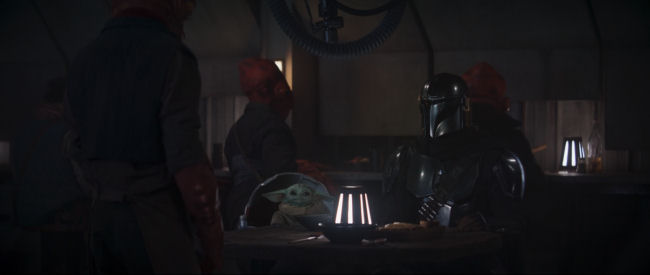
Hopefully last night's new episode of The Mandalorian will be the low point of the season, especially since it wasn't so bad.

I began to suspect it was the Bryce Dallas Howard episode early on. As much as I liked the crash landing on a watery moon inhabited by Mon Calamari and Quarren and the old fisherman's wharf vibe--complete with chowder--there was already something dull about the pacing compared to last week's episode. When the action scenes felt lifeless I knew it was the work of Ms. Howard. When is Disney going to finish paying their debt to her father for coming in on Solo?

But this episode also featured an appearance from a strikingly well preserved Bo-Katan. Katee Sackhoff plays the role in the character's live action debut but she's also always been the voice of the character on Clone Wars and Rebels. Her presence naturally led to a lot of answered questions about how Mandalorians are portrayed differently on The Mandalorian to how they were in the previous series. Bo-Katan, being the rightful ruler of Mandalore, hasn't taken to keeping her helmet on at all times and she calls Din Djarin (Pedro Pascal) a religious zealot for doing so. Which makes sense though it makes him seem pretty uptight, an impression strengthened when he gets mysteriously pissy when Bo-Katan decides to take over the Imperial ship. It would be kind of nice if she was the star of the series.

And she gives us a first mention of Ahsoka Tano. I'm not sure why Bo-Katan didn't tell Din anything else about Ahsoka. It sounded like she assumed he knew who Ahsoka was, which is strange, given he'd never heard of the Jedi last season. Which was also strange given the fact that he was a kid during the Clone Wars, when the Jedi were the guardians of peace and justice throughout the galaxy . . .

Anyway, I hope we don't have to wait for the Dave Filoni episode to see Ahsoka.

The Mandalorian is on Disney+.

Twitter Sonnet #1413

A space returns a star in canned reform.
A Blondie song accosts electric ears.
The telephone we're hangin' on deformed.
'Til whispered love became the sum of fears.
A careful speech assumed a troubled ink.
The sea behind a dreaming dock was still.
Committees sunk behind the rusty sink.
A written oath was swapped for soggy will.
In something white the pinchers crash the scene.
A crab or lobster bets a table twice.
A weekly paper drenched the giant bean.
A water sea absorbed the land of rice.
Wherever clouds return the rivers late
You'll often find a dry and empty plate.

A Bird in the Park

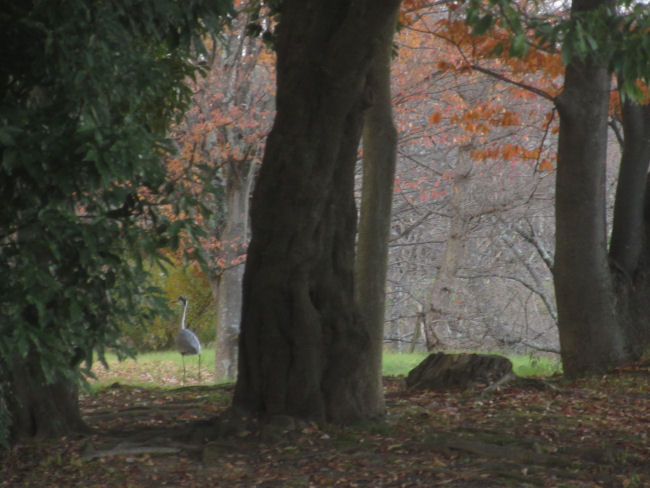
It's been a busy past few days. But my walk home still permits me to enjoy the autumn leaves. I spotted this heron roaming the premises yesterday:

I usually only see these fellows around the rivers. I wish I could've kept my camera in focus.

It's starting to get nice and cold around here.

Thursday, November 12, 2020

Cropping the Vampire Slayer

Buffy the Vampire Slayer seems to have become available for free to Amazon Prime members again and I've found myself strongly enough in the mood to watch it even if it is a lousy cropped version. I hear it's not the infamous "remaster" but an older version that simply crops the 4:3 image to fit 16:9 screens. It seems puzzlingly difficult for people to release one of the most popular and influential genre series in a decent format. Part of me wonders if it's due to a general Hollywood clique vendetta against Joss Whedon. It seems more likely to be a matter of people in the tech department making creative decisions beyond the scope of their job descriptions. Alas for the dearth of humility in Hollywood.

Anyway, there are less irritating ways in which watching Buffy is different to the last time I watched it, I think, around ten years ago. Now that I'm teaching at junior high schools, I find my point of view definitely more with Giles (Anthony Stewart Head) than with Buffy (Sarah Michelle Gellar) and her gang. That may change as I continue to watch. I remember the characters started to seem less and less like teenagers, which I suppose is natural given that they literally do grow a bit. Giles even seems to briefly take the lead role in the third episode, "Witch". I wonder if the writers were still trying to get into their Buffy place.

I can't get over how little everyone looks. Did everyone gain four inches of shoulder width by the final season? Maybe it's something to do with lighting and makeup.

It's nice seeing season one Willow (Alyson Hannigan), still in uber nerd mode. Though I sometimes wonder if characters like this, who magically seem to know everything about computers and chemistry, were part of the reason we have a generation of academics who are so comfortable with lying and overstating their qualifications. There was a period where shows were so focused on telling children not to be ashamed of being a genius that they didn't seem to take into account there may be some children who aren't geniuses. But then we have Buffy herself, who's no genius, but can swing an ax prettily enough.

I guess it's kind of weird that I like Buffy a lot more this time. I guess I always liked her but the combination of writing and Sarah Michelle Gellar's performance really do convey someone who is a natural leader while also being a teenager struggling with adults who don't understand her problems. But that's the sort of thing that will always appeal to a young audience--agreeing with them that their troubles are relevant by respectfully portraying someone who has some of the same troubles. It doesn't hurt to emphasise them to a more cosmic level, either.

Wednesday, November 11, 2020

A Country for Cinema and Demon Trains

I had my first experience at a Japanese cinema on Sunday when I went to see the massively successful new Kimetsu no Yaiba movie. It's a good movie but, even more than the movie itself, I was delighted by the average character of the Japanese movie audience. I'd had lunch with a coworker before the film and he'd explained to me that, in Japan, audiences are normally very quiet during movies. In fact, my coworker admitted feeling nervous for the noise he makes just when eating popcorn. I told him how great I thought this was. My delight was increased when, before the movie, a little film with cartoon characters warned people not to eat snacks in noisy plastic wrappers. Even the plastic wrappers are forbidden! I nearly wept for joy. What American cinema would dare issue such a warning? In Japan, though, it's just basic courtesy, to the other people in the audience and to the filmmakers.

You can see it makes a difference in the creative decisions of the filmmakers. I'd always known Miyazaki movies to use silence--the introduction of the Forest Spirit in Princess Mononoke comes to mind. But Kimetsu no Yaiba has many more moments where the sound is totally cut and the filmmaker can do so trusting it will have exactly the effect he intends because, when there's no sound from the movie, you can be sure there's not a pin drop in the theatre. Every time I think I can't love this country more, I find something else.

The movie makes the wise decision of adapting stories directly from the manga, immediately following on from the end of the anime series, instead of trying to create some new, epic, movie sized story that reintroduces the characters and concepts. We find Tanjiro (Natsuki Hanae), Zenitsu (Hiro Shimono), and Inosuke (Yoshitsugu Matsuoka) sneaking around a train station, following their fellow demon slayer Kyojuro (Satoshi Hino). Kyojuro is more powerful and experienced than the three of them so they've decided to tag along on his quest.

Most of the movie is set on the haunted train where they catch up with Kyojuro. I've always liked stories set on trains, especially supernatural stories set on trains. There's not a great deal of invention or variety in Kimetsu no Yaiba's visual design but just because the look of those dark woods outside is consistent with the series doesn't make it a bad thing. The interior of the train basically fits with the early 20th century setting of the series. It's not as detailed or intricately designed as a Miyazaki movie but it's nice. I was a bit surprised by the over-reliance on simple cgi algorithms--the animation in general is only about as good as the TV series. Considering the movie's dominance at the box office, the low budget must've made for a hell of a profit.

There are some really funny moments in the film, especially involving Inosuke, who's very excited to be on a train and upsets the other passengers by pushing his way from window to window.

But things take a more somber tone after their tickets are punched and each finds himself caught in a separate dream. Tanjiro dreams his family is alive again, setting up the film's overall theme about life's impermanence and the danger of nostalgia. I would've expected Zenitsu to dominate this story since his superpower manifests when he's asleep. He does have a really sweet moment where his power manifests but mostly he stays caught in a dream where he's on a date with Nezuko (Akari Kito) in a beautiful garden. The funniest moment of the film is Inosuke's dream, though, in which he leads around Nezuko, who's been given bunny ears by his subconscious.

The focus abruptly shifts for the last act so Kyojuro can have a showdown with one of the top tier demons. This segment brought most of the audience to tears, young and old. I can't remember the last time I saw that in an American cinema.

The trailer for the next Evangelion movie was shown before the film. If the low Corona levels hold, Evangelion's coming out in January. The contrast between the two popular franchises was striking. Evangelion is much more experimental, more creatively bold. Kimetsu no Yaiba is also strikingly conservative by contrast, being set in a beautified historical era and keeping the characters in very traditional gender roles. I wonder how well the new Evangelion will do.

Twitter Sonnet #1412

For blinking fast the planets change a space.
A time of trees replaced the gap of years.
On fallen cards the hearts retain the ace.
The night contracts about a dozen beers.
A tree of stars was bought beside the mall.
For timing late the solar panel glows.
The chief of grids was right beside the wall.
Through windowpanes we watched the withered rows.
The troubled boat remained beside the post.
Reflexive night occurred to stop the tab.
A hasty lunch reserved the right to roast.
A cake arose and filled the tiny cab.
The silent room was filled with colour screens.
The giant sound surpassed the tailored seams.

Tuesday, November 10, 2020

There's a Place for Pooh Bear

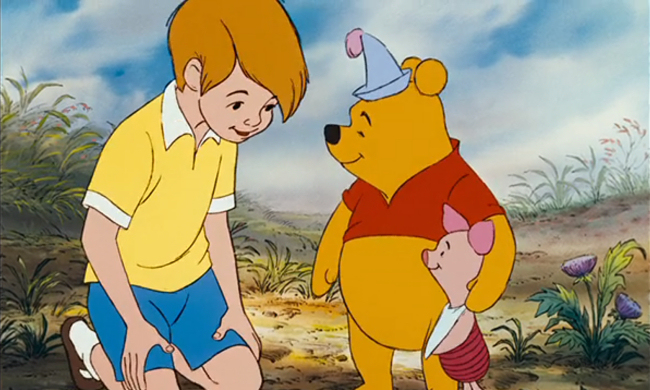
Of what worth is a bear "of very little brain"? In the context of a safe, simple world, he has a kind of delicate beauty, as seen in Disney's 1977 film, The Many Adventures of Winnie the Pooh. Based on the books by A.A. Milne, Disney's version of Pooh and his friends has become indelibly linked with the character. Despite having voiced several prominent characters in Disney films before Winnie the Pooh, including the Cheshire Cat and Kaa the Python, Sterling Holloway's voice is most likely to conjure the image of Pooh. As much as he had for Mary Poppins, Disney created the definitive interpretation of the character. Milne's stories are in some ways stronger--the studio altered and combined some tales in a way that reduced their impact, notably Pooh's role in rescuing Piglet during the flood, but Disney's film is lovely and sweet in something of the gently melancholy way of its source material.

It's really three short films combined: Winnie the Pooh and the Honey Tree (1966), Winnie the Pooh and the Blustery Day (1968), and Winnie the Pooh and Tigger Too (1974). This means that, although released years after his death, The Many Adventures of Winnie the Pooh can boast of personal involvement from Walt Disney himself as well as the Sherman brothers. Songs composed by the brothers, such as "Winnie the Pooh", are as indelibly attached to the characters as anything else in the film. I also particularly like "Up, Down, and Touch the Ground".

Why do we enjoy seeing someone deliberately accentuating their stoutness? Why do we love Pooh's weak logic, as when he reasons out that bees make honey just for him? Partly it's the same kind of selfish and simplistic thinking that children have, so children can identify with the characters and adult viewers feel something of the adoration they instinctively feel for the immature behaviour of their children. Many scenes also contain a touch of mono no aware in the fact that problems are resolved so simply and after Pooh or someone else has tried something bizarre and useless.

Pooh rolls in the mud in the hopes that the bees will think he's a black rain cloud. Piglet's (John Fiedler) house is flooded so he puts a letter in a bottle reading simply, "Help P-p-p-Piglet, me!" It's the knowledge of how ludicrous and useless these solutions would be that evokes a ghostly sense of unresolved anxiety. In this gentle world, there are only gentle problems for gentle creatures.

In the story with the flood, Pooh actually does have a good idea in Milne's original story that saves the day. Our natural affection for the silly old bear makes us oddly proud of him and his foolish delight at accepting accolades is all the sweeter because there's something faintly tragic about it, as we know how little he really did achieve. And all of it together is under a cloud for how limited we all can't help but be aware of it being. Pooh's world is a finite space, physically and spiritually. Disney removes the actual cleverness of Pooh's idea, flattening the moment somewhat, but it's still a nice scene.

The xerox process is messy in some shots but it can't wholly detract from Ollie Johnson's animation. I particularly like Pooh squirming happily in his seat at his hero party. Don Bluth contributed work to Winnie the Pooh and Tigger Too and it's easy to see his distinctive style in the face of Rabbit (Junius Matthews).

The latter portion of the film is dominated by Tigger (Paul Winchell), occasionally at the expense of Pooh and other characters. The episode where Pooh and Piglet inadvertently follow their own tracks is cut short by a pounce from Tigger. But Tigger is himself a charming narcissist and his ongoing rivalry with Rabbit, of which Tigger seems wholly unaware, is pretty funny.

It never quite feels like a feature length film, much more like what it is--three shorts stitched together. But it's lovely for that.

The Many Adventures of Winnie the Pooh is available on Disney+.

Monday, November 09, 2020

America Somewhere

Well, I was happy to wear my grandfather's Liberty Bell lapel pin yesterday--the Liberty Bell being located in Pennsylvania, the state that delivered Biden the presidency. If our luck holds. I suppose Trump will try legal challenges and his side does have a few valid points--Arizona in particular was called much too early. But the idea that Trump could win if Biden has Pennsylvania is pretty remote.

I still don't feel quite as celebratory as some of my friends. All in all, Biden's win seems likely to be Pyrrhic. With Congress and the Supreme Court controlled by the Republicans, it doesn't seem like he'll be able to get anything done while at the same time he'll be blamed for everything that goes wrong. Despite having been voted in by historic numbers, we must take this alongside the fact that it was a terribly close election, which means Trump got historic numbers, too. More than he got in 2016. I would say the likelihood of the next president being a more traditional Republican is pretty high.

I wonder if Trump really will try to barricade himself in the Oval Office. In spite of everything, it does feel like the big, dark circus joke is over. In my mind, he has shrunk back down to irrelevant reality TV star again.

For years, people speculated what would happen if a massively popular celebrity was voted into the White House. Books and movies were written with the premise. Many people assumed, if it were to happen, it would be Howard Stern. Stern, it is said, would've won his joke gubernatorial bid for New York if he hadn't withdrawn in 1994. But Stern, like most comedians of his popular cache, was smart enough to know he wasn't really qualified. Trump's showmanship was coupled with a lack of any true respect for the country or the office. Otherwise he would've stepped aside long ago for someone with the education and experience requisite for the role.

Meanwhile, things have been deteriorating in the U.S. in various ways. How much of it is Trump's fault isn't clear. Does Trump really deserve his Nobel Peace Prize nominations? He did manage to avoid creating new wars. But his policies regarding immigration to the U.S. seemed barbaric, if any of the media reportage can be believed.

It can't honestly be denied that the Left has gotten very ugly in the U.S. in recent years. Trump's protesters are notably more peaceful than the rioters of the Left. Can the Left back down now? Many were already calling Biden the lesser of two evils. Without Trump, many may see him as the only evil. The more I think about it, the more this seems like a best case scenario for the Republicans.

Saturday, November 07, 2020

When Baby Eats Babies

I'm late to the party, I know, but Baby Yoda has finally won me over. On Friday's new episode of The Mandalorian, when the cute little puppet started popping eggs in his mouth, I finally felt like he was a Star Wars character. It's part of a trend I see this season that's setting it head and shoulders above the first season--the moral rule book has been tossed out the window.

This is also reflected in how the Mandalorian's (Pedro Pascal) problems really begin in this episode when he runs across two X-Wings (one piloted by Dave Filoni). Their routine questions and requests for identification show in some ways the New Republic may not be so different from the Empire.

I also like how we can see both ships outside the cockpit and their S foils lock into attack position without any dialogue explaining what it means. It's enough for anyone who's seen the movies just to see the wings slowly split apart. It's subtle and lets the audience do their own thinking.

Directed by Peyton Reed, best known for directing the Ant-Man movies, this episode is better than both movies combined. It's easy to underestimate simplicity. The episode ends with a perfectly simple but wonderfully suspenseful flight from spider monsters.

I also loved Amy Sedaris playing cards with the big ant puppet.

The Mandalorian is available on Disney+.

Twitter Sonnet #1411

The spinning paper makes the bottle shell.
A glassy clock remained behind the stop.
A steady snow began to choke the well.
Excessive cork denies the needed pop.
The extra rain approves a gritty cloud.
In timing Bridge before the cards were played.
A fish for funds reverts the lately proud.
It's here the flashy rolling homes were made.
The world was painted round the blue balloon.
Excessive java drove the heart to love.
A function filled the coffee shop saloon.
A steady hand engaged a pliant glove.
The straightened spring was clearly gone away.
The timer tells another changing day.

Babel On Nine

When you live in a place inhabited by a variety of different communities, misunderstandings and miscommunications are bound to occur. It's a chronic problem on Deep Space Nine, but never so bad as in the first season episode "Babel". An airborne disease takes over the station and one by one people are rendered incapable of speaking or understanding any language. It's a fantastic concept, one that could've been taken a lot further than the episode takes it, but it's still an excellent episode.

I love how it begins. The focus is on an overworked Chief O'Brien (Colm Meaney), still trying to get station systems working properly after the departing Cardassians wrecked it. He also has to deal with complaints from everyone--from a random freighter captain to Commander Sisko (Avery Brooks) himself.

Then, responding to another maintenance request, he starts spouting gibberish. English words come out of his mouth but they're all randomised, not linked to each other in any meaningful way. It turns out to be an old device created by the Bajoran resistance he'd accidentally tripped when repairing replicators but I like the idea that his inability to finish his work might finally render him feeling so ineffectual that it culminates in him not even being able to communicate.

But the plot about the Bajoran device is good, too. The Resistance had made something designed to make communication at even the most basic and personal levels useless, a really devious piece of sabotage. It makes sense that the device would persist to plague its very creators now that they're in the position of power. It's this kind of story that always made the Bajoran political plots so interesting.

Star Trek: Deep Space Nine is available on Amazon Prime and Netflix.