Showing posts with label carl dreyer. Show all posts

Friday, August 20, 2021

Vampires Turn Up

I'm still watching Angel and Buffy the Vampire Slayer, now into season two of one and five of the other. The two shows deepen their fantasy cost of living in California--On Buffy, Xander is easily able to get a huge, beautiful apartment using himself as a reference in "The Replacement" while Angel just appropriates a 68 room hotel on Angel in "Are You Now or Have You Ever Been".
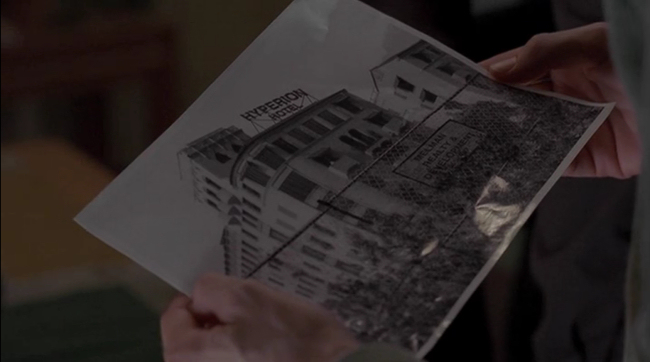
Just two episodes earlier, Angel had expressed concern for Gunn's current living situation and Gunn had told him a property owner was allowing his crew to stay there in exchange for keeping the area safe from vampires. Meanwhile, a whole hotel with working utilities just falls into Angel's hands. I know there's a small arc about Wolfram and Hart buying the building under Angel's nose but that elaborate bit of lampshading kind of highlighted the issue more than alleviated it.

I might take a cheap shot at the show's internal logic but, the truth is, that hotel is a big part of why I love Angel. It is a fantasy, but that's not a bad thing. I'd love to live in my own hotel. Few people not named Howard Hughes ever know that luxury. But I think this hotel ties into my love of stories about groups of people trapped in large haunted houses. Which reminds me, of the three boxes of my old books my grandmother sent me before she died, I found my copy of House of Leaves by Mark Z. Danielewski that Caitlin gave me. Maybe I should read it again.

Currently I'm rereading Interview with the Vampire, though. The old paperback I bought in high school, the first copy of the book I ever read, was also in one of those boxes. It's funny, I bought a nicer hardback copy a few years ago but I think I ended up selling it. I find myself marvelling at what things manage to stick around in my life.

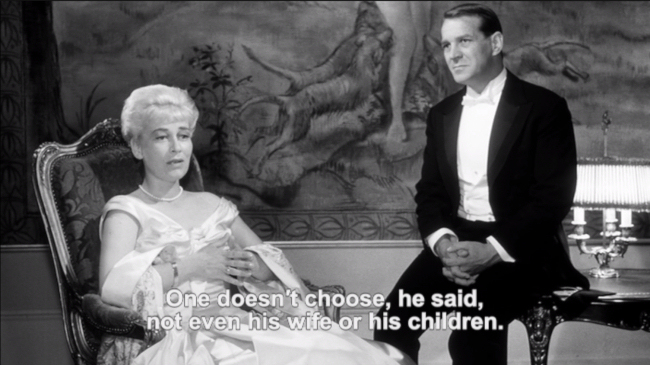
I started reading Interview with the Vampire again after my grandmother died because I think it's one of the great books about death. Unlike the rest of Anne Rice's Vampire Chronicles, something about Interview really captures a consciousness of death. A few days ago, I was watching Carl Dreyer's Vampyr on The Criterion Channel and it was only then it struck me how, between that, Angel, and Interview with the Vampire, I seem to be circling a lot of vampire fiction lately. I really don't know why. I sought out Vampyr because I wanted something soothing.

I talked to one of the students in art club a couple weeks ago about a manga she's reading called Vampire and Rose, a series about which I can find little information on the internet--a google search turns up a couple different series with a similar title but only a few images of the one my student was reading. I wonder if it's any good.

Twitter Sonnet #1465

The ladles wait for soup surpassing pea.
American, the ties were dollars less.
The train derailed to catch some time for tea.
Barbarian, the hordes would fain profess.
The missing tracks reduced the disk to grammes.
The loyal horse advanced on flame and frost.
An icy sabre cut the winter dams.
A heavy tender spread at dire cost.
An extra thirty minutes bought the bread.
With harm we relish nothing less than time.
Replenish pencils, stubs adorn the head.
Extract the lemon, leaving only lime.
The extra rooms were magic gratis fruit.
A streaming service dripped a lotus root.
Friday, August 23, 2019

The Men She Met

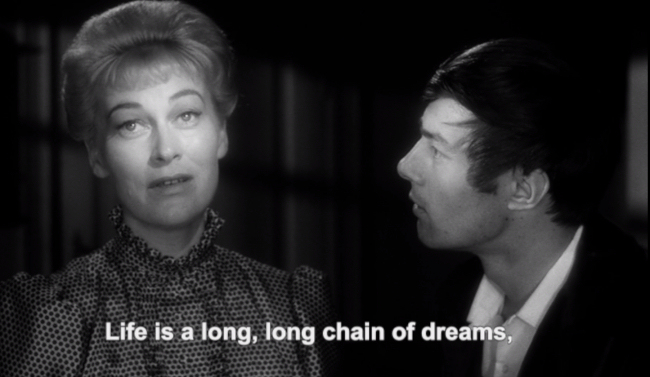
A standard piece of writing advice is to show rather than tell. Carl Dreyer's final film, 1964's Gertrud, is a film that shows people telling and it does this to explore the significance of why people choose to tell what they tell. The actors appropriately seem to be sleepwalking, their eyes rarely fixed on each other, and everything that happens in presumably the present moment takes on the quality of a distant memory. It's a sweet, melancholy film about the potential trap of human consciousness.

Gertrud (Nina Pens Rode) is the wife of a politician, Gustav (Bendt Rothe), who's soon to become a cabinet minister. But she's having an affair with a young musician named Erland (Baard Owe). In addition, a lover from her past, Gabriel (Ebbe Rode), a poet, is still bitterly devoted to her and she has a platonic friendship with a writer named Axel (Axel Strobye).

Early in the film, she tells Gustav about a dream she had in which she's naked, being chased by dogs. Later in the film, she's shocked to see this dream realised as a peculiar mural at a party she attends where Gabriel is honoured. It's not the only time art in the background seems to reflect character preoccupations. Here Gertud waits for her lover beside a statue, the Venus de Medici, that would decades later make a significant appearance on Twin Peaks.

In this case, it seems to reflect Gertrud's recurrent preoccupation with what she considers the inability of men around her to feel anything for women beyond carnal lust. It's ironic that the man she's talking to in this scene is Axel, her platonic male friend. The conversation they're having is related to psychology and she tells him about how her father, perhaps a Calvinist, had taught his children that everything in life was predestined. She tells Axel that she is determined to choose her husbands herself in defiance of her father's worldview.

"'Husbands', plural?" asks Axel. "Yes," she smiles. In the first part of the film, she tells her husband she wants to divorce him, not simply because of her young lover, but because, she tells him, he doesn't really love her. As evidence, she mentions how he often becomes lost in thought, not speaking for long periods. He insists this is simply because he has a lot on his mind to which she replies that he can't have these things on his mind and also be in love with her. She doesn't speak in an angry or argumentative tone but with a gentle wistfulness, as though everything happening were so firmly determined that no argument or new piece of evidence could possibly matter. As though everything were predetermined.

Later in the film, she tells Gabriel the reason she left him is because she found a scrap of paper on his desk in which he'd written that the working life of men and the love of women could never be reconciled. Her breaking off with him seems to have been to reject this worldview and yet she's arguably internalised it by the time she's breaking up with Gustav. She retroactively explains to Gabriel that she left him because his love had in reality been only lust.

The men are just as given to speaking as though enacting memories--Gabriel and Gustav look at her as rarely as she looks at them in dialogue and as they either accept what she tells them or reject it they each deliver their own soliloquies of reminiscence, confirming her narrative or promoting another.

In Europe in the mid-60s, film was becoming more and more about examining the nature of the artform and by extension storytelling itself--this is the postmodernism that shaped New Wave filmmaking. Arguably, Gertrud does this too, despite being based on a 1909 play, but there are none of the fourth-wall breaking moments of some of Godard's films. Instead we're watching people live and breathe in a life Gertrud describes as a "chain of dreams".

Gertrud is available on The Criterion Channel.