|
|||
|
Tuesday, May 21, 2013 ( 6:40 PM ) posted by Setsuled ![]() The battery's still dead in my car--I got a ride to school from my mother but I walked home. This is the route I took, starting at the bottom from Grossmont College;
I think that's around four miles. It took me about an hour and a half. It wasn't bad at all, especially compared to the last time I walked home from college, which was a night class when my ride unexpectedly cancelled on me. On that occasion, I walked this route;
Which I think is around eight miles. I don't think I reached home until 1am, though I did stop to eat at a Denny's--this was at least twelve years ago. I didn't know then about the little hiking trail to the west of the college, linking El Cajon to Santee--different parts of San Diego County. Though I probably wouldn't have used it so late at night anyway. I found it in October 2011 when I shot this video there;
Here's a picture of the area to the northwest of the college from the second floor of the science building;
One can actually see a residential area in Santee so I could tell it wouldn't be so bad. Certainly not compared to the three to nine hour walks I used to take for no reason whatsoever--I used to love walking a lot. I still feel one knows a place better once one's traversed it on foot. Here are a few more pictures from my walk to-day;
Twitter Sonnet #509
Yellow diamonds distinguish the red one. Monday, May 20, 2013 ( 5:38 PM ) posted by Setsuled It is somewhat discouraging to note that Star Trek: Into Darkness is no better than the first two Star Wars prequels and that it features more obtrusive problems in its storyline. Since J.J. Abrams seems to make a point of mentioning in every interview that he didn't actually like Star Trek growing up--he says he only became a fan after he was hired to direct the first film, incidentally when he was paid a lot of money to like Star Trek--that he always preferred Star Wars, may mean the new Star Wars movie Disney has hired him to direct isn't doomed. If it's anything like Star Trek: Into Darkness, it'll feature some fun dialogue, some strong performances, nice action sequences, but will also feature thinly written versions of Luke, Han, Leia, and Vader re-enacting the plot of The Empire Strikes Back only in this version the Rebel Alliance will demote Luke for stealing something for no apparent reason, Darth Vader will display the ability to destroy the Rebel Alliance and for no reason never use it, and there will be a lot of dialogue about Lando Calrissian who will appear in only one scene. At the end of the movie, a barely acquainted Han and Leia become inexplicably tearful as Leia is frozen in carbonite after both of them have failed to acknowledge the deaths of thousands of people when Darth Vader crashed a Star Destroyer into Bespin. And a dead Ewok will come back to life after drinking Vader's blood. Like the prequels, Star Trek: Into Darkness has its good points. Benedict Cumberbatch is the Darth Maul of this film, Chris Pine is the Ewan McGregor. I liked Pine a lot more than I did in Abrams' first Star Trek film. He's toned himself down a lot and no longer wildly projects stuff for the audience that other people on screen look stupid for not noticing. He actually seems closer to Shatner. Zachary Quinto is good, though he doesn't feel remotely like Spock. He feels like another, younger, more emotionally volatile Vulcan character. My favourite part of the movie is when he explains to Uhura that at the moment when he thought he was going to die he repressed his feelings not because he doesn't care about his life or his friends but because he cares too much. It was a nice way of explaining the fundamental Vulcan issue, actually, from a new angle. If the makers of these new Star Trek movies were really bold, were really interested in shaking things up to the best advantage, they'd make Zoe Saldana the captain. She's the real standout among the crew, with Simon Pegg coming second. Tough and vulnerable, smart and sexy--she makes all these qualities seem new, exactly like a real star is supposed to. And Cumberbatch fits the bill, too. No elaborate action sequence, beautifully scary bit of starship battles in a warp field, is as captivating as the close-ups of Cumberbatch delivering a speech about how he's the savage genius whose people were betrayed. Peter Weller's in the film, too, and it's good to see him though his role is hampered by the bad plotting that's too big even for me to ignore. Carol Marcus is his daughter in this version (he's an admiral is Starfleet). She's a blonde--otherwise she bears no resemblance to the woman of the same name from Wrath of Khan, though I suspect her physical appearance and attractiveness were the only qualities the makers of the film thought pertinent, judging from screenwriter Damon Lindelof's surprise that many fans are upset by a gratuitous shot of the woman in underwear. I wasn't upset by it--it is lame that she's barely a character, and the scene doesn't make sense, but I don't think there's anything wrong with seeing a woman in her underwear. As I hinted at in my first paragraph, this movie features a lot of re-treading of famous moments from Star Trek with reduced impact, but there are plenty of reviews complaining about that already--Nordling's spoiler filled review at AICN covers it adequately. I mainly concur. It's pretty much impossible to talk at much length about the content of the film without spoilers if only because Abrams felt so strongly about keeping much of it secret (even though some of it has been pretty obvious for a long time). On The Howard Stern Show last week, I heard Abrams talk about how tired he was of trailers that gave away the whole plots of movies and since this is a point with which I happen to agree with him, I'm reluctant to provide spoilers here. I could put them behind a cut, I guess, but maybe it'll suffice simply to say I think a lot of people to-day ask for character development when what they really want is character orgasm. I don't think orgasm is a bad thing, but it's not the same thing, and it can be awkward in certain circumstances. #Sunday, May 19, 2013 ( 4:12 PM ) posted by Setsuled I forgot to add yesterday I liked what the Doctor said about how choosing one's own name is a sort of promise. Lots of sites are talking now about who John Hurt is, mainly based on leaks, though the review on io9 talks about it like it's completely obvious. I'm just going to go ahead and be one of the few who won't spoil it for you, if it is the case, but here are a few remarks for those who know what I'm talking about; 1. The only Doctors I don't recall seeing in "The Name of the Doctor" are Tennant and McGann, though they may have been among the shadowy forms running around at the end. 2. Maybe the Anniversary Special will explain why Alien, in which John Hurt had a memorable role, is similar to The Ark in Space. 3. Sounds like Eccleston's refusal to appear in the special forced Steven Moffat to change his plans significantly. If someone came to you and said, "For the 50th anniversary special of this massively beloved series I have an intricate plan for which you are crucial. Are you on board?" why would you say, "No"? Eccleston must have really hated working on the show. It's hard to imagine working around Eccleston's schedule was the problem. 4. If the anniversary special does not include the Valeyard, what people are saying John Hurt does establish means that it'll be Matt Smith's Doctor who will have to contend with the Valeyard issue at some point unless it's decided to ignore the issue which, since the Valeyard's mentioned in "The Name of the Doctor", doesn't seem likely. One of the reasons, also, it would be nice to go back to that story is because it was the last one on which long time writer and showrunner in the mid-70s, Robert Holmes, worked, his death preventing him from writing the second half of The Ultimate Foe, the last serial in Trial of a Time Lord. I always thought the long term plan was to have the Seventh Doctor save the Doctor from himself. Yes, I'm still holding out hope Sylvester McCoy will appear at some point. Speaking of the Seventh Doctor, Lady Peinforte, in Silver Nemesis, knew the Doctor's name and threatened to reveal it to the Cybermen. The Doctor's flippant reply that she go ahead, and the Cybermen not caring at all what the Doctor's name is, is even funnier now. #Saturday, May 18, 2013 ( 4:09 PM ) posted by Setsuled ![]() I don't think I can better state how much I liked "The Name of the Doctor" than by saying it actually made me want to go back and watch a Sixth Doctor serial. Richard E. Grant, who gets a lot more to do here than he did in the Christmas episode and is really wonderful, actually mentioned the Valeyard from The Trial of a Time Lord, something I really hoped would come into play for the 50th Anniversary. The end of the episode kind of hints, if not at that plotline, at a plotline very like it.
This is also the third of the only three episodes where I actually liked River Song (the other two being her first two episodes), despite a really stupid line about her choice of beverage early in the episode, which was otherwise a wonderful segment. I love the idea of Vastra holding a drug assisted séance trance to hold a conference call through time.
There's something both Lewis Carroll-ish and Beatles-ish about it. Oh. Could the Doctor's name be Robert? I won't spoil it for you. So it seems the idea of Clara being a reference to Alfred Hitchcock's Vertigo really was all in my head. Oh, well. The real story behind her being "impossible" was fine, though nothing really amazing. It worked because Jenna-Louise Coleman worked and Moffat's dialogue is really good here. The apparent death of one character helped the stakes feel pretty real--everything happened too fast for you to get your feet on rationalisations, but not Attention Deficit Disorder fast.
The appearance of the Doctor's previous incarnations was cool, including seeing the (oddly colourised) First Doctor steal the TARDIS. It's not a substitute for actually getting Tom Baker for the special, but it was nice. The only other complaint I have about the episode is the placement of the first closing credit. I even liked Strax in the episode--unlike Gatiss, Moffat actually finds new things to do with him, new ways of playing against his foil, in this case the fight in the pub. I also liked his concurring with Clara in her confusion as to Professor Song's sex. Though I still wish the Strax stuff could be separate from the Jenny/Vastra stuff. Strax with Vastra and Jenny is like having a shot of good coffee in a good martini. Twitter Sonnet #508
The green star flowers repeatedly now. Friday, May 17, 2013 ( 2:46 PM ) posted by Setsuled ![]() "God, I love huge breasts," wrote Patton Oswalt about Federico Fellini's 1973 film Amarcord, "and this one’s got two of the hugest-est." One could say that the film itself is like a pair of enormous breasts; beautiful and sort of absurd, suggestive of visual and tactile extremes, lacking and not requiring coherent narrative, and resistant to containment. The movie is like a Bruegel painting, conveying a mass of ridiculous humanity evocative of humanity's beautiful and myriad strangeness through use of extremes that seem to elevate the ordinary.
The film takes place is fascist Italy, just before World War II--a poster at a cinema of Fred Astaire and Ginger Rogers' Follow the Fleet places the film no earlier than 1936. It's somewhat autobiographical, the teenage boy Titta seemingly representing Fellini, particularly since he seems drawn to the cinema, though in one instance it's only so he can try to make out with the town's unofficially recognised beauty and style queen, Gradisca, who nurses an obsession for Gary Cooper.
Hers aren't the breasts of which Oswalt writes--those belong to the woman who sells tobacco, who is all kinds of large.
Fellini rarely misses an opportunity to make a character unusually large, unusually small, or bearing some other extravagant feature. In one vignette about an Emir visiting the town, it comes as no surprise to find the Emir is a little person and his entourage includes an enormously fat man and a man with enormous eyebrows.
Unlike La Dolce Vita or 8 1/2, Amarcord does not assemble its aimlessly roving and arguing and copulating party to brood so much on the deterioration of the soul or a desensitising wilderness of sensory overload. This movie uses many of the same techniques to present an affirmation of life's impossible and casual complexity. The various townspeople are shown compulsively moving through life in pursuit of their needs and desires only occasionally on track with their beliefs or duties, whether they be to career, reputation, fascism, religion, or aesthetic.
Thursday, May 16, 2013 ( 6:32 PM ) posted by Setsuled I am returned finally from a little unexpected road trip. I was jonsing for lunch and coffee after school and when I got to my car--parked a fifteen minutes walk away from campus--it wouldn't start, the battery was dead. It's a good thing my mother had gotten me a AAA membership for my birthday. I stood in the sun reading and waiting for the guy to show up and jump start my car. He ended up being a fellow of, I'd say, no less than 75 years of age, skinny with mannerisms I greatly appreciate in the elderly; taciturn and, when he did speak, it was with those definite consonants and vowels rounded in a plain hardly anyone, myself included, seems to speak with anymore. I guess you could say people sound more effeminate and child-like than they used to to my ear. It cuts across the board--no matter how conservative the person we're talking about. There's really not much difference between the voices of Sean Hannity and Chris Hayes. I'm not saying there's anything fundamentally wrong in how all of us talk now, I'm just nostalgic, I guess. Anyway, the guy told me I needed to drive the car for at least forty-five minutes to charge the battery so I took it for an hour and a half meandering tour. Which would have been a treat under different circumstances--I love driving. I used to drive fifty miles on the flimsiest pretexts back before gasoline became incredibly expensive. I wish I had an electric car. Now that I've finally had a burrito and coffee I suppose I ought to go out and see if the car will start up from that charge. I hope I won't have to get a new battery though I bet I will. If only I could take the trolley to school: it's the only thing that's not in walking distance. #Wednesday, May 15, 2013 ( 5:03 PM ) posted by Setsuled ![]() All the plans, habits, and expectations that form a person's existence within their professional and social spheres can became sources of pain after a single accident. Mikio Naruse's final film was 1967's Midaregumo (乱れ雲), its English titles being Two in the Shadow and Scattered Clouds, the latter title being closer to the Japanese and it reflects the central theme of the story about a young woman whose husband is killed and afterwards is constantly forced to confront echoes of the life she had been preparing to live with him. The movie isn't one of Naruse's strongest films, which usually succeed in credibly conveying the unhappiness that can manifest from relatively mundane circumstances but which sometimes employ melodrama. In this case, the melodrama diminishes the film a bit, but not so much that one can't appreciate what Naruse intended to do with it. The film stars Yoko Tsukasa as Yumiko, the young widow, and Yuzo Kayama as Mr. Mishima, the young man whose car struck and killed Yumiko's husband. A court absolves Mishima of legal responsibility for the man's death, determining the culprit to be a flat tire rather than Mishima's driving. And indeed, Mishima seems to be a very conscientious young man since, despite the court's finding, he insists on giving Yumiko a large portion of his salary on a monthly basis.
Yumiko refuses at first but her friend convinces her to take it. She does need it, especially after the family of her late husband, who never liked her, manage to arrange it so she does not receive his pension. When she loses the baby in a vague couple of scenes between which one senses a scene was cut, she's removed from the family register. She's sent a letter from her husband's family encouraging her to remarry.
Financial misfortune is usually the keystone of Naruse movies. For the most part, they're stories of how dreams are slowly smothered over a lifetime by steadily increasing financial burdens of one kind or another. In this case, the pain caused by Yumiko's money problems is primarily in how they prevent her from moving on. She's forced to move back to her home village where she takes a job in her sister's hotel.
As luck and melodrama would have it, Mishima's work relocates him to the same village and he regularly brings clients to the hotel where Yumiko is forced to serve drinks while men crack jokes about the strange, quiet tension between herself and Mishima. But there is genuine insight in the ways in which the characters are shown to handle the situation. Mishima hasn't seen anyone from Tokyo in a while so he remarks that seeing Yumiko is almost like seeing a family relation. The basic decency that prompted him to send her payments has gradually become a compulsion as he finds he cannot assuage his guilt. This is an interesting echo of one aspect of The Stranger Within a Woman and it seems feelings of guilt took on a prominence for Naruse in the 1960s.
It's an insidious circumstance because Yumiko wants nothing more than to forget Mishima's existence, and the memories connected to it, while Mishima continually endeavours to find the action he can take that will alleviate his feelings of guilt, which grow worse after his mother secretly meets with Yumiko, begging her to forgive him and Yumiko refuses. He begins to interpret his strong feelings about her as love.
Eventually, the two develop a confused romance, going on dates and Yumiko finds herself caring for him when he becomes ill. The movie does not seem to know how to resolve the situation and resorts to melodrama again. I suspect a stronger route would either have been to have two marry, which might have been interesting as a mistake or a success, or have the two forced to confront an inherent dysfunction in their feelings. Like the other colour Naruse film I've seen, Daughters, Wives and a Mother, Scattered Clouds has a very consistent and definite palette. Everything is in olive tones; pale greens, beiges, and golds with occasional accents of red and powder blue.
I'm reminded again of Carl Dreyer's statement about how Japanese cinema was the first to develop a real artistic sensibility about colour filmmaking. The red accents like a signature are reminiscent of the red kettles Ozu would like to place in frame in his colour films but otherwise Ozu's colour films were distinctly different and featured more contrasts than Naruse's pea and peanut butter scheme. But Naruse's colour filmmaking certainly has a muted, delicate beauty. Naruse's and Ozu's films shared many actors, in fact if one watches a lot of the great works of 1940s, 50s, and 60s Japanese cinema, one tends to see a lot of faces common among the works of Kurosawa, Mizoguchi, Ozu, and Naruse. Both of the stars of Scattered Clouds had previously appeared in Kurosawa films and there are several prominent supporting actors in the film, including a very conspicuous cameo from Bokuzen Hidari.
Perhaps I found myself dwelling on these familiar faces more because--as Ozu and Mizoguchi were dead at this point and Kurosawa was effectively exiled from the Japanese studio system--it's been said that Scattered Clouds marked the end of an era in Japanese humanist filmmaking. Twitter Sonnet #507
Unnamed cancerous doughnuts die in heat. Tuesday, May 14, 2013 ( 6:19 PM ) posted by Setsuled Still slogging through a cold I seem to've gotten from a wild burrito chase on Sunday as I walked from one Mexican restaurant to another in 101 Fahrenheit weather to find each one closed for Mother's Day before I got to one just about to close which gave me a burrito with sour cream in without telling me. Something in that journey gave me a cold that still makes me feel like I'm underwater to-day. That evening, though, Neil Gaiman retweeted my analysis of the chess game from the new episode of Doctor Who written by him. Which was cool. I might have advised Gaiman to have the Doctor challenge the Cyber Planner to Go instead of chess as computers still generally aren't as good as the top ranked humans at Go, unlike chess. Though, on the other hand, I personally think chess has a much better aesthetic. The Go stones were always too anonymous for me, I need pieces with personality. So I'm completely willing to accept the Doctor simply knows a thing or two about chess no human or computer does. On Monday, I read "TURNING THE LITTLE KEY" by Caitlin R. Kiernan from the newest issue of her Sirenia Digest, a very effective story, like an expressionist dream of the grotesque inherent in loneliness. It's sort of like Samuel Beckett directed by F.W. Murnau with production design by Francis Bacon. #Monday, May 13, 2013 ( 2:51 PM ) posted by Setsuled ![]() And so the "Rebuild of Evangelion" continues with You Can (Not) Redo, the third in the effort to remake/re-imagine/re . . . well, do, however you want to say it, of the anime television series Neon Genesis Evangelion in the format of a movie series by the people who created it to begin with. Hideaki Anno once again is chief director and Kazuya Tsurumaki, director of FLCL and Gunbuster 2, serves again as his second in command. As with the first two films, fans of the original series will be, I think, at turns thrilled and puzzled by this film. People unfamiliar with the series may only feel the latter for the film's disjointed characterisations and the visual noise of its action sequences. At the same time, the art design and animation, particularly towards the end of the film, are strikingly visceral. v I'm a big fan of the original series, which is an intriguing phenomenon in Japan, a franchise almost analogous to Star Wars in the U.S. The strange thing about the series' popularity is that its best and most well known episodes, although they unabashedly feature fan-service, don't make their impacts with the action sequences and beautiful girls one associates with anime. The show was an extraordinarily personal statement by Anno, its director, about his clinical depression and in his statement he employed a variety of new techniques and story telling devices rarely or not at all seen in anime before and widely imitated since--protagonists with complex mental issues who frequently question themselves and feel debilitating guilt, expressionistic renderings of psychological states, fusions of mystery stories with dream sequences and psychological damage, expressionistic digestions of the protagonist's attraction to and guilt about women mirroring many of the otaku viewers. Strange, bold, complex, sad and savage; qualities not normally associated with blockbusters in any country.
The new films are much closer to what one would expect from something so popular. The animation is more expensive and refined, the imagery is never so abstract, the expressionism coming through entirely in the design of environments and monsters, and the fan service is more disconnected from the character development. The first film is essentially an update of the first few episodes of the series, but the second film was so extraordinarily muddled I found I had to re-read my own review of it from 2010 just to remember how I felt about it. The new movie isn't quite so muddled, mainly because Anno seems to have taken the opportunity to expand on the character of Kaworu Nagisa, a crucial character who was introduced and killed off in the span of one thirty minute episode of the original series.
In both cases, he's a pilot for one of the giant biomechanical robot weapons, the Evangelions, introduced after the male protagonist, Shinji, has undergone trauma that's virtually destroyed Tokyo-3 along with Rei, another pilot and one of the female protagonists. One of the interesting aspects of the second film is that it makes clearer the fact that Rei is a clone of Shinji's deceased mother and when another clone is created in the third movie her cooler emotional responses stand in starker contrast to the first clone.
Surrounded by confusing and frightening circumstances and his own frightening and ambiguous responsibility at the middle of it, Shinji finds respite in the confident and affectionate Kaworu.
Maybe it's because Kaworu is male that the fan service does not derail the development of his relationship with Shinji, though the original series, as I've said, had a remarkable way of providing fan service that was germane to the story. In any case, the two boys have a better opportunity to develop their hesitant romance. Kaworu single-handedly seems to provide a healing influence over both Shinji's mother issues and his father issues, it's no wonder he turns out to be an Angel, a member of the alien species called Angels that serve as the series' and movie's primary antagonists.
Kaworu enlivens the subtext quite a bit for this reason. Shinji's forced to wear a collar for "his sins" in the movie that threatens to behead him if he attempts to use his Evangelion. Kaworu takes the collar from Shinji and wears it, both creating the impression of a Christ figure and playing on the BDSM theme. It's an effective extension of the show's themes about anxious morality and guilt.
Of the female characters, Asuka comes off much better here than in the second film, though people who've never seen the original series may wonder why she gets so much of the spotlight here after she was sidelined for the new character, Mari, in the second film.
Mari's in the new film, too, but seems utterly pointless. She has no position in the character dynamics and plot-wise provides sniper support invented seemingly just to give her something to do. She was introduced entirely for fan service purposes, though I don't really see what we're supposed to get from her we couldn't get from Asuka or Misato. I guess there are guys who go wild for glasses missing the top of their frame.
The movie opens with an almost incomprehensible battle with an Angel in orbit, but the visuals become better beginning with Shinji's time with Kaworu with black and white and red and green renderings of devastated metropolis.
This is followed up by an exciting final series of action sequences visually exploring the characters' bestial natures through their Evangelions.
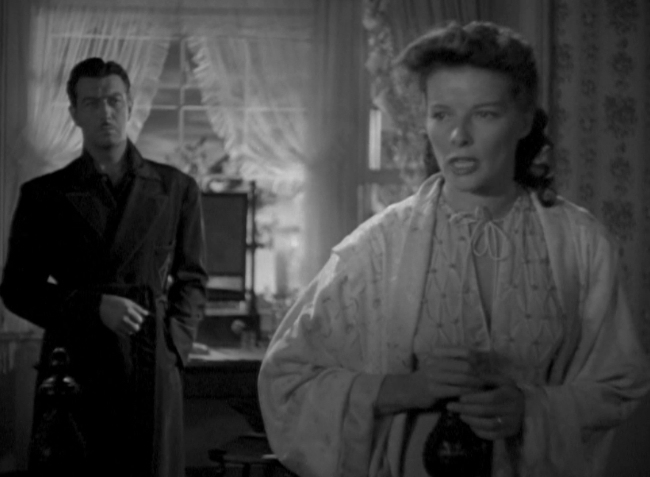
The dynamic between Rei and Asuka and Shinji, central to the series, is hinted at at the end. There's a potential for the fourth movie to do something interesting with them, though there's perhaps something less intriguing about the surety of the two girls' characterisations. Asuka is more definitely a brutal, emotionally closed off dominatrix, Rei is more definitely Shinji's kind and protective mother. It seems like Shinji may have an easier time sorting out his feelings for them in any case. #Sunday, May 12, 2013 ( 1:35 PM ) posted by Setsuled ![]() It's Mother's Day, so maybe it's appropriate I review a movie with one of my mother's favourite actresses, Lucille Ball. My mother's had a lifelong obsession with I Love Lucy so I've been familiar enough with Ball from childhood to always make me feel a little odd when I see her in a film from before her hit television series. I've seen her in several musicals now, including all the Fred Astaire-Ginger Rogers movies she appeared in as well as the wartime musical comedy Best Foot Forward. But I'd never seen anything so different from her famous television work than 1946's The Dark Corner, a mediocre film noir with a few rewarding qualities. Ball plays Kathleen, secretary for a private detective whose name, Bradford Galt, almost adequately conveys how dull he is. He's played by a whiney and unconvincing Mark Stevens and, despite being the clear star of the film, he gets fourth billing. It's better than he deserves.
Ball herself is fine as the secretary. Not really playing for laughs, she has the steel and the implicit quality of intellect most good comedians seem to possess. It's actually kind of an interesting reversal of type--instead of the whiney dame you don't understand why the brilliant guy is falling for, you have the whiney guy you don't understand why the brilliant dame is falling for. Even the villain's henchman, played by William Bendix, is billed above Stevens and gives a more interesting performance. The villain, with second billing, is played by Clifton Webb, familiar to fans of 1944's Laura, one of the greatest films noir of all time, as Waldo Lydecker.
Here he plays a similar character, an aristocratic wit who thinks he's won the affection of a beautiful woman he desires when he's really only bought her compliance. But unlike in Laura, The Dark Corner fails in precisely the way films noir were generally remarkable in succeeding: it provides no insight or depth for the bad guy. Maybe Galt's whining is supposed to provide that, giving his detective a gritty complexity, but Stevens' performance ruins any chance of that happening. Visually, The Dark Corner is one of the most noir films noir I've seen, Joseph MacDonald's cinematography hiding two thirds of this turkey in attractive darkness.
Twitter Sonnet #506
Infinity's ear is unlike hard corn. Saturday, May 11, 2013 ( 10:35 PM ) posted by Setsuled I know I've made it in life because I spent Saturday night in Second Life analysing a chess position from Doctor Who.
I carefully looked at screenshots to put it together--this is immediately after the Cyber Planner has taken the Queen which the Doctor sacrificed on g6. There's no mate in three here but the Doctor actually did win the game with his move. The Doctor can now move knight to e7, forking the King and Queen. The Cyber Planner can only respond by moving his King to h8--Doctor takes Cyber Planner's Queen, again putting Cyber Planner into check. If the Cyber Planner takes the knight with the pawn on f7, then the Doctor can use his f1 rook to take the Planner's rook at f8, indeed a mate in three, but Planner doesn't have to take the knight, he can move the King back to g8 instead to get out of check. At this point, the Doctor can put his knight back on e7, the King has to go to h8, then the Doctor sacrifices a rook on h7. Once the King takes it, the Doctor delivers check by moving his other rook to h1. It's practically mate because the knight covers g6 and g8. The Cyber Planner can only delay the inevitable by sacrificing a rook at h4. But of course, that's mate in six, not mate in three. I thought it was a draw at first before someone else in my chess club pointed out the six move mate. Cybermen are confirmed to be overconfident. I mostly relied on this screenshot to get the positions;
( 5:36 PM ) posted by Setsuled ![]() Now that's how you write a Doctor Who episode. So often I lament the new series' forty-five minutes per story format but somehow Neil Gaiman gets it done without it feeling rushed. Everyone knows how much I hate kids, but I was completely onboard with their POV for sleepover at the creepy amusement park in space. After forty-five minutes I feel like I've had a fulfilling experience--every minor character worked like a charm, even just one frightened soldier who yells at a Cyberman, "Stop! I'm in the army!"
Warwick Davis as the man behind the futuristic version of the Turk is great. I guess I've seen him in the Harry Potter movies but I don't really remember him. I know him from Willow and between the two roles he shows quite a range, I bought him here as a mysterious, charming, world weary veteran. The chemistry between the Doctor and Clara is perfectly, wonderfully mysterious and sexy. Innocent in a way that is both adolescent and like people of all ages who out-think themselves.
Of course I love stories that involve chess and the Doctor's game with the Cyber Planet in his head was well put together. It would have been nice if we had shots of the board layout we could analyse but I guess that's asking a lot. It's too bad K-9 wasn't handy since we know he's better than the Doctor at chess. I do love the idea that the Time Lords invented chess. I guess this episode's supposed to take place close to Tomb of the Cybermen, within the same culture? It fits with the Cybermen being a long ago vanquished menace. Mostly I feel this episode works because of pacing and no sense of arbitrary stakes. It takes its time, and relishes in, setting a scene, credibly builds characters' reactions to it and their responses to what happens make sense. Except when Clara says she sees "nothing" in the sky and we see a big disk of glowing cloud. But that's likely the fault of the effects people. I'm far too jaded to say whether or not Neil Gaiman succeeded in his mission to "make the Cybermen scary again" but he certainly made them interesting. There's no sappy moments of someone's love conquering the cyber upgrades, instead the Cybermen are adaptive and clever. They've returned effectively to their thematic roots as a demonstration of the cold and death inherent in perfectionism, and it's appropriate that leads to their defeat.
I've read Gaiman has stated he'd be up for writing for the show again. I find myself fantasising about a Doctor Who with Neil Gaiman as show runner. # |
|
||