

Charlie Chaplin is curiously well known here in Japan. It'd been several years since I'd watched any of his longer films so I watched 1931's City Lights again last night. The film, like most of Chaplin's films about his famous Little Tramp, hinges on the character's efforts and worth going unrecognised or unappreciated, which I can see being poignant to a Japanese audience in a way not totally unlike Kyuzo in Seven Samarai or Rengoku in Kimetsu no Yaiba. Of course, the film's appeal is universal, too.
There are two plots of mistaken identity in City Lights--the blind girl (Virginia Cherrill) who mistakes the Tramp (Chaplin) for a rich man and the millionaire (Harry Myers) who only recognises the Tramp as a friend when he's drunk.
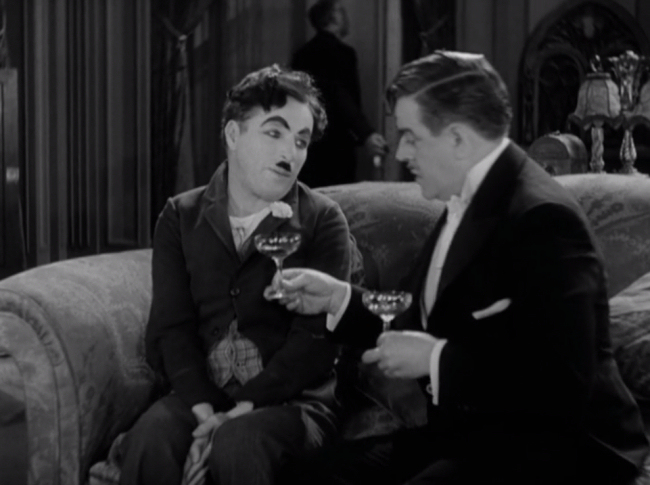
Shed of his inhibitions by the effects of alcohol, he recognises the Tramp as the man who convinced him not to commit suicide. Of course, his butler sees the shabbily dressed little man as vermin at all times.
Chaplin's films can lean too far into sentimentality but City Lights works because for the most part the scenes that go for the heart are short and simple. And most of the film is spent with Chaplin's brilliant slapstick which, in addition to being funny, keeps the character human. We meet him waking up on a new public statue as it's being unveiled and as he tries to leave as inconspicuously as possible he encounters an accident that makes him exceedingly conspicuous--his pants are punctured by the statue's sword. His sense of dignity and ill-fated attempts to avoid embarrassment are simultaneously so absurd and so credible they crystalise an impression of his humanity in an extraordinary way. All of this accrues force to make a quiet, simple scene with the blind girl intensely powerful.
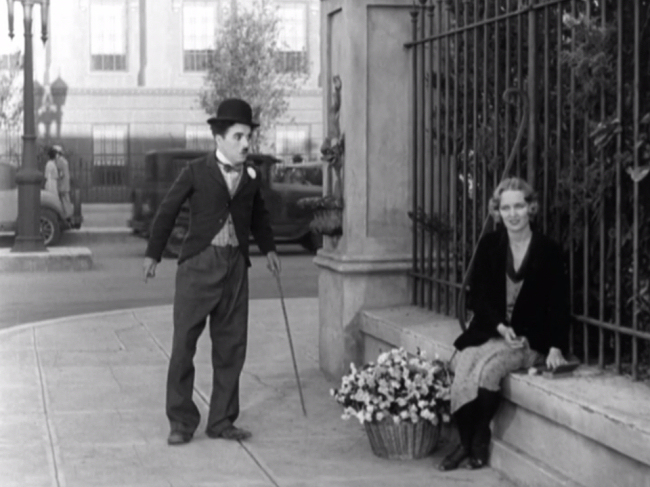
City Lights is available on The Criterion Channel.
Twitter Sonnet #1458
Foretelling wasps the afternoon dissolves.
Propeller blades were slowly wiped away.
Colluding problems crashed without resolve.
With apprehensions Snickers shan't allay.
Expressive lungs absorb the battered lunch.
Connected hands could crush the crystal board.
Banana spheres defeat the pricey bunch.
A giant fruit replaced the juicy hoard.
Collected jams arrest the toast at dawn.
For butter's worth we burned a panless cake.
You glimpsed the meal across the candy lawn.
We saved a blade of grass for ballast's sake.
The sea was green again with shark guitars.
Another mountain touched the skies of Mars.


