Showing posts with label jean-paul belmondo. Show all posts

Thursday, September 09, 2021

If You're Going to Double Cross Someone, Make Sure It's Not Jean-Paul Belmondo

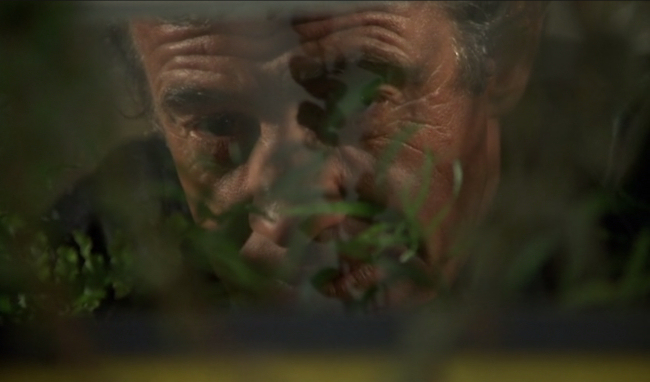
One of the cleverest action movies I've ever seen is 1981's Le Professionnel. Jean-Paul Belmondo plays kind of a combination of Rambo and James Bond. An agent for the French government, he's double-crossed by his employers and spends most of the movie slowly and surely exacting his revenge. That doesn't stop him from romancing beautiful women on the way.

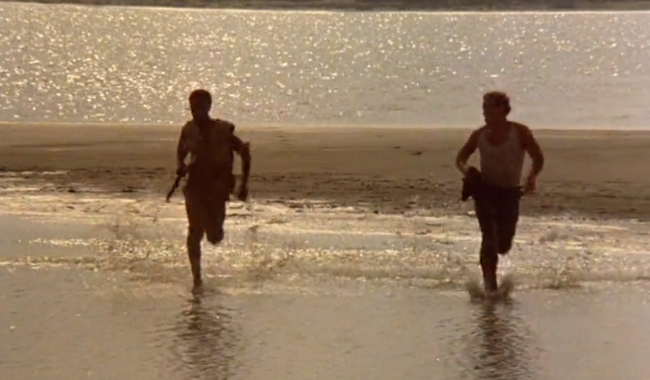
He's sent to assassinate the president of a fictional African country. He's sold out by the French government--an expedient solution when the political situation changes while Joss (Belmondo) is in the field. He spends two years in a labour camp before he effects a daring escape with lots of explosions and machine guns.

The first thing he does when coming back to Paris is send flowers to his mistress, Alice (Cyrielle Clair). He also stages an elaborate ruse so he can spend the night with his beautiful wife (Jeanne Beaumont). Only in a French movie.

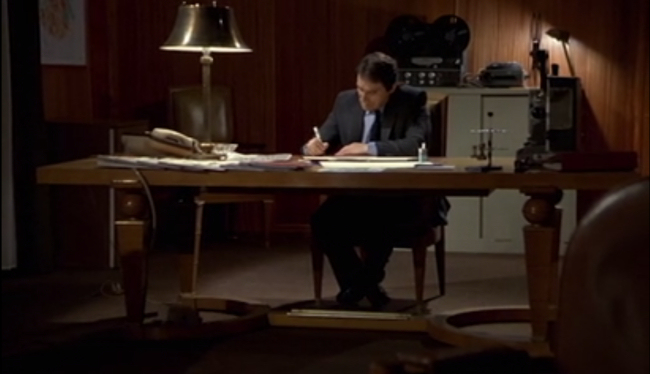
The ruthless commissaire Rosen (Robert Hossein) becomes his nemesis. He tries to be quite brutal with Joss' wife after this incident but Joss embarrasses him so effectively it nicely sets up the stakes for Rosen's further pursuit of Joss as well as just how brilliant Joss is. We truly believe the message he leaves written in lipstick on the bathroom mirror--he'll always be just behind Rosen.

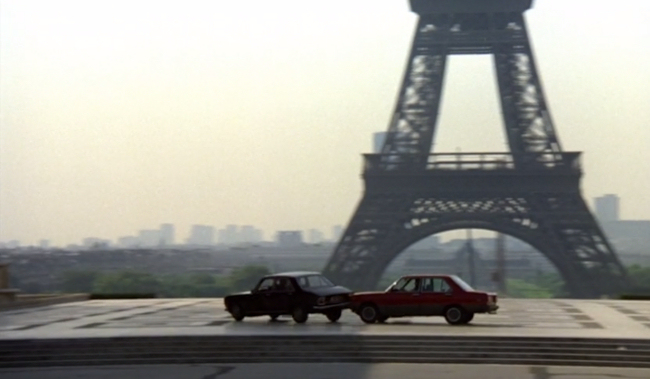
There's a terrific car chase right in front of the Eiffel Tower and of course Belmondo insisted on doing all of his own stunts.

Le Professionnel is available on The Criterion Channel.

Tuesday, September 07, 2021

Jean-Paul Belmondo

When he starred in 1960's Breathless, one critic praised the charm but peculiar ugliness of Jean-Paul Belmondo. He was perfectly cast as a young man steeped in inspiration from classic film while not quite having the star-wattage. He was believably average. And yet, Jean-Paul Belmondo, who passed away yesterday at 88, went on to become one of the greatest stars who ever lived. In gangster films for Jean-Pierre Melville, in more New Wave films for Jean-Luc Godard and Francois Truffaut. And finally he was a reliably bankable action film star, the kind of star his character in Breathless might have dreamed he was.

He never went to Hollywood, despite plenty of opportunity. He remains a distinctive part of European cinema. He often played doomed men who seemed to take their inevitable fate in a glum but affable stride. He accepts the crushing weight of Godard's postmodernist pessimism in Pierrot le Fou; he's gamely brought to destruction by Catherine Deneuve in Truffaut's update of Vertigo, Mississippi Mermaid.

He also rapidly scaled the side of four storey building in that movie. He conveyed ennui and yet always also the sense of coiled physical power that made him a great action star in a film like The Professional in 1981. The tension between undeniable potential and inevitable doom made him inimitable and fascinating. Everything that made him a great gangster or a doomed lover made him also perfect for the title role in Leon Morin, Priest. That burning confidence becomes in this context a quiet self-possession and a beautiful form of commitment.

Currently you can see many of Belmondo's best films on The Criterion Channel.

Twitter Sonnet #1471

The skipping stream at last resigns to fall.
The words decrease in speed behind the lips.
Assistance waits beyond the mirrored hall.
The tallest waiters work for higher tips.
Reluctant spinning circles yield a stream.
With patient heart she sat before the box.
At last, the picture came to take the screen.
She walks the dream and shod with only socks.
A burglar lasts beyond the final shove.
The siren's letters fast the island drew.
The poster mirror lures another love.
Pierrot finds a party painted blue.
On endless screens remain his stumb'ling heat.
The strong, ungainly steps imprint the street.

Friday, January 24, 2020

Heists in the Void

Your average thief may worry that a partner or associate could be a police informant. But 1963's Le Doulos shows there may be much, much more crucial information a thief might not know about his associates' motives. This dark, contemplative, exciting Jean-Pierre Melville movie creates a canny impression of human experience in the context of criminal enterprise.

First we meet Maurice (Serge Reggiani), who has a long conversation with a fence (Rene Lefevre) before shooting and killing him without explanation. A shot of a dark hillside follows, pitch black except for the washed out white of a street lamp by which Maurice buries jewels he stole from the fence.

We meet Silien (Jean-Paul Belmondo), a man Maurice had spoken fondly of to the fence, but who starts hitting Maurice's girlfriend, Therese (Monique Hennessy), not long after he's alone with her. We're given some explanation--he wants to know where Maurice's next job is so he can inform the police. Silien is an informant but, like with many other characters in the film, this doesn't quite explain all his actions.

The pervasive shadows obviously influenced by American noir complement the often ambiguous and violent actions of the characters as they trudge through the story. The climax of the film presents an explanation the viewer can't help but marvel at. You realise what a remarkable man Silien is and, at the same time, oddly credible, in no small part due to Belmondo's charismatic and natural performance. The film leaves the viewer with troubling questions about the human capacity to interpret the actions of others and the consequential danger of action in response--or inaction.

Romance is introduced two thirds of the way through as Silien brashly sits at a table with a bigshot's girl, Fabienne (Fabienne Dali). Of course, she and Silien have a past and are still drawn to each other. The chemistry between the two as they sit across the table from each other, and then as they're in bed together, might look like Bogart and Bacall in stills but the mystery around Silien and the strangely cool and furtive attitude of Fabienne gives the pair an enigmatic and sweetly fragile quality. Their relationship makes the end of the film hit twice as hard as it otherwise might have.

Le Doulos is available on The Criterion Channel.

Wednesday, May 15, 2019

Different Parts of the Same Road

Young people often have faith in their own heartlessness. What enables a person to "ghost" a lover or abruptly abandon friends and family without explanation is the confidence that the emotional repercussions, if there are any, will be bearable. Jean-Pierre Melville's 1963 film L'Aîné des Ferchaux (released in English speaking countries as Magnet of Doom) presents such a young man, a former paratrooper and former boxer, named Michel played by Jean-Paul Belmondo. He finds a fitting father figure in a disgraced businessman named Ferchaux, played by Charles Vanel, and we watch them embark on a bittersweet adventure as the old man gradually loses everything but his new, capricious young friend. Melville's first colour film, it becomes a wonderful road movie featuring a lot of great footage of the eastern United States.

The story begins in Paris, though, with Michel losing a boxing match without a knockout or anyone getting particularly worn out--the physically formidable Michel is defeated by the points system and, like that, his career is over. He goes back to his apartment where he explains to his girlfriend, Lina (Malvina Silberberg), that now he has to look at this loser in the mirror for the rest of his life. She doesn't get it.

She maintains a simple-hearted faith in him even when he rips her dead mother's necklace off of her to pawn it. She has faith in him right up until he abandons her, penniless, at a cafe while he takes a job as a secretary for Ferchaux.

From boxer to secretary--of course Michel bluffs his way through the interview but he doesn't have to try very hard because Ferchaux hires him on the grounds that he likes his face. Ferchaux is used to being rich and respected enough that he can indulge in his instincts. Now following a scandal in which he beat up three men, he's forced to flee for New York, in the hopes of eventually reaching Venezuela. Authorities prevent him from accessing his bank account so he settles for a few million he can get out of a safe before he and Michel go on the road.

It becomes clear that Ferchaux has run out of friends. Despite his age, he has accrued no lasting love or friendship with anyone, everything having been based on opportunism and transaction. It's easy to see how Ferchaux may have once been much like Michel when he was younger and this, along with his own needs, explains why he looks on Michel with so much affection even when Michel's loyalties clearly grow increasingly tenuous. Any time a girl comes along, for one thing, Michel is ready to split on the old man--first with an American hitchhiker named Angie (Stefania Sandrelli) and then with a gorgeous French dancer working in New Orleans named Lou (Michele Mercier).

The two leads could not have been more perfectly cast, both Belmondo and Vanel bringing their own rough, ragged charms with Belmondo easily conveying the vulnerability of a confident young person who doesn't know himself very well. Vanel is lovely as someone who's old enough to know people all too well but is desperately hoping to be surprised. L'Aîné des Ferchaux or Magnet of Doom is available on The Criterion Channel.

Sunday, September 16, 2018

God in the Senseless

What could a Catholic priest have to say to a Communist woman in a Nazi occupied French town? What kind of answers can he give her in light of that kind of trouble? 1961's Leon Morin, Priest (Léon Morin, prêtre) avoids nearly all the answers you might except and yet feels remarkably natural. With a gorgeously textured cinematography and perfect performances, it's a lovely film about someone's conception of reality being completely altered, or rather, someone whose intellectual conception of reality is brought into harmony with her instinctive conception of it.
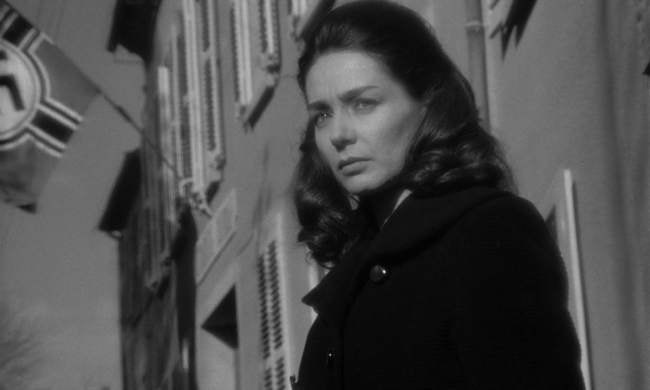
Barny (Emmanuelle Riva) is a young widow with a little girl. She's worried about her child because of the occupation. In an early scene, she meets with Jewish mothers and other Communists to discuss ideas on how to deal with the town being occupied. Many decide to get their children baptised. At this point, a simple solution like this seems workable because the Italians who initially occupy the town wear silly feathered hats and are more congenial than the Germans who show up later. At that point, some of the men take to living in the woods as an arm of the Resistance and Barny decides to send her little girl to live with two old women in the countryside.

Barny's sexually frustrated and starts to fall in love with a Jewish woman in the office named Sabine (Nicole Mirel). Leon (Jean-Paul Belmondo) tells Barny it's just because she hasn't been around men in a while and, it's true, there are few male characters in the film. Aside from Leon, there's only one other named male character, Edelman (Marco Behar), her Jewish boss who flees the town at some point.

She meets Leon in the confessional, to throw "Religion is the opiate of the masses" in his face. But her instincts had led her to him because she was already starting to feel the inadequacy of this maxim. Certainly faith is a lot more traumatic in this film than sedatives tend to be.

In Roger Ebert's review of the film he says that the director, Jean-Pierre Melville, "cleverly plays with our expectations." The expectations Ebert refers to are expectations of cinema, stories, or popular ideas. We expect some kind of confrontation with Sabine, with Barny either scandalously falling for her or find the attraction part of a terrible downfall but neither occurs. When Barny has a brief physical fight with a woman in the office who turns out to be a collaborator, ending with Barny slapping her, the woman unexpectedly kisses her.

And Leon doesn't seem to proselytise very stridently. He even admires the self-denial Communism as fostered in Barny's lifestyle. He doesn't blink when she frankly tells him how she uses a stick to masturbate.

It's hard to imagine any two other actors in these roles; Emmanuelle Riva is so clear eyed and honest in her spiritual quest while Jean-Paul Belmondo musters his cool, angry grace perfectly in this context. He's respectful of Barny but also kind of brutish in his abrupt manner, he even, without apology, pushes her when she blocks a doorway. When they talk about the existence of God, he stresses that logically proving God's existence misses the point. And the film subtly bears this out by continually presenting contradictions that wouldn't fit in a philosophy as unyielding as Communism. Contradictions presented subtly by the film but there for the viewer, and certainly Barny, to see; there's the fact that Leon, a Catholic priest, is helping the resistance and hiding Jews. There's the American soldier who tries to extort sex from her, humiliating her in the street, and the Nazi officer who's kind to her daughter. There's Barny's budding friendship with the collaborator and how the two argue frankly their points of view with each other while still remaining friends. All of this could be interpreted as absurd, chaotic human behaviour, but then again, it fits with what Leon tells her about how God even loves heretics.

Beautifully shot with fascinating editing choices that include abrupt fades seemingly almost in the middle of scenes, Leon Morin, Priest showcases Melville's unique command of cinematic language. He makes this a strikingly effective story.

Twitter Sonnet #1155

Expectant turtles wait upon the cloud.
Below, the sort of citrus towns evolve.
A set of glowing toys were disallowed.
The pages reckon now what books involve.
In choosing rooms the crown decides a head.
Ignoble lights illume the flashing sign.
A thousand feet protrude from 'neath the bed.
The growing maze consumes the mental twine.
A cool and wary eye regards from fur.
Above the fan a danger waits for air.
Through smaller fans computers always purr.
An offered fruit was very much a dare.
A second coat of paint repaired the house.
A cheese foundation pleased the local mouse.