Among other the other problems it may cause, incest can spoil everyone's plans. John Ford's early 17th century play, 'Tis Pity She's a Whore, shows the far-reaching effects of a brother and sister's decision to enter a sexual relationship. Lacking the depth of insight found in Shakespeare, Ford's play is nonetheless a stimulating thought experiment, an illustration of the dangers inherent in reordering nature according to one's own will and whim.
I sought out this play because of a song on David Bowie's Blackstar, his final album, called "'Tis a Pity She was a Whore". Although the lyrics bear little resemblance to the story of the play, it seems the title was meant as a reference to it. The lyrics of another song on the Bowie album, "Sue (Or in a Season of Crime)" bear more resemblance to the play.

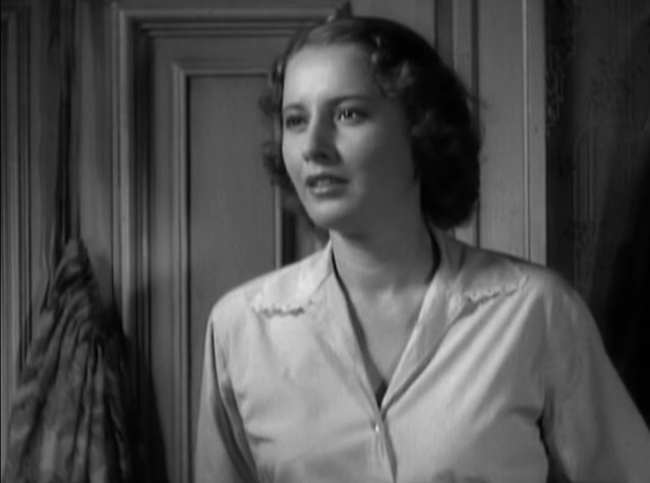
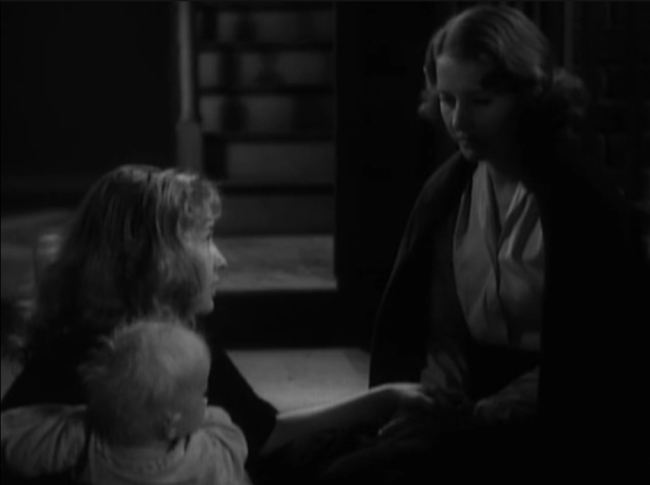
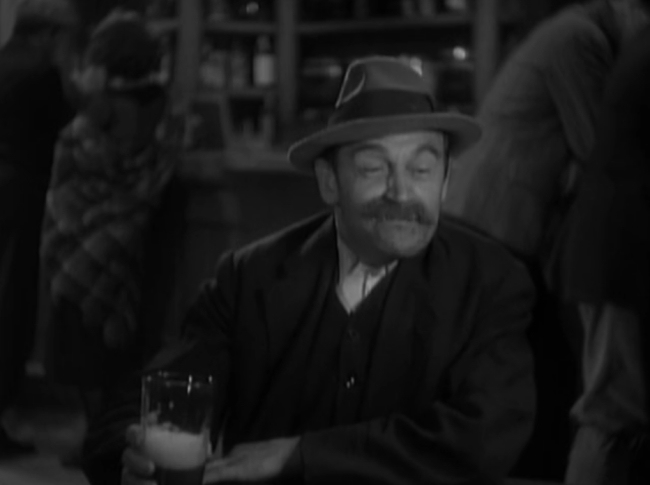
I watched a 1980 BBC production starring Cherie Lunghi as well as several actors I recognised from Doctor Who, including Tim Pigott-Smith from Masque of Mandragara, Bernard Archard who played Professor Scarman in The Pyramids of Mars, and Colin Douglas who played the lighthouse keeper from Horror of Fang Rock. For no reason in particular, the setting and costumes place the action in mid-19th century England. The play was originally set in Italy--it was common in English plays of the time to illustrate moral depravity by setting their action in Catholic countries, particularly Italy and Spain, where clergy, like the friar in Romeo and Juliet, can be shown ushering the protagonists to their destruction.

In her introduction to the play in the Norton English Renaissance Drama, Katharine Eisaman Maus draws direct comparisons between Romeo and Juliet and 'Tis Pity She's a Whore in discussing the lovers' rash disregard for their society's expectations. There's a Friar in this play, too, though he does not approve of Giovanni's (Kenneth Cranham) passion for his sister, Annabella (Lunghi), when Giovanni confesses to him.
Since Giovanni has shown no interest in other women, his father despairs of the family line's survival, both in terms of flesh and finance, as he finds himself in desperate financial straits. So he's trying to marry his daughter, Annabella, off to the wealthy nobleman, Soranzo (Anthony Bate). So the loss of Annabella's virginity is a grave matter indeed, in both senses of the word "grave".
Meanwhile, Soranzo is trying to extricate himself from entanglement with his former mistress, Hippolita (Alison Fiske). In this matter, and in the trouble that results when he discovers Annabella is pregnant by another man, he employs his murderous Spanish servant, Vasques (Pigott-Smith).

In contrast to the patriarchal expectations and machinations of society, Eisaman Maus concludes her introduction by saying that one feels "nostalgic for Giovanni's reckless disregard of social laws." I can't say I agree with that. In the name of love, he irrevocably ruins his sister's life. Her father may have been desperate but he specifically says he wouldn't force Annabella to marry anyone she didn't want to. Who knows what would have happened if Giovanni hadn't broached the subject of incest with her? She may have eventually found a suitable match. Maybe not someone she felt great passion for but someone with whom she could have lived in relative contentment. Eisaman Maus makes a point of how both Annabella and Giovanni are inexperienced so she can't be entirely faulted for interpreting her own feelings for Giovanni so disastrously. The title of the play, spoken by an authority figure at the end, is likely meant to show up the exceeding harshness to women of society's judgement of such things, but on the other hand, it is a pity that it was so easy for Giovanni to have sex with her. He was wrong to propose the relationship but she was also wrong to agree to it.
Looked at in the light of nature versus society, it's easier to see the connexion between the play and Bowie's song. He sings about a sexual relationship with a woman that can't be more because of some kind of "war". Since war is a construct dependent on abstract human conceptions of territory and citizenship, it is a contrary force to purely physical love, part of a set of abstract forces that run contrary to human instinct. If you look at the song as part of an album generally about Bowie being on the verge of death, it may be part of a lament, a recognition of his own fatigue, that he must, even at this final stage of his life, adhere to a society's expectations that run contrary to his instincts or desires.