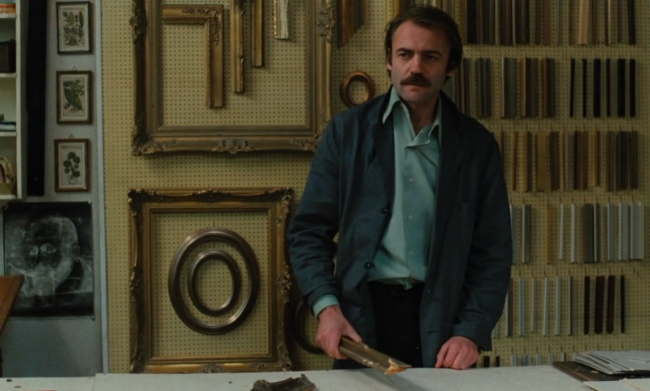
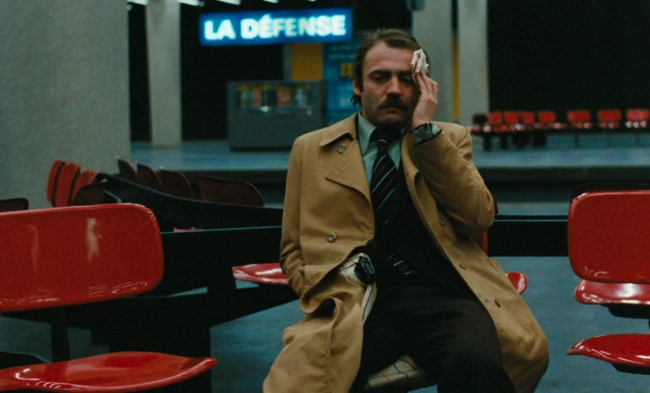
A quiet old man lives through a spartan existence, cleaning toilets and listening to classic rock, in Wim Wenders' 2023 film Perfect Days. At times tranquil but also terribly devastating, this is a strange film. What started as a promotion for a project in Tokyo in which 17 toilets were redesigned became something much different and greater in Wenders' hands.
Koji Yakusho stars as Hirayama, the quiet old man. He doesn't speak at all for the first ten minutes or so of the movie and then says very little throughout the rest of the film. I thought perhaps this was a way for Wenders to identify with the Japanese man despite being unable to speak much Japanese. As the film progresses, it seems clear that Hirayama reserves his voice for particular people and situations; he maintains separate worlds in his life. Why?

He takes spiritual pleasure in gazing at trees or shadows speckling the concrete. He listens to classic rock cassette tapes--Van Morrison, Patti Smith, and, of course, Lou Reed, whose "Perfect Day" does play a significant role in the film. Wenders makes it clear how important the songs are by continually matching up lyrics with imagery. When "Brown Eyed Girl" mentions "when the rains came", Hirayama is driving through a rainstorm. When the song mentions sun, we see the sun suddenly shine between the skyscrapers at Hirayama's car.

All the songs should've had Japanese subtitles. I think Wenders overestimated the English abilities of his Japanese audience. I've heard "I'm Sticking with You" by The Velvet Underground at the mall. There's no scandal because no-one understands the lyrics about the guy hanging from a tree or the bit about fighting the Viet Cong. A few weeks ago, I showed Sinead O'Connor's "Nothing Compares 2 U" to some of the higher level English students. I had to explain the title but 90% of that song is English they'd been studying for years. It's very simple English, "I go out every night and sleep all day," etc. But they couldn't recognise it until I played the song for them line by line.
One day, Hirayama finds himself driving his co-worker (Tokio Emoto) and his co-worker's girlfriend, Aya, (Aoi Yamada) around. Aya is fascinated by the cover of Patti Smith's Horses and asks to listen to it. The music starts from "Redondo Beach" and Aya finds herself enthralled by the lyrics.

I thought, here's a typical old man's fantasy--meeting a beautiful young woman who's surprised to find she prefers the old man's taste to the antics of her inadequate young boyfriend. As the movie continues, though, Hirayama encounters different young women and we start to get a sense of his loneliness and inability to connect with the women who attract him.
Koji Yakusho is best known in the west for Shall We Dance, a comedy from over twenty years ago about a married man who spots a beautiful dance instructor and enrolls in her classes to get closer to her. Over the course of the film, he realises it's not the girl he needs, just a new perspective and a new hobby. Perfect Days is kind of an anti-Shall We Dance. Hirayama has tried to deal with his loneliness by adopting a zenlike perspective, partaking of simple pleasures and leading a humble life. Is that really enough? Wenders' love for Ozu is clear in this film, which feels much more like a Japanese film from 70 years ago than one from to-day. It has mono no aware, the Japanese aesthetic concept that revolves around acknowledgement of life's beauty but also inevitable inadequacy. In this context, Lou Reed's "Perfect Day" is a brilliant choice, a song that seems jubilant from one angle but shifts to an overwhelming despair from another angle. In the final shot of the film, Wenders uses a Nina Simone song with a similar impact and Yakusho delivers an incredible performance.
Perfect Days is now in theatres in Germany and Japan.