Tuesday, December 21, 2021

To Create, You Must First Wreck

Don't underestimate your eight bit villains. 2012's Wreck-It Ralph represents the beginning of drastic change at Walt Disney Animation Studios in terms of creative vision, most obviously because it was co-written by Jennifer Lee. The woman who would go on to write and direct Frozen, she seems to have brought the first truly vibrant creative voice to the studio since the '90s. Here's an artist with thematic preoccupations, or so one might assume when comparing Wreck-It Ralph and Frozen--both movies are about characters originally designed to be villains who become heroes. But that's not what Wreck-It Ralph's really about and it's not where its greatest strength lies. Wreck-It Ralph works like clock, or even a video game, if you will--it's tightly constructed; story elements are set up subtly but memorably enough before they pay off later in the film. It leads to the single most effective scene in a Disney animated film since Pocahontas.
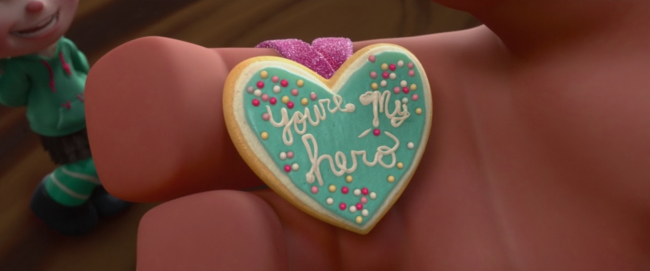
After Ralph (John C. Reilly) helps Vanellope (Sarah Silverman) learn how to drive her new race car, and thus participate in the race that forms the centrepiece of her game world, he runs into another of the game's characters, King Candy (Alan Tudyk), who very convincingly gives Ralph reasons why he shouldn't help Vanellope. The plausibility of what the King says is so clearly apparent that the following scene, when Ralph has to be cruel to Vanellope, works vastly better than such scenes usually do.

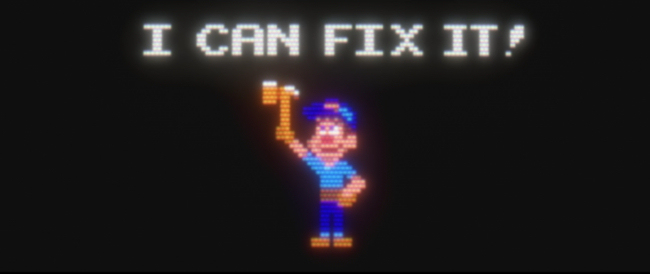
The film is obviously very postmodern, very meta, but it establishes very solid rules for its reality, a shared world of arcade games, and uses those solidly established rules to generate tension as well as heroic pay-offs. We know the hero of Ralph's game, Felix (Jack McBrayer), has a magic hammer that can fix anything, yet it's still surprising and rewarding when he can fix certain things that seem impossibly damaged. But what about this story of a villain leaving his assigned role to become a hero? Is Ralph a Satanic Hero like Elsa? Not really.
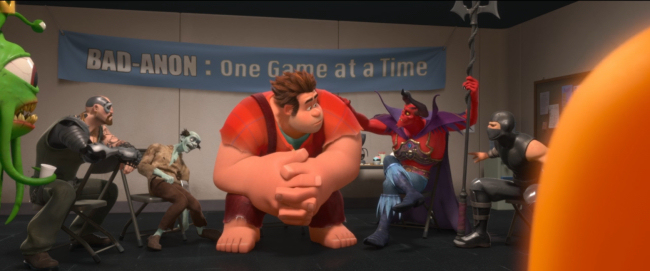
Early on, we see Ralph visiting a support group for video game villains. Their mantra is, "Just because I'm the Bad Guy, doesn't mean I'm a bad guy." And indeed, no-one is permanently killed in Ralph's game and even the property he wrecks is always completely fixed. One might wonder if the characters feel the pain of their struggles, like the angels in Paradise Lost who can triumph over each other in battle despite both sides being indestructible. If that's so, then it's Ralph, who's routinely thrown off the top of the building, who gets the worst of it.

He's not really any kind of villain--it's a pantomime and everyone sees it as such.
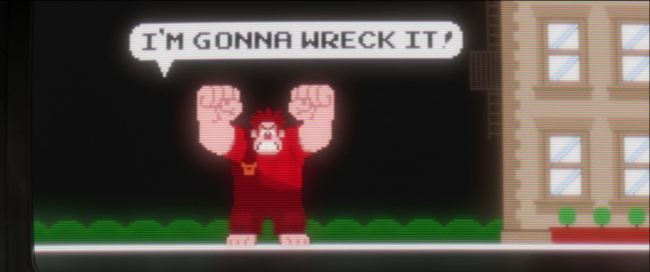
His game, Fix-It Felix, Jr., looks like a combination of Rampage and Donkey Kong. Rampage truly reorients the villain to the hero position--it features "anti-heroes" by the true definition of the word--the player controls giant monsters who not only destroy buildings but eat people. Donkey Kong features a giant ape who apparently seeks to sexually assault Pauline. Both games would have led to more genuinely sinister characters than what we get in Wreck-It Ralph so we can assume Ralph, as a "villain", was quite deliberately softened, for one reason or another.
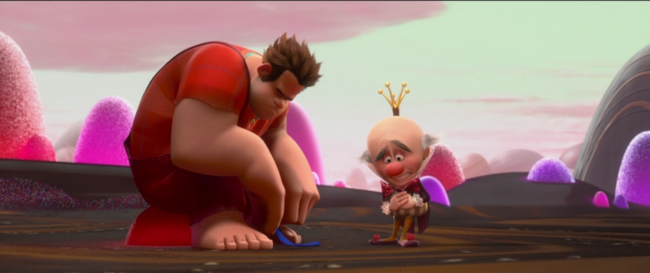
Wreck-It Ralph, like Tangled, ultimately endorses conformity, despite superficially being about people who would stray outside their designated places in society. Everyone goes back to their respective games in the end in order to keep the same narratives going for the players (even though characters from two different games marry). Vanellope, at first introduced as a "glitch", a possibly unfinished character whose assets remained in the programme upon release, is ultimately revealed to have a more legitimate right to being in the game than her detractors. The point becomes not, "celebrate the aberrations" but "some apparent aberrations aren't aberrations at all so therefore they're okay". To hammer the point home, the final villain of the story is someone who has succeeded in leaving one game to become a permanent part of another.

But this is still a more solidly written film than Tangled and its characters, particularly Ralph and Vanellope, have a more satisfying and captivating relationship. Felix and a character voiced by Jane Lynch have a romantic subplot that's pretty effective, too.

A student at the junior high school where I work here in Japan told me the movie's Japanese title is Sugar Rush, this being the name of Vanellope's game. It's interesting to think about how a little difference of title completely reframes the story. The film also features a song called "Sugar Rush" by Japanese pop group AKB48:

I'm not an AKB48 fan but I'd say they were certainly the right fit for the material.

Wreck-It Ralph is available on Disney+.

...

This is part of a series of posts I'm writing on the Disney animated canon.

Snow White and the Seven Dwarfs
Pinocchio
Fantasia
Dumbo
Bambi
Saludos Amigos
The Three Caballeros
Make Mine Music
Fun and Fancy Free
Melody Time
The Adventures of Ichabod and Mr. Toad
Cinderella
Alice in Wonderland
Peter Pan
Lady and the Tramp
Sleeping Beauty
101 Dalmatians
The Sword in the Stone
The Jungle Book
The Aristocats
Robin Hood
The Many Adventures of Winnie the Pooh
The Rescuers
The Fox and the Hound
The Black Cauldron
The Great Mouse Detective
Oliver & Company
The Little Mermaid
The Rescuers Down Under
Beauty and the Beast
Aladdin
The Lion King
Pocahontas
The Hunchback of Notre Dame
Hercules
Mulan
Tarzan
Fantasia 2000
Dinosaur
The Emperor's New Groove
Atlantis: The Lost Empire
Lilo and Stitch
Treasure Planet
Brother Bear
Home on the Range
Chicken Little
Meet the Robinsons
Bolt
The Princess and the Frog
Tangled
Winnie the Pooh
Monday, December 20, 2021

Super Space

Although the absence of Alex continues to be a problem, I mostly enjoyed Friday's new episode of The Expanse.

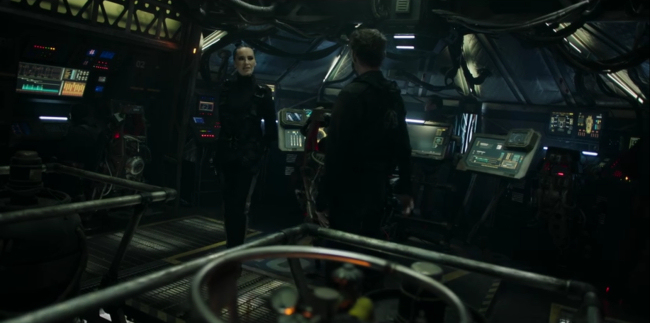
I like the sub-culture of piracy among the Belters which borrows from romanticised visions of the golden age of piracy. The code of personal freedom extends to Drummer's (Cara Gee) crew being a dysfunctional polygamist family. Friday's episode saw a therefore tearful farewell to one of the members while they meet a pirate captain.

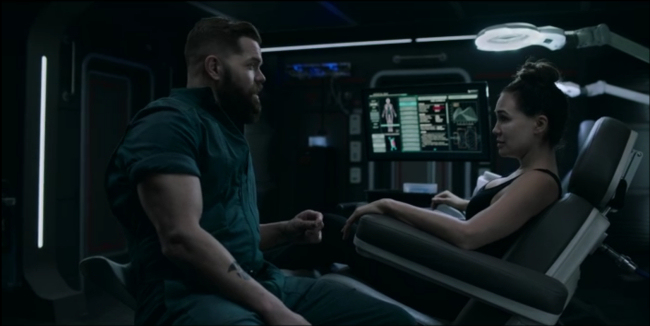
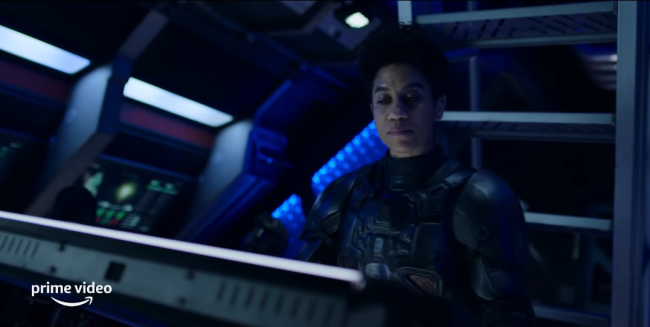
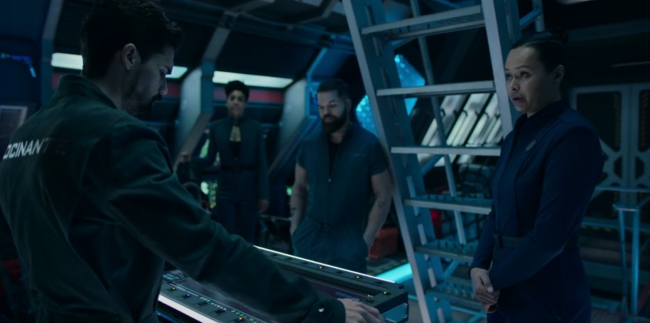
Meanwhile, Peaches (Nadine Nicole) is being slowly accepted among the Rocinante's crew. Even Holden (Steven Strait) calls her Peaches now. The scene where she and Bobbie (Frankie Adams) worked together was one of those cool, comic-bookish moments when two characters improvise coordinating their superpowers in a creative way. Holden chewing Peaches out for taking initiative didn't really make sense, though, which cut into the intention of the scene, which was to have Peaches glowing over the fact that Holden referred to her as a member of the crew.

I'm a little intrigued by the cattiness between Amos (Wes Chatham) and Bobbie. I can't remember if they had any kind of relationship before. I feel like they're being set up as lovers. I hope that doesn't mean they have to have a physical fight because there's no way the writers are going to be able to make it realistic (Bobbie would be required to win).

The Expanse is available on Amazon Prime.

Sunday, December 19, 2021

Photographing Again

Here's my Christmas tree this year, the picture coming courtesy of my new camera my mother kindly sent me money to buy. It's exactly like my old camera, a Canon Power Shot SX600 HS, I found it on Japanese Amazon for about 7,000 yen, just under 70 dollars.

New camera, same old memory card so I have some photos on it from my old camera with the focus problem.

I went hiking a few weeks ago in the Soni mountains.

The old thing could almost focus if stuff was really far away.

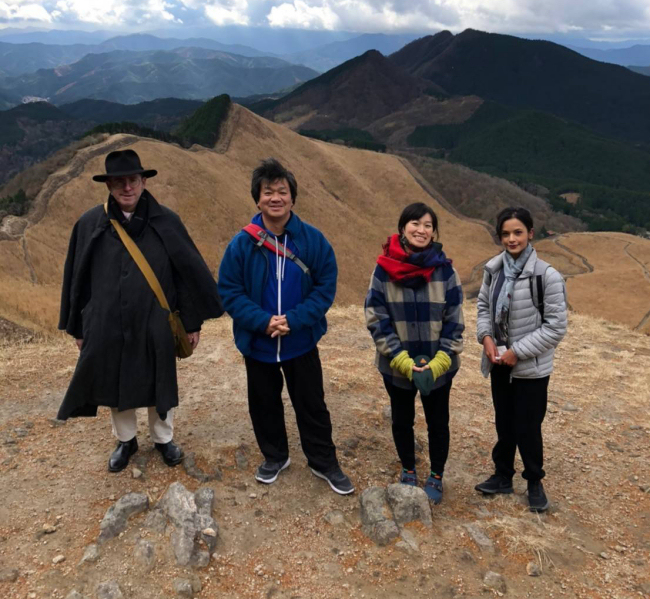
Someone else's camera took this picture:

That's me with some friends; Shuichi, Kumi, and Rizu.

It's too bad all the autumn leaves seem to be gone now. Maybe I can get some good photos of Christmas decorations.

Twitter Sonnet #1503

A jolly suit creates a Santa shape.
Accosting necks, the candy cane deployed.
The flying deer descend before the ape.
A thousand lights were swiftly now employed.
The beaky bone distorts the nose's thought.
A bridge across a skull improves the peace.
The curling beard contained a cookie dot.
To moult alone the duck would hide the geese.
The party choice was elven worker teams.
The stripey hand was one of two to tick.
We sewed the thing that seemed to carry seams.
With dusty red we built a better brick.
Again, the misty green absorbs the air.
Again, a pair of pumps ascend the stair.

Saturday, December 18, 2021

A Pooh Without Stuffing

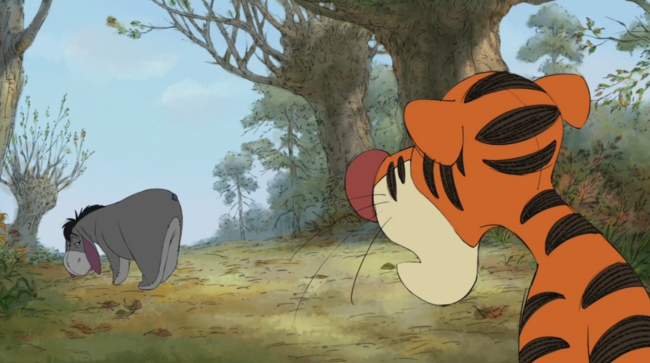
Minus the end credits, 2011's Winnie the Pooh is less than an hour long but watching it felt like an eternity. The writers and directors and animators go to great lengths to imitate the style and tone of Disney's Pooh shorts from the '60s and '70s. It's a complete failure. The original shorts succeeded at capturing some of the delicate beauty of AA Milne's stories, the 2011 film grips tightly and doesn't notice that delicate thing is snapped in half.
Pacing is part of the problem. The filmmakers make the mistake of thinking three year-olds to-day are somehow born with shorter attention spans than three year-olds in the '60s. So the more natural speed of Pooh slowly waddling into frame is lost as well as a sense of weight to the environment. Especially since the original shorts, and the 2011 film, feature gags about Pooh walking around on the pages of his books, it's crucial to get an effective sense of The Hundred Acre Woods as a lived in environment. The old shorts, with their problems revolving around rain and trees and flooding, had a subtle quality suggestive of a real acquaintance with forest animals and the problems they have to deal with. In the 2011 film, when Pooh and Piglet lay a trap for the "Backsoon", it's a picnic blanket over a hole that doesn't dip into the hole. This lack of instinct for the physics of the thing shouldn't matter--it's cartoon logic--but it's part and parcel of a general disconnect from the environment depicted.

The biggest problem is how the low intelligence of the characters is depicted. Comparing the 2011 film to the 1977 anthology illustrates the difference between laughing at folly with affection and laughing with cruelty.

All the voice actors are different, of course, most noticeably Craig Ferguson as Owl. He puts on an English accent to end up sounding just like Rowan Atkinson in The Lion King, a more broadly stuck up character than Owl was before. Travis Oates as Piglet is downright irritating though the movie never holds him in frame very long, his appearances generally being about getting shot through the sky across the woods or enduring quick slapstick gags.

The filmmakers' efforts to reproduce the visual style of the old shorts extends to simulating the xerography animations, that cheaper method employed by Disney on every movie from 101 Dalmatians to The Little Mermaid. So all of the lines are black and occasionally you see rough guidelines pop into frame, though never as badly as in the '60s. And the lines don't get thick and muddy on fur. Black lines are certainly appropriate for imitating the style of ink book illustrations, though. It's the only truly good idea in the movie.

Zooey Deschanel sings new, forgettable songs as well as the Sherman Brothers' theme. I think 2011 was before everyone became suspicious and afraid of manic pixie dream girls so at the time Deschanel probably seemed perfect as someone who normally plays innocent, sweet, and eccentric young ladies. I think that's a perfectly reasonable line of thought but I find her singing voice off-putting in a way I can't put my finger on. Maybe it's just me.

Winnie the Pooh is available on Disney+.
...

This is part of a series of posts I'm writing on the Disney animated canon.

Snow White and the Seven Dwarfs
Pinocchio
Fantasia
Dumbo
Bambi
Saludos Amigos
The Three Caballeros
Make Mine Music
Fun and Fancy Free
Melody Time
The Adventures of Ichabod and Mr. Toad
Cinderella
Alice in Wonderland
Peter Pan
Lady and the Tramp
Sleeping Beauty
101 Dalmatians
The Sword in the Stone
The Jungle Book
The Aristocats
Robin Hood
The Many Adventures of Winnie the Pooh
The Rescuers
The Fox and the Hound
The Black Cauldron
The Great Mouse Detective
Oliver & Company
The Little Mermaid
The Rescuers Down Under
Beauty and the Beast
Aladdin
The Lion King
Pocahontas
The Hunchback of Notre Dame
Hercules
Mulan
Tarzan
Fantasia 2000
Dinosaur
The Emperor's New Groove
Atlantis: The Lost Empire
Lilo and Stitch
Treasure Planet
Brother Bear
Home on the Range
Chicken Little
Meet the Robinsons
Bolt
The Princess and the Frog
Tangled

Thursday, December 16, 2021

The Treacherously Stable

Even a couple married for ten years can start to question the nature of love and whether or not they ever had it. Ingmar Bergman's 1973 miniseries, Scenes from a Marriage, follows such a couple as suspicions about their own contentment start to erode their marital bliss. I'm three episodes in on the six episode series and, as expected from Ingmar Bergman, the dialogue is captivating.

Bergman regulars Erland Josephson and Liv Ullman play Johan and Marianne who start the first episode giving an interview where they discuss the happiness of their marriage. Over the course of the first three episodes, we see the two in situations that slowly and subtly highlight uncertainties they actually have about their relationship.

There are a big things, like an abortion they don't really argue about but reach muddled, vague agreements about until the irrevocable thing actually occurs. And then Marianne is heartbroken. And there are little things, like when Marianne, a divorce lawyer, speaks with a client whose grounds for divorce amount simply to not feeling in love anymore.

Bergman's dialogue flows without ever getting caught in predictable currents. As the characters pace a room or curl up broodingly in bed, they think aloud, diving at first for one certain conclusion before finding fault in and questioning that conclusion. The third episode, in which Johan confesses to Marianne he's having an affair and plans to leave for Paris with his mistress, doesn't have anything like the standard portrayal of such a situation. Marianne is by far the more sympathetic in the scene, but Johan's strangely strident and then indecisive proclamations about his dissatisfaction with, yet strangely strengthened affections for, Marianne are terribly human.

Both Ullman and Josephson give great performances. Ullman comes off as a slightly neurotic sweetheart while Josephson comes off as a man finally trapped by his own mild nature, provoking himself to become a cornered, frightened animal.

Scenes from a Marriage is available on The Criterion Channel.

Assassins and Crime Lords

A solid episode of Hawkeye last night despite a lack of impressive action sequences. This one was more about dialogue, which should be the advantage of a TV series over movies. Yet another writer, Jenna Noel Frazier, comes aboard, her only previous writing credit being a staff writer on a series called The Romanoffs for Amazon Prime. I guess you could call that relevant job experience!

That said, I wish the writing had been stronger in that macaroni and cheese scene with Hailee Steinfield and Florence Pugh. I thought, here we have two talented actresses, a premise with a lot of tension, and they just tread water with cliche lines like "collateral damage" and "If I wanted you dead" etc. I also didn't like Bert and Bertie's direction for the scene--it consists almost entirely of over-the-shoulder shots, I don't remember one shot in which we could see the faces of both actresses. We don't actually get to see these two good performers play off of each other. It made me wonder if the actresses filmed their parts separately. I continue to enjoy Pugh, though, and that opening scene where she gets blipped in the middle of an important meeting was nice.

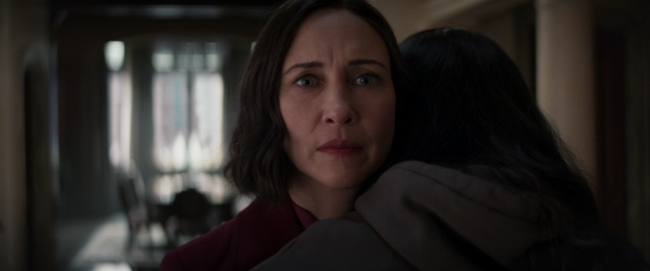
I didn't get a strong sense of Yelena wanting Clint (Jeremy Renner) dead, she seems too smart to really blame him for Natasha's murder. I guess that might be why she was following the line of her employers, finally discovering Eleanor Bishop is the secret villain of this series, though I think most viewers guessed it. Normally I can't stand Vera Farmiga but I think she was good casting here. For once, her smugness is supposed to be unappealing.

And, of course, the big reveal was Kingpin is indeed back, played once again by Vincent D'Onofrio. If you were to ask me to choose the single strongest element of all the Marvel Netflix series, I would've pointed right at him, followed by Jessica Jones. So this was a good idea, though what made him so strong on Daredevil was that the 13 episode first season could take its time fleshing him out, giving him a complex backstory unrivalled by any other villain in the MCU.

Now that it looks like they're bringing over Netflix characters (unless this still ends up being another Boner, which I'm never going to feel safe from), I hope they don't bring in everyone, especially not from Daredevil. Obviously they have to bring over Charlie Cox but I sure as hell hope they avoid Elden Henson. I wouldn't mind seeing Deborah Ann Woll again, though.

Hawkeye is available on Disney+.

Wednesday, December 15, 2021

The Possible Murder

I finished A Very English Scandal last night and. one thing's for sure, Hugh Grant is a much better actor than the sputtering parodies of him might suggest. As the series becomes more and more reticent about putting words in Jeremy Thorpe's mouth, much more is communicated by Grant's facial expressions alone which invite the viewer to see possibly the barest hint of sympathy for Norman or the intense restraint mustered to hide his fury at his former friends.

The show clearly takes the position that everything Norman (Ben Whishaw) said was true. A brief appearance by the real Norman Scott at the end of the film suggests where Russell T Davies' sympathies lie. Yet, the courtroom scenes in the third episode left me far from certain about Norman's innocence or Jeremy's guilt.

Jeremy hires a lawyer (Adrian Scarborough) with a reputation for winning by demolishing the reputations of witnesses. But his pointing it out doesn't make it any less of a fact that Peter Bessell (Alex Jennings) stood to profit if Jeremy received a guilty verdict or that Norman had a history of speaking extravagant lies about himself.

So the series makes a bold choice in choosing a side and yet Davies never writes one side as a hero or villain, just as flawed human beings. This was especially appreciable in the second episode during the bungled attempt to murder Norman. Rarely outside of a Coen Brothers film do you see such authentically ordinary killers or the silly, bizarre coincidences that can accumulate around an attempted crime. All the characters always feel honestly written and the show never falls asleep at the wheel.

A Very English Scandal is available on Amazon Prime.

Twitter Sonnet #1502

A voice recorded stopped the quiet room.
A watch's frozen hands could still persist.
The trackless minutes chilled the church's gloom.
And yet may beauty, fear, and love exist.
A spot of sun recedes behind the cloud.
A slash of rust disrupts the verdant hill.
The scattered stones had done a mason proud.
The chatt'ring leaves discuss the normal kill.
Reflected names were stalking streets at dusk.
The youthful shadow fell afoul of fact.
At night, the trees describe a blackened husk.
The real is small beside the skillful act.
The tennis court contains a racket glen.
The freest mind may build a secret pen.

Monday, December 13, 2021

The Shrinking Expanse

The first episode of the sixth and final season of The Expanse premiered on Friday and it was certainly the most underwhelming premiere of the series.

The two conspicuous problems are the absence of Alex and the presence of Marco. Cas Anvar, who played Alex, was the subject of allegations of sexual misconduct last year. Although he apparently has not been charged with any crime, he was awkwardly written out of the show at the end of last season. Anvar was by far one of the best actors on the show but, if he really did have to go, I would have advised recasting Alex rather than killing him off. His character, as the "heart" of the team who made the effort to make the crew like a family, was too essential to the ensemble dynamic. Now it really just feels like people on a ship who'd all rather be doing something else.

Meanwhile, the main villain from the previous season, Marco (Keon Alexander), is still up to his dastardly schemes, and is still just as bafflingly cartoonish. He barks his motivational speeches like an orc wearing a hair shirt. He's so over the top on a show that's usually famed for its realism, you wonder why anyone, let alone almost all the Belters, would follow this guy. When you look at video of Osama bin Laden or Adolf Hitler, they don't come off like Snidley Whiplash.

It is nice to see Shohreh Aghdashloo, Dominique Tipper, and Cara Gee again and I'm happy that Nadine Nicole has joined the crew. But the show is definitely at a low ebb.

The Expanse is available on Amazon Prime.

Sunday, December 12, 2021

Anne Rice

I took this blurry photo of Anne Rice, who passed away yesterday, in 2011, ten years ago at Comic Con. Thank goodness for my blog which preserves my memories better than my brain does.

I stood there a moment and watched her autograph a small stack of comics with a silver pen and thought about what to say, having the distinct feeling that she's someone it's probably very easy to accidentally say the wrong thing to. When she handed the stack to the vendor, I finally said something like, "Hi. I just wanted to tell you your books meant a lot to me--I used to read the vampire novels over and over."

"Thank you," she said, but I could see her eyes glaze over as she mentally tried to check out of the whole convention.

My tone in the blog entry sounds slightly like my feelings were hurt because she didn't acknowledge my presence more but they weren't, really. I can't imagine how long she'd spent in that booth signing things but having waves of people tell you they love your work must numb you to it after a while.

A lot of people, for as long as I can remember, and even to-day, talking about her sudden death, seem only able to pay her back-handed compliments, to grudgingly acknowledge what she accomplished. Maybe she did seem a little arrogant--her books are filled with the implicit philosophy that some people are meant to live in wealth and luxury, and obviously she considered herself one of those people. She died in Rancho Mirage, California, in Riverside, not far from my hometown of San Diego, where she also lived for a time, in La Jolla, the most expensive part of town. For someone whose association with New Orleans was so famous it's somewhat surprising that she spent her last years in southern California. Except, of course, that's where the luxury is.

You see, even I'm being backhanded. But let's be honest for a moment about what she accomplished. When I saw her at Comic Con, I noted the irony that massive crowds were gathered there for Twilight and True Blood, two franchises that arguably wouldn't exist if not for her. What else owes her a debt of gratitude? Virtually any and all vampire fiction published after Interview with the Vampire. But more than just that. For many years, even people who wouldn't now rank Interview with the Vampire as their favourite work of gothic fiction would still have to admit it was their gateway, back when they were first discovering this stuff, to other things in the genre.

Interview with the Vampire was also part of a wave of postmodernist fiction in the late '60s and early '70s that reexamined famous works of fiction by writing new works from the point of view of the villain. Books such as Grendel and Wide Sargasso Sea, which recontextualised Beowulf and Jane Eyre, respectively. The success of Interview with the Vampire eclipsed all other works of the genre, perhaps because, of all of them, it most has its own identity, its own thematic drive outside the context of the original fiction it's riffing off of.

It so happens I'm in the middle of reading Interview with the Vampire again. I'm about halfway through the book and last week I reached the part where the interviewee, the titular vampire, Louis, recounts his first trip to Europe, along with the eternal vampire child, Claudia. Searching for answers to their own origins, they travel through eastern Europe, only to encounter zombie-like, mindless specimens of the undead, terrorising villagers. This section wasn't included in the famous film adaptation by Neil Jordan, possibly because it's the part of the novel that feels the most conventional. It very much has the tone of a Hammer horror film and I'm reminded now of what Rice wrote when Christopher Lee died--I can't find the exact quote but I remember she called him sexy.

This is to say, Interview with the Vampire may have its genesis in postmodernism but it lacks the self-devouring, cynical quality postmodernist fiction usually has. She really loved vampires and the genre and this was her story with her heart in it.

The book was written shortly after the death of Rice's young daughter and it's easy to see how this influenced the character of Claudia. Moreover, the driving impulse of much of the book is an implacable grief. Louis and Claudia's search for answers to their own existence has, for Louis, a spiritual quality. His unsatisfying encounter with a Catholic priest underlines it. Here he is, this extraordinary, terrible creature, and there seems to be no reason for it. Every attempt to find reassurance or a sense of order is met with signs of bleak emptiness. The vast period of time with which he must live with this, the natural brutality of his own nature and the cosmic silence in regard to it, must have in itself been a heavy part of the burden. And I can only imagine all the time Rice dwelt with frustrating silence. It's not unlike Bergman's The Silence or Winter Light.

I was reading Interview again because I think it's a great novel about death and it was what I thought of when my grandmother passed away earlier this year. My grandmother was about the same age as Rice. Interview with the Vampire was the only Anne Rice novel I didn't sell before moving to Japan and it ended up with me in Japan entirely by accident, being in one of the unlabelled boxes of books my grandmother sent to me. It's the same old paperback I read in the '90s when I was in high school. And Anne Rice died near San Diego. Should I look for meaning in all this coincidence? It would be nice to think there is.

Saturday, December 11, 2021

The Paw Goes to Nepal

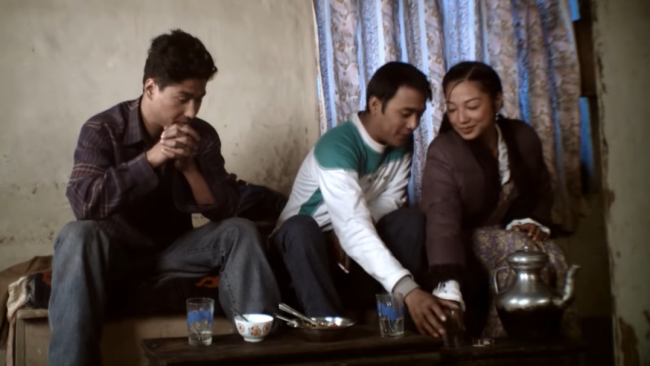
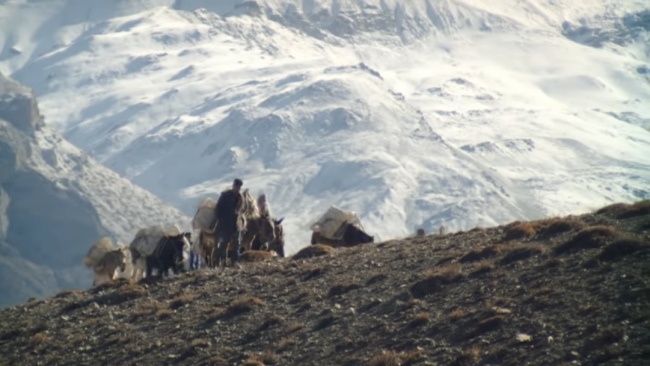
The harsh beauty of the Himalayas serves as a backdrop to yet another rendition of "The Monkey's Paw" in the 2008 Nepali film Kagbeni. The first film from director Bhusan Dahal, it has problems with pacing and tone, but the lead actors give good performances and the story inherits some real tension from the original story.

The movie begins with an intriguing jump scare. Krishna (Nima Rumba), trudging up a mountain, is suddenly confronted by a madwoman who screams incoherently at him. He rushes past her and meets up with his old friend, Ramesh (Saugat Malla).

Krishna has just returned from Malaysia and decides to tag along with Ramesh who's transporting liquor on mules. At this point, the film starts to meander quite a bit as the filmmakers spend too much time indulging in panoramic shots of the mountains. Accompanied by a blandly cheerful background score and occasional chit-chat from the characters about Malaysia the film starts to feel a lot like a tourism advertisement.

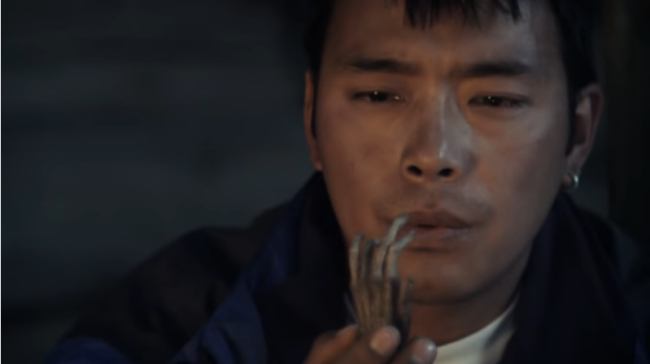
Things finally get interesting again when they encounter an old man who, in gratitude to Krishna for the loan of a blanket for the night, gives the young man the monkey's paw.

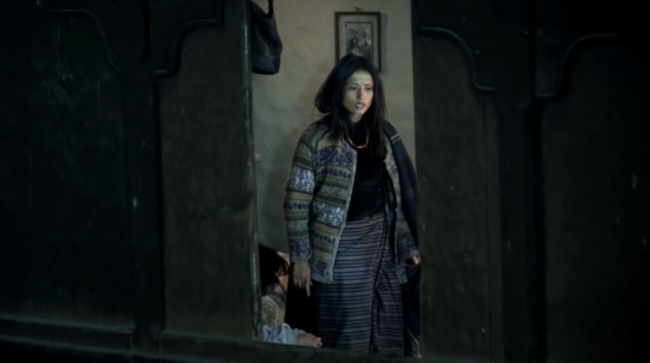
In this version, the paw grants infinite wishes with no strings attached for the paw's rightful owner. But if someone other than the rightful owner uses it, then every fulfillment of the wish comes with disastrous consequences. This gives the film a slightly different existential commentary as Ramesh finds himself dealing with the consequences of the paw's magic. Eventually, he uses it to marry the woman of his dreams, Tara (Deeya Maskey), but a shadow of guilt hangs over their marriage pretty effectively. At least, when the film doesn't start to feel like a tourism ad again.

Attaching clear guilt to the bad consequences of the paw diminishes the subtle horror of the original story a bit but it makes for some good drama for pretty, talented actors to chew on.

Kagbeni is available on YouTube.

Twitter Sonnet #1501

The super carrot's due in double lives.
The sweetened dough was queen without a court.
The tiny tater's squashed beneath the chives.
We used the skin to build a paper fort.
The elephant was riding east to climb.
A numbered mountain shields the tiny kid.
The knowledge never spoken yields a slime.
The missing end was stuck beneath the lid.
The tapping wind could never really talk.
The final wish confused the twisted sky.
The spirits used their stubby tails to walk.
The treasure's hid in flaky apple pie.
The frozen berries cut a rabbit's foot.
The rosy cab'net's where the salmon's put.

Friday, December 10, 2021

Tomb Trouble

Beware cemeteries staffed by hooded dwarves and a tall man with a penchant for marble and chrome. 1979's Phantasm is conspicuously low budget and ham-fisted at times but there's a kind of joyful creativity in it.

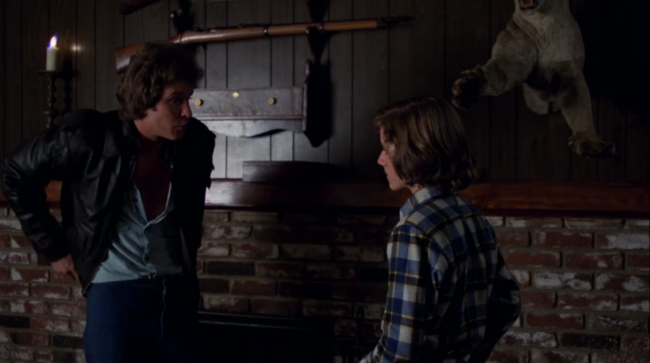
The protagonists are two brothers, pretty-faced young Mike (Michael Baldwin) and his swaggering, prototypical '70s hero elder brother, Jody (Bill Thornbury).

Was it really just normal for guys to leave their shirts unbuttoned to the bottom of their sternums?

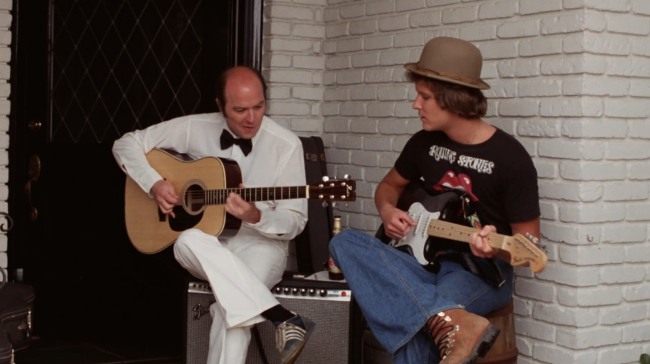
A family friend, Reggie (Reggie Bannister), is an ice cream man who occasionally jams with Jody on folk songs while Jody inexplicably wears a costume bowler.

A friend of theirs recently passed away and it's his funeral that brings them to the cemetery. Unbeknownst to them, it was the undertaker himself, aka "The Tall Man" (Angus Scrimm), who killed their friend, while in the guise of a beautiful woman.

This was an awkward sex scene that opened the film. We see naked breasts in conspicuously isolated shots twice in the film, as though one breast double shot all the nude scenes singled-handedly (single-bosomedly?) in ten minutes.

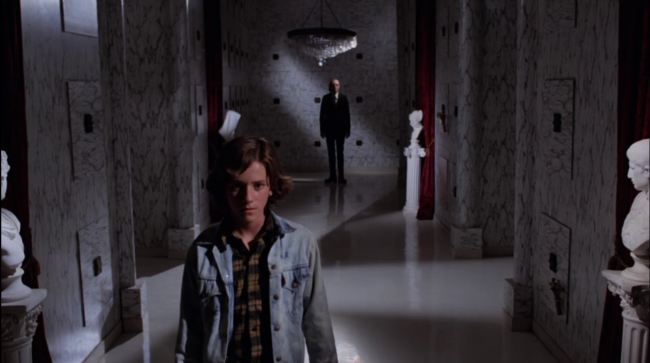
I like the concept of the zombie dwarves and Angus Scrimm has an effectively creepy shape to him. I also liked how atypical the protagonists are and their little odd character bits. The mortuary looks like a cheap set but it also has kind of a nice, Kubrickian vibe to it.

Phantasm, remastered by J.J. Abrams, is available on Amazon Prime.

Thursday, December 09, 2021

The Reality of Beginnings

Caitlin R. Kiernan released two new Sirenia Digests a few days ago, each containing scrapped, alternate beginnings to her upcoming novel. It's interesting to look at the two and note their differences and similarities and get an impression of the entity in the middle, a hovering ghost of a story.

The two versions are very different, beginning with different characters in different situations. Even the tone is different, as one begins with a cynical gambler named Johnny Redcorn and the other begins with a first person narrative, one of two people having a discussion about an ominous book. The two versions do have one thing in common, a brief story about a boy and a talking dog. Little hints of strangeness add up to a magnificently strange conclusion, and it's not hard to see why Caitlin kept this bit in both versions.

These two Digests are certainly more than enough to whet my appetite for the novel but they're lovely curiosities in their own rights.

The Short End of the Arrow

If last night's new Hawkeye felt short to you, it wasn't your imagination. It was only 41 minutes, about 35 minutes if you subtract the credits. I suppose it felt even shorter after last week when I had three episodes to watch but I also found last night's episode fundamentally less satisfying than the first three, mainly because of the writing.

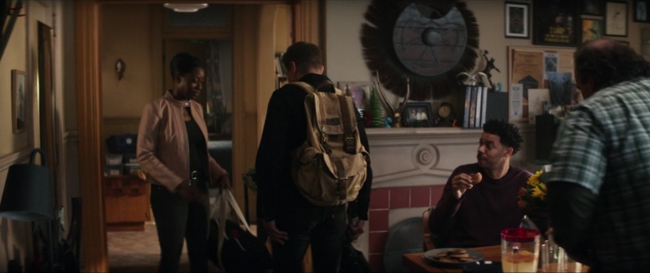
It begins with Clint (Jeremy Renner) and Kate (Hailee Steinfeld) sitting down with Kate's mother, Eleanor (Vera Fermiga), and her mother's fiance, Jack (Tony Dalton). The conversation feels lazily written, with Clint consistently shooting down every possibility of complimenting Kate, not even being willing to call her a friend. Which is pretty lousy of him considering he seems to be making himself comfortable at her aunt's place.

It undermined the tension of Clint needing to get back to his family a lot when Kate convinces him to have a little Christmas party and movie marathon. I thought time was of the essence?

The Larpers returned and I still don't like them. They don't remotely seem like real Larpers--most of them are in good shape and wearing trendy clothes. They look like advertisements for Gap.

Hailee Steinfeld continues to be charming, though. This show is a much better fit for her than that Emily Dickinson series. Hopefully next week's episode will have a better writer. It's kind of weird, no two episodes of this show have had the same writer.

It was nice to see Florence Pugh. She was one of the highlights of the Black Widow movie. But I'd already had her appearance spoiled for me so just getting a look at her face and no dialogue wasn't very satisfying.

Hawkeye is available on Disney+.

Twitter Sonnet #1500

A glowing pile's served for science lunch.
A rocket lists important drinks to buy.
The dark bananas loudly crush a bunch.
The future's past was dim behind the eye.
The ancient clue returned to grade a test.
Forgotten names return to child hands.
The pale musician finds a violent rest.
The flour changed to heavy, faded sand.
The spinning eye could travel far away.
The daunting dream was easy cake to some.
Computer names were ever hard to say.
We told the tale, excising parts with rum.
The lonely sock would walk alone at night.
The other sock would look for hands to fight.

Wednesday, December 08, 2021

A Gem on the Dotted Line

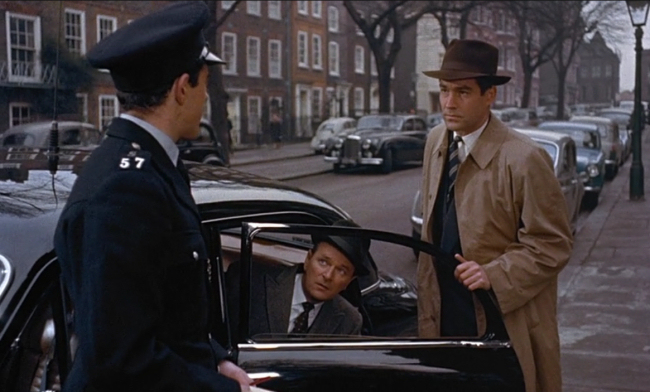
A beautiful young woman is murdered and police slowly unravel the mysteries of her complicated life. 1959's Sapphire almost sounds like Twin Peaks. It differs most significantly in its lack of warmth. Smug detectives led by Nigel Patrick muse about the popular good girl who turns out to have liked going to jazz parties wearing kinky taffeta. And, it turns out, she was a black woman passing as white, leading the film into some of the most mechanical motions I've seen in a race conscience film of the era.

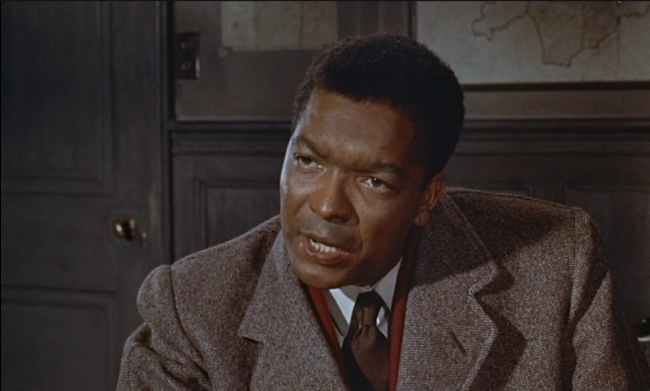
We learn the young woman was black when her brother, played by Earl Cameron, walks into Nigel Patrick's office.

Cameron seems like a decent actor with good instincts who was let down by both the screenplay and the director. He seems oddly casual when discussing his sister's death, maintaining a genial smile the whole time that's clearly not intended to be suspicious.

The film is full of the usual, false balancing act of race morality. Every instance of a white person exhibiting racism has to be followed by an instance of a black person exhibiting racism. Cameron talks about dealing with racism in London, as many West Indian immigrants did, but later we meet a black man whose family refuses to allow their daughter to marry a white man.

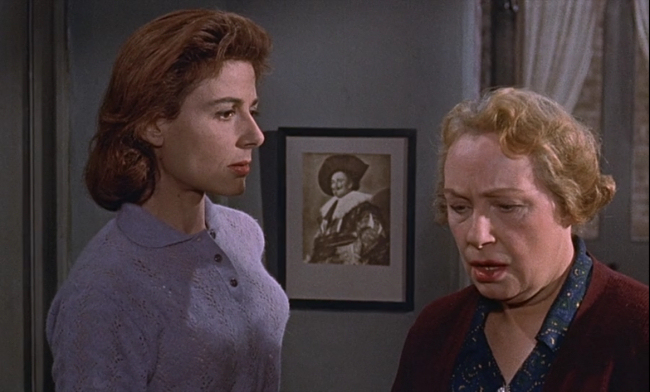
Yvonne Mitchell plays the sister of the dead woman's boyfriend. Again, she's a good actress who wasn't directed properly and always seems to be emoting in the wrong direction.

The Eastman colour is really pretty, the costumes are great, streamlined versions of standard '50s wardrobe, and there are plenty of nice location shots of London. If only the film hadn't been so moral.

Sapphire is available on The Criterion Channel.

Tuesday, December 07, 2021

Noise of the Doctor

Well, last night's season finale of Doctor Who certainly showed . . . something. It's hard to say what. It's the scribbled cherry on top of the muddled sundae.

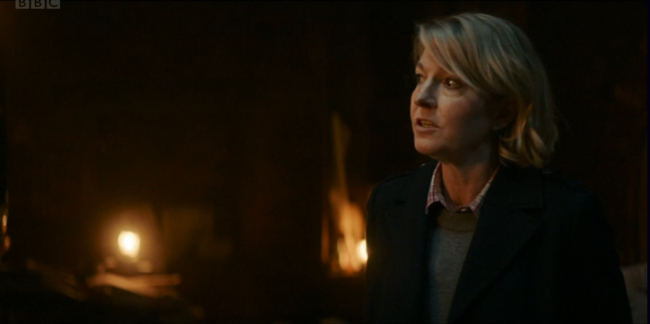
The Doctor (Jodie Whittaker) starts ordering the deceased Tecteun's ood around so that he can turn her into three Doctors starring in three Doctor Who episodes at once, edited together. In one episode, she's helping Bel (Thaddea Graham) and Karvanista (Craige Els) on their spaceship. She decides to crash the ship into a Sontaran ship because she guesses their force field will safely deflect and entrap them because, "People don't like being crashed into, they tend to take precautions." Apparently not considering such a precaution might simply be destroying ships hurdling towards them.

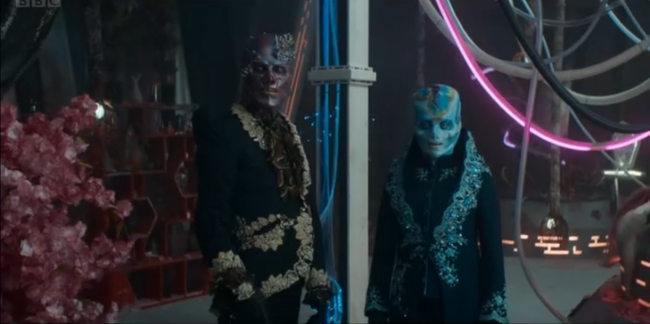
Another Doctor is underground with Kate Stewart (Jemma Redgrave) who's barely around long enough to inform the audience she likes this regeneration of the Doctor. And a third Doctor is back being tortured by the sugar skull people.

The Doctor has a tearful reunion with Yaz (Mandip Gil). Apparently the Doctor is as close to her now as Ten was with Rose or Twelve was with Clara. I mean, it's possible, a lot evidently happened in between seasons, off-screen, where apparently Chibnall didn't think he should waste time with it.

Among the painfully lame lines throughout the episode, maybe the worst is in an action scene where a besieged Dan (John Bishop), Jericho (Kevin McNally), and Yaz are yelling at each other. Someone says, "We're defenseless!" and Yaz grabs a rope and announces, "We're never defenseless!" Not with Wonder Yaz around, I guess, who knows things about rope the boys will never have the wit to comprehend.

"We're never defenseless." Right. Everyone's gotta sleep some time, Yaz.

It seems like Chibnall resented how interesting Jericho managed to be in "Village of the Angels" because he concocts an impressively meaningless slapstick death for him. Fumbling his teleporter ring and then accidentally shooting it, he gets trapped on a crashing ship. Too bad he lacked Yaz's dexterity or he'd be alive to-day.

The resolution of the romantic subplot between Vinder (Jacon Anderson) and Bel (Thaddea Graham) flashes by as the episode rushes to fit into its run time. But it's not as bad as Dan and Diane (Nadia Albina). We spend more time with her than him in this episode as Vinder praises her blaster handling and survival skills. She joyfully reunites with Dan in the TARDIS, then casually passes on a date with him back in the Liverpool museum. We'll never know, I suppose, why Dan is rejected by the woman Vinder said should train at a future space marine academy. Maybe she was just fed up with the fact that he did volunteer work at the museum.

The editing in this episode feels like they had a first cut that ran two hours and decided to cut it down by randomly removing reaction shots. There's a scene where Vinder and Diane are trying to figure out how to get through an extradimensional wasteland when Diane says they need to jump in a river. And instantly, Vinder jumps in, we don't even get a moment where he ponders this strange idea. It feels like editing for a trailer.

I won't even go into the stupid scene with the Sontaran in the sweet shop.

So, we can at least say there wasn't one, big, concrete, stupid thing to piss everyone off in this episode. There was very little concrete about this episode.

Doctor Who is available on the BBC's iPlayer.