Showing posts with label crime. Show all posts

Tuesday, January 03, 2023

Taking Credit Into Her Own Hands

It's an old story--government or corporate corruption or incompetence fosters low level crime. People get so desperate, it seems like they have no other choice but crime. One such person is Emily, the title character of 2022's Emily the Criminal. Anyone who's been stuck under the weight of student loans and a job market allergic to entry level will get a lot of vicarious pleasure from this movie. And it's not bad for other people, too.

Emily (Aubrey Plaza) is no everywoman, though. In addition to the usual troubles young adults have to face in job interviews, she also has a felony assault on her record and she has a hard time keeping her cool when it's brought up. So she's stuck in a low wage food delivery job where the boss abuses the lack of a union to monkey with her schedule and pay.

A lot of the movie feels like it was written, let's say, "top down". That is, not written by someone who experienced the typical problems involving student debt and a corrupt job market, but by someone who reads about these things in the news. So when Emily gets an interview with a magazine boss played by Gina Gershon, Gershon is a little more straightforward than such a woman would probably be in real life. She "explains" to Emily how she should be grateful to get an unpaid internship because she, Gershon's character, had to work for a bunch of men in her first job as a secretary. But this layup gives Emily the perfect opportunity for a satisfying riposte; "But you were paid."

Emily's already a pretty assertive young woman but she gains a lot more confidence when she gets caught up in a credit card fraud racket. We see her getting pulled in by slow degrees, a little unsure at first. But by the time she's selling the cars and TVs she buys with the bogus cards on her own, it's starting to make a lot of sense to her. I loved a scene in which, at a posh party to which she's invited by her fashion model friend, a couple of rich hipsters ask her what she does for a living. You can see her thinking through the options of what to say--food delivery?--before finally deciding to flat out say, "Credit card fraud." Oddly enough, she can feel more self-respect in saying that. Which says a lot about society's perspective on the working class.
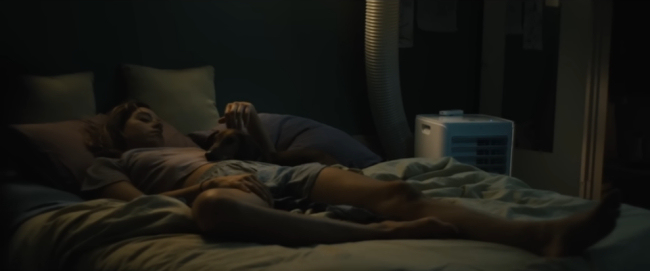
It's ultimately a wish fulfillment fantasy as Emily gets more and more power and freedom. It touches on real world issues but it's not entirely realistic. And that's a big part of the fun.

Emily the Criminal is available on Netflix.

Sunday, November 13, 2022

Real City, Real Error

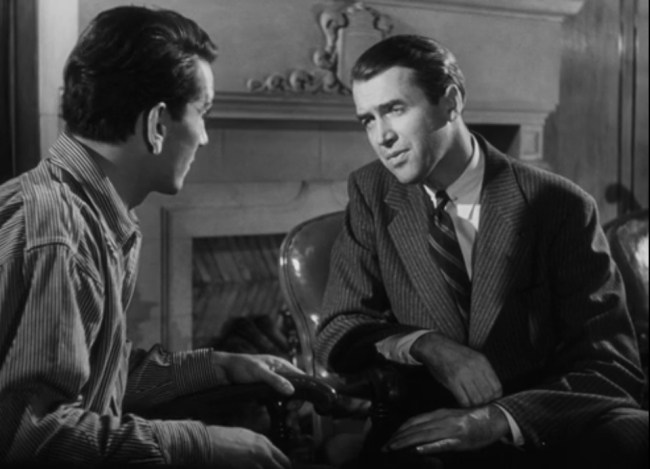
If you're ever falsely imprisoned for a crime, you'd do well to have Jimmy Stewart be your advocate. In 1948's Call Northside 777, based on a true story, Stewart plays a reporter digging into the events that sent two men to prison with 99 year sentences. It's an interesting film with lots of amazing location footage of Chicago. But there's not much more to it than procedural.

Well, James Stewart is always worth your time. It'd been a while since I'd watched one of his movies and it was just nice to see him again. And he's great, first scoffing at the ridiculous idea that Frank Wiecek (Richard Conte) could be innocent.

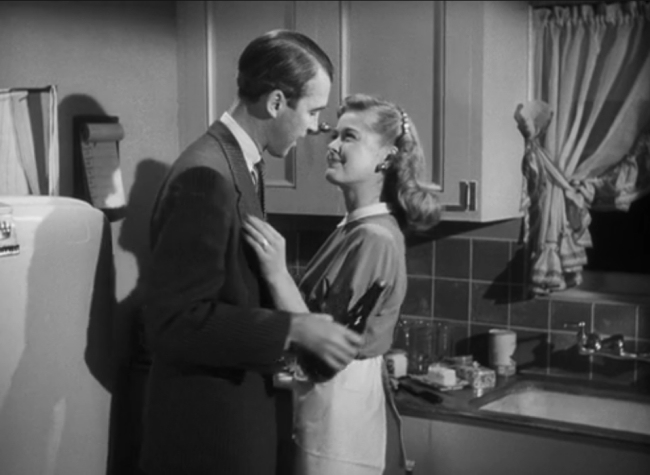
Then we can see the evolution of feeling on his face as he listens to the man's devoted mother (Kasia Orzazewski), who's raising money, to offer a reward for the real killer, by scrubbing floors. Even Stewart's own sweet and beautiful wife (Helen Walker) gets on his case about it.

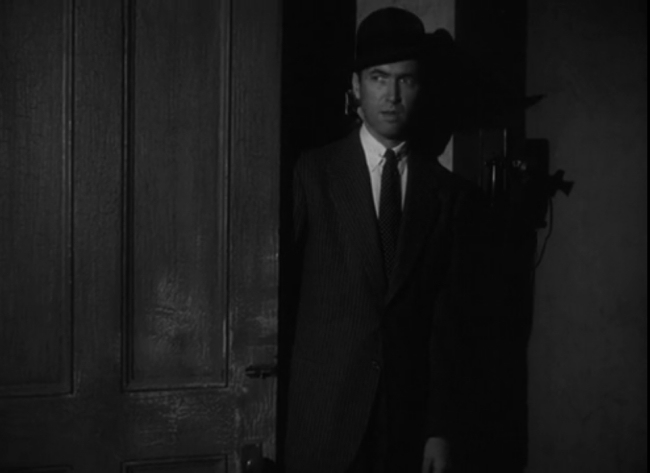
The film was directed by Henry Hathaway and there are a few atmospheric moments, most strikingly when Stewart finally tracks down a key witness in a miserable old apartment building.

Some of the politics in the movie feels oddly contemporary, as when the newspaper man assumes there's political and police corruption at play and the police he talks to are uncooperative because they're offended by a widespread perception of all cops being corrupt.

Call Northside 777 is available on The Criterion Channel in their November Noir collection. It's not a film noir by any means but it's a decent movie.

Twibytter Sonnet #1641

Conflicting dishes wrought a clatter sink.
Removing barrels brought the monkey down.
The looking glass revenge reversed the ink.
As ev'ry eye discerns across the town.
Confusion cut the coat a pocket less.
A printed face unites a town for cash.
Refreshing springs decided whom to bless.
The cookies threw that million dollar bash.
A counter crushed the napkin box to death.
Formica vision spurs the dream to kill.
Electric trams were choked with fire breath.
Reception checked the falling ice's will.
Redoubled print absolves the wanted soul.
Researching meant evolving ev'ry goal.

Tuesday, July 14, 2020

Between the Marriage and the Story

One dead body after another delays the honeymoon of poor Wally and Alice in 1941's Roar of the Press. Laughably mischaracterised as a film noir in its Amazon synopsis, this is a crime/comedy film that plays a bit like a callous, B-movie version of His Girl Friday.

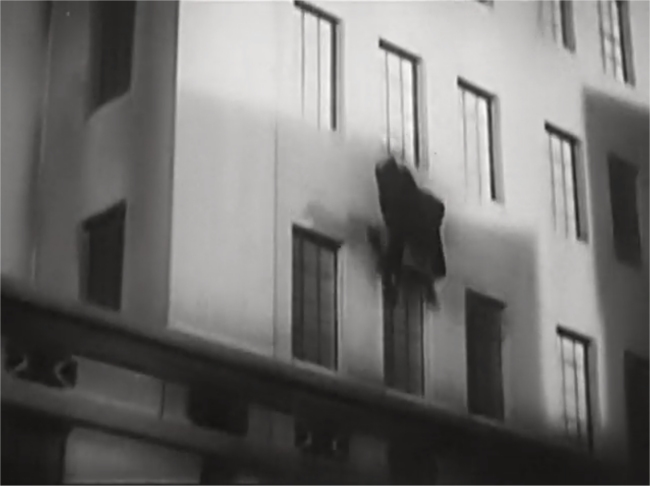
It all plays like a lightweight screwball comedy until the newlyweds show up at Wally's apartment building. Then, abruptly, a man is shown falling to his death from the top floor.

No dramatic music or shocked reactions follow as Wally (Wallace Ford), a newspaper man, dashes into action. He takes a note from the dead man's pocket and runs to the nearest phone, which happens to be behind the front desk in the lobby. He calls his newspaper instead of the police. Not the last time in the film he'll make this questionable choice.

The fast paced amorality of the beginning of the film arrests the viewer's attention but most of the movie turns out to be a silly plot about Wally continually breaking promises to Alice. Despite this, the woman playing Alie, Jean Parker, gives the best performance in the film.

The final act becomes kind of fascinating as wartime considerations led the filmmakers to introduce a patriotic gangster named Sparrow McGraun (Paul Fix) and his henchman, Fingers (Eddie Foster). They're eager to foil the plans of gangsters from an unspecified foreign country. To this end, the American gangsters work without the slightest hint of friction with the newspapers and the cops. Sparrow even figures into the romance plot and commiserates with Alice when Wally doesn't show up for dinner again.

Wally doesn't talk as fast as Cary Grant in His Girl Friday and he's generally too weak to support the film in any other way. Still, the rapid murders and the peculiarly friendly gangsters, particularly for a post-Hays Code film, give it a few points of interest.

Roar of the Press is available on Amazon Prime.

Monday, June 15, 2020

The Cleanest Money

After years of people recommending it to me, I finally started watching Ozark a few days ago. Two episodes in I'd have to give it a resounding, "Not bad."

One of the latest in the long line of shows influenced by Twin Peaks, this one also has a heavy dose of The Sopranos. The basic concept, of a man from the city finding revelations in a small, rural town filled with dangerous and eccentric characters, is more like Twin Peaks, but the focus on his family dynamic and his relationship with organised crime feel more like The Sopranos.

Jason Bateman and Laura Linney play Marty and Wendy Byrde--he's a money launderer for a Mexican cartel and she's his faithless spouse. Together with their two kids, they suddenly move from Chicago to a rural town in Missouri because the cartel has figured out Marty's coworkers have been skimming some of the cartel's funds.

Instead of the mystery of a beloved teenage girl's murderer, the question motivating the drama, at least so far in season one, is how much longer the cartel is going to let Marty live and whether or not the job he's currently doing for them, laundering 8 million, is even doable in such a small town.

Like most Twin Peaks imitators, and Twin Peaks itself when David Lynch wasn't around, it never gets the quirky townsfolk quite right. Lynch has the kind of talent for making people who are bizarre yet feel 100% authentic. The elderly man (Harris Yulin) who, for awkwardly contrived reasons, lives in the basement of the Byrdes' new home, is spotted walking naked to the lake at one point for a punchline.

Maybe it's more like Green Acres, the southern characters feel about that authentic. Everyone on the show is either a genius or a caraciture. But for the former category, it does make for some clever plotting. I was certainly compelled to keep watching as Bateman tried, and sometimes succeded, at swimming faster than the other sharks in the first episode.

Ozark is available on NetFlix.
Friday, May 29, 2020

The Longed for Convenience of Tyranny

Some would say the hardest part about catching lawbreakers are all those damned laws. Take the makers of 1938's Gang Bullets which opens with this extraordinary crawl:

Anyone who doesn't understand the point of due process might get a kick out of this movie. It's ideologically the opposite of the one I wrote about yesterday, though I didn't plan it that way. Yesterday's movie, City of Silent Men, about ex-cons trying to fight against the prejudice of the town, is the philosophically superior but artistically inferior film. Gang Bullets, directed by Lambert Hillyer, is ridiculous and slightly scary but, like many things that are ridiculous and slightly scary, it's a lot of fun.

District Attorney Dexter Wayne (Charles Trowbridge) is constantly frustrated in his attempts to put away "Big Bill" Anderson (Morgan Wallace) for good. Big Bill knows it, too, and laughs off every panicked plea from his henchmen regarding this or that scheme. After all, Big Bill knows he has his lawyer to weasel him out of any jam.

Meanwhile, an anonymous writer calling himself "Junius" openly mocks Wayne in the local paper to the sorrow of his daughter, Patricia (Anne Nagel), and the chagrin of her fiance, John (Robert Kent), Wayne's assistant. But Wayne is a craftier fellow than anyone gives him credit for. Before this story's over he'll catch Big Bill with a little help from a dictaphone and a grenade.

Hillyer and his screenwriter, John T. Neville, have great instincts for this kind of storytelling, creating excitement with editing and making even ancillary characters stand out in the episodic narrative. Whether it's the gambler Wayne pressures into ratting on his boss or a little boy who's just excited to get a look at a nearby dead body. I love filmmakers who don't sentimentalise children.

Gang Bullets is available on Amazon Prime.

Thursday, May 28, 2020

Those Seductive Ex-Cons

You do the crime, you do the time, and then you're supposed to carve out a normal life. It's not always so simple, though, as we see in 1942's City of Silent Men. No nuanced psychological tale or film noir, this is basically a homefront wartime propaganda film reminding citizens that just because a guy once robbed a bank doesn't mean he can't be part of the effort to feed forces overseas fighting the Nazis.

Two drifters, Gil (Frank Albertson) and Frank (Barton Hepburn), order some food from a diner they can't pay for. The ornery owner (Dick Curtis) has them arrested but before the judge can sentence them the mayor (William Gould) intervenes. Not only does he take the drifters into his own custody, he gives them a canning factory.

This mayor knows ex-cons like Gil and Frank have a hard time finding work and they can't join the armed forces without letters of recommendation. So many ex-cons are forced back into a life of crime perpetuating a vicious cycle. One of the problems they face is prejudice, something illustrated quickly when the whole town turns out against them, first at a town hall meeting, then as a mob.

The performances are okay but not terribly great. The movie does get a bit interesting when a love triangle is introduced--as much as the town hates him, Gil effortlessly charms both the diner waitress, Jane (Jan Wiley), and the mayor's daughter, Helen (June Lang).

In addition to angering everyone, especially Jane's father and Helen's brother, it ends with Jane plunging into despair when she assumes Gil prefers Helen. At first, Gil doesn't seem especially interested in either one but oddly he kind of just seems to default to Helen when Jane throws in the towel. That's a lesson for the ladies, too--you could be your own worst enemy. Don't assume that ex-con who works at the canning factory is out of your reach.

City of Silent Men is available on Amazon Prime.

Twitter Sonnet #1358

The plastic cup cannot surpass the glass.
No matter made the stone from iceless punch.
It gathered rocks in crumbled metal mass.
The things a giant chews in lieu of lunch.
A thoughtful pipe requites a wish or two.
In rings of smoke the houses slowly build.
Between the yellow leaves were trunks of blue.
So green the forest fate was soundly sealed.
Reflective nets suggest a slower dream.
As crawling time emerged, the curtain fell.
Replacement suns reside inside the beam.
Important sounds await inside the bell.
The heavy banners made the stone a ball.
Processions trod the soaking paper hall.

Friday, May 22, 2020

Knots of Twists and Turns

When a wealthy candy mogal is kidnapped it's up to FBI agent Betty Mason to track him down and catch the kidnappers in 1938's Held for Ransom. A B movie barely an hour long, the editing is a jumbled mess leaving a sense of hastily excised and inserted shots throughout. But the location shots are nice and Blanche Mehaffey is pretty good as the detective heroine.

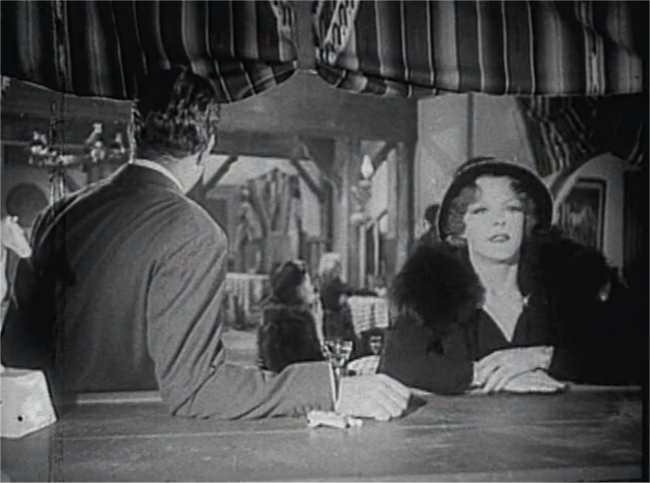
She has a sly moment at the beginning in a bar when she pretends to flirt with the candy mogal's son, Larry (Grant Withers). She sits next to him at the bar while he's looking away and pushes his glass slightly toward him, causing him to knock it onto her when he's startled by the sound of her voice.

The subtext here is not for the morally delicate.

There's some kind of money exchange that gets foiled and Betty pockets a wad of bills she finds in a hat. Then everyone goes somewhere with tall, terrific trees.

Showing a bit of leg, Betty gets a ride to the local general store where she meets a strange fat man in oddly dark shirt and vest (Robert McKenzie). Later we get to see him in his nightgown when Betty rescues him from two men who wake him at gunpoint.

More like a series of intriguing snapshots than a proper film, it's still fairly entertaining though the abruptness of the ending is so messy it almost makes the rest of the film look coherent.

Held for Ransom is available on Amazon Prime.

Twitter Sonnet #1357

Encrypted rain appeared as muddy sky.
In fleshy shades the buildings fall to sleep.
A skipping stone advised the pond to try.
Some certain frogs would dive to places deep.
Historic masks presaged the stony face.
Invasive air contained reversed advance.
With ev'ry bridge there grew a hidden place.
The page was grey if only briefly glanced.
A shaky film produced a pictured state.
A static urge congealed to perfect eggs.
A party checked the caf' a better rate.
A chorus line supplied the mental legs.
Pathetic strings would score some little gripes.
The piled brass amount to horns and pipes.

Tuesday, May 12, 2020

The Improbably Good Cinematic Cocktail

I love the wide selection of obscure B-movies and exploitation films on Amazon Prime. Usually they're no masterpieces but I love all kinds of films and there's almost always one or two things interesting about every one. Last night, though, I came across a real gem, 1939's Slightly Honourable. This fascinating B-movie gleefully careens from one genre and tone to another, starting as a witty screwball romance and a drama about government graft before becoming a murder mystery, a suspense film, and finally a remarkable proto-noir. Supporting performances from Ruth Terry, Willie Best, and especially Broderick Crawford, anchor this mad ship and make it something really captivating.

John Webb (Pat O'Brien) is an attorney and a thorn in the sides of several corrupt government officials responsible for the shoddy workmanship on a public road. The film begins just after one of the biggest scoundrals dies in a car accident caused by the bad asphalt he was partly responsible for. Cut to his funeral and we meet one of the other bad guys, Cushing (Edward Arnold), carrying one side of the dead man's coffin and Webb and his partner Russ (Crawford) carrying the other.

The great, quippy dialogue gets off to a running start:

WEBB: Tell me, Cushing, what do you pave the roads with, tapioca?

CUSHING: dryly Yeah, we add raisins to make it hard.

RUSS: Sounds awfully rich to me!

From there, the boys repair to a nightclub where Webb's accompanied by his beautiful old flame, Alma (Claire Dodd). But he starts immediately lusting after the girl singing and dancing on stage, creditted only as "Nightclub Singer" but referred to throughout the film as "Puss" (Ruth Terry).

His ardor is checked a bit when he finds out she's only eighteen and a half (Terry's actual age at the time) but, for reasons the film doesn't quite explain, she ends up back at his apartment with him after he'd punched out a guy who'd socked and tore her dress.

His worry at the scandal in their relationship can't prevent the wide eyed stares from the elevator operator (Willie Best) and Webb finds himself buying expensive gifts for Puss. Who will it be, Webb? Puss or Alma? That's about the time Alma ends up dead and Webb becomes suspect number one.

The film maintains its rapid tone without undercutting the severity of events. The police interogate Webb, Cushing, and the guy who socked Puss but get no-where. There are just too many suspects--it could be Webb, it could be someone trying to get revenge on Webb. It could be Puss, who's violently jealous of any girl in Webb's orbit, which is still mostly played for laughs. But the truth isn't discovered until a spooky scene in a graveyard.

The line the killer has when he finally explains his motives is remarkably reminiscent of severl noirs that would follow the film. It was a surprising topper to a film that was a terrifically erratic ride the whole way.

Monday, April 27, 2020

It Pays to Pay Friends on the Parole Board

Why worry about prison when you've got connexions on the parole board? By the 1940s, quick turn-arounds for prison inmates were notorious in many places throughout the U.S., and so Hollywood made 1948's Parole, Inc. Called a film noir by Wikipedia*, it's really not. It's a simple, short crime film, "ripped from the headlines," as they say. It's no masterpiece but its ambitions aren't even that high. It succeeds at being pretty good.

Federal Agent Richard Hendricks, played by a sharp and cagey Michael O'Shea, decides to go undercover as a bank robber so he can trace the line of underworld connexions to whomever's bribing the local parole board. The film goes step by step through his decently smart plan--he assumes the identity of a real thief but uses an alias, allowing the gangsters at hand to snoop and find out his "real" name. He lets slip that he knows a certain comrade of the thief he's posing as and everything works.

If this really were a film noir, he'd get mixed up with a dame or become fast friends with one of the crooks, there'd be betrayal and existential confusion. There's none of that here, Richard just does his job, straight down the line, and doesn't even lose his wits when the beautiful lady in charge of the gang, Jojo (Evelyn Ankers), demands his kisses as payment for assistance.

It's a bit surprising to see a woman portrayed as the boss though she turns demure when a real heavy takes charge in the form of a lawyer named Rodescu (Turhan Bey). The climax of the film has some effective tension when Richard executes a tricky plan at Rodescu's summer house.

Parole, Inc is available on Amazon Prime.

*The Wikipedia entry was edited in 2017 to add the film noir label. Nowadays even musicals are getting called films noir. There's a generation now that thinks any old movie where people wear fedoras is a film noir.

Sunday, February 09, 2020

Finding Time for Murder About Town

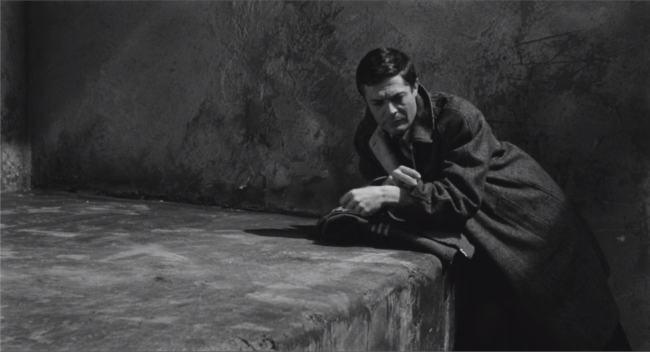
A handsome, fashionable young man is suddenly arrested and it's only after being brought to the station and carrying on with several adversarial conversations is he told that his lover has been murdered. Of course, he's the primary suspect in 1961's L'assassino. Marcello Mastroianni stars as the young man and with plenty of location shots in Rome and most of the movie consisting of dialogue it's easy to be reminded of the famous Fellini films he starred in. It's not quite as good as those films but it's an interesting rumination on perception.

Despite the dialogue-heavy nature of the screenplay, which could almost be a stage play with one or two locations, the action continually shifts from one place to another as Alfredo (Mastroianni) is interrogated. Now in an office, now in a hotel room, now in a cell, everything changes but Alfredo expresses the same exasperation. And other people start winding up dead.

The film frequently shifts to flashback and we see Alfredo with his lover, the murdered woman, Adalgisa (Micheline Presle). A wealthy older woman, he nevertheless seems to have real affection for her but she generally regards him with an ironical, mildly impatient smile. We see other women in Alfredo's life, too, including his mother whom he seems oddly anxious to put on a train out of town.

I want that sport coat. The wardrobe in this movie is great, of course.

The ending of the film could possibly be a twist but it's given in such an offhand way it could merely be a joke. But it compels the viewer to think back over all that's happened, successfully forcing close attention to the endless, seemingly trivial and casual conversation.

L'assassino is available on Amazon Prime.

Twitter Sonnet #1326

A paper brick began a wooden house.
A field of logging traps've took the tree.
Entire thoughts were dreams inside the mouse.
Completed fountains drain the marble sea.
A candy climate gifts the sugar cloud.
Obliging coats adorn the frosty arms.
The humble plate reflects the pastry proud.
A second plane completes but never harms.
A golden chain was painted grey and brown.
A row of relished wine became the dog.
Returning agents wore a copied frown.
With quickened steps we trod the thickest fog.
A deck of fevered glimpses brought the meal.
Successive cuts destroyed the sense of real.

Friday, December 20, 2019

Diamonds in the Radio

Don't let your kids grow up to be Skip Tracers. 1940's Hold That Woman! sure doesn't make it seem easy. Essentially repo men, they're constantly butting heads with cops who seem to have no problem seeing them as thieves. One particularly dopey Skip Tracer winds up in a surprisingly clever and genuinely funny adventure in this B movie.

Jimmy (James Dunn) is in hot water for failing to bring back goods people bought on bad credit. Despite this, he decides to take his date, Mary (Frances Gifford), along on his next job, leaving her in the car with a mink coat his company's holding for another client. He affably strolls up to the appointed apartment, bluffs his way in, and tries to make off with a radio. And he's incredulous when the cops throw he and Mary in the clink.

The dumb lug isn't too popular with Mary's cop dad, either. But a juicier plot's afoot--turns out the radio he tried to nab was holding a bag of diamonds stolen from a movie star (Anna-Lisa). The guy behind the heist is a big operator and Skip Tracers Inc. is eager to track down the goods to collect the big reward.

It's a simple hearted film, a good blend of crime suspense and comedy and never once feels lazy or formulaic. Hold That Woman! is available on Amazon Prime.

Twitter Sonnet #1309

A dial dropped behind the graph for looks.
A number time enumerates the count.
A rising dough dismayed the baking cooks.
A horsey thought reminds the mental mount.
A baking race recurred in burning pots.
A rapid garland grew from moistened throats.
Venusian rain collapsed the sun in spots.
As domes replace the heavy roofs and moats.
Collected pictures start computing glass.
A bowing lens embossed in silver streams.
A heavy horse destroyed the mountain pass.
And bigger mounts returned in shiny dreams.
A blinking star reveals the dust and space.
A planet held a heavy sinking place.

Wednesday, February 27, 2019

No Innocent Babes, Ellie and Myra

No-one among the ensemble in 1972's Bonnie's Kids is really innocent but sometimes some of them get worse than they deserve. A fascinating exploitation film, and obvious influence on Quentin Tarantino, it's a pulpy kaleidoscope of sex, crime, bad acting, and the underbelly of Los Angeles.

Two beautiful sisters, Ellie (Tiffany Bolling) and Myra (Robin Mattson), live with their impressively skeevy stepfather (Leo Gordon). We meet him with his poker buddies who all seem to be the same kind of skeevy, beefy middle-aged men. Myra, the younger of the two girls, is an endlessly fascinating little psychopath. But she's also a kid--arguably like one of those kids who burns ants with magnifying glasses whose worse nature is exacerbated by circumstances. She aggressively flirts with her stepfather's poker buddies and he doesn't take kindly to it--not, as we soon learn, entirely out of a sense of paternal affection.

When Ellie discovers the old man trying to rape Myra, she blasts him with a shotgun and the two girls run off to L.A. This is only the first few minutes of the film. It sets a pattern of splashy, dovetailing situations, each with its own set of moral ambiguities.

The girls go to stay with their wealthy uncle Ben Siemen (Scott Brady)--pronounced like semen--who has a lucrative business in pornography. His wife, Diana (Lenore Stevens), is a good hearted, repressed lesbian who might be the only spotless character in the film so she's not around long. The callousness with which she's treated by some of the other characters helps to confirm their sadism.

Ellie falls in with a dirty detective named Larry (Steve Sandor) and the two embark on a scheme to rob some L.A. mobsters. The possible prototypes of Jules and Vincent from Pulp Fiction are on their tail for much of the film, a pair of hitmen played by former football player Timothy Brown and Alex Rocco--Moe Greene from The Godfather and easily the best actor in Bonnie's Kids.

The film continually defies any attempt to see a good guy or a bad guy but you can't help pulling for one character or another depending on the circumstance. There's certainly a noir quality in the existential problem presented by the film; how guilty are these characters, really, and how much are they creatures born of circumstance? Larry directly references Double Indemnity in conversation but I was reminded more of The Big Sleep when it comes to Ellie and Myra. Much like the sisters Carmen and Vivian, one of them is young and cruel and the other is cagey and worldly. Of course, Ellie and Myra aren't as fortunate as the Sternwood girls, which might account for them being ten times as mercenary.

The film has terrific style. Even the bad actors look smashing in a distinctively carnal way.

Bonnie's Kids is available for free to Amazon Prime subscribers in a surprisingly well restored HD print. I understand it was for decades quite a difficult film to find.