Showing posts with label takashi miike. Show all posts

Friday, August 12, 2022

Excessive Cuts

In the complicated splatter pattern of gangster delusion, lust, and greed, a strange picture emerges in 2001's Ichi the Killer (殺し屋1). Some might take this as a parody of gangster and action films in general but I think director Takashi Miike is making a more fundamental argument about the human compulsion for violence. It's also a pretty entertaining bloodbath.

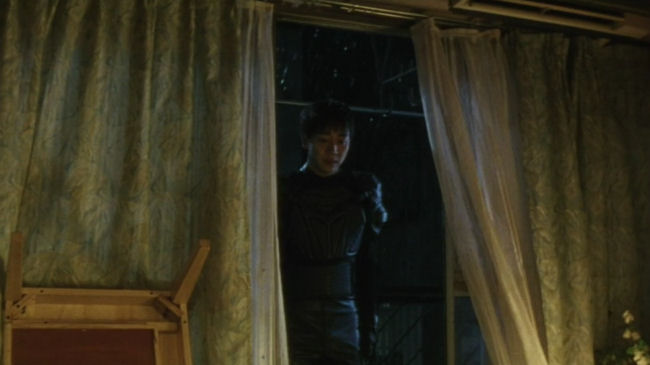
You could almost take it as a parody of The Dark Knight, seven years early. A hero in a black body armour costume vows vengeance against criminals after witnessing an assault of a loved one in his youth. His adversary is a fearless killer with a Glasgow smile.
But it's not that simple. The "hero", Ichi (Nao Omori) is sexually aroused by the victims of the criminals he kills. The inciting incident of his career, witnessing the gang rape of a high school girl, was possibly implanted by hypnosis and, as years passed, he's realised he wanted to rape the girl, too. This could be a commentary on how rape is typically fetishised in films though the nature of attraction itself implies a relationship between predatory and protective behaviour. Men and women are attracted to vulnerability. For some people, it's a small leap from being attracted to an existing vulnerability to actually wanting to cause pain, creating vulnerability where it didn't exist before.
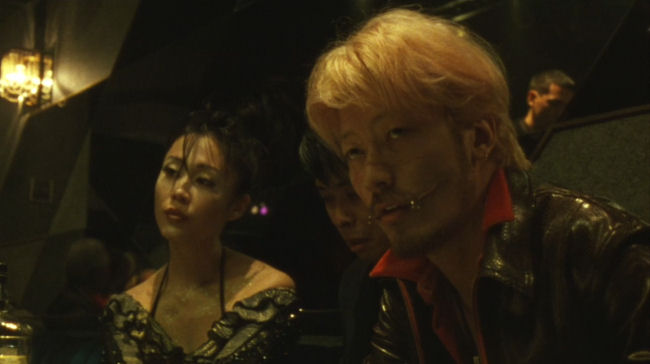
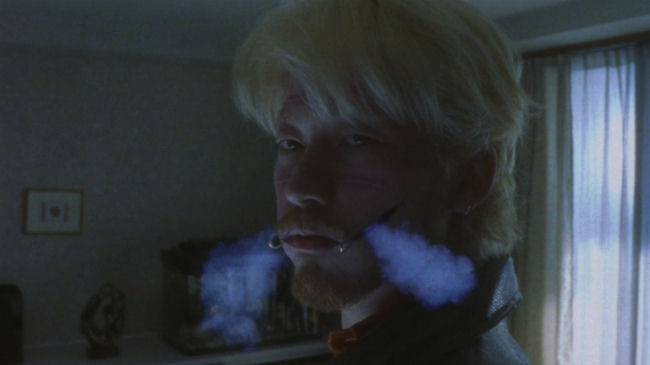
Meanwhile, the villain, Kakihara (Tadanobu Asano), is a sadomasochist. More of a masochist, really. He wears it on his face, not just with the Glasgow smile but with a criss-cross of scars. One of the more interesting images in the film is when he blows cigarette smoke through his unnaturally elongated mouth.
As the film gets bloodier and bloodier and both characters seem driven more by their strange, private fetishes, the story loses a lot of tension. It leans much more in the direction of slapstick, at times reminding me of Peter Jackson's Dead Alive. But I was much more reminded of Seijun Suzuki's Branded to Kill and I think it likely Miike was, like Suzuki, driven a little artistically crazy by the repetitive conventions of the genre. He made quite a piece of work out of it, though.

Ichi the Killer is available on Shudder.

Sunday, May 15, 2022

Don't Check Your Messages

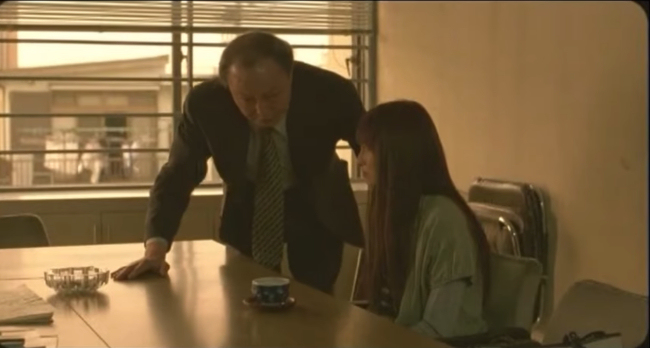
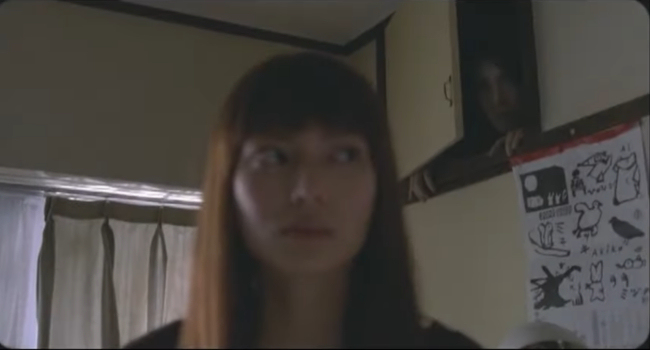
What is the significance of the demon ghost in your life? 2003's One Missed Call (着信アリ) made an effort to set itself apart from the flourishing genre of Japanese horror films about ghosts in machines by making a psychological connexion between its heroine and the threat menacing her. Critics saw it as just another run of the mill "J-Horror" show but I kind of liked it.

The concept in this one is that people get voice mails mails from themselves in future, moments before their deaths. You hear two or three words in the message and then a scream. It works nicely because, you might think, okay, I'll just make a point of not saying that sentence. But the victim always says it without thinking, and it's always plausible. It creates a wonderfully dreadful sense of inescapable fate.

The last one is especially good. The protagonist, Yumi (Ko Shibasaki), just hears herself saying, "Doshite?"--"Why?" Okay, now she just has to remember to never ask why. She's established as having a history of being abused and this matches well with an abusive relationship of the kind where an abuser might be twice as enraged by his or her victim asking that very question--"Why?"

Yumi's personal experiences seem to help her get some insight into what's happening. But then they also mislead her. She's a psychology student at university and this has given her preconceptions of what an abusive relationship looks like. Just when it seems like everything's wrapped up with a nice little bow, we're reminded of a whole bunch of clues the characters have forgotten about in arriving at a tidy diagnosis.

Director Takashi Miike does a lot of nice things with pacing and tone. I love how he favours letting the audience imagine things over showing a special effect or bit of gore. He uses reaction shots a lot, lingering on an actor's shocked face rather than the shocking thing they're seeing. In one scene, we're even given a reaction shot of a reaction. When Yumi sees one victim dragged into an elevator shaft, she falls down, and we see the back of her head. At that moment, a few guys get off the elevator and stop talking when they see her. We see their faces, not hers. I suppose it could've been a tactic to get around a weak performance but I didn't think Shibasaski was that bad.

One Missed Call is available on Shudder.

Twitter Sonnet #1581

The title waits on paper warped in rain.
The spiky turtle taunts the napless troll.
The tiny text can aging stereos explain.
You must deposit disks beneath the bowl.
The wasted weave was signed in error ink.
Beneath the hole, a waiting wight was kept.
The forest hides a dead but vital link.
In dappled light the knight of trees has slept.
Apparent Irish poems embrace the young.
Confusing phones await the hidden starved.
A can of air replaced a piping lung.
In red and white the clinic's halls were carved.
Familiar birds would carry years to space.
Behind a dream there watched a bitter face.

Monday, October 15, 2018

A Riot of Almost Nothing

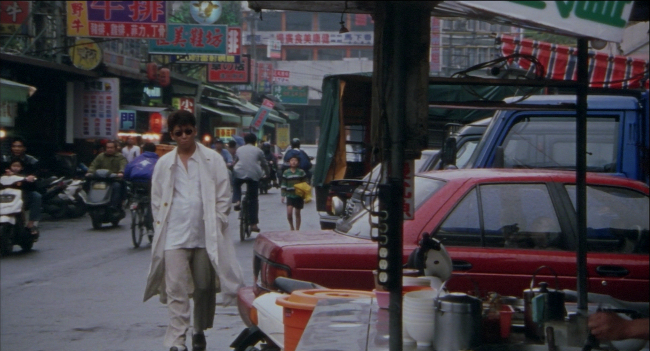
It's hard to imagine anything like normal life carrying on in the kaleidoscope of rubbish, signs, people, and homes of Taipei's slums as they're shown in 1997's Rainy Dog (極道黒社会>. And it's not the story of a normal life director Takashi Miike gives us, showing without sentiment a very unsentimental man and the loose semblance of a family that forms around him. It's a cold, fascinating film.

Yuuji (Show Aikawa) is a Japanese gangster working in Taiwan after his group back in Japan, following a change of leadership, put a hit out on him. There's another yakuza in Taipei (Tomorowo Taguchi) tasked with killing Yuuji. He can't go home until he does though after one failed attempt on Yuuji's life he explains to his target over dinner that he actually likes Taipei. It has friendly women and good food. He asks if the little boy following Yuuji around is really his son to which Yuuji replies he has no idea.

It's really not clear; Yuuji remembers sleeping with the boy's mother years ago but it's entirely possible the woman just used it as an excuse to drop the kid off with Yuuji when she didn't want to care for him anymore. Not that this phases Yuuji whose profession involves executing people without hesitation or remorse. He doesn't tell the kid to leave but doesn't acknowledge him either. It's like he's not even there.

Meanwhile, the boss of Yuuji's gang speaks to Yuuji in the exaggeratively familial way of yakuza, calling Yuuji his brother and telling him how much that means. But of course Yuuji has a very good idea of exactly how much it means. The beginning of the film has him coolly riding along in a truck with hanging meat, and it's not hard to see the correlation.

Yuuji hires a prostitute named Lily (Xianmei Chen) and circumstances force him to flee with her and the kid. They seem like they're starting to form something like a bond and Lily even starts trying to teach the little boy how to read. But it's all so tenuous; they wind up on a beach where a motley of scattered junk has washed up, all this human detritus divorced of meaning and function. It's one of many visuals that with cool sadness show what life is like in Yuuji's world.