Showing posts with label william hurt. Show all posts

Sunday, March 13, 2022

William Hurt

William Hurt died yesterday. A great leading man in the '80s, by the late '90s he'd established himself in a solid career of great supporting performances. Suddenly William Hurt would turn up in a movie and he'd either elevate or perfectly complement the material.

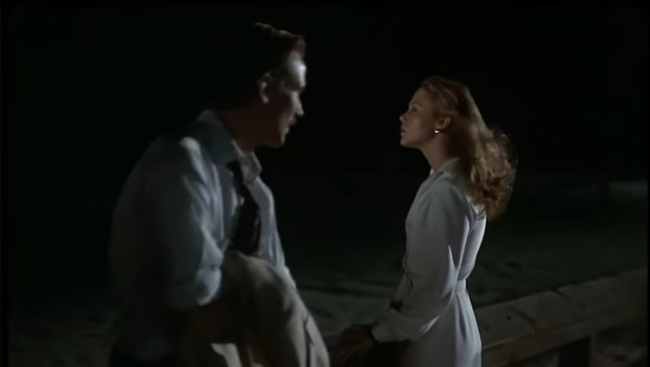
I haven't seen most of his famous leading roles. I only recently saw Body Heat, a neo-noir from 1981, the year he became a big name. In that movie he has to be vulgar and sophisticated, carnal and canny, and he pulls it off. It's this mix of inviting warmth and selfish sensuality that made him so effective, that made him so good in small roles. Because he needed hardly any time to get the ball rolling.

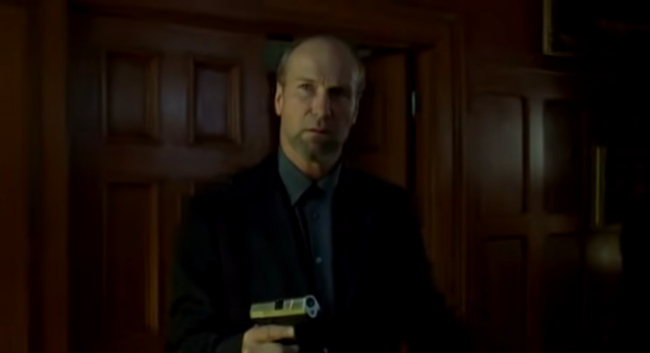
I remember how stunned everyone was when he turned up as a mob boss in David Cronenberg's History of Violence in 2005. Everyone had somehow gotten used to him in softball, romantic leads. Suddenly that carnality from the '80s was working for him to make an effectively frightening gangster.

And then there are plenty of roles that weren't so much talked about but were crucial to making their films what they are. The father figure and robotics engineer in Spielberg's A.I., Thaddeus Ross in the MCU, and the real life knight, Sir William Marshal, in Ridley Scott's Robin Hood. He was one of the few things I liked about that movie.

Last year I also listened to him read me Ernest Hemmingway's The Sun Also Rises in audiobook. That mix of earnest empathy and indulgent vulgarity made him perfect for a young Hemmingway. There was certainly no other actor quite like him.

Monday, September 06, 2021

Counterfeit Heat

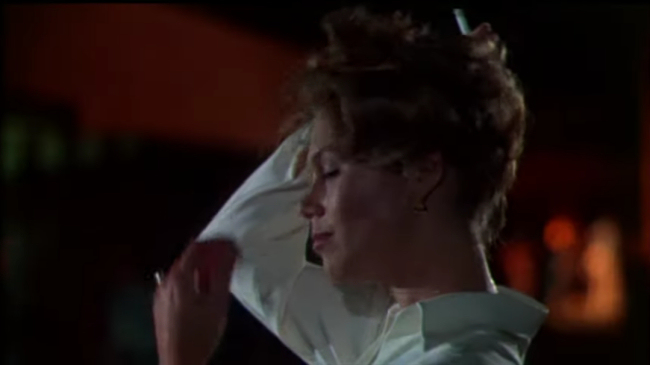
I wonder if Kathleen Turner in 1981's Body Heat is the original '80s femme fatale. Watching it last night, I thought of my recent viewing of Black Widow and how cold Theresa Russell is in that movie. These femmes fatale are reptilian in a way they never were in the golden era of noir. Writer/director Lawrence Kasdan obviously drew primarily from Double Indemnity but while Barbara Stanwyck is certainly murderous, manipulative, and avaricious, you don't come away with the impression you never saw for sure her true feelings. Turner's character, Matty, is such a complete enigma by the end of the film it's almost a horror movie. I would say she's closer to Bram Stoker's conception of Dracula than a '40s style femme fatale. The main reason for this is how successful Kasdan, Turner, and William Hurt are at conveying a sense of irresistible sexual passion in the first part of the film.

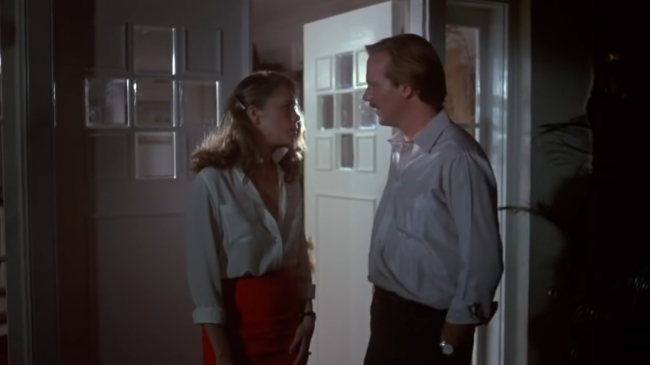
The dialogue is an emulation of the classic noir, highly stylised back and forth. Chandlerian but not quite "How fast was I driving" Chandlerian. But it still gives a real sense of two people navigating their sexual needs in dialogue. Hurt is insistent yet playful, Turner is cool but fervent. The idea that she felt absolutely nothing for him, enough to casually betray him, almost seems like a paranoid conspiracy theory. Or, indeed, like misogyny. An impression given credence by another odd difference between this and old noir--Hurt's character is surrounded by a really caring network of guys. Even his rival attorney played by Ted Danson cares enough about him to give him thinly veiled warnings about an investigation being conducted on him. Mickey Rourke, in his breakout role, is a criminal, a demolitions guy, whom Hurt had helped stay out of prison. Even that doesn't quite explain the deep concern Rourke evidently feels for him, enough that he goes out of his way to warn Hurt about danger.

Kasdan's dialogue really is clever, though, and the performances are great. The movie's good enough I watched it in dribs and drabs last night, struggling to get HBOMax to stream. It took about three hours to watch the two hour movie. I got screenshots from YouTube trailers and clips to-day. I'm so done trying to use HBOMax.

Thursday, October 11, 2018

Three Billys and a Giant

This morning I finished watching the first season of Goliath, a legal drama created by writers and attorneys David E. Kelley and Jonathan Shapiro in 2016. It was really good, somewhat pulpier than other David E. Kelley series I've seen.

He and Shapiro co-wrote the first three episodes and the last two of the first season and Shapiro alone wrote the three in between. Despite the fact that Shapiro is also an attorney who has written for a lot of television legal dramas, the courtroom scenes are noticeably better in the episodes where he shares a writing credit with Kelley. But Shapiro's solo episodes are absorbing in how they further the show's rumination on people who see themselves as monsters.

The title refers to the biblical tale with Billy Bob Thorton's Billy McBride representing David and a massive weapons development corporation and their powerhouse law firm collectively representing Goliath. But Billy isn't quite the pure and simple little guy; he's co-founder of that same powerhouse law firm, Cooperman McBride, which still bears his name.

The other name belongs to William Hurt's character, Donald Cooperman, who's almost a comic villain; a scarred, reclusive man who rarely leaves his penthouse office where he sits in the dark, listening to opera, and observing everything via omnipresent surveillance cameras with a feed that's inexplicably tinted red.

I loved watching Kelley's series Ally McBeal and The Practice when they originally aired back in the 90s. Looking at Kelley's Wikipedia entry to-day, I see there's an interesting comparison between articles praising Ally McBeal for its insight into real women and articles condemning it as mere male fantasy. Why is it so hard for people to consider a work of art may have genuine insight and also be a fantasy?

Certainly I'd say Goliath is both. Billy and Donald are two patriarchs conspicuously surrounded by beautiful women--for some of them the two compete and there are shifting allegiances. On Billie's side is a spunky DUI lawyer and realtor named Patty Solis-Papagian (Nina Arianda) and a prostitute and paralegal named Brittany Gold (Tania Raymonde). On Donald's side is the crafty Callie Senate (Molly Parker), the very young but brilliant and ambitious Lucy Kittridge (Olivia Thirlby), and Billy's ex-wife Michelle who's played by Maria Bello in what turns out to be a surprisingly small role.

Billy's story is mostly dominated by the surprising plot developments as the powers-that-be deploy surprisingly extreme methods to stop his lawsuit from proving the company's been guilty of illegal weapons testing. There's murder, dirty cops, mutilated bodies turning up in trunks, drug stings--the show successfully raises the tension and it seems a wonder Billy isn't killed or imprisoned before the end of the series. Personal drama of the prostitute, Brittany, ends up taking more time than Billy's story and she's interesting enough--she makes me want to see season two despite the absence of Kelley and Shapiro as writers.

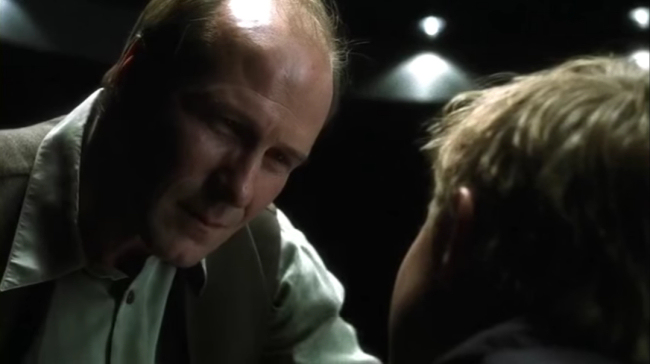
The show spends much more time on Donald than on Billy. Donald's relationship with Lucy ends up being sweet, sad, and scary and an obvious but still successfully tragic portrait of the self destructiveness inherent in Donald's arrogance and intolerance. William Hurt's performance is amazing.

Ultimately I'd say the villains are more interesting than the heroes in this story but Billy Bob Thorton is also great.

Friday, May 11, 2018

A Strangely Familiar Bull

I decided to spend all day working on my comic to-day so I got an audio book to listen to, William Hurt reading Ernest Hemingway's 1926 novel The Sun Also Rises. I thought I'd never read it but what started as deja vu became a definite feeling that I'd read the book before. I have no memory of when or why but I definitely knew the book. It's not bad, anyway I like the narrative structure. I suppose that's been said.

William Hurt is an odd reader, his inflection often seemed wrong. Sometimes his tone would go up at the end of a statement like it was a question, sometimes he ran sentences together when it seemed inappropriate. But as I went on I got used to him. By the end I thought he had kind of a classy, Robert Mitchum-ish voice. I've seen him in plenty of movies; Hurt, I mean (I've seen Mitchum in a lot more). I remember he impressed me most playing against type as a gangster in David Cronenberg's History of Violence. He put on an accent in that and he doesn't hesitate from putting on the variety of accents in The Sun Also Rises with varying degrees of success. It was a nice way of keeping the characters distinct.

I love how much time Hemingway devotes to describing experiences that don't have any explicit connexion to the main plot, but then, of course, they do. Describing a day spent fishing with another guy he establishes his state of mind and gives an impression of the passage of time between the last time he saw Brett, the woman everyone in the novel's in love with, and the next. It helps emphasise the importance she has in the minds of the male characters too--something he gets closer to directly stating when he says, when it was just him and two of the other guys, it felt like six people were missing. I guess that's all part of Hemingway's "Iceberg Technique", where he deliberately doesn't directly emphasise important things. It's a good technique.

Not only have I read the book I feel like I've also read a lot about it. I do remember a class a couple years ago where the use of the word "nigger" was discussed. I think the book also came up when I took Women's Sexuality, I certainly remember hearing the Third or Fourth Wave Feminist angle on it in any case. Wikipedia has a section on its anti-Semitism. Maybe it's the way Hurt read it but I felt like some of the characters were anti-Semitic, not the book itself. The one Jewish character, Robert Cohn, even seems to be the protagonist at the beginning of the book at first and Hemingway gives him a pretty complex and even sympathetic backstory, talking about his time in college, his compulsion to take up boxing even though he didn't really like it. But the fact that he was good at it was good for his self-esteem--he comes across as a real person, not a caricature, anti-Semiic or otherwise. But that might be only because he's based on a real person. Certainly all the characters seem tolerant of anti-Semitism.

I'm not a fan of bullfighting, something that the action of the book revolves around, literally and thematically. I'm a vegetarian, though I generally say not for moral reasons--I've just never liked meat. But bullfighting seems excessively cruel to the animal. I could sort of appreciate what Hemingway says about the pride in the professionalism, how the crowd cheers more for the young, risk-taking matador over the more polished but careful one. It becomes an interesting way into discussing Brett's fascination with the boy. An integral part of the innocence that attracts her to the much younger man is the pride and skill he has in killing this magnificent animal. I suppose one could read into it an attempt to reconnect with a pre-World War I romanticising of warfare. There is something eerie and lovely about it. Bullfighters still don't impress me, though.