Showing posts with label world war ii. Show all posts

Tuesday, June 13, 2023

The Standard Version

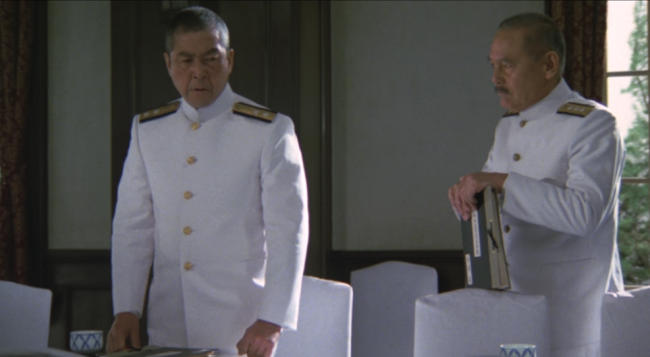
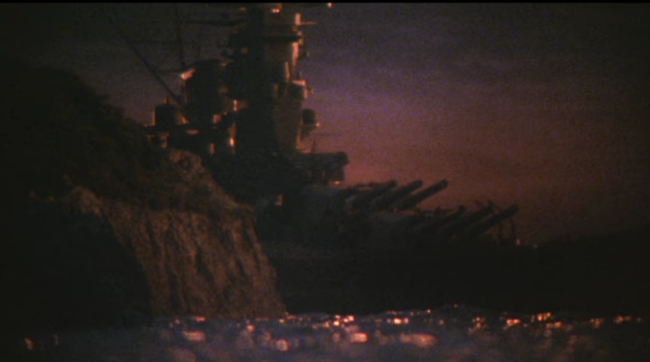
Japan engages in naval warfare in 1981's Imperial Navy (連合艦隊). Despite weak special effects and an unimaginative screenplay, this World War II film manages some effective scenes, particularly in its bloody climax.

The movie begins by showing the top brass of Japan's Navy being informed of the decision to ally with Germany and Italy in going to war. Admiral Yamamoto (Keiju Kohayashi) is furious and feels such an endeavour is doomed.

The movie carefully avoids depicting any enthusiasm for the object of the war, instead depicting all passions focused on the people and vessels involved, particularly the battleship Yamato.

That's the same ship that gets turned into a space vessel in the great anime Space Battleship Yamato, a much more effective work.

The year 1981 will be familiar to cinephiles as the year Das Boot was released, a World War II film with a German submarine crew as protagonists. Das Boot gained worldwide renown but Imperial Navy remains obscure. It's not just that Das Boot had better special effects. Wolfgang Petersen's film succeeds at portraying the realistic, messy humanity of that group of men. Imperial Navy portrays types. Everyone, from the stoic admiral to the eager young soldier to the kamikaze pilot who cries out for his mother, everyone behaves as most people would expect.

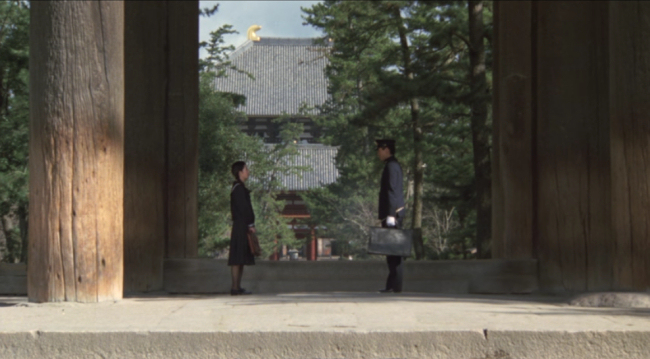
I was pleased to recognise some locations, including the beautiful gates near Todai-ji in Nara.

Imperial Navy is available on YouTube.

Monday, June 06, 2022

The Disoriented Empress

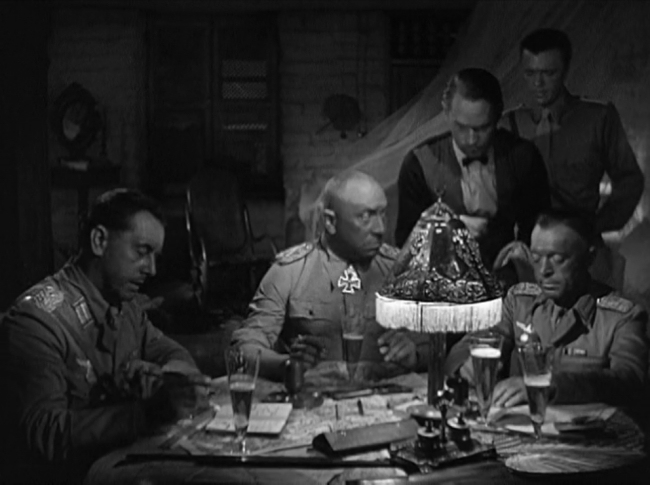
A British tank crewman stumbles across the desert, delirious, and somehow makes it to a hotel in North Africa called the Empress of Britain. So begins Billy Wilder's 1943 American propaganda film Five Graves to Cairo. Like most of Wilder's movies, this one has a very sharp screenplay, in this case by Wilder and Charles Brackett. Stars Franchot Tone, Anne Baxter, and Erich von Stoheim put in good performances, too.

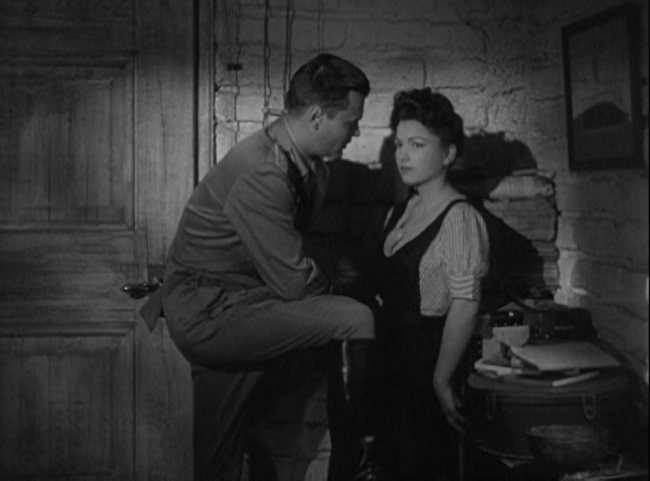
Baxter's is the most memorable. She plays a French chambermaid named Mouche who has somehow ended up working in this North African hotel. It later turns out she has resentment for the British for how they handled Dunkirk and, while she won't squeal on John (Tone) when Rommel (Von Stroheim) and his men take over the hotel, she still wants to find favour with someone in the German brass. She has a brother in a concentration camp and she's willing to do anything to get him out. The film, despite having been made during the era of the Hays Code, manages to make it clear that means sexual favours.

Her tragic story plays effectively alongside the more straightforward adventure tale of John's. He masquerades as a waiter who'd been killed in a bombardment before the Germans came. Then he finds out that waiter was a German agent. So he finds himself pretending to be a waiter pretending to be a Nazi spy.

The film nicely keeps up the tension on his predicament. There's never any real chemistry between him and Baxter which is perhaps why this film hasn't garnered the same kind of veneration as Casablanca or other great wartime films. But it's still pretty good.

Five Graves to Cairo is available on The Criterion Channel as part of this month's collection of 1940s Billy Wilder movies.

Thursday, November 11, 2021

The Day Between Conflict and Peace

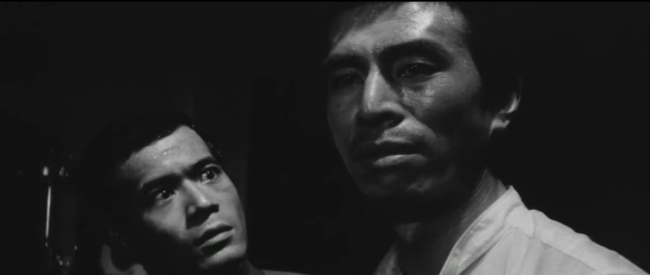
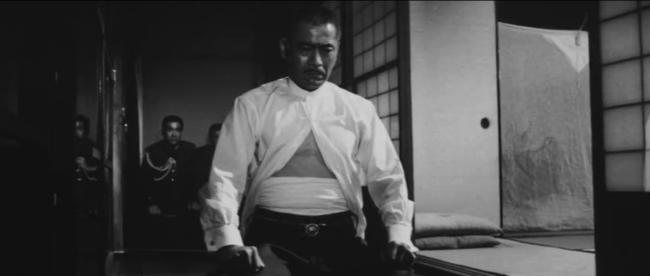
It's easy to say Japan surrendered after the United States used two atomic bombs on Japanese cities. The reality was much more complicated and delicate, as can be seen in Japan's Longest Day (日本のいちばん長い日). A 1967 film from Toho, it features almost every major and minor star from the studio, including Toshiro Mifune and Chishu Ryu, playing Minister of War Korechika Anami and Prime Minister Kantaro Suzuki, respectively. Mostly consisting of scenes of men arguing in comfortable rooms, it's nonetheless constantly propelled by suspense.

Taking place over the course of 24 hours, from noon, August 14 to noon, August 15, 1945, it presents two groups of players in the drama--Japan's highest officials, debating the correct course for the country, and a few lower ranking officers who decide to take matters into their own hands. Masataka Ida (Etsushi Takahashi) and Kenji Hatanaka (Toshio Kurosawa) attempt to perpetrate what was later called the Kyujo incident, a coup.

To do this, they murder one official in one of the film's few action sequences, using swords against the old man who's too indignant at what his subordinates are doing to be afraid. The scene uses arterial spray to great dramatic effect.

Following this, the conspirators search madly for the recording of the Emperor announcing the surrender before its broadcast. They ransack the Emperor's palace, invading the rooms of all the women staying at the palace as well as high level servants. Watching them tear apart the carefully arranged furniture and decorations, I realised these guys must have been intensely unsympathetic to the average Japanese audience. If having the pro-surrender officials played by actors who typically played popular heroes didn't already make it clear which side the film's sympathy is on. This is perhaps what keeps the film from being truly great, it makes little attempt to show why the conspirators were doing what they were doing.

The exception is the Minister of War, played by Toshirio Mifune. He puts forward the argument that to surrender now, however inevitable defeat might seem, would be to dishonour the hundreds of thousands who died believing in Japan's victory. But he can't disobey his Emperor. He's not a madman, he doesn't attempt a coup against the sovereign whose sovereignty he's attempting to defend. But it's also not hard to see why he would commit seppuku after signing the surrender.

The film was directed by Kihachi Okamoto who might rely too much on close-ups but his editing keeps everything moving at a brisk pace so that the two and a half hour run time feels more like one hour.

Sunday, February 23, 2020

Rabbit Courage

Not all the things we liked as kids look so good when we're older, whether it's He-Man or Good Luck Trolls or, like the protagonist of 2019's Jojo Rabbit, Adolf Hitler. True, being a Nazi fanboy has direr connotations than being an avid Pog collector, but filmmaker Taika Waititi wisely sees the same rules of youthful foolishness likely applied. Employing a tone frequently reminiscent of Wes Anderson, Waititi made a good comedy about the innocent absurdity that can exist concurrently with malicious horror.

As Dostoevsky wrote in The Brothers Karamazov, "As a general rule, people, even the wicked, are much more naïve and simple-hearted than we suppose. And we ourselves are, too." As young Jojo (Roman Griffin Davis) takes to Hitler Youth training with gusto, he meets silly adult Nazis played by Sam Rockwell, Alfie Allen, and Rebel Wilson. Wilson's character, Fraulein Rahm, never breaks stride in her devotion to the cause, even later in the film when she's packing kids off with explosives. She maintains the manner of a secretary whose mind is never entirely on her boring job yet her devotion to the concept is beyond question.

The film's most interesting character is Sam Rockwell's Captain Klenzendorf whose fervour for the National Socialist Party has worn out with age and experience along with assorted other kinds of youthful idealism and slavishness. He designs his own uniform at one point with ridiculous crimson fringe and a plumed helmet that doesn't so much proclaim his loyalties as much as it says, "Fuck this noise, I'm doing what I want."

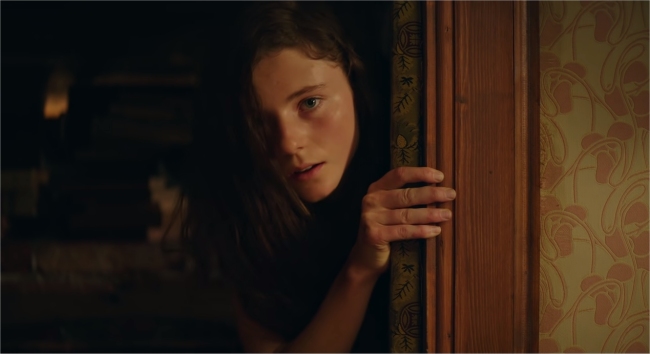
Jojo's mother, played by an especially sharp and charming Scarlett Johansson, is a more straight forward, secret anti-Nazi, and Jojo discovers one day a Jewish girl his mother's been hiding in the wall. Elsa (Thomasin McKenzie) threatens and mocks the boy and he, of course, is horrified by her. But like most kids who spend a lot of time together on the playground, no taunts or factionalism can quite outlast the influence of shared experience and hormones.

Waititi himself plays Jojo's imaginary friend in the film, a version of Adolf Hitler, whose childlike recriminations and articulations of moral support seem much more like a kid's construct than the bloody dictator, though there's understandably some overlap between the two. Waititi's performance is very funny.

It's a very sweet film that says some rather dangerously innocent and insightful things about human nature.

Sunday, January 26, 2020

War Spares Not the Lovable

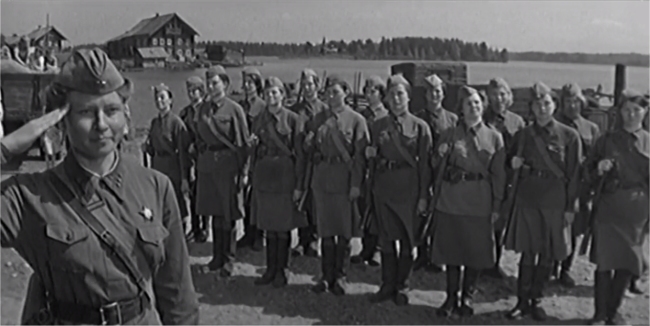
During World War II, many Soviet women served in the military, mostly in medical roles but a significant number were pilots, snipers, and ground troops. The reality probably didn't look a lot like 1972's The Dawns Here are Quiet, which depicts one male officer chagrined to find himself in charge of an adorable all female unit at a remote outpost. Divided in two parts, the first introduces us to the bright eyed young lasses with their pure hearted hopes and dreams while the second half concerns their tragic attempts to stop a group of Nazi scouts. The movie was designed to inspire love for the Soviet Union and hatred for its enemies and I can't deny it works its spell effectively. I wanted to hug all these girls and brutally murder all the Nazis who threatened them.

The first half of the movie is so moe it's almost a slice-of-life anime. Every single one of the gunners assigned to the meagre outpost is petite, sweet, and has a backstory about lost love or sneaking rations to a struggling family. Like an anime, too, there's an obligatory bath house scene, in this case a steam bath in which everyone admires Zhenya (Olga Ostroumova) for being the most beautiful of all and with the best figure.

Oh, come on, girls, you're all worthy.

All of them are in various levels of love with Senior Sergeant Vaskov (Andrey Martynov) who tries to hide his embarrassment behind a brilliant, enormous moustache. He awkwardly decides to visit the barracks while the girls are dancing, just to hang out and watch, but everyone stops because he's there and he's obliged to awkwardly remove himself.

Vaskov's number one fan is Lisa (Yelena Drapeko), who's teased for it by the others. This makes it all the more heartbreaking when, in part 2, she's sent back alone from the reconnaissance party to report on the Nazis being in greater number than expected. She runs too fast and gets stuck in the mud, gradually sinking in, gasping for air before submerging completely.

Most of the film is black and white but flashbacks and fantasies are shown in colour. Vaskov starts to have visions of the girls in colour in part two and if it doesn't bring a tear to your eye you're made of sterner stuff than I.

The Dawns Here are Quiet is available on Amazon Prime in two separate parts. Part I is in the original Russian with English subtitles while Part II, for some reason, is mostly an English dubbed version but some random scenes switch to the original Russian.

Wednesday, December 19, 2018

New Animation for Old Years

Firsthand experience of the Holocaust is hard enough to imagine as an adult, but how strange it must have been for a child in a concentration camp, in addition to horrifying. Yesterday I finally got a chance to see the 2011 short film Ingrid Pitt: Beyond the Forest, the final project of Ingrid Pitt before her death. One of my favourite actresses, she's best known for her work in British horror films in the 70s, particularly the great The Vampire Lovers and the decent Countess Dracula. When she was a little girl, she and her mother escaped from a concentration camp in Poland near the end of World War II; the short recounts this experience. It's so short it's a bit hard to judge, but something of her experience is translated in a fascinating way by the decision to let a ten year old boy named Perry Chen do the animation. Still, I can't help feeling the film would've been better off with Bill Plympton animating the short himself.

Plympton did do the storyboards and his style is clearly recognisable in the character designs. The animation itself is crude and clearly produced with a simple computer programmme. But I guess there is something in the simplicity of how Chen conceives of black planes shooting scribble bombs at Nazis who keep their rifles straight up on their shoulders as they flee. His imperfect perceptions match up a bit with Pitt's recollections.

Her voice sounds frail and emotional, very different to the newest thing I saw her in, the 1984 Doctor Who serial Warriors of the Deep. She appeared in a few things since then, I just haven't seen them.

Warriors of the Deep is kind of a low point both for Doctor Who and Ingrid Pitt but she had a nice supporting role in the BBC Television Shakespeare's production of Comedy of Errors the year before that.

Maybe because she wasn't feeling well, maybe because she was close to death, made her emotions particularly raw when recounting her childhood experience, but it really works, in any case. She recalls dogs at the concentration camp that were always snarling but for some reason never barked. She remembers a little boy who found her and her mother in the forest who at first wanted his father to shoot them. Something of the strangeness and confusion of the experience comes through.

I don't know how this movie took five years to complete. Maybe if Plympton were hand drawing it, I would understand. Anyway, it's an interesting work and a fascinating part of Pitt's life.

Thursday, August 09, 2018

Children in the Ruins

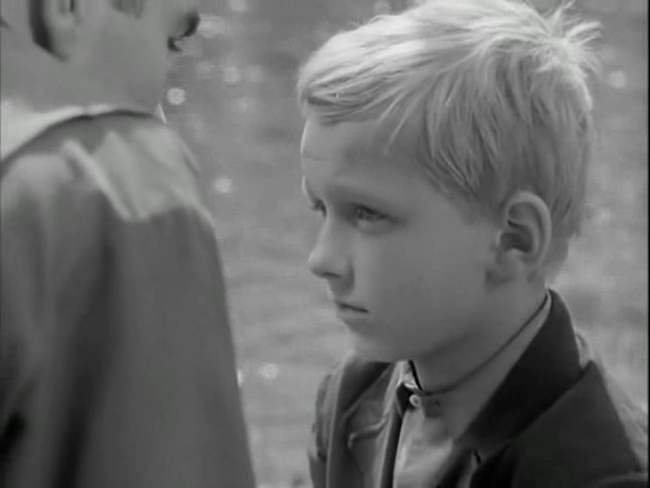
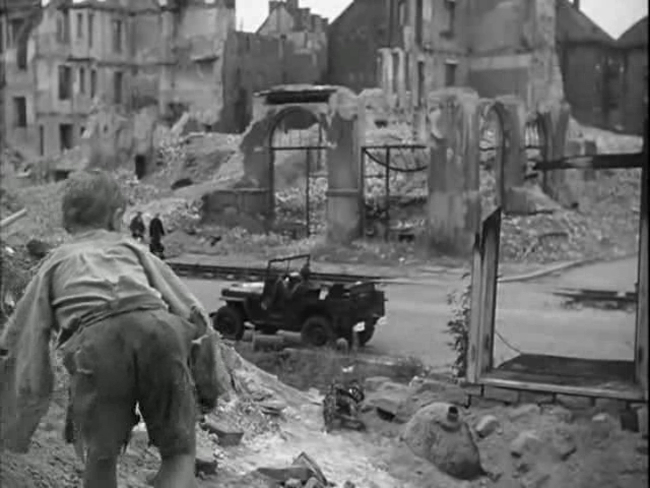
Among the many difficult jobs Allied forces faced after World War II was reuniting families separated by the Nazis. 1948's The Search is about the small children found in concentration camps and the efforts to find their parents, who were often dead. Shot on location in the ruins of post war Germany, there's an astonishing feeling of authenticity to the film but also an extremely effective, bittersweet drama between its leads, Ivan Jandl and Montgomery Clift.

Karel (Jandl) is among a group of children found in various concentration camps before ending up at a UN transit camp. Karel was in Auschwitz and has a more difficult time mustering the courage to speak than the other children but all of them are traumatised. As we're told in voice over by Mrs. Murray (Aline MacMahon) the children are conditioned to fear adults, especially adults in uniform.

The voice-over and the authentic locations give the film a documentary feel but it becomes more of a story when the children escape from an ambulance and scatter through the ruins. Karel, believed by the UN workers to have drowned, ends up meeting an American soldier named Steve (Clift) who takes him in.

Clift and Jandl are so good in this movie. Unhappy with the dialogue, Clift also contributed to the screenplay and his performance has all the naturalism you'd expect from a method actor as well as Clift's natural warmth. Steve's been eager to get home but he quickly forms a bond with Karel--who he calls Jim--and wants to stay and care for him.

Jandl won an Oscar for his role but because his native Czechoslovakia had become communist he was not permitted to travel to the U.S. to accept the award. According to Wikipedia, he didn't know any English during the making of the film and learned all his lines phonetically. If true, that's amazing because he gives such a natural, emotive performance. This may be due partly to Fred Zinnemann's direction and I would suspect having someone as natural as Clift to play off of helped as well. The kid has naturally sad eyes, too.

But all this makes it hard to account for the adorably excited reaction he has when Steve gives him a new pair of shoes--"My shoes!" he cries immediately. Not just in individual moments but over the course of the film he gives a performance with a clear progression. From withdrawn and emotionally paralysed by trauma to a kid who's responded to the comparative normalcy of an affable anchor like Steve with some of the normal energy and curiosity of a child. I found myself getting caught up in the relationship between these two characters and I felt really happy for every good thing that happened and terribly anxious even at some of the most obviously manipulative moments.

These real war torn locations along with the performances give the film an Italian Neorealist feel and I thought of Bicycle Thieves and Rome, Open City. But it's a very good film in its own right.

Tuesday, April 03, 2018

The Wet Devastation

London's East End in the aftermath of World War II was not an easy place to live in. In addition to physical damage to structures from the war there was also a persisting scarcity of resources. The 1948 film noir It Always Rains On Sunday captures some of this world in an almost incidental way, featuring some real location footage but even more extraordinary backlot scenes populated by diverse characters, shot by the great cinematographer Douglas Slocombe. Featuring several curious subplots, the main story surprisingly focuses on women dealing with sexual frustration. The end abruptly crashes into a set of solutions to meet moral imperatives but the film is fascinating in the lead up to these especially since a few of the subplots, uniquely for films of the time, remain unresolved.

Googie Withers stars as Rose Sandigate, a young working class wife married to a man, as the dialogue pointedly draws attention to, twelve years her senior, George (Edward Chapman). Rose is constantly frustrated and argumentative but seems glumly settled down to life caring for the basically amiable George and his three children from a previous marriage--two beautiful teenage daughters, Vi (Susan Shaw) and Doris (Patricia Plunkett), and a little boy named Alfie (David Lines).
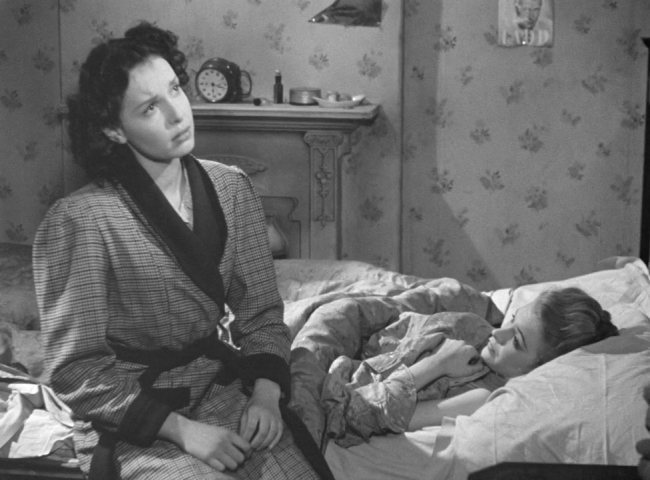
Like most teenage girls, Vi and Doris have their dramas involving boys, but Vi's trouble is slightly unusual. She's been going out with an older, married man--a band leader and owner of a music shop named Morry Hyams (Sydney Tafler).

The film features several unambiguously Jewish characters, unusual for the time, especially striking given the film's tangential relationship to World War II. We meet Morry's wife, Sadie (Betty Ann Davies), and his brother, Lou (John Slater), who runs a local arcade and seems to be something of a mild gang boss, though he never comes off as especially sinister or foolish. Three would-be gangsters who try to associate with him are played more for laughs. In one amusing scene, they show up at a store owner's home and try to force him to pay exorbitant rates for possibly stolen goods but the store owner manages to intimidate them a bit into lowering prices and securing a deal for paying on delivery. The three young men leave with slumped shoulders, like three Charlie Browns who've failed to start a protection racket.

The film's main plot starts when George casually mentions one of the guys who escaped from prison the night before is someone named Tommy Swann (John McCallum). Rose struggles to maintain composure, doesn't quite succeed, but the blissfully oblivious George doesn't notice. Tommy is a former lover of Rose's, from before she met George. When she discovers him hiding in the yard, we discover that Tommy is a lot younger a lot better looking than George.

She stashes the dirty, wide eyed, desperate hulk of a man in her upstairs bedroom, a walking and talking metaphor for her own repressed passion and sexuality. With the affable and stable but soft and sexless George as her husband, it's easy to draw comparisons to Madame Bovary, especially as Rose finds it more and more difficult to resist her attraction to Tommy.

Vi and Doris both resent having to call Rose mother--one wonders how far apart in age the girls are from Rose--and the tension between Rose and Vi starts to boil over when Vi tries to get into the room where Rose has hid Tommy in order to get a mirror Rose borrowed. There's a lot you could unpack there if you wanted to analyse--Vi intruding on the territory of Rose's hidden sexual desire and shame, the younger girl's mirror as a sign of self-reflection and a tool of beautifying oneself in the effort to attain sexual satisfaction. As Vi struggles with the locked door, the two get into an argument that turns into a slightly bizarre, more than slightly kinky fight where Rose rips Vi's dress in half.

Of course the film can't say much directly about sex but it's visually communicated in a lot of ways. Googie Withers never seems to be wearing a bra in the film, for one thing. With the vivid realism of the neighbourhood and the relationships between family members, and the realistic overlapping of frequently unresolved subplots, the film manages to make what it's not saying come across very distinctly.

Thursday, March 15, 2018

The Precarious Noise

Saying just the right thing at just the right time can be dangerous. This is likely why Jean Renoir's 1939 masterpiece, The Rules of the Game (La Règle du Jeu), was met with disgust at the time of its release despite on the surface being a relatively harmless drawing room comedy. But there are ways in which the film is definitely more like a nightmare about a comedy than a straightforward comedy, despite Renoir's expressed intention only to make the latter. The delirium of comedy becomes a foundation layer for a truly disturbing portrait of Europe at the beginning of World War II.

The film begins with a pilot, Andre (Roland Toutain), landing his plane in France after an historic flight that one of the reporters present compares to Charles Lindbergh. All Andre seems concerned with, though, is that the woman he loves, Christine (Nora Gregor), isn't there to meet him. Continually the film presents its ensemble of aristocratic characters ignoring or barely noticing vitally important, even dangerous things, focusing instead on their own romances--affairs which seem quite capricious despite the passion characters express for them.

Most of the film is set at the enormous country house belonging to Robert (Marcel Dalio), Christine's husband. It seems like a long, unbroken party sequence. Much of the dialogue was apparently improvised and characters chat endlessly about their relationships and consider the pros and cons of starting an affair with this person or breaking off an affair with that person. Octave, a character played by Renoir himself, has some slightly more profound things to say, including one really impressive, ominous line; "in this world, there is one awful thing, and that is that everyone has his reasons." But this is tossed off as something barely less trivial than everything else that's going on.

Because of the high turnover rate in romance, grand sentiments become commonplace, so maybe that's why extraordinary things don't seem to make much of an impression. One scene that is truly nightmarish in its comic energy has the German gamekeeper, Schumacher (Gaston Madot), running rampant through the party firing a gun, trying to hit the poacher, Marceau (Julien Carette), he'd caught with his wife. Everyone seems frightened and shocked but also delighted and amused in equal measure. The recorded music playing from a machine gets stuck and the discordant sound alters the tone of the slapstick considerably.

Schumacher might be taken as representing Hitler--he has something of the self-importance and resentment for the people around him one associates with Hitler. Marceau might be interpreted as a Jew, especially when he tries to blend into a crowd of partygoers as Schumacher fires at him. This interpretation doesn't quite hold when he and Schumacher are commiserating later when it seems to them Lisette (Paulette Dubost), Schumacher's wife, has transferred her affections to Octave. On the other hand, this speaks to the ultimate shallowness of the anti-Semitism which operated as a convenient outlet for anger and resentment. The terrifying absurdity is in how thin and insubstantial are the philosophies used to justify terrible destruction.

One should also note that Marceau making out with another man's wife is exactly what everyone else is doing. Andre and Robert finally come to blows over Christine; Christine finally realises she's always been in love with one man before finally realising she's always been in love with another. Revelations that one couple is cheating seem to have significance only in how passionate one can reasonably be about it, or charmingly dispassionate. When one woman finally admits to loving the man who'd pursued her, he checks her ardour by reminding her "There are rules, after all." And one does get that impression, that everyone, however chaotic their outward behaviour, is still operating within unseen boundaries. They're so strong that when one man commits murder, everyone instinctively considers it the appropriate response when he's allowed to help clean up some of the wreckage and resume his position in society.