Saturday, April 21, 2018

Paper Doctor Who

This week I finally got around to watching the 2016 animated version of 1966's Power of the Daleks, the first serial of the Second Doctor's tenure on Doctor Who. The original live action episodes from the serial, with the exception of a few clips and stills, are lost due to the BBC's ill-advised junking policy. Audio of all six episodes survived, though, so this was used to create an animated version. I found the result a mixed bag, mostly I prefer the old releases consisting of stills, clips, and title cards combined with the surviving audio of lost episodes. Your mileage may vary, depending on how comfortable you are with this particular form of animation, but I found the combination had a persistently distracting disharmony.
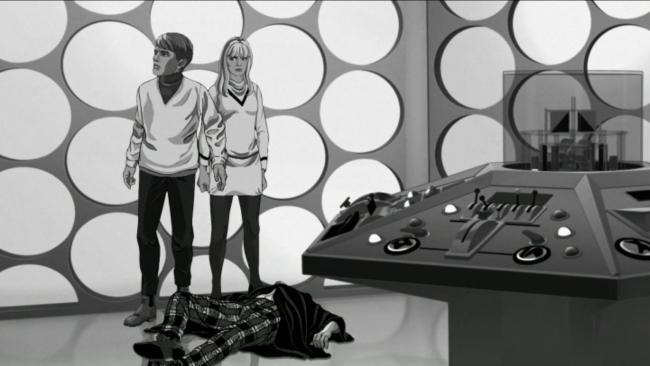
Mind you, I realise this was probably the best that could be afforded. Traditional hand drawn animation or fully 3d computer animation might have been better but even then I don't think it would have quite added up properly. So much of Patrick Troughton's performance is in his face and body, any animated version will inevitably be the work of other creative impulses and limitations. The old Star Trek animated series from the 70s wasn't quite as jarring, partly because the actors were recording specifically for animation, but animated Kirk and Spock were always of a different species than their live action counterparts. The 2D computer animation for Power of the Daleks also might suffer from my familiarity with its association with parody.

Maybe it's just me, but on shows like Space Ghost Coast to Coast, Sealab 2021, and Harvey Birdman, it seemed like part of the joke. It created a sense of deliberate unreality, post-modern and a bit punk, reliant on the consistent impression that these images are being pushed outside their originally intended parameters. Space Ghost bantering nonsense with Zorak, the petty insecurities that come through in their dialogue and delivery undermining the simplistic hero and villain figures paralleled by computers stretching the drawings past their intended range. It was ridiculous, oddly imposing the external reality on the animation, and therefore funny.
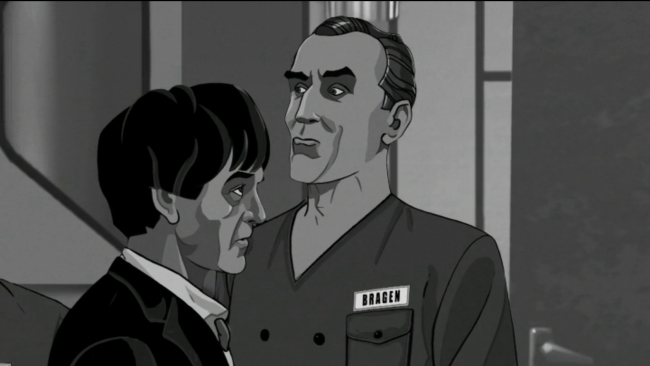
So it feels out of step with the experience we're supposed to be having with Power of the Daleks. I love the idea that the Second Doctor's first moments are both frightening and funny, and Troughton is a big part of that in the surviving clips. The animation sanitises it, removes the sense of anxiety at the strange and uncomfortable.
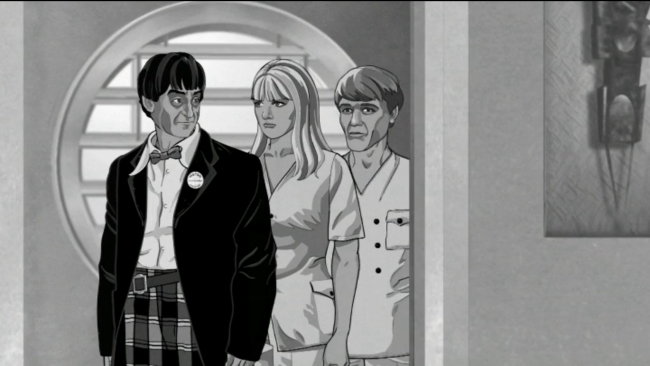
Sometimes the animation carries its own sense of eeriness, typically divorced from any eeriness intended in the story. I felt sometimes like I was watching demon puppets who'd become trapped in a recording, especially in long pauses where they stand there blinking, shifting their eyes around, as though slightly panicked they're temporarily unconstrained by any dialogue from the audio, frightened by the sudden imposition of freedom.
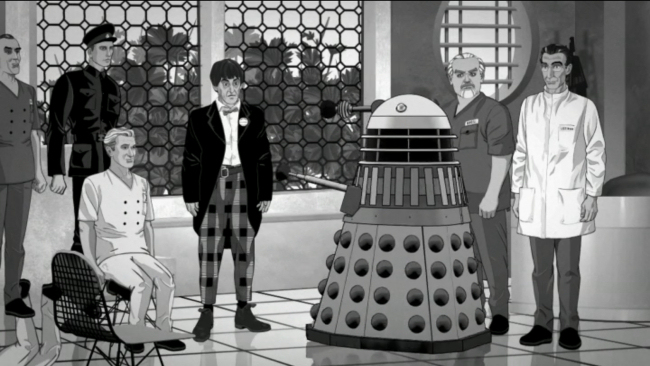
The Daleks come off a little better, being fully 3D animation. Their familiar peevish monotone dialogue fits well with the animation and the sequence where a horde of new Dalek shells are manufactured is the most effective part of the animated serial. All in all, though, I prefer the audio accompanied by stills and clips.

Friday, April 20, 2018

That Rascal Hyde!

Why would I watch the 1986 animated TV movie version of Dr. Jekyll and Mr. Hyde? I don't plan on watching every adaptation. Though I might end up doing that. But I guess I was in the mood for cheesy 80s animation and that's just what I got. From Australia's Burbank Films, a studio that has produced cheap animated adaptations of literary classics since the early 80s, it's not as bad as you might expect. The style looks like Hanna-Barbera but it's better animated, still a cut well below what was out of Japan at the time, though. In terms of story, I think it's instructive if you want an idea of the haziest conception of Jekyll and Hyde in the popular imagination.

There's no playing around with how much Jekyll (Max Meldrum) is in Hyde (David Nettheim) or how much Hyde is in Jekyll, or how much the events of the story support or contradict Jekyll's idea of each person containing a good and evil side. Jekyll does talk about this and his colleagues do scoff at him as usual but Hyde is portrayed as essentially a lucky thug who's taken up residence in Jekyll's home. Expect that they occupy the same body, he's basically exactly what Utterson assumes he is in the book--a bad fellow who forces Jekyll to put him his will. The film isn't very clear on the subject but it seems, after the first time Jekyll takes the potion, Hyde just manifests on his own and switches back by drinking the potion in order to hide from authorities.

He seems basically modelled on Peg Leg Pete and his first transformation is accompanied by synthesised bass guitar with a rock beat. I had to grin, after all the other adaptations I've watched lately, to see Hyde as a run of the mill 80s cartoon villain.
Obviously it's meant for children who probably wouldn't appreciate the subtleties of conversations about duty and the liberation of amorality. Oddly, this simple version of the story got me thinking about what a basically frightening idea it is, losing control of one's own life so completely. This in spite of a pretty garish colour palette.

Thursday, April 19, 2018

Don't Let the Drill Out in the Expanse

Last night's new episode was classic Expanse, doing one of the things it's best known for, incorporating relatively realistic physics into the story for very effective suspense. We were also introduced to an interesting new character and familiar characters were shuffled about again. A real nice episode.

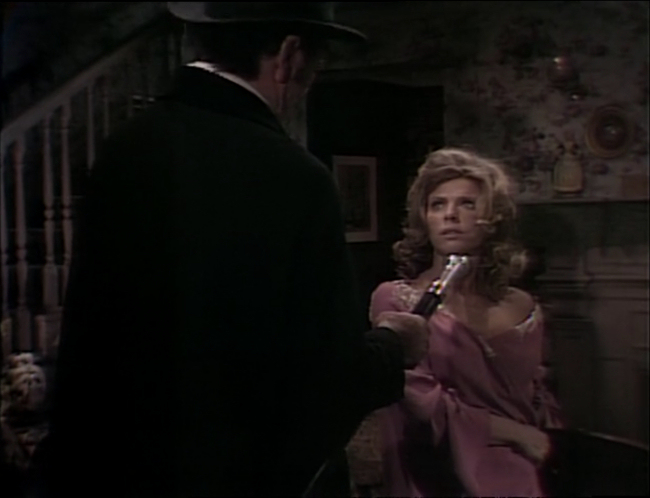
Spoilers after the screenshot

You know, I thought that storage locker thing didn't look secure when Prax (Terry Chen) shut it. I so love the fact that this show, in the middle of a very dramatically effective rescue, indulged in a scene involving power tools flying all over the room just because of one simple little mistake. It's that kind of thing that makes this show feel truly human in a way a lot of other shows don't, let alone Sci-Fi shows.

And that was a dramatic rescue. I liked how we were left hanging, wondering whether Prax was going to break the tie vote on whether or not to respond to the distress signal. I felt pretty sure were were going to see the Pinus rescue Avasarala (Shohreh Aghdashloo) and Bobbie (Frankie Adams) but it was still a great pleasure when they got there just in the nick of time.

I love those weird gyroscope seats Bobbie and Avasarala are in, they added greatly to the sense of their physical momentum, as did their dialogue about dealing with g force. The shots at the end from Avasarala's point of view were really nice--incidentally beautiful while serving as a cap to a whole sequence that clearly communicated her physical discomfort. I felt bad for her when she said she thought she was getting used to it as blood came out of her nose and Bobbie informed her they'd actually slowed down.

Meanwhile on Earth, the show brought on another decent actress, Elizabeth Mitchell as someone called Reverend Doctor Anna Volovodov. She's a doctor and a reverend? With the Mormons in space building some kind of temple/ark, I like the tertiary details on this show that suggest just how much old religions have evolved.

The Reverend Doctor seems like a nice lady, not as colourful as Avasarala, but I don't need everyone to be. Her standing up to the riot cops felt a little awkward and forced but was basically a nice scene. Mostly, though, I wondered at the special effect used to make the crowd size bigger. I'm not knocking them for it--it's a lot better than I expect from a low budget show, but there's something just kind of off about it that made me compulsively go back and look at it. It's not quite like it's the exact same clump of people repeated twenty times but they clearly don't seem to all actually be occupying that space together. Looking at it makes me feel slightly cross-eyed.

But I wouldn't call it a flaw, this was a good episode all around.

Twitter Sonnet #1105

A useless green, anomalous reclined.
Unsought, a coat collects a linty dust.
All other hangers thus to fore aligned.
Unchosen garment fits a ghostless bust.
Upended giant arches smote the land.
A thickened soup absorbed the breathing air.
The sky rehearsed its movie deal with sand.
The secret passage moved the open dare.
Beside the bottle pictures placed deny.
A portrait put in paths to paint the way.
Unending strips in second D retry.
Dimensions flattened dressed by light of day.
The barking speaker cracks the savage song.
The forest floor continues right along.

Wednesday, April 18, 2018

Jekyll versus Slapstick

For all the issues presented by the Jekyll and Hyde story, can we rely on Abbott and Costello for a solution? No. But 1953's Abbott and Costello Meet Dr. Jekyll and Mr. Hyde is no waste of time though you'd be better off watching Abbott and Costello Meet Frankenstein. Their Jekyll and Hyde film is in many ways a less imaginative retread of that 1948 film. It's naturally a more simplistic take on Jekyll and Hyde but Boris Karloff in the role does manage to make it interesting and there are some weird undercurrents in the movie's commentary on women's rights.

The story, set in the Edwardian era, begins with a demonstration from women's suffragettes led by the film's lead female character, Vicky (Helen Westcott). Any thought that the film is putting forth a sincere feminist point of view is quickly dashed when the women segue into a can-can routine.

Like a lot of films featuring well known comedy teams from the period, Abbott and Costello Meet Dr. Jekyll and Mr. Hyde feels obliged to include a foreground romance between two straight, in the comedic sense, leads. We're introduced to the male lead first, Bruce (Craig Stevens), who remarks off-handedly to an itinerant drunk that he doesn't believe women should get the vote, something that undercuts the sense of sincerity in his efforts to woo Vicky as he pledges his full support for her cause.

Is the film condemning his hypocrisy or is it slyly nodding and winking at the fellas in the audience, essentially telling them how to deceive women? The filmmakers likely didn't want the audience to be sure of the intention, more in the interest of attracting the widest audience possible than for any provoking ambiguity. But it's interesting how this dynamic is paralleled in Jekyll when we meet him.

Played by Boris Karloff, he's for the most part a much more obvious hypocrite in this film than in earlier incarnations. He rationalises murders--saying his first victim had to die because he was an obstacle to his research which would ultimately benefit humankind--and also washes his hands of them, insisting they were committed by Hyde, not Jekyll, even though he takes the potion with the clear motive of knocking off another such obstacle. This might have been just simplistically broad except, in a cab ride with Vicky and Bruce, Karloff really sells a soliloquy on sorting out human nature so there can be peace on Earth. There's a sadness and wistfulness in Karloff's delivery that suggests this was his real dream at one point and he himself doesn't consciously realise how far he's strayed.

He's Vicky's guardian and he becomes angry when she and Bruce begin their romance. We learn that he had cared for her always with the desire to make her his wife eventually. Karloff shows more wisdom as a storyteller than this silly film may require in that he makes his superficial support for their relationship utterly convincing. This has the effect of making the revelation of his true feelings very creepy as well as a possibly unintended but very pointed commentary on patriarchy.

But of course most of the film focuses on a couple of American doofuses trying to earn a living as cops in London. Bud Abbott and Lou Costello play Slim and Tubby, a couple of guys fired from the police force after their poor handling of a brawl that erupts at the suffragette demonstration. There are a series of slapstick routines as they endeavour to capture Hyde in the hopes it'll get them their jobs back. This version of Hyde hearkens back to the wolf monster of the 1912 or 1931 versions, apparently in this case played by a stunt man instead of by Karloff.

In one of the more effective sequences, Tubby, after being injected with Jekyll's formula, turns into a giant mouse, leading to some exquisitely absurd business when he and Slim walk into a pub. They waste no opportunity for "man or mouse" dialogue.

Otherwise, there's a wax museum routine which is basically a repeat of the one in Abbott and Costello Meet Frankenstein and not a whole lot to remark on. But it's always nice to see Lou Costello.

Tuesday, April 17, 2018

Bringing Tea and Sandwiches to Jekyll and Hyde

A well off guy like Henry Jekyll should have lots of servants but the only one we get to know in the novella and most adaptations is his butler, Poole. 1996's Mary Reilly approaches the story from the perspective of one the household's typically anonymous maids for a film that, while certainly flawed, is nowhere near as bad as its reputation suggests.

The flaws are easy to list: Julia Roberts' uneven Irish accent, John Malkovich's lack of an English accent, and the insufficient differences between Jekyll and Hyde. Someone with more talent as a chameleon in the role would have been nice, having a different actor for each persona would've been ideal. Failing that, maybe the inclusion of a character like Muggsy from The Lady Eve to pop up now and then and say, "It's positively the same guy!" for reverse psychology's sake. As it is, it doesn't make sense than none of the servants catch on that the doctor and his "assistant" are one and the same.

But there's also quite a lot to like in this movie--the grim and fantastic production design and supporting performances from Glenn Close, Michael Gambon, and George Cole as Poole. I particularly would've liked to have seen more of him in the movie. But, in spite of the accent, I'd also say Julia Roberts gives a decent performance, certainly much better than critics have said. I think perhaps viewers used to enjoying her as more relaxed, easy going characters were put off by the more tightly-wound Mary. Much like Kim Novak in Vertigo, I think she's been criticised for something that was a deliberate and very sensible choice.

In addition to her career as a servant which would require her to adopt a quiet and unobtrusive demeanour, a key part of the film is Mary's background as a victim of domestic abuse. Her father, seen in flashbacks played by Michael Gambon, regularly subjected her to physical and psychological abuse. As she tells Jekyll about this, she talks about how he seemed a different man when he was drunk than when he was sober, the parallel to the story of Jekyll and Hyde explicitly drawn. Jekyll suggests to her that her father found drunkenness "liberating".

There's no mention of a motive to separate people into purely good and evil halves, Jekyll's motive again going back to the idea of being liberated from codes of conduct. As Mary's life is defined by duty and repression, one can see how liberation might be just the thing she needs and it's no wonder Jekyll seems to take a liking to her. Some mention is made of the other side of the argument--that other people pay the price of Jekyll's liberation, but we never get to know his victims well enough to give weight to this argument. We do see it in how Mary's father made her bear the cost of his liberation but the fact that she's unwilling to reconcile with him but seems to warm to Hyde deprives the question of due attention. I suspect the makers of Mary Reilly would disagree with the moralising behind The Two Faces of Dr. Jekyll--I would too but, while I don't think a movie is obliged to provide an opposite argument to its own, Mary Reilly introduces enough of one to feel incomplete.

Maybe they didn't want to retread familiar ground. The film re-teams director Stephen Frears, screenwriter Christopher Hampton, and stars John Malkovitch and Glenn Glose, all of whom had previously collaborated on a famous film adaptation of Dangerous Liaisons. That film is perfectly comfortable delighting in a tale of amorality and towards the ending of Mary Reilly it seems as though the filmmakers are sliding into that kind of story like a familiar coat, not quite having the novelty of that earlier film. But there is a pleasing romantic quality to Mary Reilly, almost like a crossover between Dr. Jekyll and Mr. Hyde and Jane Eyre.

Monday, April 16, 2018

Fanny Obsourne Loves Henry Jekyll

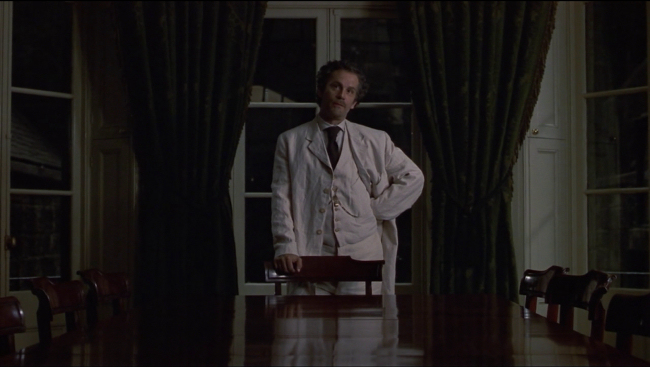
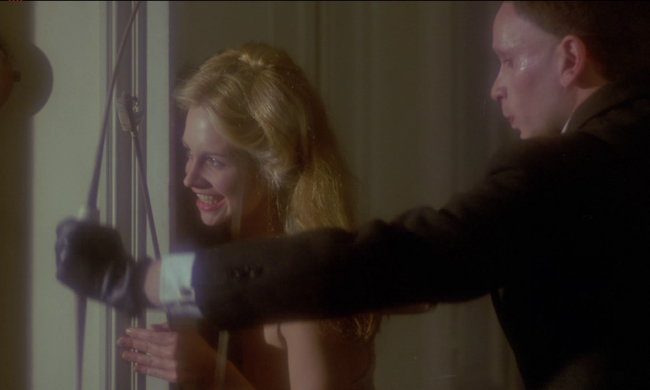
And then there's the pure sensual pleasure of transgressing all ethics and morality. 1981's Strange Case of Dr. Jekyll and Miss Osbourne (apparently the director's preferred title though it was released in France as Docteur Jekyll et les femmes) is Jekyll and Hyde by way of the Marquis de Sade. Essentially an S&M fantasy, it's also a meditation on societal hypocrisy, handsomely photographed, and featuring magnetic performances from Udo Kier and Marina Pierro. Patrick Magee also stars in this, his final feature film role before he died the following year. As the title suggests, the film also has a provocative reconfiguration of perspective to include participation from its female characters in the discussion on morality.

With the exception of the film's first scene, in which Hyde not merely tramples but attempts to rape a young girl, the entire film takes place indoors. In Jekyll's enormous, labyrinthine mansion, the candles and lamps are never lit but the lighting makes it seem as though every room has a skylight through which sunlight is constantly streaming, night and day.

The effect is to give a simultaneously warm painted quality and eerie iciness to the events. It underlines the sense of unreality, leading one to suspect that the house is meant to be taken as a metaphor for a whole country or culture. Hyde's assault of the young girl is juxtaposed with another girl (Magali Noaro) dancing ballet for Jekyll's assembled guests. Her elderly caretakers fuss and coo over the girl's appearance, telling her not to exaggerate when she complains her shoes are too tight. When she falls onto a bed, exhausted, her mother (Catherine Coste) and Lady Osbourne (Rita Maiden) carefully place her feet, instead of her head, on the pillow and then cover her with a lace veil "to keep away flies".

The dancer is the daughter of Enfield (Eugene Braun Munk), the man who first tells Utterson about Hyde in the novella. He and Utterson have very small roles here. Patrick Magee plays General Carew, normally the father of Jekyll's fiancee in previous films but here apparently unrelated to her. He has a younger daughter, Charlotte (Agnes Daems), who's so turned on by the murders Hyde begins to commit that when Hyde does get around to the room she shares with her father she comes out of hiding half naked, bending over a table and caressing a sewing machine, her father's apoplectic reaction apparently adding to her stimulation.

The General's punishment of her afterwards suggests he also unconsciously derives some pleasure from things he shouldn't. It's hard to imagine this character in the hands of any other actor; Magee's weird fervour is both over the top and completely credible.

This is the only Jekyll and Hyde I've seen, outside the versions where the two characters are of different sexes, where Jekyll and Hyde are played by different actors. For once it would be believable that no-one recognises them as the same person but since few seem to survive getting a clear look at Hyde it's kind of a wasted opportunity. Gerard Zalcberg presents an eyebrow-less, almost Nosferatu-ish Hyde while Udo Kier, who was adorable when he was young, plays Jekyll as a sweet and sensitive doctor and suitor. Passionately making out with his fiancee, Fanny Osbourne (Marina Pierro), you believe the two are really in love, something that becomes important for the climax of the film. This is one version where Jekyll's fiancee is certainly willing to understand his obsession.

In this version, Jekyll is developing a "transcendental chemistry"--as in The Two Faces of Dr. Jekyll, this isn't a Jekyll concerned so much with making people purely good but with transcending all ideas of good and evil. Unlike the Hammer film, though, this version seems to revel in the idea as men and women find themselves liberated from the stiflingly shallow morality of society. Where The Two Faces of Dr. Jekyll only argued against the potential sadism of such an outlook, Dr. Jekyll and Miss Osbourne also includes the masochism.

The actress playing the child dancer is clearly not a child. This, like the mise-en-scene, emphasises the fantasy aspect of the film. The point in its criticism of social hypocrisy is clearly not an advocacy of real unrestrained mayhem but an encouragement to allow oneself to entertain thoughts and feelings society adheres to with mindless fear. It fits in with a general trend in 70s and 80s fiction to vicariously revel in the experiences of a traditionally villainous character--it's a very pretty example, too.

Twitter Sonnet #1104

A careful card complains in potted ink.
Tremendous blooms appeared beyond the plant.
Collected troops amass within the sink.
A dish deserves a plate and legs a pant.
A tall and placid cube of water drank.
The swimmer grins to find a bounded drop.
A bubble wake rewards the fish who sank.
Attained, a floor compels the sleep to stop.
A broken turtle shoe has shown a fate.
An ankle deep in turns decides the toe.
A march collides with stumbling, steely gait.
The stripe of pants portrays a legging show.
Impossible, the diff'rent brow could tell.
A changling leech, confirmed in potion hell.

Sunday, April 15, 2018

Hyde the Vicious Charmer

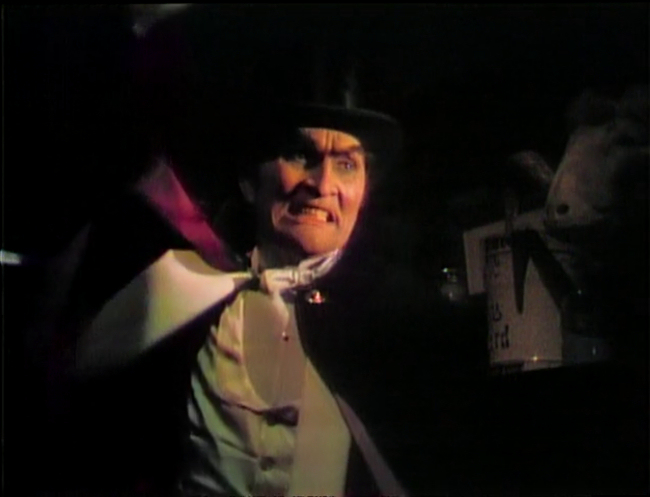
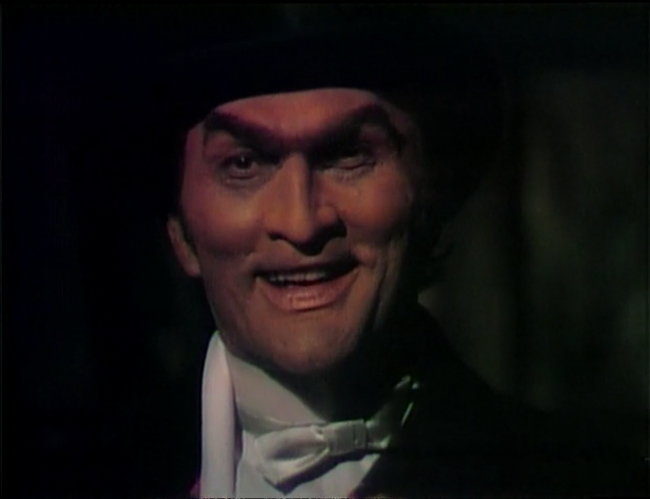
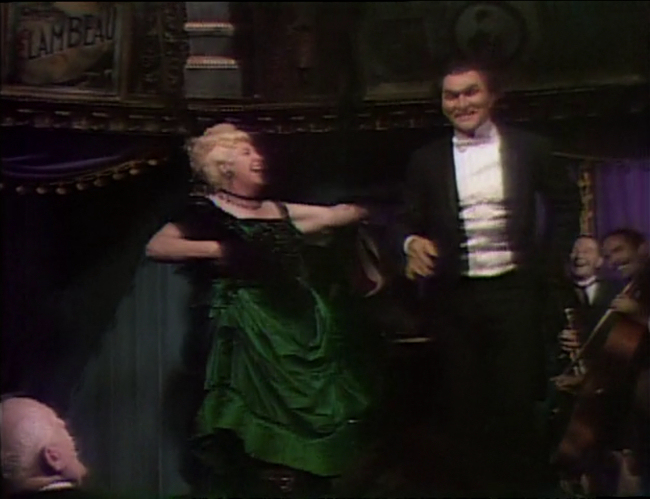
Jack Palance makes an exceptionally fearsome, charming, and loathsome Hyde in 1968's The Strange Case of Dr. Jekyll and Mr. Hyde. With a cast that also includes Denholm Elliot and Leo Genn, it's one of the more impressive productions, with great production design. Its biggest flaw, and it is a pervasive one, is that it was shot on videotape instead of film, though at times this makes it even creepier.

Seemingly influenced by The Nutty Professor and perhaps, to a lesser extent, The Two Faces of Dr. Jekyll, the primary difference between Jekyll and Hyde in this film is inhibition. Unlike the novella and film versions prior to The Two Faces, this is a Hyde who is intensely charming--everyone at the music hall loves him. He even jumps on stage to perform a bit, much to the crowd's delight.

Poor Dr. Jekyll is shy and awkward by contrast--no fiancee for him in this film--Lanyon (Leo Genn) even remarks on Jekyll's lack of experience with women. I wonder if this movie was an influence on Jim Carrey's film version of The Mask--the Hyde makeup here even calls it to mind.

Unlike the suave dandy from The Two Faces, this Hyde is a boisterous, hearty rogue. There's a prostitute character in this one, a descendent of the one in the 1920, 1931, and 1941 versions, in this case named Gwyn (Billie Whitelaw). Unlike the versions played by Miriam Hopkins and Ingrid Bergman, it's clear that Gwyn is attracted to him and it makes sense when they move in together. When he does assault her and her initial defiance turns into a frightened denial, it feels much more disturbingly credible.

He's quite vicious with men, too, and few Hydes come off as so zealously sadistic. One of the more effective moments comes when Hyde corners a victim and a full body shot of Hyde snap zooms onto his face after he smashes a globe with his cane.

The cane is important in this version, too, though it's for yet another reason--in this case it's a cane sword, a rather thick one that looks like it would be pretty effective as a cudgel even without the blade. We see Hyde taking fencing lessons, a surprisingly disciplined endeavour for him, emphasising again the concept here is mainly about boldness.

Denholm Elliot plays the Utterson character, for absolutely no apparent reason renamed Devlin. There's certainly nothing devilish about him and Elliot exudes warmth, sympathy, and determination as only he can when he tries to advise Jekyll. Though this is another version that misses that key bit of characterisation from the novella, that Utterson is more tolerant than Jekyll.

Jekyll starts off with the idea to separate the good and evil in people into pure components but after his first taste of life as Hyde he comes more around to the Two Faces Jekyll's point of view of might makes right and living amorally, though it doesn't get deeply enough into the philosophical argument for flaws in it to be obtrusive. Palance does a good job as Jekyll, adding a stiffness to his manner that communicates his shyness. But its in his fantastically malevolent Hyde where he really shines.