Showing posts with label neil gaiman. Show all posts

Monday, August 28, 2023

Core Align

A little girl frustrated at the lack of attention given her by her parents is at first delighted to find a more accommodating Mom and Dad with button eyes. 2009's Coraline Is Henry Selick's adaptation of Neil Gaiman's 2002 novella, capturing some of the eeriness of its source material and adding a lot of cartoonish charm.

I was feeling a little sorry I didn't like Good Omens 2 and wanted to watch something to reaffirm my fondness for Neil Gaiman. I read Coraline when it came out. I was such a Gaiman fan then, I bought the hardcover book and the audiobook read by Gaiman himself. I remember sitting in my car, listening to it, in a mall parking garage where I liked to go to be alone. I would say, outside of Sandman, Coraline is his best work, that I've read.

It's a simple concept with a suggestion of old-fashioned morality pushed to a slightly sadistic level. It feels like Hansel and Gretel or The Snow Queen, something from Hans Christian Anderson or the Grimm Brothers where you can clearly see the moral instruction but the story fills out with strange or frightening ideas in a pleasingly gratuitous way.

I kind of wish the character designs had learned closer to realistic. It's harder to appreciate the strangeness of the other world when Coraline herself already has a massive head with a flat top. But Selick's stop motion is the perfect medium. I believe these button eyed people can coexist with these people who have eyeballs. In live action with makeup or cgi buttons, it would have felt more clearly demarcated. The stiff, jerkiness of the stop motion adds to the sense of nightmare.

Coraline is available on Netflix in Japan.

Monday, August 07, 2023

Who Needs Omens when Things Always Turn Out Okay Anyway?

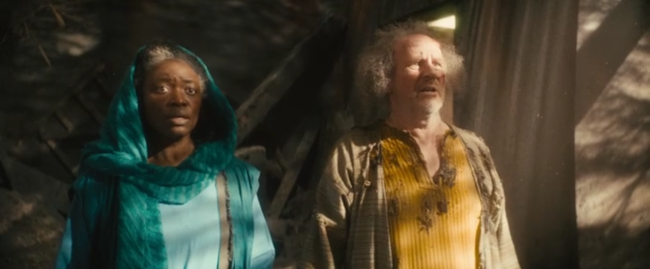
I realised last week the new season of Good Omens wasn't streaming week to week, as I thought, but had in fact premiered in entirety on the first day. So I worked my way through the rest of the six episodes over the past four days. It wasn't as hard as I dreaded, it does become a bit less saccharine after the first episode. I enjoyed the episode with Mark Gatiss as part of a trio of Nazi zombies and it was exciting to see Peter Davison as Job. Still, the show was overburdened with sweetness and light.

I went back and read my review for season one and was reminded how different Crowley and Aziraphale were back then. In season two, you get the impression that the demon Crowley had never intentionally done a bad thing and that Aziraphale is just plain dumb.

Crowley couldn't even bring himself to kill Job's goats. I'm not really sure what Gaiman and Finnemore were trying to say with their satire of the Book of Job. Either they're saying God worked through Aziraphale and Crowley to make Job's troubles less horrific, or they're criticising the bible for being cruel and wicked. Neither possibility is as satisfying as the complexity and emotion of the original work, which addresses the very real circumstance of a good person who suffers terribly.

But Good Omens 2 shows us a softer, kinder world where the virtuous are always found out and rewarded, and no-one truly dies.

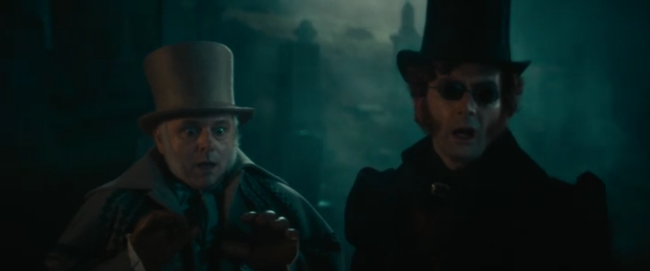
Well, there's some permanent death in an episode that seems inspired by the Burke and Hare murders. Incidentally, one of David Tennant's first roles on Doctor Who, before he was cast as the Doctor, was playing a minor character in an audio play about the murders in 2004.

Like most stories about Burke and Hare, Aziraphale and Crowley's encounter with, in this case, a young woman who sells corpses to a surgeon highlights the moral ambiguities inherent in the tale. It's wrong to dig up corpses and sell them, yet medical science needed cadavers to save the living and the poor needed the money to be had by digging up corpses. When it came to murder, was it because the system pushed the criminal gradually and inexorably into that crime?

Aziraphale is bewildered at every turn, as though this is the first time in millions of years he's come across any difficult moral problem. But I guess that's the central joke of Good Omens, that all these characters, always and forever, act as though they were born yesterday. Except Crowley for some reason, who seems really bored this season.

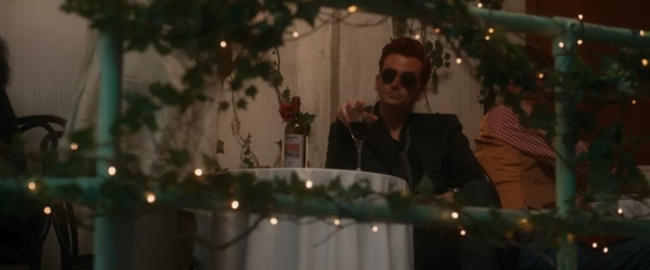
The way he's always lounging around, half asleep, it's like you've invited your world travelling, adventuresome uncle to a 12 hour birthday party at Chuck E Cheese.

Good Omens 2 is available on Amazon Prime.

Saturday, July 29, 2023

Heaven and Hell on a Cupcake

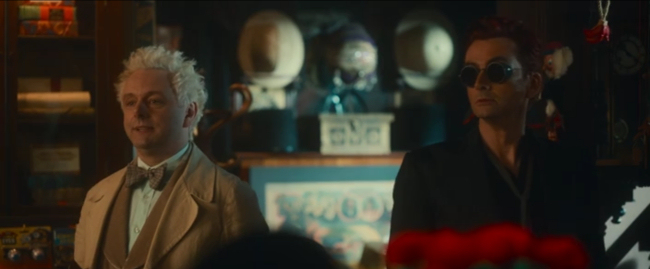
Everyone's favourite demon and angel duo are back in Good Omens 2, the second season of the series based on a Neil Gaiman and Terry Pratchett novel. It premiered on Friday with one episode. It's aggressively cute and occasionally funny.

Although it's new material, written by Gaiman and John Finnemore (Pratchett passed away years before the show was made), it hearkens back to the 1990s in many ways. I don't know if this was intentional or if Gaiman and Finnemore just need to get out more. There's a subplot about two women falling in love and one of them is considered odd because she has a store selling vinyl records. Do Gaiman and Finnemore really not know how popular vinyl records have become in the past ten years?

I suppose that could just be part of the deliberately unchallenging nature of the material. Crowley's supposed to be a demon but he doesn't exhibit any truly bad behaviour, for example. The worse he does is drive fast while listening to Queen. People who want to feel like rebels without actually stepping out of line can watch the show and feel like martyrs for owning vinyl Queen records.

I kind of wish Aziraphale would act more like an angel, too. When the amnesiac Gabriel calls Aziraphale and Crowley his "friends", it made sense when Crowley denied being his friend but I felt like Aziraphale would've said, "Of course we're your friends." I did really like the scene where Aziraphale, as her landlord, forgave the record shop owner for not paying her rent. If even a softball show like this is willing to lampoon the ridiculous rent prices in the western world now, maybe we're a little closer to real action.

The costumes and sets are all really adorable. The street and buildings constructed around Aziraphale's shop make even the show's "real" world feel like a fantasy, underlining the impression that all of this is set in some softer, sweeter plane of existence where angels and demons alike spend most of their time having adorably awkward dialogue. Even Crowley's choice of beverage at the coffee shop, just six shots of espresso in a cup, is like a child from the 1990s' impression of an unreasonably strong drink.

David Tennant and Michael Sheen as the two leads are both really good, particularly Tennant. John Hamm returns as the archangel Gabriel and his guileless innocence is very cute. He's introduced, this season, walking naked down the street to Aziraphale's shop and, in this adorable reality, a naked man in the street causes absolutely everyone to stop and watch him. I don't think I could binge this show, at least not without a drink stronger than six shots of espresso, but the show's being released one episode a week. And maybe one little drop of this super sweet confection, like a miniature cupcake buried in frosting and sprinkles, is enjoyable on a weekly basis.

If you like twee, this show is tweer than Lamb Chop copulating with a Care Bear on a bed of cotton candy.

Good Omens is available on Amazon Prime.

Saturday, August 06, 2022

You Were Dreaming

I've always read comics but the comic that first got me really excited about dramatic storytelling in the artform was Sandman. Before I read Alan Moore or Jaime Hernandez or most anything in the diverse and radical world of '80s and '90s American comics, I read Neil Gaiman's Sandman. In the late '90s, for a while, every day after work, I'd buy one of the collected volumes at the comic shop in the mall and sit down and read the whole thing cover to cover. It was a transformative experience, one of the significant landmarks in my life as an artist. And now it's a Netflix series.

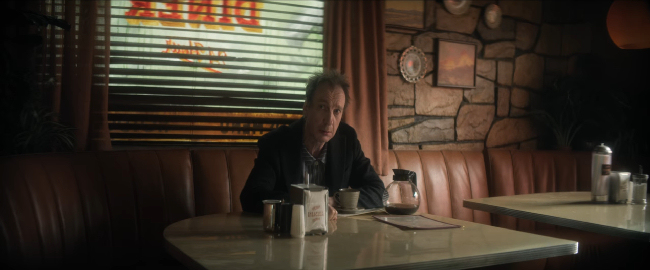
I've seen the first six episodes and I'd say I'm about 85% pleased with it. Some of it makes me really happy. From the moment David Thewlis took his seat in the diner in episode five, I became increasingly excited by the horror show unfolding. I love how time was spent establishing and fleshing out every character in the diner. It was a treat.
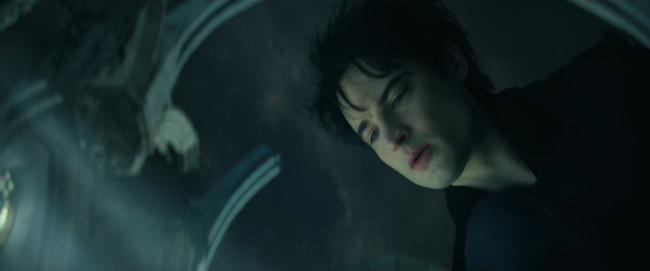
And a lot of the magic about Dream is captured. The standout moments for me are the death of Gregory and the brief scene with Nada in Hell. Dream's centuries-long relationship with Hob Gadling is perfectly handled. All of these things contribute to the sense of Dream being the King of Dreams. He's disconnected in a way that a monarch needs to be to make decisions but not without compassion or understanding.

Tom Sturridge certainly looks the part although he's very different to my impression of Dream. I wish they'd blacked out his eyes and modified his voice. He seems much more human than the character in the comics. But I could see how a more ethereal Dream would be a hard sell. Similarly, I was disappointed by the overabundance of exposition. I know it's probably seen as necessary in order to get the largest audience possible but it diminished the potential shock in many moments, particularly regarding Dreams imprisonment.

It would take an extraordinary filmmaker to evoke the kind of madness in Sam Kieth's art or the harshness of Mike Dringenberg's. So the possibility of the series approaching the quality of the comic was always remote and maybe the conservative approach they took, as opposed to an experimental one, was wisest in the circumstances. Unless they could have gotten Terry Gilliam or David Lynch, I guess it was wise to keep a lid on things a bit. Still, I was disappointed the diner scene ended with Dream explaining how the lies John Dee was trying to kill were the dreams that enriched people's lives. It didn't really make sense and seemed a bit trite.
I don't remember if there was any version of it in the comic. All my Sandman comics are back in the U.S. I also don't remember if Dream had a raven hanging about when he was imprisoned. I felt like I'd have wondered why the raven couldn't have smudged the magic circle or why Dream couldn't have escaped into the raven's mind. And with all the death occurring in the room, I don't remember if there's a rationalisation as to why Death didn't appear and talk to Dream. She chides him for not calling for help. I'm not sure if we're meant to take her as passive aggressive or what.
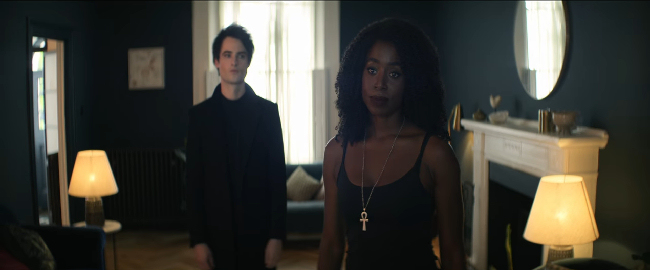
Death doesn't really feel like the same character, either. She seems more somber and sedate than I imagined her. I suppose that's one of the differences between books and their adaptations, even comic books and their adaptations. Our imagination does a lot of work when we experience the printed page, even with illustrations. But I wonder if there was concern that she was too much of a manic-pixie-dreamgirl in the source material.

She's played by a black actress, Kirby Howell-Baptiste, despite being usually portrayed as white in the comic. I guess some of the people complaining about it are probably racists. I think some people complaining fear they might be racists so they're coming up with a lot of arguments that don't make sense, like how she should be more like the artist's model or that she's supposed to be Goth. Of course, there were black Goths in the '90s, I think I met one. But I feel like Death and a lot of other characters in the comic are based on a "type" of person and the show has moved away from that. Generally, I think there's a pervasive fear of indulging in stereotypes now. It's a fair debate to be had, I think. When a writer sits down to create a character, is it fair to ask, "Okay, I want this person to be a typical example of this subculture and then I'll peel back the layers and reveal the complex person beneath," or should every character feel detached from such things or be an unusual example? I don't know. Death doesn't exactly bother me on the Netflix series. I did think it odd that she no longer makes fun of Dick Van Dyke's accent in Mary Poppins. But I guess even Death has to mind her manners nowadays.

I was bothered more by Joanna Constantine. And I love Jenna Coleman. I loved her on Doctor Who. Here, because the makers of the show needed to distance it from DC (despite the DC logo appearing at the end of every episode), they had to change John Constantine substantially. But so much of John Constatine remains in the dialogue that it feels really out of place with Coleman's performance and certainly with her wardrobe. She comes off as sharp as a razor and clear as crystal but the dialogue seems meant for someone scruffy and perpetually hungover. It occurs to me that's not the kind of role women are typically allowed to play. Krysten Ritter on Jessica Jones kind of went there. Natasha Lyonne on Russian Doll had that kind of vibe. But Coleman is perfect as the 18th century Joanna Constantine.
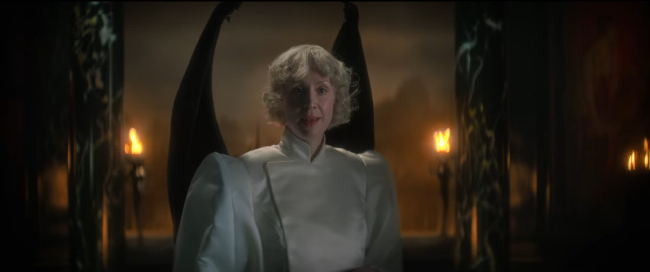
I thought Gwendoline Christie was perfect as Lucifer and Mason Alexander Park was born to play Desire. I love the sort of curly Prince Valiant haircut Christie has. Something about it absolutely says, "Fallen Angel". The shoulder pads are just right, too, and I loved how the wings looked like Gustave Dore's illustrations for Paradise Lost. I've only seen a few snippets of Mason Alexander Park as Desire but I feel like I'm seeing Desire coming to life right off the page. They're definitely more suited to this role than they were as Gren on Cowboy Bebop.

But so far, David Thewlis is the standout performance on this show. He absolutely is John Dee and he brings exactly the amount of intellect and pathos the role needs to make it provokingly complicated for the viewer.

But I like this show a lot overall and I'm excited to think that Sandman will be a sensation now. That would be nice.

It's available on Netflix.

Thursday, June 20, 2019

With Prophecies Like These . . .

Poor humanity, pitted between the competing, shallow boards of directors called Heaven and Hell. It falls to Aziraphale and Crowley, a reluctantly independent minded angel and demon, respectively, to avert apocalypse in Good Omens, a new-ish Amazon Prime series based on the 1990 novel by Terry Pratchett and Neil Gaiman. The six episode series, while no masterpiece, is entertaining. I like it about exactly as much as I like the novel.

I discovered Neil Gaiman's work in the late 90s. I remember routinely buying collected volumes of Sandman at the mall when it still had a bookstore and sitting down on a bench then and there, reading each cover to cover. These rightly revered comics left me wanting more so I sought out Gaiman's prose works which were at that time limited to Stardust, Neverwhere, and Good Omens.

I liked them but none of them came close to Sandman. My favourite of the three was easily the edition of Stardust illustrated by Charles Vess, though I quite enjoyed Neverwhere, an adaptation of a television series written by Gaiman. I liked Good Omens, too, but as someone who'd seen the Monty Python movies and read Douglas Adams, it seemed like a more modest exercise in the ballpark of those greater works of satire. Though I don't think it's exactly fair to say it is simply that. My exposure to the works of Terry Pratchett is more limited--I've read one other of his novels and listened to an audio play--but I can see why he appeals to a very particular niche. He's about 60% tongue-in-cheek and 40% sincerity and you need to have a particular taste in order for those two elements not to cancel each other out. Sometimes it works for me and I can see Pratchett was a really clever author but his style was never as satisfying for me as it is for many other readers.

The new television series very much has that Pratchett tone but it's more fascinating for what an anachronism it is. This kind of humour based on religion felt so brilliant and transgressive in the 80s and 90s. Now as I watch it I find myself hoping viewers will care and suspecting many will just feel impatient. It used to be you could rely on the charming rogue to be the fan favourite but now in this world where young people seem to strongly prefer Luke over Han, I suspect everyone will much prefer Aziraphale to Crowley and many will be frustrated by the very idea that a Good Person would have a chummy relationship with a Bad Person. I do hope such viewers find their perspective shifted maybe just a little. Certainly Michael Sheen and David Tennant are well cast and have great chemistry. Tennant's particularly good, particularly in moments where he shows subtle emotional wounds when Aziraphale finally threatens to break off their secret alliance.

For myself, I don't find the best bits of Good Omens' satire quite as enduring as Life of Brian's. When Crowley remarks at the beginning, when Adam and Eve are expelled from the Garden of Eden, that it's a bit harsh, I remembered being amused at the gentle tone used to show up a significant flaw in the basic worldview of western religion. But now, after a few years studying Milton, it's not nearly as exciting as Satan in Paradise Lost:

One fatal tree there stands, of knowledge called,
Forbidden them to taste: Knowledge forbidden
Suspicious, reasonless. Why should their Lord
Envy them that? Can it be sin to know?
Can it be death? And do they only stand
By ignorance? Is that their happy state,
The proof of their obedience and their faith?

This is so much better because it engages with the idea of forbidden knowledge and the reader is compelled to weigh the value of such a policy. The gentle nudge of humour in Good Omens suggests it's funny because it's outdated and silly while Satan's question in Paradise Lost remains terribly relevant. But, of course, it's not fair, really, to complain, "Good Omens isn't as good as Paradise Lost!" though maybe it's worth saying since there is a substantial push to see the classics as irrelevant and worthless.

The supporting cast on the series is wonderful except for Frances McDormand as God, the narrator. She might have been fine if she'd put on a British accent--so many of the casually absurd phrases she drops go down like lead with an American accent. Michael McKean, fresh from his brilliant role on Better Call Saul, puts on a Scottish accent as Witchfinder Sergeant Shadwell and even though the accent isn't perfect he's still great in the role. He and Miranda Richardson are wonderfully sweet and funny.

Jack Whitehall and Adria Arjona are also very sweet and funny, Arjona in particular striking some pleasantly surprising notes with her dialogue. I do kind of wish the show's sex scene had been more convincing.

I loved Crowley berating his plants and expressing love for his car. The music from Queen was well deployed in the soundtrack. I really liked how the wardrobe for people from heaven wasn't limited to white and included powder blue shirts and caramel coloured shoes. Good Omens is available on Amazon Prime.