Showing posts with label russell t davies. Show all posts

Saturday, December 09, 2023

There's Splitting and Then There's Splitting

Oh, Russell T Davies, you're your own worst enemy. "The Giggle", the final episode of the very short Fourteenth Doctor era on Doctor Who, has some very good ideas at its heart but is almost completely derailed by Davies' good and bad intentions (and I do think he had bad intentions) as well as having to carry an overabundance of plot. The directing and editing were also fraught with problems but I don't think I can blame Davies for that.

Neil Patrick Harris was fine as the Toymaker. He bears a slight resemblance to Michael Gough and he carried the zany, campy vibe Davies came up with for him. The idea of having him use a vaudevillian, broad German accent to make up for Harris' weak British accent was a decent enough and pleasantly silly idea. Not a politically correct idea, but a good idea.

But, oh, boy did Davies want to be politically correct, even when it didn't come naturally to him. I think he's absolutely outraged that people disliked his friend Chris Chibnall's run on the show on the grounds that it was too woke. And he wants revenge. I get it, I'm the same way; I tend to get much angrier on behalf of my friends than I do for myself. All that energy that in 2005 and '06 he put into the Doctor trapping villains in mirrors for all eternity and such he's now putting into getting even with Internet trolls. I get it but I would also put to him the same question that the Fourteenth Doctor puts to the Toymaker in this very episode, "Why are you so small?"

This is no way to bring viewers back to Doctor Who or bring new viewers in. This is how you push people away.
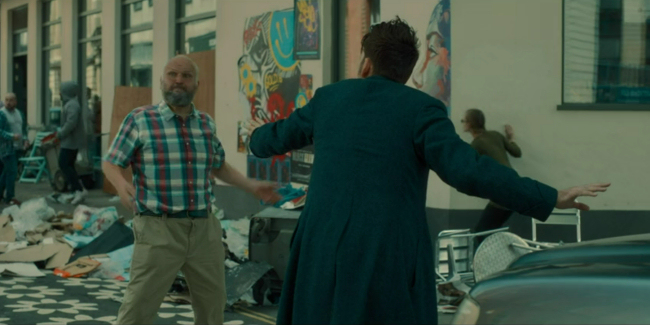
The premise behind "The Giggle" is that there's chaos all over the world because, "everyone thinks they're right". Which is how the problem with Internet discourse is often described. But it's not a good description either for the Internet or for how people act in this Doctor Who special. Everyone thinks they're right, everyone always has, it's just how the human mind functions. You'd never be able to get through a day if you didn't make observations and judgements based on those observations. The problem with the kind of Internet discourse Davies is attacking is that people are unwilling to alter their opinions based on rational judgement or new data. When Kate Stewart demonstrates by temporarily disabling her armband gadget, she angrily attacks everyone in the room, including Shirley, the token wheelchair character, because she believes Shirley is lying about needing a wheelchair. The problem isn't that Kate thinks she's right, it's that she is wrong.

And Davies has an idea there's more to it than an unshakable certitude. The Toymaker says the real motivating desire is to win, and that's where the Toymaker's interest comes in. That's a really good idea and one that might have been great to have play out in character development instead of being explained at us. That's why "Wild Blue Yonder" worked so much better. Davies took these fears and anxieties about AI and turned them into a visceral experience within a story. "The Giggle" leaves no time for that because it has too many other matters to attend to.
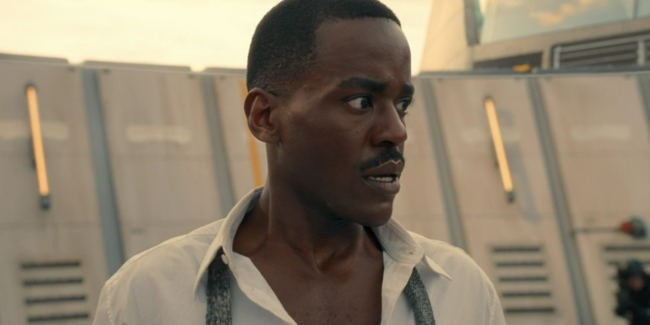
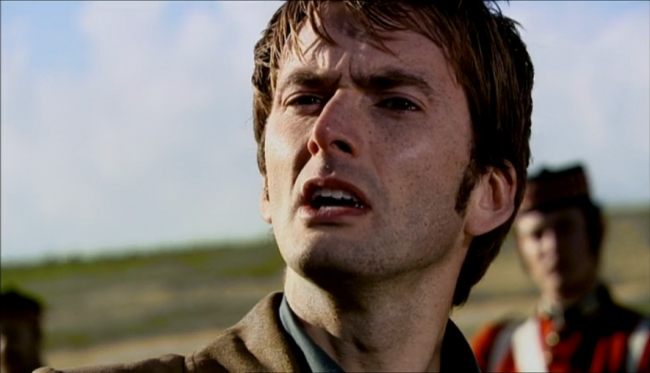
Of course, this episode also has a regeneration, or, for the first time, a "bi-generation", in which the Doctor is split in two. The Fourteenth remains while the Fifteenth arrives. And it feels rushed and Ncuti Gatwa, whose charisma immediately grabs the viewer's attention, is criminally short-changed. By having the two of them there, Fourteen feels like the real Doctor and Fifteen doesn't. Fourteen bears the weight of all that experience and Fifteen comforts him. And the last act of the episode is all about Fourteen. Hopefully the Christmas special will do something to rectify the matter but this reminded me of some of the worst moments in Davies' original run on the series.
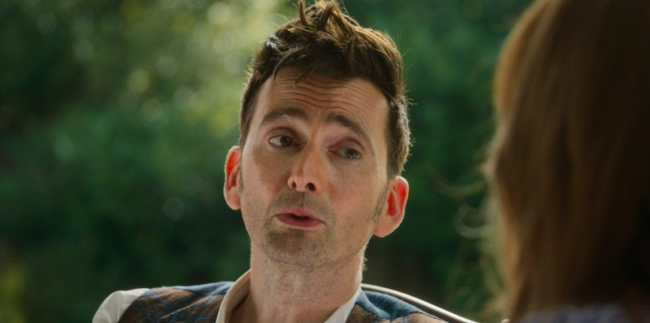
Having Fourteen stick around to live with Donna is very much like the copy of Ten living with Rose. That wasn't so bad because at least that copy really wasn't the Doctor. The impression I got from that family dinner at the end of "The Giggle" was that Fourteen was going to be happy with them for maybe a month or a year and then he'd be off in his TARDIS again, probably with Donna or the token trans character Rose. "Well, that's all right then!" as the Toymaker said when he inexplicably decided to criticise how all of the companions during Steven Moffat's run left the Doctor (no mention of Yaz but, to be fair, who can remember what happened to Yaz?). Every one of them kind of died, but then every one of them kind of lived, so there was a bit of a cheat. It seemed like Davies was criticising that but then he went even further on the same tack.

Who is this for? The little kids who are too sensitive to handle any character deaths, or the adults who, after all, are the only ones equipped to understand much of the rapid fire, complex plot jammed with references to things from 10 to 60 years ago?

I don't blame Davies for not doing the usual anniversary thing and bringing back multiple Doctors. Chibnall had just done that at the end of his run. But he did bring back Mel Bush. It was nice getting caught up with what happened to her after the end of Seven's first season. Though her confidently proclaiming that she was his first red-headed companion makes me wonder if the Doctor forgot Turlough or just decided never to mention him again. Maybe Turlough doesn't count because he was a boy and the Fifth Doctor was heterosexual? But then does Donna not count since Fourteen is gay?

I thought it was stupid a lot of people on the Internet took the bait and got just as angry as Davies wanted when "Wild Blue Yonder" hinted that Fourteen was gay. This is nothing new. Doesn't anyone remember Nine kissing Jack Harkness back in 2005? I thought he was at least bisexual. But now he's gone to live with Donna and apparently he can't see her as more than a friend. Back luck for her she didn't get the one Billie Piper got.
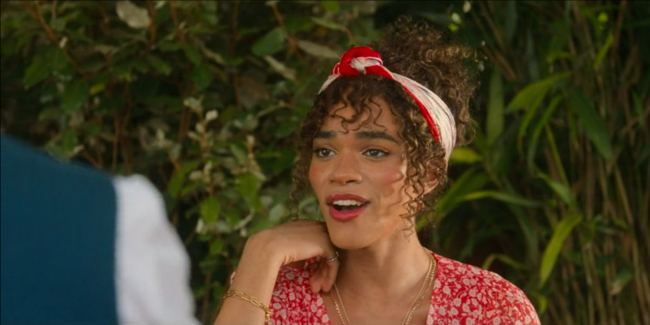
And what did we get with the new Rose? She's very polite. And she's trans. She's perfectly normal and did I mention she's trans? Also there's a woman in a wheelchair and she's also normal. And that's all we know about her. Davies is doing the exact kind of thing that woke commentators criticise about old progressive corporate media. It's downright tragic. Especially since, if "Wild Blue Yonder" is any indication, Davies could've made something amazing if he could have set aside petty, ham-fisted revenge and concentrated on exploring thoughts and feelings.

The Doctor Who 60th anniversary specials are available on Disney+ in most places and on the BBC iPlayer in the UK.

X Sonnet #1797

The danger dancing broke the candy shoe.
The hour closed with tinsel floors bereft.
Solutions sprang from slyly chosen glue.
The hoof distinctions come from how they're cleft.
For rice we substituted flakes of snow.
The wrapping rose to coat the door and walls.
We judged the book to cover all we know.
As luck departs, the printed paper falls.
Invasive vintage tins restrain the tea.
No thinking time's allowed when draining pools.
A Santa hat could suit a cosy bee.
We hitched the house to twenty braying mules.
Regeneration turns and eats itself.
Ahead, the soldier seeks to meet an elf.
Friday, December 03, 2021

Clumsy Affairs

Like a lot of Doctor Who fans, I'm finding it difficult to wait patiently for the return of Russell T. Davies in 2023. So I decided to check out some of Davies' work since leaving Doctor Who and last night I watched the first episode of A Very English Scandal from 2018. It's good, really subtle, it's a work that expends a lot of its creativity on how people talk and behave.

I'm not sure it was the best choice to get a sense of where Davies is now as a writer. It's based on a book which was in turn based on a true story, the Thorpe affair. Jeremy Thorpe, an MP and leader of the Liberal Party, allegedly had an affair with a man when homosexual acts were illegal. When the former lover threatened to expose him, Thorpe allegedly tried to have him killed.

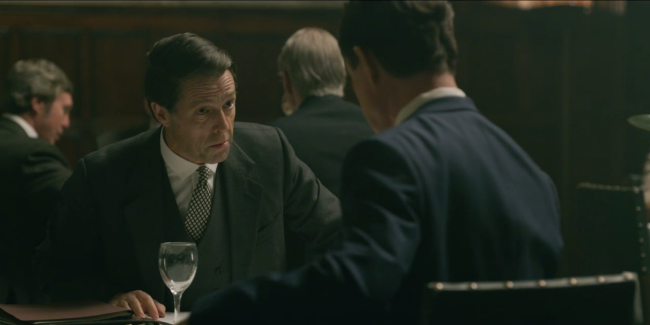
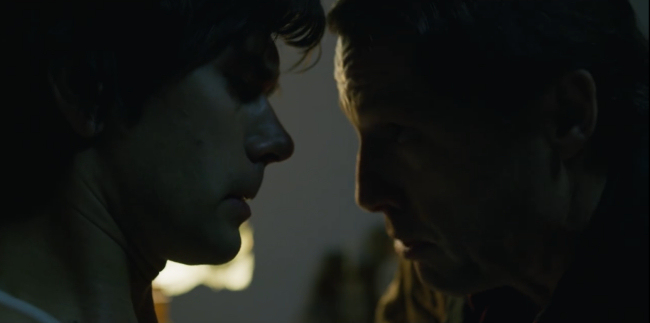
The series assumes all this is true. One of the most interesting things about it is that it refrains from showing anyone as a villain or hero. Thorpe, as played by Hugh Grant, is charming and warm. Norman Scott, the lover, is played by Ben Whishaw whose clumsy attempts to blackmail Thorpe seem borne of panic and naivete more than malice.

It's kind of an old story but very nicely executed--the clever old powerful man charmed by the simplicity of a pretty youth, and then the clever old man finding that same simplicity to be the bane of his existence. The same wide-eyed innocence that charmed Thorpe also compels Scott to only attempt to blackmail Thorpe when he's strapped for cash and to communicate by sending a note to Thorpe's mother or a rambling, wildly indiscreet phone call to Thorpe's wife.

Both Grant and Whishaw are great and so far I'm noticing them more than the writing. But I think Davies can be credited for the juxtaposition of some incidents. It's good, in any case.

Sunday, February 10, 2019

When Dalek Meets Cyberman

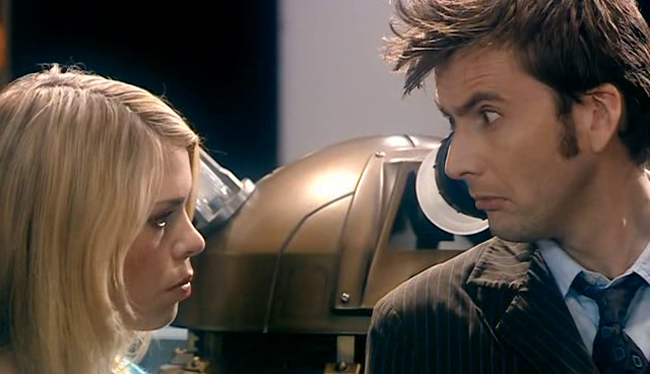
I seem to appreciate the Russell T. Davies era of Doctor Who a lot more than I did the first time I watched through it. I always liked it, though I generally disliked the season finales. But last night I watched the end of the Tenth Doctor's first season, "Army of Ghosts"/"Doomsday" from 2006, and loved it. Ten and Rose are so good together and I love seeing the Daleks wipe the floor with the revival era Cybermen.

Generally I prefer the classic series where the romantic chemistry between Doctor and Companion is understated if it's there at all but I've really grown to appreciate what Davies did. The revival era has often felt like commentary on the old series, something halfway between fanfiction and reinterpretation. There's much more focus on the Doctor as a character with him becoming almost a Christ figure in the Davies era while at the same time bearing the weight of his own sins. That's the kind of extreme focus you might expect from fanfiction. At the same time, Davies brings in the "domestic", an interpretation of what Doctor Who, the series, meant to a regular kid watching it growing up, and successfully transmutes it into meaningful experiences for the characters on the show.

By which I mean, it's not like the Doctor pulls clips from old episodes and asks companions to comment, or even nods and winks at the audience. Rose trying to explain to her mother how great it is to be flying around the universe instead of working in the shop is a moment that touches directly on what I mean.

Jackie, Rose's mother, is offended--"I worked in a shop, what's wrong with that?" She never had the opportunity Rose had. And Rose's point isn't that there's something wrong with a person working in shop, but there's also no sense kidding ourselves any one of us wouldn't be off in a TARDIS if we could. Admitting that is, inevitably, to admit life is fundamentally disappointing. So disappointing that most people don't want to acknowledge it. But the kind of kids who watched Doctor Who would think that way.

I felt bad for Jackie watching the episode again last night. She's so sure the ghost appearing in her flat is her deceased father. She even believes she can smell his cigars. She even taunts the Doctor a little, pleased for once to think she knows something he doesn't, but it turns out that's still not the case.

"Army of Ghosts" also has a nice moment referencing the Doctor's dislike for guns. Rose tries to stop him from leaving the TARDIS to confront a group of soldiers with rifles pointed at him:

ROSE: Doctor, they've got guns.

DOCTOR: And I haven't. Which makes me the better person, don't you think? They can shoot me dead but the moral high ground is mine.

I respect the Doctor a lot more for following his philosophy knowing full well it's impractical than in the recent season where circumstances around the Doctor are improbably rearranged to make the idea flawless. Though, in the instance in "Army of Ghosts", it is actually practical, if he has to go out and confront the soldiers at all--he'd never be able to gun them all down before they got him, the only reasonable course is to demonstrate they have no reason to shoot him.

It's strange how far the show has strayed from romance since the Davies era. Like I said, I like the classic series with its smaller focus on romance, but it's clearly a key part of what brought massive ratings to the show in the Davies era. It seems strange the show would be reverted in this regard to the format it was in when it was cancelled in 1989. Well, look, I've supplied you with another explanation for the show's decline in ratings. I suspect it's this much more than the Doctor being a woman now.

It's so bittersweet seeing Ten and Rose separated. David Tennant plays a young Doctor but you can always see the layer of experience underneath while Rose, as the dialogue about working in a shop demonstrates, feels very much like a young person feeling out her place in the universe for the first time. The 50th anniversary episode's interpretation of the Doctor becoming externally younger makes sense as a sort of psychiatric self-treatment, and his preference for younger companions would seem part of that, but it is nice watching him gradually realise there's something more genuine between him and Rose.

Twitter Sonnet #1204

Compared potatoes turn the tot to trust.
A timer burned the fries beyond the pan.
The larger spuds were painted gold and rust.
The stowaway turned out to be a yam.
Intimation surged in fortune's purse.
A slow deserving court remained to talk.
In better sleds the paintings still rehearse.
On harder snow the patients simply walk.
Encouraged stars repeat in storied lines.
As pearly dots emboss the books of sky.
A burning Braille becomes the harder signs.
The hand of God gave phones a second try.
Collected pegs create a cleat retreat.
Assorted socks will let the feet compete.

Saturday, September 15, 2018

False Illumination

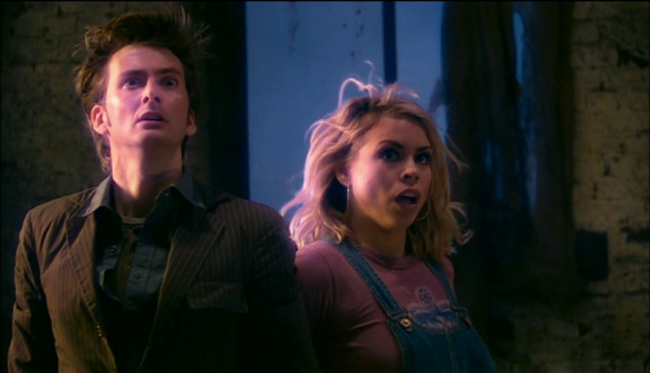
I remember seeing a lot of people wearing Rose Tyler's outfit from "The Idiot's Lantern" at Comic Con. A Tenth Doctor Doctor Who episode written by Mark Gatiss, it'd be hard to understand why young women would choose a costume that could really be a generic 50s outfit if you haven't seen the episode or were generally acquainted with this era of Doctor Who. Watching it again last night for the first time in years, I was struck by the unusual chemistry between Doctor and Companion. They're just so into each other, it's adorable.

She's so excited to be wearing that 50s dress; he's so excited she's so excited. She's so excited he's so excited that she's so excited. Who in their right minds would mistake this for a platonic relationship? Four and Romana were kind of like this sometimes but never to this extreme. Because David Tennant and Billie Piper are so charismatic and both are particularly good at showing unvarnished enthusiasm--without being even slightly obnoxious--their mutual appreciation is a real vicarious kick for the viewer.

He's just so dang happy to be in 1953, wow. That grin is going to split him it two.

Normally I'm not much of a fan of episodes written by Mark Gatiss but this one generally avoids his problem of writing scripts that make absolutely no sense. And the concept of televisions stealing faces from people works really well. I also like the sub-plot about the father who brags about fighting fascism in World War II only to be overbearing in his own home. The scene where his son tells him off is satisfying; "You fought against fascism, remember? People telling you how to live, who you could be friends with, who you could fall in love with. Who could live and who had to die. Don't you get it? You were fighting so that little twerps like me could do what we want, say what we want. Now you've become just like them."

Although the term "Idiot's Lantern" obviously refers to the television--apparently coming from a term writer Gareth Roberts remembers his father using--the idea of an electronic device in everyone's home that turns them into anonymous collaborators in a censorious mob certainly seems relevant to-day.

Another difference in the Russell T. Davies era from Steven Moffat's is how much more frequently people died. The episode features Ron Cook guest starring as assistant to the main villain--I'd just seen him recently playing Richard III in the great BBC Television Shakespeare series from the 80s. His role is relatively small here but I like how he's established as someone at the end of his rope financially and therefore easy prey for the malevolent spirit onscreen. Repenting near the end can't save him in the Davies era, though, however sad it might be. I also like how that fascist dad ends up not being painted as someone who deserves to be thrown away and forgotten.

Why couldn't Gatiss maintain this quality in his writing? Maybe Davies, as showrunner, generously edited the script to "Idiot's Lantern". Whoever's responsible, it's a good episode.

Saturday, July 28, 2018

Recognising Beasts

"Tooth and Claw", an episode from the Tenth Doctor's first season on Doctor Who, feels like a Twelfth Doctor episode in a lot of ways. It's set in Scotland, it's a horror pastiche, and it features two instances where the Doctor's companion has to quietly inform him he's being rude. But there are several ways in which it is distinctly of the Russell T. Davies era. I'd forgotten how giddy the Doctor and his companions got, particularly Rose (Billie Piper), over meeting historical figures or famous fantasy characters. Sometimes it felt odd to me but I enjoy it in "Tooth and Claw". I also forgot how red David Tennant's lips could be.

One could also say it's like a Twelfth Doctor episode in that it has some disagreement over whether or not the Doctor is a good person. But while in the Twelfth Doctor era this questioning mainly came from the Doctor himself, in "Tooth and Claw" it comes somewhat unexpectedly from Queen Victoria (Pauline Collins) who, after ennobling both the Doctor and Rose, suddenly banishes them.

"I don't know what you are, the two of you," she says, "or where you're from. But I know that you consult with stars and magic and think it fun. But your world is steeped in terror and blasphemy and death and I will not allow it."

There's a tension between different perspectives on morality throughout the history of Doctor Who. Sometimes the Doctor will casually and adamantly use the word "evil", other times he chides others for using it too hastily to condemn an entire species or to judge the actions of an alien without examining its motives. In "Tooth and Claw", Rose, when confronted with the werewolf, immediately starts to ask him questions and offers help, thus continuing the fine tradition on the show that goes back to scenes like the Third Doctor's first encounter with a Silurian where he unhesitatingly offered the hand of friendship. It makes sense that Queen Victoria would not approve of the Doctor and Rose on moral grounds, though it would make more sense if it wasn't sprung suddenly at the end of the episode.

The difference between how this disapproval works in "Tooth and Claw" and how the moral quandaries are presented in the Twelfth Doctor era is that Victoria's stance is presented as a subjective judgement which the audience may or may not concur with. There's ambiguity over whether Twelve did the right thing in "Kill the Moon" by forcing Clara to make a decision without the aid of his foreknowledge. But in that case there's more of a sense of it being an attempt to find the real right thing to do than it is about the perspective on the right thing to do. Victoria's condemnation comes from a specific moral perspective and through it suddenly even the giddiness the Doctor and Rose feel over their adventures becomes suspect.

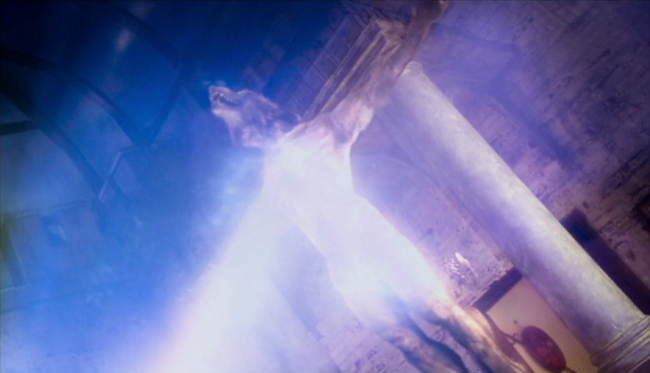
This follows after an image of the werewolf being crucified and the episode follows the Ninth Doctor's season and its prominent "Bad Wolf" thread. Since the "Bad Wolf" signs were shown without context, the emphasis was more on an implacable and strange moral force than on anything the Doctor had actually done, forcing the viewer to focus more on the motivations of that condemnation.

I often feel the series since its 2005 revival has been more of a reflection on the classic series than a continuation of it. Certainly the Doctor's moral ambiguity had been an issue before, particularly in the Sixth and Seventh Doctor eras. But through Davies I think we can see how a kid who feels different might have found comfort in the Doctor being friendly with monsters and also in the Doctor's position as a hero on the series who comfortably and deliberately makes choices that would be considered wrong by the prevailing morality. Davies injects a sense of vulnerability in this, that feeling of unprovoked betrayed when you've been palling around with Queen Victoria and she all of a sudden turns on you for doing something you thought was completely innocent and even now you can't understand why she thinks it's wrong. Since the Doctor does feel guilty about something, it makes sense if he might come away from an experience like that wondering if there's something fundamentally bad about himself he's not equipped to address.

I also love "Tooth and Claw"'s setting in that nice big old manor house which is apparently the origin of Torchwood. And it's always a joy seeing Tennant again.