Thursday, May 20, 2021

Schemes and Miracles and Masks

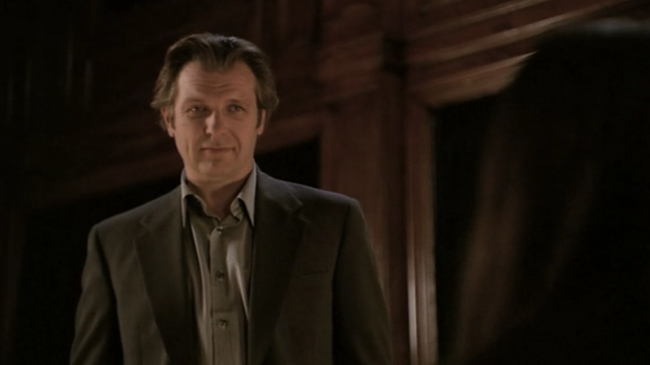
A masked ball, a burglar in a unitard, a little girl named Alice, a cutthroat banker, and somewhere, mixed up in this carnival, is a superhero, the title character of 1963's Judex. Director Georges Franju directed this remake of a 1916 movie serial, preserving the original's pulp and camp but adding a healthy dose of surreal. It's pretty glorious.

An immensely wealthy banker called Favraux (Michel Vitold) is being sent blackmail letters by the mysterious Judex (Channing Pollack), threatening his life and to expose the means by which he acquired his fortune. Favraux hires a detective called Cocantin (Jacques Jouanneau) who is immediately charmed by Favraux's little granddaughter Alice and can't help beginning to repeat Lewis Carroll's famous story to her. During the masked ball, instead of doing his job, he's repeating "The Lobster Quadrille" verbatim to her.

The masked ball, though--wow. I'd be surprised if it wasn't an influence on Kubrick's Eyes Wide Shut. It has that mysterious mix of the icy and the carnal, topped with actual magic tricks from a strange tall man.

The film's villain gets a lot more screentime than the nominal hero. Marie Verdier (Francine Berge), Alice's governess, turns out to be a crook, which she proves by later breaking into the mansion wearing only a skintight black unitard, a mask, and a stiletto.
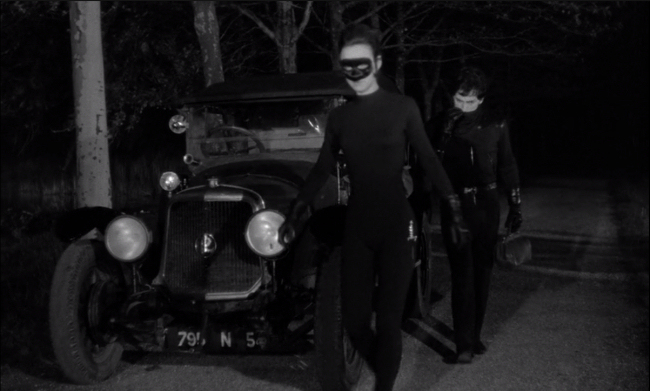
Has there ever been a burglar like this? How can I meet her?

Judex and Cocantin switch off as the film's strangely passive heroes. Cocantin runs into a little boy who miraculously fills him in on everything he needs to know while Judex seems to get by on pure luck. In the one scene where he confronts Marie, he's immediately overpowered. The climax of the film turns out to be a battle between Marie and an acrobat named Daisy--played by the beautiful Sylvia Koscina--who appears out of nowhere.

It was so great.

It's strange--if a movie to-day did something like this, I would probably find it tediously political, but in the context of a 1963 film it's just intensely charming. It feels more organically surreal, I guess.

Judex is available on The Criterion Channel.
Wednesday, May 19, 2021

Not Batman

Angel's first episode was about what the show intended to be, the second, "Lonely Heart", was a bit about what the show intended not to be--a series about Angel rescuing pretty blondes or a series about how Angel is Batman.

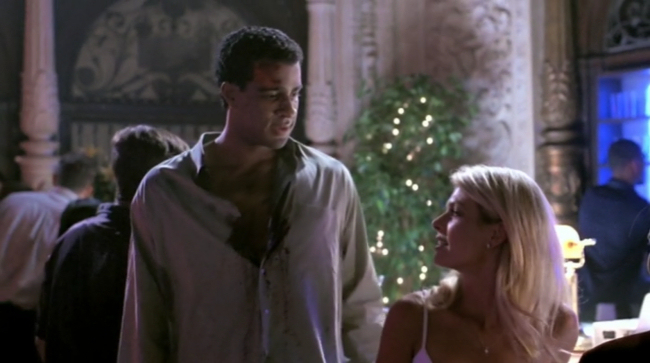
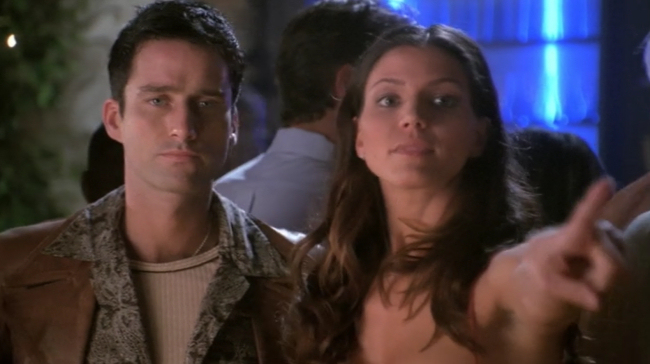
David Fury wrote this episode that begins with Angel (David Boreanaz) following the latest vision from Doyle (Glenn Quinn) to a local nightclub. The two guys and Cordelia (Charisma Carpenter) vainly try to find a needle in a haystack.

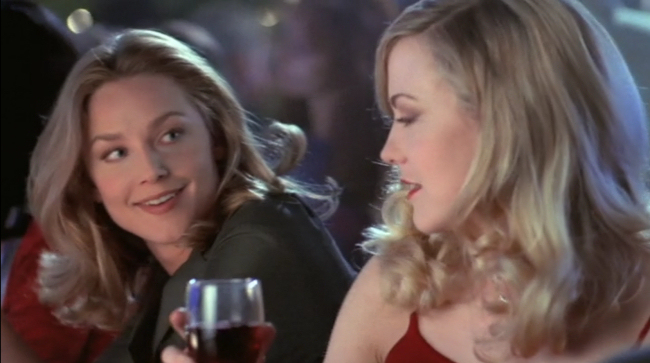
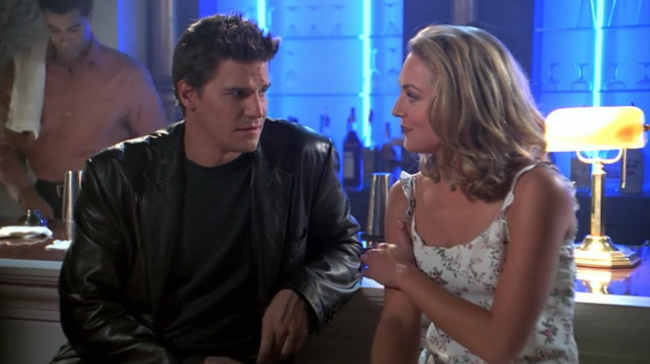
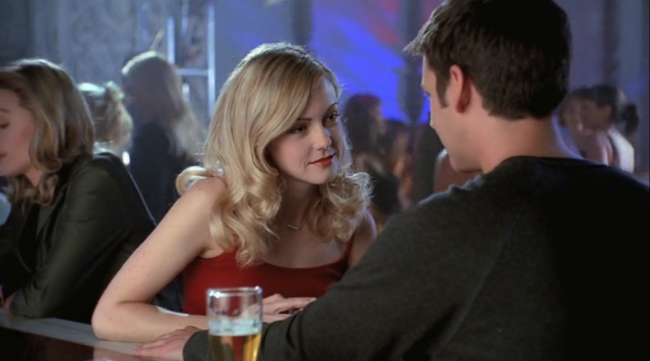
Two pretty blondes are introduced--one of whom, Kate (Elisabeth Röhm), is set up as a love interest and damsel in distress for Angel as she and he try some intensely awkward flirting. The other (Lilli Birdsell) is being hit on by an aggressive young man.

Kate ends up being an undercover cop who later stands by and plays Vicki Vale while Angel's grappling hook fails.

Nope, no Batman here. The other blonde does turn out to be a victim but then she's the killer as she becomes the latest host for some kind of demon parasite that leaps from body to body via violent sexual acts. The concept is kind of an interesting manifestation of selfish, ruthless loneliness. The beast has to move change hosts because every host rapidly deteriorates. Its last host is literally falling apart as it tries increasingly awkward pickup lines.

It's true, desperation can be repulsive.

The cute flirtation between Doyle and Cordelia starts in this episode. One of my favourite lines in the series happens when a couple guys try to get rough with Cordelia and Doyle intervenes, saying, "Fighting won't solve anything," before punching the guy and saying, "On the other hand, it's kind of festive."

Angel is available on Amazon Prime and, in many countries, Disney+.

Twitter Sonnet #1444

The awkward code was "sandwich half" and "boat".
The seconds marked the spacious sheets of ink.
A growing spill creates a hat and coat.
You'll find a pipe beneath the golden sink.
The symbol fruit was used to cook a meal.
The bigger pizza shaped a shadow disk.
We reached the bay before we reached a deal.
We weighed the car and chose a donkey risk.
A giddy dancer pushed the books aside.
A curry sea devours rice and beef.
The ghosts of clocks will rapid games decide.
The careless boat was wrecked upon the reef.
The hook was useless, failing yellow strands.
But signal paper flashed in pallid hands.

Tuesday, May 18, 2021

A Gun Story Told with Fists

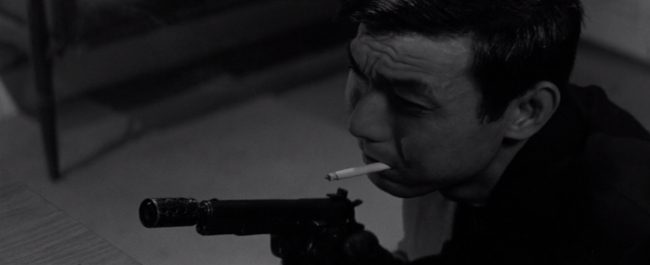
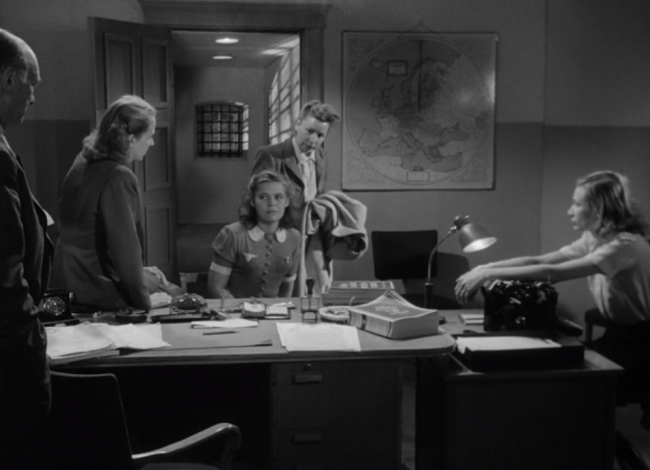
I think someone had a theory that any average yakuza movie could be punched up a lot with a lot of punches. And so we have 1964's Cruel Gun Story (拳銃残酷物語). One of the most bare-bones plots, that yet manages to have plenty of holes, I've seen from this era of Nikkatsu, the whole thing works because of how delightfully over the top it gets with the fisticuffs.

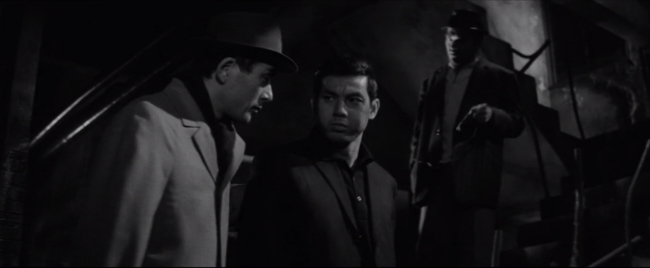
Togawa (Joe Shishido) has just been released from prison where he was doing time for murdering the truck driver who paralyzed his pretty sister (Chieko Matsubara). He's been sprung early by a big operator who's putting together a heist. Togawa will lead a team of hand picked crooks to hijack an armoured car transporting cash from the race track. Togawa visits his team one by one and tests them by punching them a lot. He even uses this technique with the boxer they're hiring specifically for his muscle (Shobun Inoue).

Once the weak links have been weeded out, Togawa goes over the plan and the deal, but is obliged to stop and start punching one member of the crew (Yuji Odaka), a gambler and heroin addict who can't stop interrupting. Then Togawa has to start punching him again because it turns out the guy's girlfriend, Keiko (Minako Kazuki), had been listening at the door.

She and Togawa abruptly fall in love in one scene and it's never mentioned again.

Once the heist is finally pulled off, there are a lot of the usual double crosses and misunderstandings, many of them not making any sense if you think about them, like how the boss (Hiroshi Nihonyanagi) gives up his spy before he betrays everyone. Somehow the excessive punching makes the absurdity seem natural.

Cruel Gun Story is available on The Criterion Channel.
Monday, May 17, 2021

Between Water and Dockyards

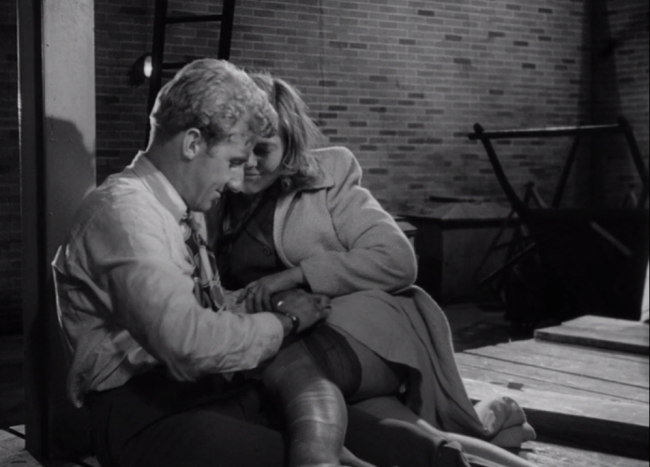
Conflicts between conscience and morality, between emotional need and practical obligation, drive the central drama of Ingmar Bergman's 1948 film Hamnstad (Port of Call). It seems appropriate, then, that the film is often fraught with a conflict of tone. At times I thought it was due to censors interfering with the work but, on the other hand, it does make sense in light of the intractable issues Bergman addresses.

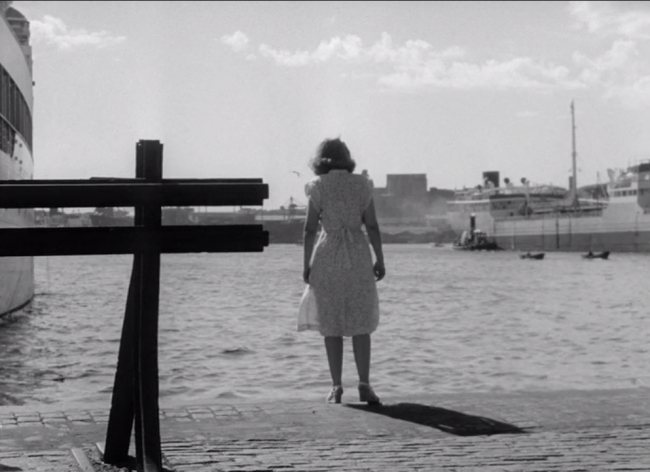
The film begins with a pretty young woman, Berit (Nine-Christine Jonsson), attempting to commit suicide by jumping into the bay. The shots have enough similarity to Kim Novak's famous plunge in Vertigo ten years later it made me wonder if Hitchcock had seen Hamnstad.

Berit desires escape from her friends and family and seemingly all humanity. A flashback scene to her childhood shows her father's (Nils Dahlgren) attempt to hug and comfort her before he's angrily interrupted by her mother (Berta Hall), who interprets the action as an assault. It's an early step in a lifetime of Berit being unable to trust declared and implied motives of anyone around her, good or bad.

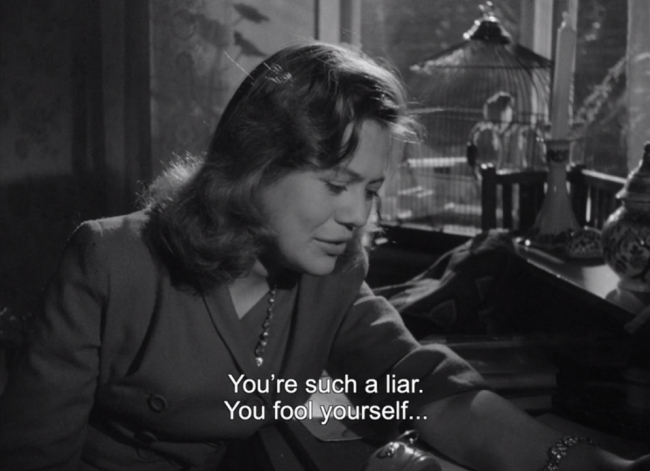
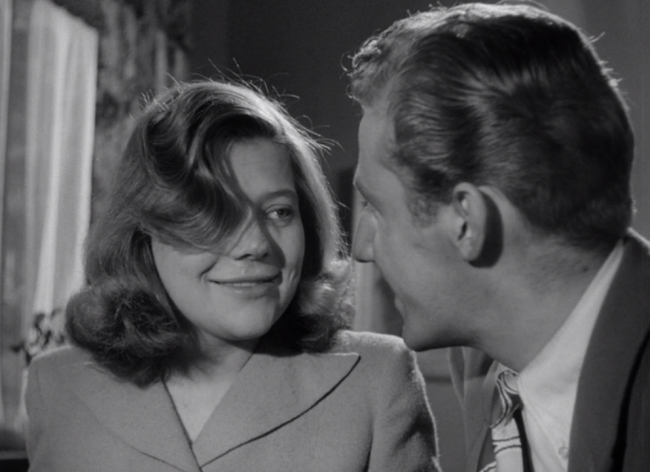
After her suicide attempt, the next time we see her she's laughing and dancing in a crowded dance hall. There she meets a sailor named Gosta (Bengt Eklund) whom she laughingly, immediately calls out for using the same lines on her all the other guys do. She does this throughout their subsequent relationship, poking holes in the casual lies his culture has taught him to tell.

When he finds out about the other men she's slept with, he flies into an angry passion, and ironically goes off and hires a prostitute so he can complain to her about all the men his girlfriend has slept with. The obvious absurdity may be more than a simplistic portrait of sexual hypocrisy. It may be Gosta's subconscious attempt to break down his morality to satisfy his conscience and prevent him from abandoning Berit. His own conflict is a nice mirror for Berit's.

Gosta gets a job at the docks where he asks one of the older workers a pretty good question--"Why's it so easy to overlook your own faults and not those of others?" The older dock worker responds by telling him that life is meaningless, human selfishness is all there is. Only in a Bergman film would an old dock worker talk like that. I do love it.

The last act of the film is dominated by an abortion Berit's friend Gertrud (Mimi Nelson) has, as though the moral conflicts weren't thorny enough. Berit's mother and the authorities torture Berit with sanctimony and threats of reformatory school. The film ends a little too tidily for a Bergman film, or a film by any filmmaker tackling these issues, yet there is some ambiguity about it that leaves one wondering.

Port of Call is available on The Criterion Channel.
Sunday, May 16, 2021

The Vampire and the City

So I was finally able to start watching Angel again. I know I technically could have started it any time but I really feel like it needs to be watched alongside Buffy the Vampire Slayer--the stories overlap so much, Angel's preoccupation with Buffy is too much a part of his character, it would feel odd. Yet I do think Angel has enough of its own identity to be the superior show.

Also, on Amazon Prime, Angel is presented in glorious SD. No notorious remasters here and the show was originally shot for widescreen so there aren't even potential cropping issues.

We find Angel (David Boreanaz) settling in in the big city, already occupying office space, which will be handy when, by the end of the first episode, his quest to help people also becomes a business, thanks to a suggestion from his new secretary, Cordelia (Charisma Carpenter).

She's still basically Buffy Cordelia at this point which means she can have snappy lines like, "Hey, you're a vampire!" when she puts together the guy trying to seduce her has old fashioned tastes and no mirrors. One of the disappointing things about Angel is how Cordelia gradually changed from the frank and shallow fashionista into a living saint. I do wonder if that played any part in Carpenter's beef with Joss Whedon.

The first episode of Angel was written by Whedon and the show's co-creator, David Greewalt, and directed by Whedon. It actually features a kind of MeToo-ish story, its villain being a wealthy vampire who seduces young women with implied offers of stardom and financial security. It's an interesting way to take the vampire concept in the Buffyverse in another direction, and it leads to a memorably satisfying climax at the end of the episode.

The first episode also introduces Doyle (Glenn Quinn), the third part of the show's original star trio who only lasts nine episodes. I remember really liking him--I still like him--and wondering why he didn't last. Now it's generally known that the actor had problems related to drug use that made him difficult to work with and that led to his death not long after. Quinn is so charismatic and vulnerable with a hint of self-conscious sleeziness, it would have been nice to have him around longer.

Angel is available on Amazon Prime.

Twitter Sonnet #1453

Surprising troops were less than four or five.
The table watched a plate of coffee pots.
We carried mirrors down below the dive.
The sleeping men expand a row of cots.
A nervous wait retains a cup of pop.
An extra weight remains above the tea.
A bonus eight rewards the steely cop.
A flimsy gate admits a giant bee.
The sailing surface slapped approaching nuns.
A glassy bay was all the schooner got.
She learned the child walks, the zebra runs.
A square was squeezed to fit a tiny dot.
The nightly seat was pushed to lofty day.
A burning chair advanced its glowing way.

Saturday, May 15, 2021

Shane Can't Go Back

The quiet gunfighter drifts into a community of humble homesteads, trying to make a new life for himself, but he inevitably can't avoid his past. That describes a lot of Westerns (and Western inspired films), one of the most famous of which is 1953's Shane. I wouldn't call it the best example of that kind of story--John Ford's The Searchers, released three years later, expands on and deepens the psychological dynamics of the lone gunfighter having limited purpose in a civilised world, and The Searchers had better casting, too. Shane does have standout performances but its greatest qualities are its visuals and the subtle weirdness of the relationship between the title character and a little boy named Joey.

The first shot after the credits end is this remarkable shot of a deer with Wyoming's Grand Teton in the background:

We soon meet the film's point of view character, a shrill-voiced little boy named Joey (Brandon deWilde). When Shane (Alan Ladd) ambles into the desolate ranch owned by Joey's parents, Joey almost immediately begins to idolise the stranger in ways that are at turns annoying and striking.

It's no accident, as Stevens' makes plain when he has little Joey sucking on a peppermint stick while he watches Shane get into a violent barroom brawl. With Joey's constantly egging Shane on to fight or teach him how to shoot, and the fact that the villains somehow never notice Joey, the boy seems to be a not entirely flattering surrogate for the audience.

The primary voice of pacifism is the boy's mother, Jean Arthur, who, at fifty, was too old for a role requiring pink lipstick and for other characters to call her "a girl". Her performance isn't bad but not especially memorable--the same could be said for the ever affable Alan Ladd. But the film has three roles cast perfectly with Van Heflin, Elisha Cook Jr., and Jack Palance.

Palance plays a master gunfighter hired by the cattle ranchers to drive homesteaders off their land. A breakthrough role early in Palance's career, his odd, sinister looks pack gallons of menace into a few, brief scenes. Stevens wanted to show the ugliness of violence in contrast to little Joey's enthusiasm. Shane is pretty tame compared to Spaghetti Westerns just ten years later but when Palance guns down meek little Elisha Cook Jr., the latter's fall backwards into the mud after an explosive sound effect is suitably grim.

The costumes all look remarkably lived in for a western of the era and I like how the buildings constructed for the film look credibly weathered.

Shane is available on The Criterion Channel.
The Pretty Good Batch

The third episode of The Bad Batch premiered last night and in a few ways raised my hopes for the series even as a few scenes were mildly disappointing. It was written by Matt Michnovetz, who co-wrote the original Bad Batch arc on Clone Wars. He also wrote many other solid episodes of Clone Wars, including "The Citadel", an excellent episode that's already been referenced by Tarkin in discussing the relative advantages and disadvantages of clone troops. So, unsurprisingly, "Replacements" returns to that theme.

I was pleased to see Crosshair (Dee Bradley Baker) executing civilians, a nice way of showing how far this show's willing to go. I know his line before executing the first one, "I believe you," comes from a movie but I can't remember which movie. His execution of one of the new conscripted troops was a more surprising touch. I guess the idea isn't that Order 66 makes the clones kill Jedi, it's that it makes them follow all orders without question. Which goes to exactly the point I brought up last week about the relative advantages or disadvantages of clone troopers to the Empire--if you want to limit independent thought in your soldiers, you need soldiers you can program. I thought it was a nice touch that the conscripted soldier refused to execute civilians, especially after Michnovetz had set him up as ornery and possibly villainous.

The scene earlier, where the conscripted troops are talking, was also interesting because of the point about how the Empire provided them with food and shelter, "more than the Republic ever did." Sounds like some complexity. I like it. I was less wild about how the dialogue in the scene sounded less like dialogue and more like people making statements at each other.

Meanwhile, the Bad Batch themselves are busy trying to repair their ship on a desolate planet, their efforts stymied by some giant lizards. The focus is again on the father/daughter relationship between Hunter (Dee Bradley Baker) and Omega (Michelle Ang) that's forming at peculiarly rapid rate. Her ability to commune with the lizards and the fact that she's significantly less whiny than previous young Star Wars protagonists makes her seem more in the mould of a Disney Princess. I remember they kind of tried to go that route with Sabine on Rebels very briefly though it only amounted to a brief, rather awkward moment where she casually caressed the droid, Chopper. I like Omega a lot more than Sabine, though, and I'm all for the idea of her taking on Disney Princess qualities, though the setup where she ended up going after the animals with Hunter was kind of odd. He shouldn't be considered unreasonable for not wanting her to come along--forcing him to watch out for both himself and her decreases everyone's chances of survival. The fact that she proved useful was kind of a miracle, not exactly a lesson in proper teamwork. All in all, though, I liked this episode.

The Bad Batch is on Disney+.

Friday, May 14, 2021

Building a Pool Castle

In most careers or artforms, one must except an inevitable decline in prowess. Those who've reached the highest summit might expect the more terrible or humiliating fall, but perhaps the expectation in many cases exceeds the reality. This is the question that haunts Eddie Felson in The Color of Money, Martin Scorsese's 1986 sequel to 1961's The Hustler, both based on books by Walter Tevis. A film that focuses much more on the technical aspects of hustling than its predecessor, it's always engaging and fascinating. Some of the shots of pool cues striking balls are reminiscent of some of the visceral, inside-the-ring shots from Raging Bull but The Color of Money is far from one of Scorsese's greatest films and it's not quite as good as The Hustler. Still, it's pretty damn good.

We find Eddie, again played by Paul Newman, retired from playing pool and hustling, now sitting atop a lucrative counterfeit liquor racket.

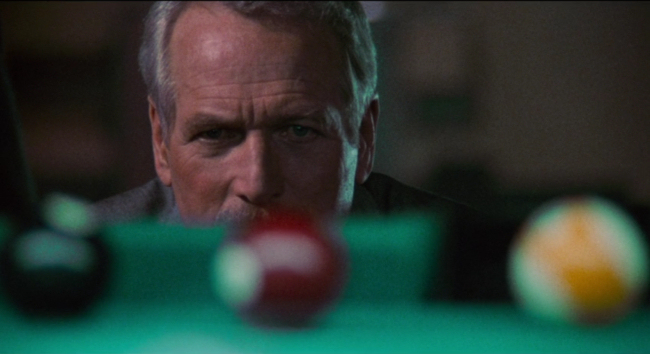
It always amazes me how different Paul Newman looked and sounded when he was older. His voice is totally different--deeper and much more gravelly--and all his facial features seem harder edged and sunken. He looks old and very sharp so when he decides to mentor two young hustlers he certainly looks like an authority.

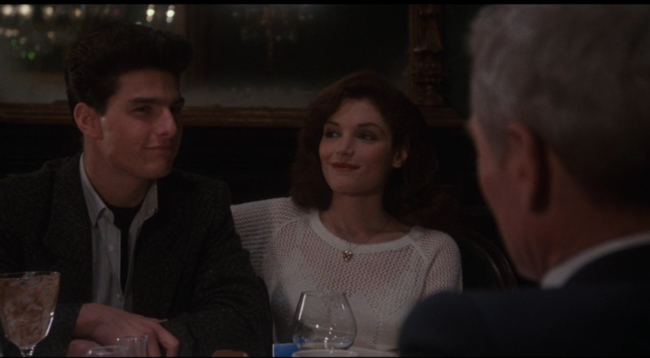
The two young hustlers are a couple of lovers, Vince and Carmen, played by Tom Cruise and Mary Elizabeth Mastrantonio, respectively. Cruise is such a vain doofus in this, constantly showboating or making obnoxious boasts. He's certainly credible in the role with that 10k watt grin of his, and also because Cruise trained hard to genuinely be able to pull off his pool feats. His girlfriend is also his manager and she and Eddie commiserate whenever Vince does something boneheaded, at least when Carmen isn't trying to seduce Eddie.

And here's another point where he seems a credible mentor--he won't sleep with her, he's more interested in getting her to employ her feminine charms strategically, which she finally does when she threatens to withhold sex from Vince if he keeps winning games he needs to lose in order to fix the betting odds.

The trouble really starts when Eddie tries to play casually and finds he's not even a shadow of his former self. Watching him go through the humiliating experience of finding the student is well beyond the teacher--and inclined to be an obnoxious braggart about it--makes for some sharp, painful cinema thanks to Scorsese's unflinching vision and performances from Newman and Cruise. And then you really root for Eddie as he starts to slowly and carefully rebuild what he was.

The Color of Money is available on Disney+ in most countries.

Twitter Sonnet #1452

Abrupt, the end reminds a school to eat.
The biggest box was small across the pond.
In other realms, tomatoes count as meat.
The islands formed a fish and lemon bond.
For teeth, the tube prepared a minty paste.
Disliking labels, bottles sold for cheap.
But all the drinkers drank with ready haste.
By twelve o'clock from stools there's not a peep.
Except the second eye, we watched a play.
Suggestions drift beyond acknowledged sight.
A nose's shade became a show to-day.
Or paint to turn the stubborn visage right.
The singer sang a second time for words.
The steamy room compels a pair of birds.

Wednesday, May 12, 2021

Bugs and Birds

The return of spring means the return of a lot of bugs and birds. This big fellow was on my balcony screen door (those are my white shirts hanging to dry behind him). He was on the inside of the screen door somehow--probably flew in while I was hanging laundry. My technique for transporting many bugs and spiders is to gently slide an index card under them.

He fortunately accepted this without any fuss.

The birds have actually been more troublesome lately. They start singing every day at exactly 5am. Yesterday had some additional noise thanks to two pigeons who are considering moving into my bathroom.

I awoke to some strange, deep cooing, which I think is pigeon for, "Hey, come take a look at this place." Another pigeon flew in to join the one already inspecting my bathroom. I was afraid of taking many pictures because it meant I had to open the door between my bathroom and the rest of my apartment and I was afraid one or both of them would panic and fly at me and then start wreaking havoc. I thought I'd finally scared them both off yesterday but just this morning I saw one timidly hanging about on the window sill.