Is love the natural result of long familiarity or the product of intimate, impassioned exchanges of ideas and feelings? 1962's I Hate but I Love (憎いあンちくしょう) presents both kinds of relationship, centring on a young couple who have been together a long time but haven't slept together. Starring Yujiro Ishihara and Ruriko Asaoka, both young and beautiful, the film, for a low budget Nikkatsu film, is surprisingly captivating for its violent sensitivity to subtext.
Daisaku (Ishihara) is a multitalented celebrity, a reckless crooner, TV interviewer, and radio host who often can't be bothered to read ad copy. The film opens with tracking shots of him angrily stalking out of the radio studio then driving madly through a crowd before stumbling through his apartment, tearing off his clothes, and collapsing naked in bed. But not before writing on the door outside, "Wake me up and I'll beat you to death."

But that doesn't stop Noriko (Asaoka) who gleefully puts an alarm clock in a bowl, sliding it into his bedroom. She's not just his girlfriend but his manager as well.

The two are comfortable goofing off, dancing, and arguing--they argue quite a bit--but they have a rule, instituted by Daisaku, never to kiss or sleep together. Originally he'd been concerned over complicating their professional relationship, now it's almost a fetish as she's comfortable dancing about his apartment in just a shirt and underwear while he sings for her. Ishihara's voice, by the way, is terribly beautiful.
Then two things happen; the producer of Daisaku's TV show finds a human interest story for him, a potential juicy interview, and Daisaku and Noriko, bored in his apartment one day, decide to break their rule. At the last moment, just as Daisaku is tearing his own shirt off Noriko in bed, she decides not to go through with it.

The human interest story is centred on a young woman living in Tokyo who has been exchanging love letters with a doctor in Kyushu, far to the south. The woman has placed an ad for someone to drive a jeep to Kyushu to deliver letters to the man.
Noriko laughs that her and Daisaku's relationship is exactly the opposite of the man and woman's, insisting the two can't really be in love because they've never met. Still worked up from Noriko's rejection the previous night, Daisaku impulsively accepts the job of driving cross country in the jeep despite pleas from Noriko and the producer.

Of course, she follows Daisaku. He drives the decrepit jeep, she drives his sporty Janguar, and it becomes a road movie. The longer the trip lasts, the less his fervour seems strange and the more Noriko's intense desire to stop him seems like it reflects deeper, difficult to articulate issues. If Daisaku succeeds in completing a romantic gesture, would that mean something about romance Noriko doesn't want to acknowledge? His music is so beautiful and obviously romantic, it's hard to believe she doesn't believe in it. But maybe that's part of the job of a manager, to be only pragmatic so the artist doesn't have to be. It turns out to be a good way to talk about two different aspects of love. It helps a lot that these kids have massive star power.
I Hate but I Love is available on The Criterion Channel, in the U.S. and Japan.







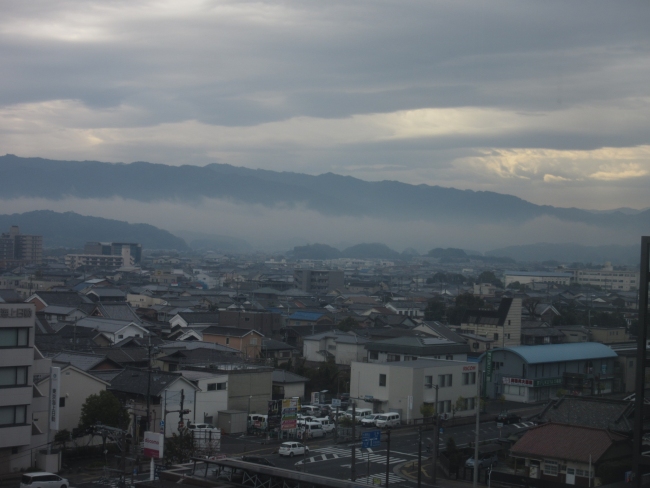





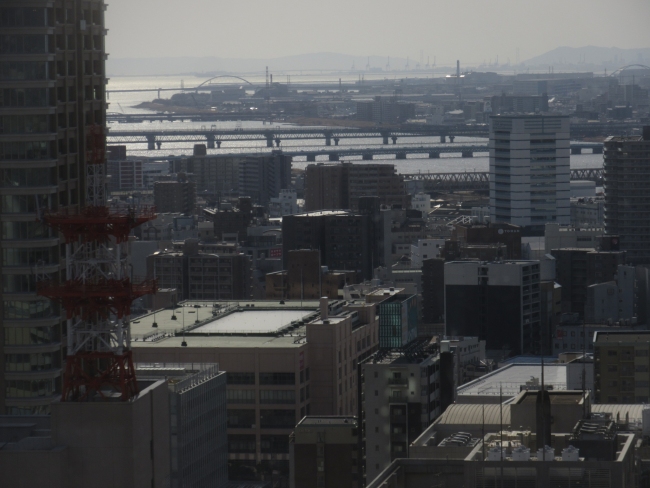
 Here's a picture from Tennessee. Currently I'm in flight, over New Mexico, I think. Oddly the twelve hour flight doesn't seem like very much time to me. I have a nice seat, the seats next to me are empty and I have plenty of room for my laptop case. I suppose this is a side effect of the Coronavirus.
If my attitude about the Coronavirus seems callous or inappropriately casual to you, I would like to assure you I do appreciate the seriousness of the situation. I would be more than happy to self-quarantine and avoid travel if I had a place to self-quarantine to and my job didn't depend on me travelling right now. I've been preparing for this job in Japan for over a year and have made many sacrifices including donating or discarding all of my furniture, selling or donating many of my books, and finally selling my car to a relative in Tennessee. I might have enjoyed staying at the Embassy Suite forever but my funds simply won't allow it. I consider myself fortunate that I'm not one of the many forced to spend the duration of this crisis on streets and in shelters.
Maybe I should use language to show feelings of anguish and people may be upset that I don't seem to be participating in the communal dismay. I don't like what's happening and hate that the virus has killed so many people and has made others sick while the changes being made to status quo operations have caused problems that go beyond inconvenience, including staff shortages at hospitals. The reason I may not seem very emotional about this thing, and the reason I seem to be focused on other things, is because this seems to me the most practical and considerate way of conducting myself. Although I feel calm and not panicked, I feel like any attempt to provoke panic or terror in myself places an undue burden on other people. It seems to me an expression of pain, emotional or physical, is a form of cry for help and it takes resources and energy for people to help other people, emotionally or physically. So if I don't actually require such assistance, I would be wasting other people's time if I demanded it when I might contribute more constructive and entertaining things about my particular experience to distract people from what they may be going through.
Several years ago, I had a conversation with a young man who told me that he reacted to the news of any death, of anyone in the world, the same way he'd react to the death of a loved one. Since he told me this while not sobbing or appearing in any other way especially upset, I could only assume he avoided news all the time (I know he didn't), he was lying, or he was a psychopath. So I tend not to trust some people when they say it's our responsibility to always be empathetic. You couldn't do that and remain sane. Can you enjoy watching the cute cat video while knowing, right at that moment, someone like you or your loved one is experiencing pain or death? So I respect the seriousness of what is occurring without feeling like I must be experiencing the full extent of the pain internally. I don't think that would do anyone any good. Understandably, some people are more sensitive to the imagery and news than others. Maybe it's because I'm distracted by so many other issues at this time that I'm not feeling the same level of shock as some of my friends. On the other hand, I generally find I'm at my most calm in the middle of a crisis.
Here's a picture from Tennessee. Currently I'm in flight, over New Mexico, I think. Oddly the twelve hour flight doesn't seem like very much time to me. I have a nice seat, the seats next to me are empty and I have plenty of room for my laptop case. I suppose this is a side effect of the Coronavirus.
If my attitude about the Coronavirus seems callous or inappropriately casual to you, I would like to assure you I do appreciate the seriousness of the situation. I would be more than happy to self-quarantine and avoid travel if I had a place to self-quarantine to and my job didn't depend on me travelling right now. I've been preparing for this job in Japan for over a year and have made many sacrifices including donating or discarding all of my furniture, selling or donating many of my books, and finally selling my car to a relative in Tennessee. I might have enjoyed staying at the Embassy Suite forever but my funds simply won't allow it. I consider myself fortunate that I'm not one of the many forced to spend the duration of this crisis on streets and in shelters.
Maybe I should use language to show feelings of anguish and people may be upset that I don't seem to be participating in the communal dismay. I don't like what's happening and hate that the virus has killed so many people and has made others sick while the changes being made to status quo operations have caused problems that go beyond inconvenience, including staff shortages at hospitals. The reason I may not seem very emotional about this thing, and the reason I seem to be focused on other things, is because this seems to me the most practical and considerate way of conducting myself. Although I feel calm and not panicked, I feel like any attempt to provoke panic or terror in myself places an undue burden on other people. It seems to me an expression of pain, emotional or physical, is a form of cry for help and it takes resources and energy for people to help other people, emotionally or physically. So if I don't actually require such assistance, I would be wasting other people's time if I demanded it when I might contribute more constructive and entertaining things about my particular experience to distract people from what they may be going through.
Several years ago, I had a conversation with a young man who told me that he reacted to the news of any death, of anyone in the world, the same way he'd react to the death of a loved one. Since he told me this while not sobbing or appearing in any other way especially upset, I could only assume he avoided news all the time (I know he didn't), he was lying, or he was a psychopath. So I tend not to trust some people when they say it's our responsibility to always be empathetic. You couldn't do that and remain sane. Can you enjoy watching the cute cat video while knowing, right at that moment, someone like you or your loved one is experiencing pain or death? So I respect the seriousness of what is occurring without feeling like I must be experiencing the full extent of the pain internally. I don't think that would do anyone any good. Understandably, some people are more sensitive to the imagery and news than others. Maybe it's because I'm distracted by so many other issues at this time that I'm not feeling the same level of shock as some of my friends. On the other hand, I generally find I'm at my most calm in the middle of a crisis.