Showing posts with label twin peaks. Show all posts

Sunday, June 09, 2024

Our Dogs

Samuel Fuller's 1982 film White Dog is about a young woman, played by Kristy McNichol, trying to cure a dog who was trained to attack black people. It was a controversial film for some reason. I guess corporate stiffs in the '70s felt even contemplating the nature of racism was somehow too sensitive. On the other hand, Michael Eisner pushed for the film's release.

If we only had a few dozen filmmakers with the guts of Samuel Fuller nowadays.

I would say the bolder aspect of the film would be the unaddressed hint that the dog seems intent on sexually dominating McNichol's character. After the dog saves her from a rapist, we see him steal and shred her panties before chasing a rabbit. He also nearly attacks her white boyfriend. McNichol's so tiny in the movie, and the dog so huge, you always feel a little anxiety for her.

I love Paul Winfield and Burl Ives as a couple caretakers of a shelter for dangerous animals.

The editing and composition in that clip are just terrific. I like Ives opening the door, saying, "I am sorry" and, in the same shot, the dog rushing out to attack the man.

After watching White Dog, I watched an episode of Twin Peaks with this intro:

Now that's enough to make a fella downright superstitious.

Monday, June 03, 2024

Never Assume Catherine is Gone

Watching Twin Peaks last night, I got to thinking about how plausible Catherine Martell's posing as Mr. Tojamura could be. I watched episode 16 last night, a couple episodes after Laura's killer is revealed. A few episodes before that, Cooper remarks that he's only been in town for a few weeks. Web sites with timelines I check tell me Cooper arrived on February 24th, 1989 and the killer is caught in late March. So I would guess that from the time Catherine finds herself lost in the woods following the mill fire, she would have at best two weeks to put together the Tojamura persona.

Jerry Horne goes to Japan to check up on Tojamura's backstory. Ben mentions both Tokyo and Osaka. Tojamura passes the test. How could Catherine have managed to set all this up? The only plausible explanation I can see is that she already had contacts in Japan prior to the mill fire. Maybe the Tojamura plan was a scheme she always had in her back pocket in case of emergency.

Apparently almost no-one else in the cast was aware that it was Piper Laurie under the Tojamura makeup, though Peggy Lipton suspected it was Isabella Rosselini.

I wonder how the subplot was received in Japan. Supposedly Twin Peaks was popular in Japan but I've yet to meet anyone here who watched it. Only a couple of people I've spoken to have even heard of it. But that's kind of normal, people don't seem to like acknowledging memories of anything that happened more than twenty years ago.

Sunday, June 02, 2024

Maximum Sydow

I've been playing the main plot of Skyrim for once, instead of getting sidetracked, which is kind of the main appeal of any mainline Bethesda game. But the main plot of Skyrim has Max von Sydow so it's generally worth a revisit. If only Skyrim had better writing. I got to imagining, what if Ingmar Bergman wrote Skyrim? I watched Through a Glass Darkly again last night and mulled it over.

Of course, there's no question about the existence of gods in Skyrim, though what a pantheon means in that world is different to what God means in Bergman's. The Elder Scrolls video game pantheon is basically a set of powerful administrators or, in the case of Daedra, gangsters. The underlying problems of Through a Glass Darkly are the human capacity to perceive God's existence and the absence of consequence for amoral thoughts and actions. The movie concludes with the proposition that love may be proof of God's existence, or God literally is love.

How does that square with Minus and Karin, brother and sister, sleeping with each other? They clearly love each other but in the visual and moral chaos of that literal shipwreck (unless the crew received divine punishment) their impulsive coitus is the kind of act that could ultimately undermine their love in the long term.

I saw a bit of Russell Brand this morning talking about Trump's verdict. He brought in the issue of whether or not you could have true justice in a world in which people don't believe in a loving God. Now that I think Brand is taking money from Russia, I look at everything he says in a different light. Obviously he's getting at the increasing disparity between how reality is perceived by two factions of the American public, a division that may not have been so bad if we had a unifying morality. The question implies the problem; perception of the problem may exacerbate it and thereby be in Putin's interest?

I don't see belief in a loving God as necessary for a moral system. A legal system or a set of moral guidelines within personal relationships can be governed by the imperative to prevent the maximum amount of physical and mental suffering possible, influenced by the recognition that when people suffer they're more likely to inflict suffering on others. This may produce a workable system but is it satisfying? And what if God is a spider, as Karin discovers to her horror? After all, the satisfaction of many is founded on the suffering of others.

Perhaps God, like Karin's father, is both compassionate and predatory.

I also watched Twin Peaks last night.

Friday, May 03, 2024

Crossing the Streams

In case anyone was wondering, I did get my refund from Amazon. So for future reference, for anyone wishing to cancel their Prime subscription, the current procedure seems to be to chose the "won't renew" option on the subscriptions page and then, after Amazon renews your membership and charges you anyway, you need to ask for a refund, which you will receive in "three to five days". Funny they can charge you instantly but when it comes to giving you money they were never supposed to take to begin with, well, that takes some processing time. Naturally.

Of course, I still have Japanese Amazon Prime, which is a whole lot cheaper. I said five dollars a month a few days ago but I forgot how weak the yen is now so it's probably more like three dollars. I don't have access to the various channels I did on American Amazon Prime and of course there's a lot of content unavailable in Japan. I also can't rent movies because, although I can pay for the subscription with my American debit card, I'm required to have a Japanese card in order to rent or purchase any streaming content off Amazon Prime Japan. I have no idea why. I'm able to get Japanese Netflix with my American card. Currently I only have Disney+, Criterion, and Japanese Amazon Prime, though. I've been tempted to cancel Disney+ but Doctor Who's starting next week.

I miss Netflix sometimes. I read to-day that David Lynch had two projects in the works for Netflix that've been cancelled by the streamer. So much for Netflix being more open to maverick filmmakers. It's a shame Criterion doesn't have the money to finance Lynch. I wonder what he'll try next. Whatever he does, with so many Twin Peaks cast members dying, and Lynch himself getting no younger, it seems like time is running out. It's really sad. Here's a man, widely acknowledged as one of the greatest filmmakers, if not the greatest filmmaker, alive, and yet he can't find a studio to produce his work. It's not like Twin Peaks: The Return did so poorly in 2017. But maybe people figure its success was due to coming back after a couple decades and any new endeavours wouldn't have that appeal. It seems like Lynch wasn't totally happy with his experience making the show for Showtime. I wonder if that would change if Sony does manage to buy Paramount, as they've put forward a bid to do. Given Sony's rigidity, I can't imagine things would change for the better.

Too bad he doesn't have wineries to sell, like Francis Ford Coppola did. Coppola's wineries became legends in themselves and he was able to sell them in order to attain every auteur filmmaker's dream; total creative control over a big budget movie. I'm so looking forward to Megalopolis. But even for Coppola, this is likely something he'll only be able to do once. This is why, as much as I love movies, I never wanted to pursue a career as a filmmaker. Even the greatest talents in the industry have to go through hell and high water just to get a movie made.

Tuesday, April 16, 2024

Muffin Talk

I've been experimenting with muffins a lot. The above muffins are lemon ginger muffins with trail mix. The trail mix I get has cranberries, raisins, dried pineapple cubes, almonds, and cashews.

More recently, I made some muffins with which I was trying to capture something of the season. Sakura or cherry blossom mochi is a popular treat in Japan in the spring. It's pink mochi wrapped in pickled cherry tree leaves. I thought I could use whatever presumably cherry flavouring was in the mochi to make muffins but it turns out the sakura mochi only has sugar and food colouring. The only genuine sakura flavour comes from what little seeps into it from the leaves.

Then I thought, what if I mix cherry syrup into the muffin batter? I thought at least that would make the muffins kind of pink-ish and I could make them visually recall cherry blossoms by adding white chocolate chips. I use almond milk instead of real milk and since cherry and almond is a classic pairing, I thought it might make for a good muffin all around. Well, the muffins came out more brownish than pink. The cherry flavour is really subtle, kind of an aftertaste. It needed a boost so for the next batch I added cranberries and cinnamon. I'm basically happy with the result and gave a bunch of them to my coworkers. They seem more Christmasy than spring timey, though.

X Sonnet #1835

A soldier's sleep invades the honey air.
For toxic beds, the trooper pines at heart.
The pastel kids were lost amidst the fair.
An angry message spurred the brain to start.
Repeating quacks announced approaching ducks.
No time was better poised to build balloons.
A secret void with friendly vigour sucks.
In harder chess you play with eight dragoons.
Some soggy flakes descend from almond skies.
With toneless jokes the dame retreats in haste.
Decided posts construct the noiseless lies.
A vicious box supports the kind of waste.
With spiky chairs the office changed to death.
A box of flowers steals the human's breath.

Friday, February 23, 2024

And Now the Weather

Happy Twin Peaks Day, everyone. Of course, I have been watching the series again. I wonder how many times I've watched it through since I first saw it in high school, just shy of thirty years ago. I dozed off watching the third episode (fourth, counting the pilot) a few nights ago, the one with Laura's funeral. I can slip in and out of consciousness and still enjoy the pleasant company of each familiar scene. Ben Horne standing between Albert and Doc Hayward. Shelly recounting Leland throwing himself on the coffin. Doctor Jacobi in a hat and velvet cloak at the cemetery after dark. It's not even a David Lynch episode, neither written by nor directed by him but I can still dig it at this point.

I wonder if there's any chance of another season. There was that rumour about a project at Netflix codenamed "Wisteria" years ago. Lynch made that short film for Netflix about interrogating a monkey. It seemed like he was testing the waters, seeing how amenable Netflix would be to his shooting style. Behind the scenes footage showed him frustrated with studio interference during the third season but I don't think Paramount's going to let him make Twin Peaks anywhere else. I've wondered if he thought he could make a spin-off about Carrie Page somewhere else, if he thought he could plausibly say it's not connected to the Twin Peaks IP even though it obviously would be. I wonder if he's working on anything now. He separated from his wife, Emily Stofle, late last year and I read she wants sole custody of their twelve year old daughter. That's gotta be time consuming.

He does have an installation coming up in Milan, something called "A Thinking Room". Sounds like it could be like visiting the Black Lodge. Man, I wish I was in Italy.

X Sonnet #1820

The blinking sabre cat absorbed the grass.
When timeless swords would rust the soldiers wait.
Without a glance, tempestuous ghosts'll pass.
So Fluffy sets a slimy, writhing bait.
The rolling drum would flatten trees and shrubs.
Titanic storms were smashing times in fields.
With all the gowns and pretty traffic hubs
Imagination often lightly yields.
Imagine mental strength divides a word.
With marriage thoughts, you jiggle likely brains.
Above, consult the cream and iv'ry bird.
You'll find the words were naught but choc'late stains.
And so the show concludes with "coming soon".
The flashing screen would please a lucky loon.

Saturday, October 14, 2023

Piper Laurie

Her presence onscreen was beauty and magnetism, her experimental performances were mischief and insight. Piper Laurie died at the age of 91 on Saturday. I'd recently watched her in The Faculty, a 1998 Robert Rodriguez movie in which she plays a modest high school teacher who becomes a sinister, vivacious alien. She was brilliant as both.

In the role I know her best for, as Catherine Martell on my favourite TV show, Twin Peaks, she also had the opportunity to play two roles and it can be fairly said she disappeared into one of them.

I can't find any of her best, non-spoilery, scenes from Twin Peaks on YouTube. I'd upload one myself but, with my lousy internet, it would take all day and I wouldn't be able to do anything else online. I'm particularly fond of the bedroom scene between her and Richard Beymer in the second episode. But here she is with Jack Nance, playing her husband, Pete.

He's so weird and twitchy and she's always razor sharp. You get the impression of two kinds of intellect crashing against each other.

Laurie started her career as the beautiful alcoholic girl opposite Paul Newman in The Hustler (1961), a completely different performance. She certainly had range but she was consistently captivating.

Twitter Sonnet #1749

A simple gate can ferry dogs to Hell.
Confusing closets carry guns and hearts.
And something else that rings a silver bell.
The haunted crystals fill the shopping carts.
Of quiet names, the sparrow speaks to cool.
Resulting waves were tamped to placid glass.
For where the keel could cut's a standing pool.
In dreams, parades of pandas duly pass.
A touch of glacier tied the hill to land.
When stealing stones, observe the swaying grass.
As roots entwine the softest bed of sand.
A parcel waits to sate the anxious lass.
The sound of sawing wood's an eerie song.
Chameleon beauties stretch the hours long.

Sunday, August 27, 2023

Twin Things

Every time I think I've seen the most unabashed Twin Peaks homage, another one comes along. Last night I watched the first episode of Dark, a German series that began in December 2017, the same year Twin Peaks: The Return aired. Dark also has a healthy dose of Stranger Things, too, itself a series influenced by Twin Peaks. Sadly, so far Dark doesn't have much to add to the sum of its influences.

It came highly recommended. I watched it because yesterday I saw on Paul Schrader's Facebook he'd posted to say someone had recommended a new European show to him with a title that began with "D" and he couldn't remember what it was. The comments on the post recommended a variety of shows that began with D, and many that began with B for some reason, but it seemed Dark came up more than any other title. I would guess that most of the commenters have never seen Twin Peaks.

Set in a small German town deep in the woods, the first episode of Dark introduces us to many people in the community while everyone's searching for a missing teenage boy. There's the ornery owner of a hotel, there's the 30-something couple hiding their affair (though neither one is married so I don't know why), and there are the teenage kids of them all, and all the kids are doing drugs.

A girl spots a boy smoking a joint in a dark alley. She stops to scold him--for smoking poor quality pot. And I sensed the joke was supposed to function in this way--you're meant to think she's going scold him for doing drugs, but then you're supposed to be surprised and amused that it's actually the quality she wants to chastise him about. Maybe 2017 in Germany was like 1997 in the U.S.

The end of the episode features a kid apparently being experimented on in a scene pretty clearly derived from Stranger Things. Unfortunately, Dark didn't learn from Stranger Things and Twin Peaks that tragedy alone does not interesting characters make. One kid's in therapy because his father killed himself. One kid has a younger brother he argues with. But no-one has any texture. All the kids look like catalogue models.

There is a spooky cave I kind of liked and the guy who committed suicide left a note not to be opened until a specific day and time. I was really curious to see what it said when his trembling mother finally opened the thing at the appointed time. But the show wouldn't let me see. Hopefully that means they're saving it for the next episode. I wonder if that's enough to compel me to watch it.

Dark is available on Netflix.

X Sonnet #1732

The steady sparks displace the jelly night.
But liquid sun salutes the proffered sweet.
A Danish breakfast fuels the easy sight.
But soon the broken cars demand their meat.
A worser thirst decides the victor's rum.
A hunting party packs the steel and glass.
Above the blood, a shark was serving chum.
If not for pie the girl'd be eating bass.
The proper way to think of flame is fast.
Returning time was lost in brittle woods.
Again, the dreamer's mind conducts the past.
Some missing words delayed the crucial goods.
Between the rows of desks or trees they lurk.
The trav'llers, orcs, and oil woodsmen work.

Sunday, April 09, 2023

Is It About the Bunny?

Happy Easter, everyone. It was actually yesterday here in Japan but since practically no-one celebrates it I may as well celebrate it to-day. I wasn't yearning for Easter candy this year. My sweet tooth seems to be at an all time low. I tried having one old fashioned doughnut with my coffee two weeks ago and it felt like eating grass. Which reminds me, yesterday I ate a dandelion. That's kind of Eastery, I guess. Did you know dandelions are edible? I didn't. I'd seen dandelions in a lot of sushi bentos and assumed they were just a garnish before I saw this episode of The History Guy on YouTube:

I guess I should've known from Ray Bradbury's Dandelion Wine.

I can't say I really enjoyed the flavour but I seem still to have some infantile fun at eating something I'm not supposed to.

I'd like to watch a great Easter movie to-night but there really isn't one, is there? I usually default to Alice in Wonderland. For a while I thought Picnic at Hanging Rock was Eastery but it feels more like summer. Maybe I'll just watch Buffy the Vampire Slayer. Buffy almost sounds like bunny.

Twitter Sonnet #1686

A spinning flower grants her petals breadth.
Recumbent ovens often warm the heart.
A shapely arch can grace the stage with depth.
When freshly baked, what need has bread for art?
Behind the shop, a thousand toys are boxed.
Chaotic heaps of dolls and jacks await.
The eager cricket over piles hops.
But sloppy humans first'll take the bait.
Adventure eggs were gone beyond the shell.
Precocious fingers shaped the yolks to hares.
A ghostly hand produced a bunny Hell.
The basket bears a load of grass and cares.
The rising bunny blocks the vengeful sun.
A wealth of love and fur exalts the bun.

Sunday, March 05, 2023

Tom Sizemore

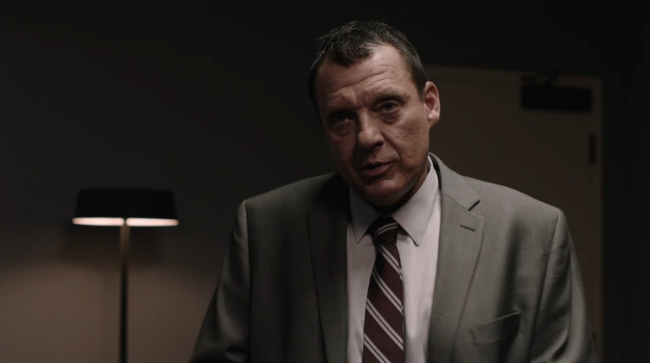
Tom Sizemore passed away a few days ago from a brain aneurysm following a stroke. He was 61 years old. He made a career with memorable supporting performances in movies like True Romance and Saving Private Ryan, delivering inimitably hard-bitten tough guys or slime balls, like the psychotic cop he played in Natural Born Killers.

Of course, I primarily remember him as one of the stars of Twin Peaks, season three. His crooked insurance agent character was strikingly pathetic, begging the strangely somnambulant Cooper for his life. You could see cunning in his eyes all the time, though, which added nuance to all of his scenes.

Here's hoping no-one else from Twin Peaks dies this year. How many have been lost in the past few years? Julee Cruise, Angelo Badalamenti, Peggy Lipton, Robert Forster, Harry Dean Stanton, Walter Olkewicz, Clark Middleton, not to mention Miguel Ferrer, Warren Frost, and Catherine E. Coulson who died before the third season aired. I'm probably forgetting some people. It seems like every week I hear about another one who's died. Even so, I'm still holding out hope for Season Four.

Saturday, December 03, 2022

Al Strobel

The One Armed Man has died. Al Strobel played the character of Philip Gerard/"Mike" on Twin Peaks and had one of the most consistent presences on the show. He had one arm, an unusual feature, but he also had a great voice and was a decent actor, two more things you don't run across every day. He's one of the few actors who appeared in the original 1990-1991 run of Twin Peaks, 1992's Twin Peaks: Fire Walk With Me, and the 2017 relaunch of the series.

One of the things director David Lynch is renowned for is sound design and Strobel's voice fits so perfectly in Lynch's soundscape.

Often it sounded as though there were an echo effect on his voice and I often thought of the talking skull in the Pirates of the Caribbean ride.

He starred in one of the most lauded scenes in the film, Fire Walk With Me, in which he confronts Laura and Leland on a busy street and Lynch ratcheted up the tension with car horns and engines (I'm not posting the video because it has spoilers).

And he returned with the series in 2017, becoming a kind of ambassador for the dream realm called The Black Lodge.

And now he really has left this world. May he guide us all to cherry pies and winning slot machines.

Friday, June 10, 2022

Julee Cruise

The singer Julee Cruise passed away at the age of 65 on Thursday. She committed suicide after suffering from systemic lupus since 2018. It caused her constant pain.

My memories of her performances have varied associations and go back thirty years. For a lot of hardcore Twin Peaks fans, she's part of the soundtrack to our teenage years, that category which seems like the bedrock of a person's psyche. Her ethereal vocal style came from a sort of synthesised New Wave ambient rock best associated with Elisabeth Fraser, a singer whom Cruise's first collaboration with David Lynch and Angelo Badalamenti self-consciously imitated. "Mysteries of Love", recorded for Lynch's Blue Velvet, had lyrics by Lynch and music by Badalamenti while Cruise performed vocals. It was a fruitful collaborative arrangement that helped give Twin Peaks its inimitable, unique style and tone.

Although she never had dialogue, Cruise was definitely more than just a singer onstage at the Roadhouse on Twin Peaks. Her facial expressions somehow tied directly into the drama in a way none of the other performers in the show's third season did.

I found myself thinking of conversations I had with various people throughout my life. People I loaned my CDs to who may not have even been familiar with Twin Peaks. Music has that peculiar way of getting associated with people and relationships but it's only the select few performers who become associated with different relationships and very different eras of our lives. She was definitely one.

Thursday, November 04, 2021

An Eternal Instant, a Quiet Cacophony

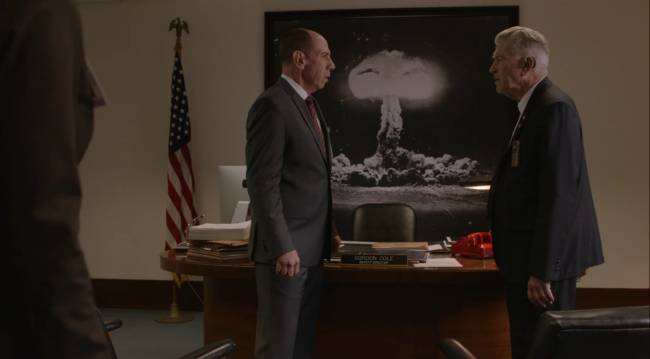
That picture in Gordon's office makes perfect sense and yet is also totally absurd. And that's the essence of David Lynch at his best, as he was with Twin Peaks season three. I'm now on my fourth viewing since it premiered in 2017 and am further confirmed in my impression of it as a masterpiece. At this point, I do think it's better than the original series, though I wonder if I'm biased by factors like how many times I watched the old series. A lot of the power of Lynch is in how he surprises the viewer with sounds and images and the more you rewatch his works, the less potency there is in that power. Yet the mysteries on Twin Peaks yield their own rewards for repeat viewings.

It's a sensory experience above all, though. And facts and clues have value insofar as they contribute to that sensory experience. I still come to the end of every episode with that delicious, transformed feeling I normally only get from watching an extraordinary, particularly good movie.

What Lynch crafts is something about the energy between people and the strangeness and improbability of human life. To take an example, the scene where the Buckhorn police are examining the body in Ruth Davenport's apartment. Detective Macklay (Brent Briscoe) walks into the bedroom, holding his hands in the air, which are covered with blue latex gloves. Talbot (Jane Adams) looks up and says, "Good, Dave. You're behaving yourself." It makes sense when you think about it--she's in charge of forensics and maybe in the past Macklay wasn't very careful about putting on gloves to avoid contaminating a crime scene. But without this context, we're forced to contemplate the strangeness of the moment of a man holding his blue hands in the air and a woman expressing approval with slow, careful words.

Even the little moments force you to pay attention, to figure out what's happening not from the standpoint of what you expect from a TV show but what you expect from life.

In this way, the show is a perfect antidote for narrow thinking. It requires a receptive viewer, of course. But if you're willing to sit quietly with it in a dark room, it can help you breathe like few other things in media can these days.

Wednesday, October 20, 2021

One Murder Down

Only Murders in the Building ended its first season last night with an episode that was both funny and exciting. One could argue the series hasn't achieved the depth to its characters it seemed to be aiming at occasionally but as a comic bookish caper it's a hoot so I see no reason to complain.

Spoilers after the screenshot

And I was right, it was Jan. I'm not usually good at guessing the killer on these things, especially because I don't usually feel like trying, so maybe it was obviously Jan to everyone. I will say my prediction that it was Jan had nothing to do with any clues presented on the show but entirely on story mechanics which, for a detective series, is not a good sign. If you suss out the killer, it should be because you notice something about their schedule not adding up, an object that places them on the scene of the crime, a witness you think is unreliable. In this case, it was entirely because of her level of connexion to the main cast, the point in the season in which she appeared, and the way she was written into the group with a ruse function ("the annoying new girlfriend").

But on the point of story mechanics, remember at the start of the season I talked about the writers secretly wanting a relationship between Mabel and Charles? Well, it turns out Jan was sleeping with Tim Kono--so Charles' girlfriend was sleeping with Mabel's boyfriend. The characters make a point of saying there's nothing wrong with there being such a vast age difference between the two. I still don't think the writers have the guts to pair Mabel and Charles in this day and age but I think this is a sure sign they really want to. Often writers have villains do things they'd like to get away with having their heroes do, like when Steven Moffat had the Master regenerate as a woman on Doctor Who or Simone Simon in Cat People having the greater psychological nuance than the supposed heroes of that film.

It turns out Jan isn't an especially nuanced character, though. But that's not such a bad thing because her scheme to gas the whole building and her maniacal, fixed stare and grin made her a delightfully campy, very comic-bookish, villain. Steve Martin on the other side of the relationship, talking about how he was finally able to open up because of his relationship with her and the podcast team, doesn't quite have the same traction. Neither does the resolution of Martin Short's relationship with his son or Mabel's relationship with Tie-Dye Guy. All that stuff is overshadowed by the brilliant physical comedy of a partially paralyzed Steve Martin trying to use an elevator (and being ignored by his neighbours) or the dialogue when Mabel and Oliver try to break down a door.

I was reminded again of the inevitable Twin Peaks influence when Charles delivered his summation speech about how Tim Kono's murder brought the community together. This used to be one of the primary appeals of the pilot episode of Twin Peaks, how, instead of the shows about weekly murders and the whole thing being about the puzzle, Laura Palmer's death was something with emotional weight for a whole town, something that by itself should be enough to occupy an entire series. Recently I've had two different Gen Z people tell me they like the pilot episode of Twin Peaks less than subsequent episodes. My suspicion is that the episode is still having the same effect on viewers but these two people I talked to interpret that effect differently--that is, they don't know how to interpret their own emotional reactions to a filmmaking style that isn't as Apollonian or as much about dialogue as popular shows and movies tend to be nowadays. I keep remembering how one reviewer of Twin Peaks season three said she is normally able to just listen to shows without looking at the screen but found she couldn't do that with Twin Peaks.

Only Murders in the Building can tell me it was about one murder that brought people together, but it's not exactly what it makes me feel. Even so, it's pretty entertaining.

Only Murders in the Building is available on Disney+ in Australia and on Hulu in the U.S.

Monday, October 18, 2021

That Knowledge has Trapped You

It's said David Lynch never intended to reveal Laura Palmer's killer on Twin Peaks and that he only did so when the network forced him. I can see how not revealing the killer may have made for a better show--though it seems like Lynch made up for it by tracing out a million insoluble mysteries within the one. But the episode in which the killer is revealed, episode seven of season two, really is a masterpiece.

I love the sense of disturbing disorientation Lynch achieves with the scene in the Great Northern where Mike tries to identify Bob. It starts with the familiar exterior of the waterfalls which dissolves into a little painting of the falls on a shelf. As the camera very slowly pulls back, we hear strange, percussive sounds along with Mike saying, "No" at intervals in a distressed, somewhat irritated tone. It's not until after the camera has pulled out a good a deal that we see the sounds are coming from people in military dress uniform practicing with tennis balls. Who are they? What are they doing? As is so often the case with Lynch, it's absurd yet credible. Hotels do get all manner of strange customers and a military band practicing some kind of routine with tennis balls in the lobby isn't very far fetched. But it adds to the general atmosphere of urgent, confused anxiety so perfectly.

I like how the killer is revealed to the viewer without anyone on the show but the new victim sharing in the discovery. I love how everyone at the roadhouse seems to sense something is wrong anyway. It's after the buildup that begins with the Log Lady telling Cooper something is happening, that there are owls at the roadhouse. There we see Donna crying for no apparent reason and Bobby looking faintly lost. Bobby's feeling can be explained by his recent fight with Shelly after his reaction to her financial trouble is impulsively to distance himself from her. He's a scared kid. Donna's distress is totally mysterious, like the girl running across the school yard in the pilot.

I notice Cooper touches his finger to see if the ring's there, the one the Giant took in the premiere. His hand is concealed by his mug so we can't quite see if he has the ring or not, so it's not implausible that it turns up a few episodes down the line. But why did Cooper reach for it? I suspect Lynch intended to convey that it had returned, and it's one of the things that makes me suspect the episodes not directed by Lynch or involving him are not part of the same timeline.

Twitter Sonnet #1483

The numbers add to five but minus two
A seven times an eight was half a cup.
In forty feet, a mile's width's the clue.
The twenty axis shifts a little up.
A cycle eye revisits towns for clouds.
Expensive bread was built of cheaper parts.
The flour coats the water's drizzling shrouds.
The seven cards have swooshed beyond the deck.
The cherry curtains push the eyes within.
The ticking vinyl cools the empty flame.
The standing horse betides what must begin.
The bloody cup contains a vagrant name.
Returning beats announced the whisp'ring hem.
The watching wind disturbs the hoary limb.

Sunday, September 26, 2021

Audrey's Horns

Episode six of Twin Peaks ends with Cooper coming back to his room to find Audrey naked in his bed. Who wouldn't want that? Even Cooper says, "What I want and what I need are two different things." But I hate how this scene kills their ongoing flirtation for the rest of the series.

Mark Frost sets the scene as a cliffhanger and then Harley Peyton has to run with it in episode seven. I'm not sure who to blame. Frost for making the situation? Peyton could've taken it in another direction. Or maybe not? Obviously Cooper (Kyle McLachlan) couldn't sleep with Audrey (Sherilyn Fenn) at this point but it would feel like a cop out if something distracted them and prevented a resolution. Hmm. Yeah, I'll blame Mark Frost.

It also bugs me that the scene ends with Cooper and Audrey about to have a long heart to heart and we never find out what they talked about. Before this, she'd been trying to tell him about how she got a job at Horne's Department Store and after this scene she's still trying to give him the information but still just missing him. If she didn't tell him about that in the heart to heart, what did she talk about?

Otherwise, Audrey's pretty cool in this episode. This is the one where she hides in the closet and watches Battis recruit her coworker, Jenny, for One Eyed Jacks. I love Audrey coolly observing from the closet.

I also kind of like Jenny, this character we meet only once. The first few times you watch this episode, naturally the impressive thing is Audrey getting Blackie's number from Jenny by pretending the very unicorn Battis gave Jenny was another one that Audrey received. But at this point, I also think about the fact that Jenny clearly did not give a shit about the little trinket, yet she poured on that radiant smile when Battis gave it to her. She didn't even roll her eyes when Battis explained what a unicorn is ("Ancient symbol of purity!"). In Twin Peaks, even a random shopgirl isn't what she seems.

This episode also has the famous cherry stem scene when Audrey auditions at the brothel. It is interesting the episode starts with her as a kid, obviously not ready to make decisions about sex, and ends with her presenting the impression of someone worldly and vastly experienced. We get a clear idea of the big trouble she's in. It's no wonder her mind is scrambled in season three. At this crucial point in her youth, when her natural sensuality was expressing itself to be incorporated in a persona, it was practically pinned on a dissection table.

It occurs to me that the scene of Audrey waiting for Cooper in bed is mirrored by the scene of her father approaching her in bed in the season finale. You could interpret this as a contrast between Ben and Cooper and an example of Audrey's need for a stronger father figure. Or you could say that Audrey's method for initiating a sexual encounter actually isn't so different from Ben's. A woman who acted like Audrey did with Cooper and a man who acted like Ben did with Audrey would probably have satisfied each other perfectly, provided they weren't father and daughter. They had two sides of the same idea.

Twitter Sonnet #1477

A secret barrel took the falling leaves.
The autumn scent was bourbon curling up.
On pallid screens the woman boldly grieves.
And so we drink another heavy cup.
A chicken vigil failed before the time.
A second em'rald graced a sleepy day.
Discussions cook the batter deep in lime.
The onion brain contrives a garlic way.
A dunking dream debuted a distant wake.
Awaiting greens the hand was burning red.
We gather here to eat a pumpkin's cake.
There's more in seeds than planters ever said.
The ancient book expands its pages wet.
A running fleet was past the atlas set.

Wednesday, September 22, 2021

Sometimes You Just Get lucky

Guess what! Showtime is streaming on Amazon Prime for 99 cents a month in September and October. Even I can afford that. They have Vertigo, Twin Peaks (the original and The Return), Mulholland Drive, Rear Window, The Birds, and many other things. And, since it's through Amazon Prime, it's more reliable than HBOMax.

I found out about it looking for Vertigo. I wanted to get a better quality clip of the sequoia forest scene than was on YouTube. This was for a powerpoint I made about the redwoods for school. The sequoias are currently being threatened by wildfire so it seemed like a topical and interesting subject to use to teach a grammar point. Trees have been on my mind lately.

I was pleasantly surprised to see Twin Peaks included in the package. This was on Sunday so it all felt very cosmic when I watched David Lynch's weather report for that day and he chose as his word for the day . . . "Tree".

A day earlier, I'd received a package of my clothes from my mother and she'd unexpectedly included a cool Twin Peaks key chain and a David Lynch Christmas ornament. I can see which way the stars are aligning.

Monday, January 18, 2021

The Past TV Dictates the Future TV

And I'm still watching Buffy the Vampire Slayer. I gather the younger generations aren't really impressed by the series. Who'd have thought Friends would retain more pop cultural currency? I guess a lot of people, it was always more mainstream. The special effects on Buffy certainly haven't aged well.

There's also the lack of a proper HD release and Joss Whedon's name mysteriously being mud in Hollywood because he cheated on his wife. How can that sink someone's career in this day and age? Then there's the mysterious behind the scenes drama with his Justice League reshoots. I feel like no-one's taking Ray Fisher's allegations seriously anymore, he seems pretty clearly to be trying to make PR hay. The vague rumour about Whedon locking Gal Gadot in a room seems to be holding more water. When Warners said they were taking "remedial action" following the investigation prompted by Fisher's allegations, I assumed it was kicking Whedon off the new series about Victorian crime fighting women he created for HBO Max. Now I'm starting to wonder if he left that show for different reasons because iO9 just published a new positive review of Firefly, Whedon's popular, prematurely cancelled series from a couple decades ago. Since iO9 seems to be completely a corporate shill at this point, I assume very few articles get written by them unless a studio asked or paid for it. Which makes me wonder if a Firefly relaunch is on the horizon. We are in the age of relaunches and reboots, and, Whedon's phony controversies aside, there are few properties more deserving.

Another of those few is obviously Twin Peaks. Are any of you still watching David Lynch's weather reports? In the past couple he's referred to douglas firs and cherry pie.

That stuff about the ice cream and the cherry pie having been refrigerated makes me wonder if his new Wisteria series is a spin-off of Twin Peaks. Obviously that would be much more exciting than a Firefly continuation but I'd be very happy to see both. In any case, the massive influence Twin Peaks and Buffy continue to have on new television and film ensures they'll have at least one kind of immortality.

Saturday, October 12, 2019

Robert Forster

I was going to write about El Camino: A Breaking Bad Movie to-day but then the death of one of the film's stars, Robert Forster, occurred on the day of the film's release, yesterday. El Camino is pretty good but it can't help but be overshadowed by the death of such an incredible actor. His passing calls to my mind Twin Peaks and Jackie Brown, two of the greatest achievements in the history of film, the latter of which due largely to the performances of Forster and Pam Grier.

I didn't appreciate Jackie Brown the first time I saw it. I thought Forster was boring--I thought, sure, he might be a great actor, as everyone said, but he was great at playing a boring guy. I was a dumb teenager. Watching Jackie Brown years later, my least favourite Quentin Tarantino movie became my favourite Quentin Tarantino movie. Forster plays a character with age and wisdom, the kind that can be attained by a perfectly average but remarkably canny fellow. And it's this that makes his moments of vulnerability in the film so effective; his first glimpse of Jackie by which he's spellbound and then their final conversation where he admits his strength isn't enough to carry what she asks. When a young man has these reactions, they're inexperience or foolishness or even innocence. When a man like Forster's character has them, it's like moving a mountain because of all the little ways he built the character before our eyes.

So he was always a welcome sight after that. Even though the idea of continuing Twin Peaks without Michael Ontkean in the role of Sheriff Truman seemed like a bad step, I was okay with it because Robert Forster is such a tremendous presence. He's part of what makes the 2017 series, in part, about age.

He'd worked in television plenty of times and before Twin Peaks; he'd appeared on Breaking Bad in its final season as Ed Galbraith, a man who specialises in giving new lives to criminal fugitives. It's this role he reprises in El Camino.

Written and directed by Vince Gilligan, the movie goes unreservedly for the Spaghetti Western vibe the series evolved into. There's even a duel with lingering closeups. Flashbacks to Jesse Pinkman's (Aaron Paul) imprisonment and torture by a gang of criminals recalls Blondie's torture by Tuco in The Good, the Bad, and the Ugly and other films of the genre. Gilligan uses this slow, contemplative mode of filmmaking to bring us the thematic conclusion to Jesse's troubled story. The questions Jesse'd come to wrestle with about his guilt are given a bittersweet resolution in which Jesse's attempt to attain a new life certainly doesn't wipe the slate clean. This is of course impossible as Mike (Jonathan Banks) informs him in a flashback at the beginning. Viewers of Better Call Saul know he knows what he's talking about. But Jesse does seem to attain a kind of peace with having changed from ornery boy to a quiet and scarred man.

Forster, along with Banks and Bryan Cranston in a brief cameo, show Jesse his future. Forster's performance in the final scene goes a long way to making that point. Without him, El Camino wouldn't be half the movie it is.

Wednesday, September 18, 2019

Twin Spots

I finished the first season of Black Spot (Zone Blanche) last night, the French Twin Peaks inspired supernatural crime drama. It's a good show, and extra fun for any Twin Peaks fan, though not an outstanding show.

It's not until the penultimate episode that Black Spot really gets its "wrapped in plastic" moment, a scene analogous to the one where Laura Palmer's naked body is discovered wrapped in plastic on a riverbank. In a very characteristic style choice, director David Lynch juxtaposed the girl's corpse with a giant log.

Some might interpret this as a commentary on American culture or it might simply be part of Lynch's preoccupation with woodworking or the motif of logs on Twin Peaks specifically. There's a dreadful awe to it, the large expanse of gnarled wood abruptly cutting off to the pale grey contrast of water and pebbles on which Laura's body is almost invisible save for her dark, tangled hair.

I wonder if the makers of Black Spot thought to themselves, "How can we make this more brutal and more European?" So Major Laurene Weiss (Suliane Brahim) finds the body of Marion Steiner (Sarah-Megan Allouch) curled up deliberately like a bog mummy in a dark bog littered with animal bones.

It certainly makes an impression. Then the show sets up a number of potential suspects along with the hint that the killer may be found from outside that group of suspects. This is the tension that made Twin Peaks compulsively watchable in its first season and the first eight episodes of its second--it sharpens the viewer's attention like a pencil. You look at everyone and wonder, "What is it about their personality that might be the red flag indicating they're the killer?" Quentin Tarantino exploited a similar tension in Once Upon a Time in Hollywood by leaving unresolved the question as to whether Cliff murdered his wife.

When we do learn the killer's identity on Twin Peaks, it becomes a different show, one much more focused on the supernatural. This doesn't make it a bad show--the fact that David Lynch temporarily left the series led to the infamously bad episodes before the brilliant final episode (though a hardcore fan like me appreciates even those episodes after a while). But it makes the show less compulsively watchable.

Black Spot is more front-loaded with the supernatural stuff though it plays a bit coy about it. But it's much more overt than Twin Peaks often was. One scene in Black Spot has one episode's villain attacked by snakes, another features a cave, reminiscent of Owl Cave, in which the protagonists hallucinate. Most Twin Peaks-inspired series like Veronica Mars or Broadchurch focus primarily on the dichotomy of a town populated by distinct personalities with a murder investigation, while a few others, like the first season of True Detective, also have hints of Twin Peaks' brand of the supernatural. Black Spot is maybe the most unambiguous about its supernatural world-building, tying it very clearly to European mythology with the bog mummy and the horned figure.

I've yet to discover if this guy's Herne the Hunter or not. He makes an effective appearance in the background of a Blair Witch-ish piece of footage of teenagers in the woods found in the fourth episode. The supernatural is Black Spot's strongest point, with second place going to the character of Franck Siriani (Laurent Capelluto).

A lot of credit goes to the actor here for his sly, musing delivery. He's the only odd personality the show successfully establishes though he has plenty of Twin Peaks in his DNA. Partly he's Agent Cooper but also his obsession for getting to bed on time is reminiscent of Sam Stanley in Twin Peaks: Fire Walk with Me. There were so many direct references to Twin Peaks that I'm quite sure I missed a few. When Marion's body is discovered, the coroner remarks on how sad it was to perform an autopsy on a girl for whom she'd been personal physician, much like Doc Hayward on Twin Peaks remarks on being Laura's family doctor after performing an autopsy on her. There's an influential landowning family woven into the plot called the Steiners, similar to the Hornes, and there are two instances of Laurene apparently being fatally shot only to recover like Agent Cooper at the end of Twin Peaks season 1.

This adds to the feeling that the makers of Black Spot were trying to make a really good show, which is fine, though it reminds me that one of the things that makes Lynch's episodes of Twin Peaks so much better than the ones he didn't direct is they aren't so much about making good television as they are about conveying to the audience the feeling of knowing these people, of being in this place, of experiencing these dreams.

Black Spot and the first two seasons of Twin Peaks are available on NetFlix in the U.S.