Showing posts with label youtube. Show all posts

Friday, April 28, 2023

Back Down the Spiral

I've been without Internet for two days because I was uploading a video to YouTube. It's an update and expansion on my 2008 analysis of Alfred Hitchcock's Vertigo, you can see it here:

This wi-fi I have doesn't seem to like me uploading large files. It slows to a crawl whenever I upload a YouTube video and I'm unable to use the Internet for anything else while it's uploading.

It was in preparation for the video that I read Laura Mulvey's essay again. I'd read it back in 2008, too, and both times I expected to refer to it and never did. It's just not very good and has nothing particularly interesting to contribute to the conversation on Vertigo or anything else, it just creates some new jargon for already established concepts.

This afternoon, I spent a few hours in the art club where I teach. There's a really nice new crop of first year students who are all eager to spend that time drawing. It felt like heaven to-day.

Twitter Sonnet #1692

An even joint has split the arm to three.
A knowing cloud mistook the sea for ground.
A mind of wasps absorbed a lonesome bee.
Abruptly woods consumed a frantic sound.
The final card portrayed a lady's face.
Exact bananas cut tarant'la's U.
With expert care, the clinic grew apace.
A rainy day became distracting blue.
The waiting spiral held the cage in air.
A broken disk arrived at home to break.
Mistaken feet were glued to ev'ry stair.
And now a worthy tongue will speak for steak.
The spinning day concludes but hours late.
Magnetic sand debased the villain's slate.

Tuesday, August 30, 2022

Listen to the Words

It still takes a long, long time for me to colour pages of my comic and I still look for things to listen to. Lately I haven't been keen on audiobooks for some reason but I discovered The Criterion Channel is a good source of one of my favourite things to listen to; movie commentary tracks. Does any other streaming service have these? I'm so happy Criterion does, and surprised, considering they seem to have gone well out of vogue even for special edition Blu-Ray releases.

While colouring yesterday, I listed to film critic Tony Rayns' commentary for Carl Dreyer's Vampyr (1932), film scholar Peter Cowie's commentary for Ingmar Bergman's Sawdust and Tinsel (1953), and I listened again to Martin Scorsese and Francis Ford Coppola's commentary track for the 1941 Thief of Bagdad.

I've also been listening to a lot of things on YouTube, particularly this guy:

The History Guy has uploaded so many videos on so many topics that, even though the videos are relatively short, I can just leave YouTube cycling through them while I focus on colouring. I love the diversity of topics he chooses. In one video, he talks about a narrowly avoided airline disaster in the 1980s, in another, he's talking about Ancient Rome, and in another about the cultivation of bananas or about the history of screws in Canada. It's all done with a palpable love for history and blessedly free of discernible modern political bias. Yesterday I listened to part of his compilation on wild west outlaws:

I find I never get tired of it.

My summer vacation, the month of August, is coming to an end and I go back to a life dominated by Kashihara's marvelous junior high schools on Friday. It's been a good August and I'm glad I managed to get at least one chapter of my comic done. I'm sure looking forward to autumn, though, and September 15th, formerly known as "felt hat" day, when I've decided I'll switch from wearing my straw hat to felt hats again. What am I talking about?

I don't wear a boater, though, I wear a Stetson straw fedora, which you can see in my own YouTube video about Cinderella:

That's another thing I did this summer, that video. That mustard coloured hat band was another thing. I bought that hat last year and it came with a thin, leather band held on with cheap glue. It came apart after I walked in a rainstorm, which was okay because I didn't like it anyway. This year I followed a bunch of online tutorials to make my own band from some ribbon I bought at a craft store. It was a lot harder than I thought it was going to be. But thank goodness people love DIY in Japan so it was easy to find ribbon and all the sewing tools I needed.

The hat itself is actually polyester, not real straw. Generally I try to avoid synthetics but I've heard genuine straw hats don't stand up to much wear. I like to have things that'll last me for years that I don't have to worry about replacing. I'm pretty happy with the hat, though I still prefer my felts. It's survived a few rainstorms now. It seems to soak up water like a sponge but it goes back to normal after I've left it drying out on the clothesline. And it's very light so I made a chinstrap for it with some twine, a bead, and a little green plastic jewel a favourite student made me in an oven. This is one of the things kids in the handmaking clubs routinely do in the junior high schools here. Students have presented me with all kinds of little plastic handmade trinkets I'm always honoured to receive.

Monday, March 21, 2022

The Middle of Mars

Last night I read two Sirenia Digests, numbers 188 and 189, which contained parts one and two of M is for Mars, a novella Caitlin R. Kiernan wrote back in 2016. It's a nice peek into a world Caitlin has explored in other stories, a fictional, colonised Mars inhabited entirely by women due to an infectious agent in the atmosphere that affects only biological males.

M is for Mars feels a lot like the middle of a longer story. It follows a professor names Babette Flanagan who gets mixed up in some business involving a crashed ship. We learn that she fled from another town where she committed a crime of some kind but we never learn what that crime was. It's kind of an interesting Rorschach test for the reader. Some readers will be inclined to assume she didn't do anything particularly bad and that it was only tyrannical laws that got her in trouble, others will assume she's really guilty of something terrible and ought to seek atonement.

That's half of what turns out to be what you might call book-ends of blanks. The story ends without really providing the answers to tantalising prompts that come up. Like a lot of Caitlin's fiction, M is for Mars also features a lot of dialogue between characters asking each other questions and avoiding answering any of them, usually with a lot of swearing. It's good.

On another subject, lately I've been experimenting with putting my blog entries on YouTube. So far I've made videos for Snow White and Raya and the Last Dragon. Enjoy.

Wednesday, June 02, 2021

Juggling Tubes

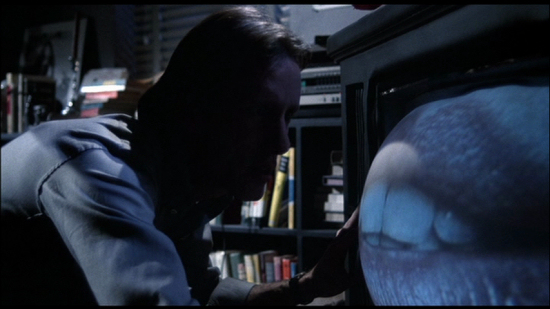
Between watching old movies and old TV shows, I do watch YouTube, the video spackle of our lives. For many people now, it's the exclusive theatre of video media. You can watch full movies, either those uploaded by users or available for rent via legitimate studios, but I suspect the bulk of the viewership goes to music videos and YouTubers. The latter comes in a wide variety of subcategories, including fashion vloggers, cooks, gamers, essayists, virtual YouTubers (very popular in Japan), and political pundits. Well, let's face it, in this day and age, all the categories are infected with politics. There are actually plenty of apolitical YouTubers but naturally they can't avoid occasionally saying something that would be construed as extreme from one political perspective or another and I find my brain has developed a sort of Videodrome tumour that gently vibrates whenever I hear someone say something remotely political.

And then there are YouTubers who consider themselves apolitical, and may honestly believe they are, but who can't help uploading content that constantly lines up with one faction. I remember a few months ago seeing some YouTubers, including anime YouTuber DannPhan and pop culture commentator ClownfishTV, incredulously responding to the same obscure leftwing website that had labelled them both right wing. I can sympathise with their desire not to be categorised--the left winger's article was obviously intended to discourage people from making their own judgements about the content of the channels. But on the other hand, those who watch ClownfishTV or DannPhan regularly are likely to hear them complain a lot about men being routinely demonised in media and the puritanical desexualisation of genre fiction. These are both real problems but an exclusive focus on them tends to define the speaker, especially in contrast to those who don't see these issues as problems.

It is easy to become the proverbial dog with a bone, though, especially if you feel like an insufficient number of minds were changed the first time you expressed an opinion or if a particular topic gets your channel more views. Sadly, many people roam YouTube looking to receive opinions they can claim as their own in a social setting. There have always been people who do this, of course, even before the newspaper was invented. Interestingly, lately I've run across people whose attempts to suss out my political allegiance takes the form of asking where I stand on the Star Wars sequels. People figure you can get a rough idea of someone's political loyalties based on whether or not they liked The Last Jedi or, for the more refined, whether they have particular problems with The Last Jedi or Rise of Skywalker. I spoke to someone a few days ago who asserted that having Palpatine return in Rise of Skywalker totally negated Vader's sacrifice in Return of the Jedi. Then, a few days later, I was watching Red Letter Media's review of Rise of Skywalker again and I heard Mike Stoklasa express the same opinion in exactly the same words.

I really like Red Letter Media. They are one of the rare apolitical, non-corporate, pop culture commentary channels (though I think some of their commentators lean left) and the tone of their rapport helps me relax. It helps that they're so often drinking beer. They're like more articulate versions of Hank Hill and his friends. I often disagree with their opinions (though their incidental commentary on COVID is extraordinary sharp for how baffled it is). I figure the point of Vader's sacrifice was not killing Palpatine but rescuing Luke and, anyway, in terms of character development, surely it's the thought that counts. I feel like Red Letter Media lends itself better to independently thinking viewers, though, because there's less stridency in their arguments. They're too easy going. But if viewers aren't in the habit of independent critical thought, RLM can function as much like propaganda as anything else.

In the past few months, the two most interesting YouTube videos I've seen are Jordan Peterson's interview with Stephen Fry and Lindsay Ellis' video about her cancellation.

Since Peterson returned from his strange and horrific medical crisis, he's come off as a bit fragile and fearful, and some of the claims he made in his earliest videos have seemed a little paranoid. But as he's regained his health, the integrity of his interviews and arguments have also improved. His interview with Stephen Fry ought to be a model of how two people of differing political perspectives have a discussion. It comes from the fact that neither man regards ad hominem attacks to be constructive, a perspective all too rare nowadays. I'd seen them together before in a debate about free speech, a two against two format in which Peterson and Fry were on the same team. Peterson and Fry decisively won the debate largely because one of their opponents, Michael Dyson, spent most of his time calling Peterson names and naturally came off badly. Peterson's interview with Fry is so lovely, it's such a pleasant discussion between two profoundly well read people on the topics of mythology and psychology, it's hard not to come away from it thinking you've heard the two smartest people on YouTube, not just for their extemporising but for the nature of their conversation strategies.

The Lindsay Ellis video is fascinating for different reasons. Writing about it now, I find myself thinking of a post Terry Gilliam made to his Facebook a few days ago, a cartoon criticising cancel culture. I was surprised by how many hundreds of comments Gilliam received from people condemning him either on the grounds that cancel culture doesn't exist or that it exists purely to hold corrupt, abusive men in positions of power accountable. It's hard to imagine how anyone could see Lindsay Ellis as a Harvey Weinstein, it feels absurd even writing the sentence. And, of course, most of the time the subjects of cancellation aren't Harvey Weinstein types but people from the ranks of progressives who have certain inauspicious opinions or ones who have done one or two questionable things. Things that don't line up with the amorphous but feverishly proselytised perspective of to-day's hard Left. Ellis herself points out in the video that hard right wingers like Ben Shapiro are essentially immune to cancellation because their audiences are in full agreement with their cancel worthy opinions. The left has a reputation for eating their own because, like the Donner Party, it's the only food in reach.

It seems like Ellis' video has been less well received than the similar video by her friend Contrapoints. Perhaps Ellis' apologies seem insincere or lack contrition, perhaps it's because she talked about a sexual assault she'd been the victim of. This may have reminded some people of how Kevin Spacey came out as gay around the same time allegations started coming out about him. Ellis was sharing the information partly as explanation for her supposed crime of participating in a joke "rape rap" video and partly as a way of garnering sympathy for herself--she may not concede having the latter motive. But why shouldn't she? If fans have become cruel, is it not human to want to show them that you are as human and vulnerable as they are? In any case, it's one of the most refreshingly candid moments I've seen in one of her recent videos, a moment when she finally stopped sounding bitter and like she constantly grinds her teeth. The fact that she ends the video with a "fuck you" to the mob who'd come for her probably didn't help the video to a positive reception, either, but she was certainly well within her rights to be spiteful.

When Contrapoints' video came out, it seemed like there was some epiphany on the left about the nature of the cancel culture beast, or at least a brief, honest glimpse in the mirror. Perhaps because the initial shock is over, the relentless stride of rhetoric arguing for the persistent need for and non-existence of cancel culture has gained dominance again. Oh, well.

Saturday, December 08, 2018

Low Fat Star Wars

There's a new way to digest Star Wars now with Galaxy of Adventures. A series of shorts released by Disney on YouTube, they use audio of the actors from the films to recreate or create scenes in a vaguely anime style but with cheaper 2D cgi. I watched them this morning--it didn't take long, they're all under two minutes, hopefully assuring even the shortest attention spans will be sold on the brand. Also this morning I read this article in The Atlantic about Andy Warhol and this quote seemed appropriate: ". . . Warhol’s great advance was collapsing any distinction between commercial and noncommercial modes of experience." Because Galaxy of Adventures basically seems to be fan art produced by the legal owners of the intellectual property for the purpose of financial gain.

This concept isn't new, of course. In the comments section of the io9 article on Galaxy of Adventures, many people have been sharing covers from tie-in comics from the 80s that, to say the least, played fast and loose with plot, character design, and basic concept of Star Wars. I remember owning a Return of the Jedi 7 inch record and book--I see someone's selling it on eBay for 19.99. It got all kinds of little details wrong from the movie though the impression I generally had was that this wasn't so much because the writer was asserting an alternate creative vision so much as it was someone looking to pay bills with spec writing who didn't necessarily have quick access to a copy of Return of the Jedi. A lot of people forget how hard it could be to see movies, especially new movies, in the early days of home video. The writer was probably working from a script or synopsis--many such things contained references to scenes deleted from the final film.

Of course, even incidental changes or changes based on haste or limited available source material are still artistic choices, choices that alter what's expressed in the artefact. For many people, these distorted hand me down narratives form an essential part of their experience with Star Wars--even if sometimes they didn't want it to. Say there's a difference between how Vader talks to the Imperial officer at the beginning of Return of the Jedi in the movie versus how he talks to him in the little record book I had--as I seem to remember there was. I remember at one point the memory of that scene as it plays in the book being closer to my impression of the "real" scene--and then one day seeing the movie again and experiencing a small shock at realising it's different. Over the course of a few rewatches, I'll always remember that shock and it'll always occupy a part of my reaction to the scene. I might think about how the alternate versions relate to each other, ponder which one is better, and wonder why the difference exists.

In this way it's different from an old oral tradition or myth proliferated by word of mouth. There's an official version that "wins". And that's another part of the story, too, the meta-narrative, if you will. It's all part of the psychological construct of "Star Wars" that the version on the big screen with the special effects and the actors is the "right" version. This is why George Lucas fought so hard to destroy the Star Wars Holiday Special--it looked too much like canon. But this dichotomy is increasingly breaking down, partly due to the fact that ownership of a property isn't quite as successfully translating to control of the canon as corporate owners had hoped. Star Trek fans, even ones who try very hard to, are having trouble incorporating Discovery into the Star Trek canon they recognise, and the fights over Last Jedi have been sometimes sad and nasty, and hopelessly infected with politics. Simon Pegg had a very interesting point recently:

There was an odd thing with [‘The Last Jedi’] in that the people who didn’t like it were sort of being gaslighted by the people that did like it, who were just dismissing their complaints about the film as being fanboy butthurt. And yet, the whole thing is just eating itself in a hideous cultural soup. It’s a shame because it’s just a film.

Speaking as someone who liked Last Jedi, one of the problems I did have with it is that its political messages aren't very well incorporated into the film. That's different from saying I didn't like the political messages, though there are some I disagree with, like the meme about letting old things die or killing them--though, to be fair, the movie leaves some ambiguity in this since it's the villain, Kylo Ren, who urges Rey to "Let the past die" and Rey, the heroine, saves the old Jedi texts at the end. I can enjoy a completely political movie even if I disagree with it philosophically--I'm not a Communist but I think Battleship Potemkin is a brilliant film. I think people complaining about Last Jedi's politics—and people defending them--are missing Oscar Wilde's very important point, "There is no such thing as a moral or an immoral book. Books are well written, or badly written. That is all."

So that was a bit of a digression on what I intended to be a very short entry on Galaxy of Adventures. Which aren't very good. The animation isn't quite as bad as Forces of Destiny but it's close. The episode that repackages the famous scene from the end of Rogue One saps it of most of its power; the episode in the Death Star trench omits the shot of the Millennium Falcon, leaving it unclear where the shots are coming from that hit Vader's ship. The facial expressions and gestures are overwrought in a way more symptomatic of bad American animation than Japanese. The series brought me again to the thought, one that would probably be very worrying for Disney; can Star Wars really be bought and sold, even for several billion dollars? One of the themes from the George Lucas films notably absent from the Disney films is the conflict between humans and machines. Vader turns bad because he becomes "more machine now than man", Luke turns off the targeting computer to destroy the Death Star, even General Grievous is a sort of prototype of Vader. It might not be a comfortable idea for Disney who, with things like Forces of Destiny and Galaxy of Adventures, seem like they should be about to buy an audience with Star Wars Holiday Special quality. To just flip a switch and let the machine of the property do the work rather than foster artistic vision. But maybe not--I love Rogue One and I have hopes for The Madalorian. We'll see how the battle for the soul of Star Wars plays out.