Wednesday, June 15, 2022

Jedi v Djinn

Last night's Obi-Wan Kenobi was an improvement over previous episodes but still quite a few problems linger and a few more are introduced. Meanwhile, it was once again outshone by Ms. Marvel and the radiant Iman Vellani.

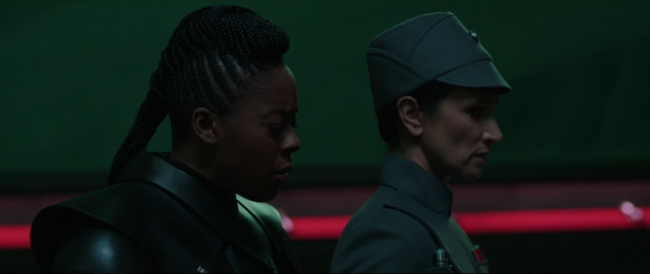
Famed Pixar director Andrew Stanton was a co-writer on last night's Obi-Wan and will be on next week's, and I suspect he's responsible for the parts I liked. The best part was the conversation between Reva and Obi-Wan and it was a moment when Reva finally became interesting for me. I'd seen a lot of people predict exactly what was revealed in the dialogue, that Reva had been a youngling and wasn't completely evil. I'd seen these predictions before I'd had time to think about it myself. In any case, it makes the character much better suited for Moses Ingram, who's just too gosh darn cute to be a great Star Wars villain. It's too bad she doesn't know how to pick her moments.
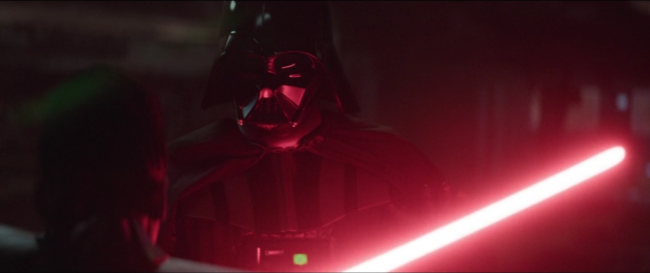
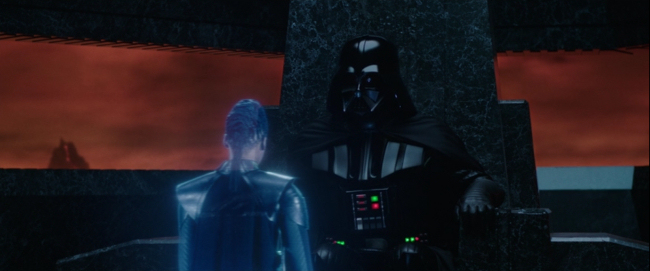
Maybe stabbing Vader in the back would've worked while he was tearing apart that decoy ship but it was pretty silly of her to do it when he was standing there not doing anything amid no distractions. All of her work infiltrating the Empire ruined because, I guess, she suddenly got impatient. I liked Vader's line about how Obi-Wan was wise to use her against him, though. Yeah, how would Obi-Wan know she'd completely whiff? This isn't on him. I also liked how Vader dismantled that stupid helicopter lightsabre.

And, keeping their precious continuity with Rebels, the good old Grand Inquisitor returned, good as new. Getting impaled with a lightsabre through the chest just isn't as deadly as you'd think, I guess. It just happened to Reva and, thanks to a few other ludicrously convenient plot contrivances, it's clear she'll be up to hijinks next week, too. I mean, if it's this easy to survive a lightsabre through the gut, even one from Darth Vader, why don't we just bring everyone back? Why not Qui-Gon?

Please don't let that happen.

Anyway, the main problem, for me, continues to be a lack of Star Wars music and Deborah Chow's inability to create a sense of scale. When Vader was marching through the hidden base, the score seemed to impotently be trying to build into "Imperial March" but Disney just won't let Natalie Holt do it.

A problem having nothing to do with paying John Williams, though, is how dinky everything feels. Maybe they can't afford to show hordes of stormtroopers or the landing of attack ships. Could we not get at least one establishing shot of Vader's Star Destroyer? Last Friday, I wrote about how much better The Orville is at this kind of thing and I can't imagine The Orville's budget is bigger than Obi-Wan's. Seth MacFarlane knows that part of this kind of story is just how cool it is to be in space in these big mechanical behemoths. So he takes the time to give us big, majestic shots of the ships sweeping into view accompanied by a lush score, emphasising that this is pretty damned amazing. That's what Star Wars should be, too. I mean, that's why the opening shot from A New Hope is so effective, of Leia's ship being overwhelmed by the big, angular shape of the Star Destroyer.
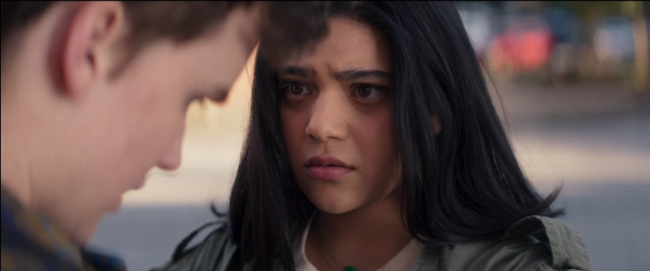
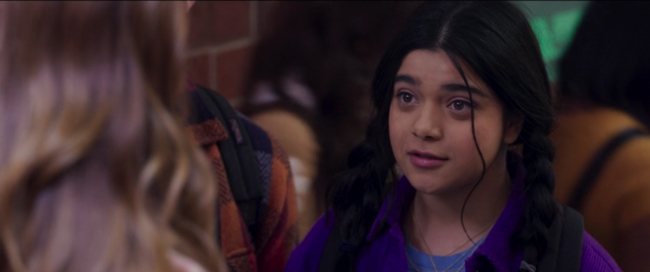
Meanwhile, on the second episode of Ms. Marvel, Kamala Khan continues to be adorable. I want to see a team-up with her, Hawkeye 2, and Black Widow 2. I figure they could call themselves the Kitten Avengers. It's absurd Kamala is going to have to share a screen with Captain Marvel and Monica Rambo. That's like teaming Tom Cruise with D.B. Sweeney and Sam Worthington. It's like A+D+D.

I bet a lot of people are staying away from Ms. Marvel because they're expecting obnoxious politics. There are a few awkward lines where one of the characters inorganically brings up her skin colour, as though the writers don't understand why they have to tow this line, but mostly the episode focuses on story. Sure, a lot of that story is inexplicably Turning Red, but it has a few ideas of its own. Maybe Marvel and Pixar writers shouldn't get lunch at the same commissary?
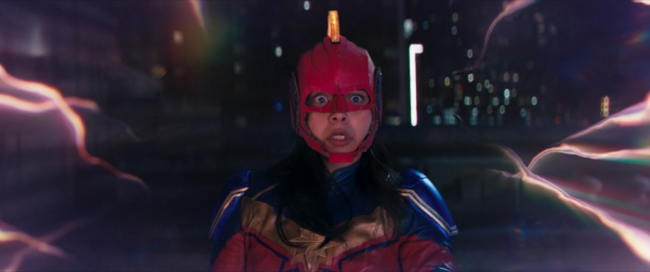
I love the awkward scene where Kamala is distracted by her own showboating so that she almost fails to rescue a kid. That really felt like a fledgling, teenage superhero, and it's a big improvement over the too typical pattern where the new superhero is immediately able to throw down big bosses without breaking a sweat. This is something Hawkeye did well, too, at least as far as Hailee Steinfeld's character.

A lot of the writing feels a bit sitcom-ish, especially around Kamala's family, but it's decent sitcomish. I loved how Kamala told her brother that the guy she was out with was their cousin. That was really funny. Though I would point out that SRK's best movie is actually Daar.

Neither of the boys in her life has much charisma. Kamran is bland and Bruno seems kind of like a villain, despite dressing like Marty McFly.
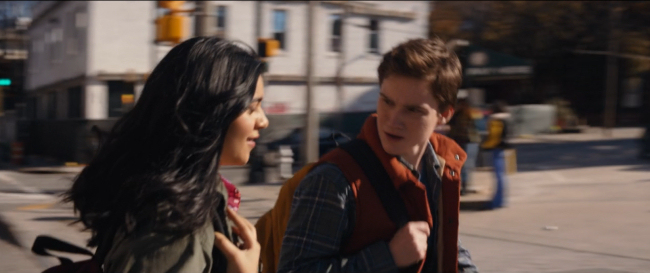
I keep expecting Kamala and Zoe to get together, actually. People writing about the show call Zoe a bully but what has she done to bully Kamala so far? She just seems a little narcissistic. Anyway, I'm enjoying this show.

Obi-Wan Kenobi and Ms. Marvel are available on Disney+.
Tuesday, June 14, 2022

Still Flowing

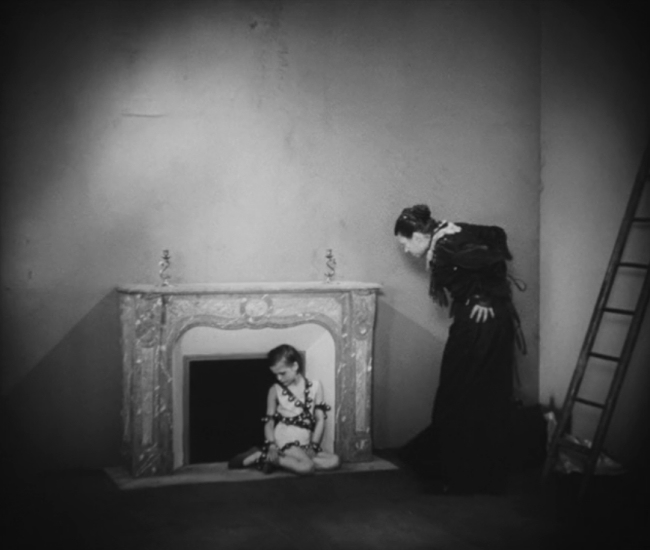
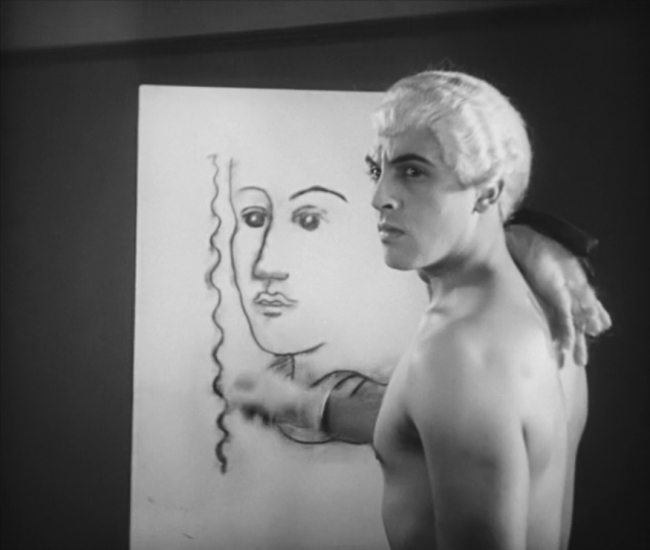
Looking for something short to watch last night, I found myself watching The Blood of a Poet (1930) for the first time in fifteen or so years. It's amazing to think that it's Jean Cocteau's first film. The assurance with which he combines composition and strange special effects effortlessly create a beautiful film that clearly conveys its ideas.

This movie is a prime example of how some things are best conveyed by film and describing them in words is to omit most of the meaning. You can get some idea of what is happening in a scene where two people in fancy dress play cards over a dead child or in a scene where a mouth appears on the hand of an artist. These are already fine ideas in text but visualising them in a way that gives a sense of time and rhythm and emotion is how the film really earns its title.

The Blood of a Poet is available on The Criterion Channel.

Twitter Sonnet #1591

The shaky picture proved a house's grain.
A heavy fox had lost his eyes in June.
A group of boys await a homeward train.
The speaking bird foretold a summer moon.
A flower horde destroyed the diamond field.
A boring sport's redundant spit and breath.
The des'prate hands of wheat comprised the yield.
An autumn life's composed of April's death.
A dogless coil chills the thought for weeks.
So marble steps convey the child's dream.
Transmuting thoughts we talked of double peaks.
For time has come when double visions team.
A leafy morning brought the freshness late.
A lonely mountain seeks a Gollum mate.

Monday, June 13, 2022

A Rush Through Dark Woods

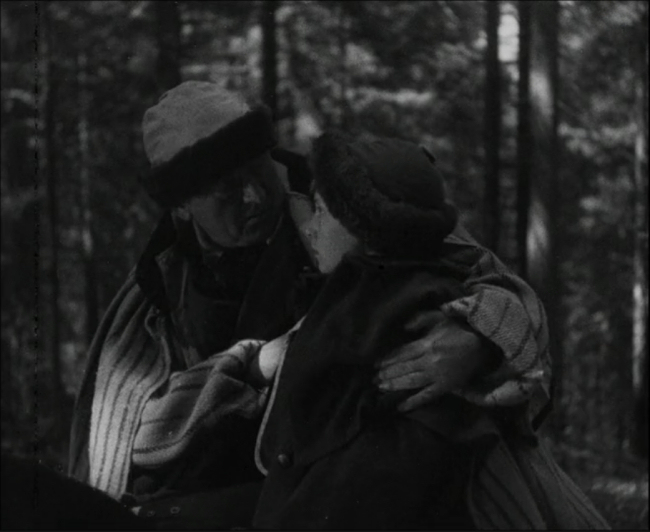
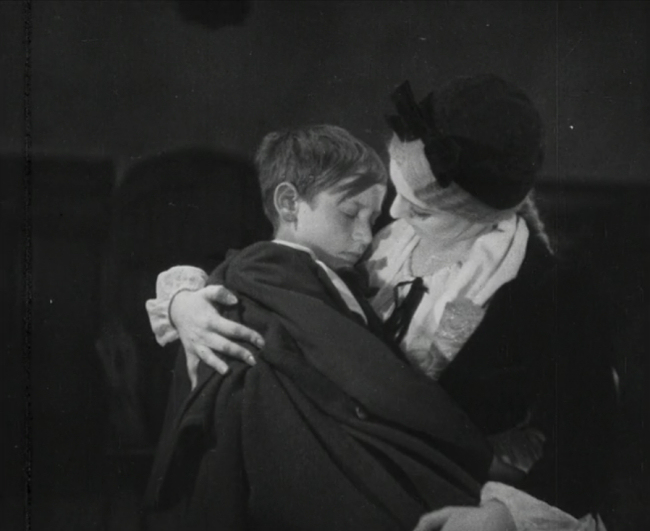
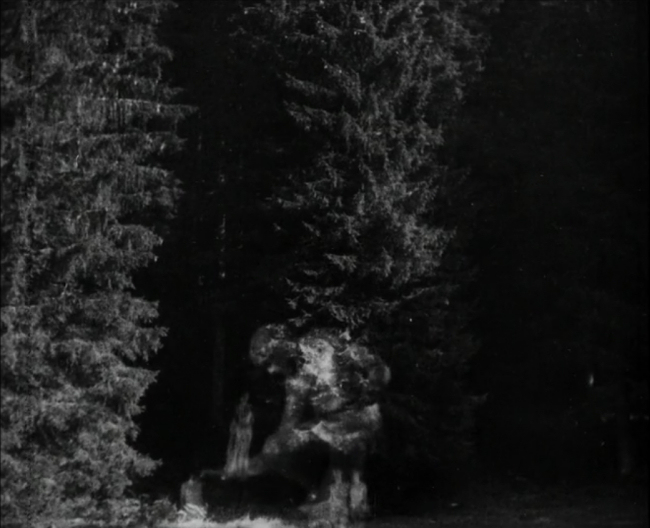
A father races through the night with his dying child in his arms, a boy who begins to rave about fairies and a spectral patriarch, in 1931's The Erlking. Based on Goethe's 1782 poem and directed by French actress Marie-Louise Iribe, it's a short, eerie piece of nightmare.

The full text of the poem is slowly shown to the audience at the start of the film before we're introduced to the man and his boy. They stop at an inn after their horse stumbles. A housemaid sings a song to the boy about the Erlking, a strange being from the woods who attempt to entice children to join him in his fairy kingdom.

This suggests the possibility that the boy hallucinates everything that follows, something that really doesn't help the film in my opinion. But I like how the film becomes almost a chase scene from an action film, with lots of tension in the wild ride throuh the woods while the king, clad head to toe in chain mail, starts to summon his half naked daughters to dance madly.

It's not exactly clear what these entities want except there's also a clear, unspeakable motive. I had no trouble understanding what was going on.

The Erlking is available on The Criterion Channel.

Sunday, June 12, 2022

Compulsive Distance

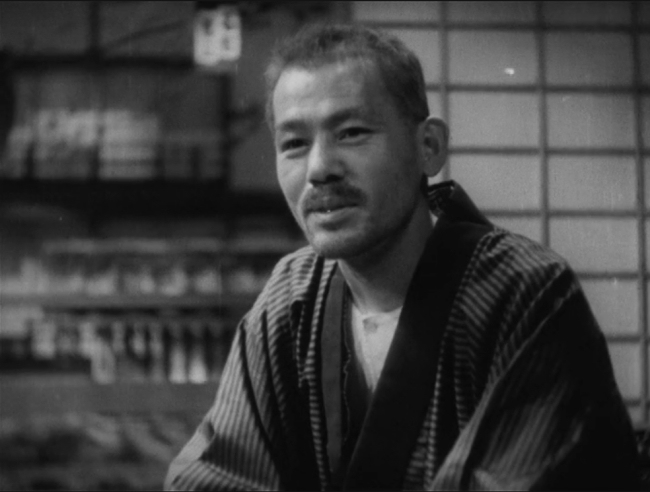
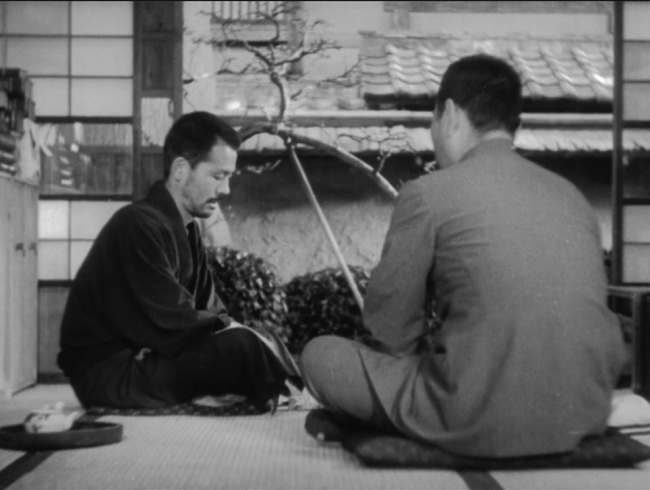
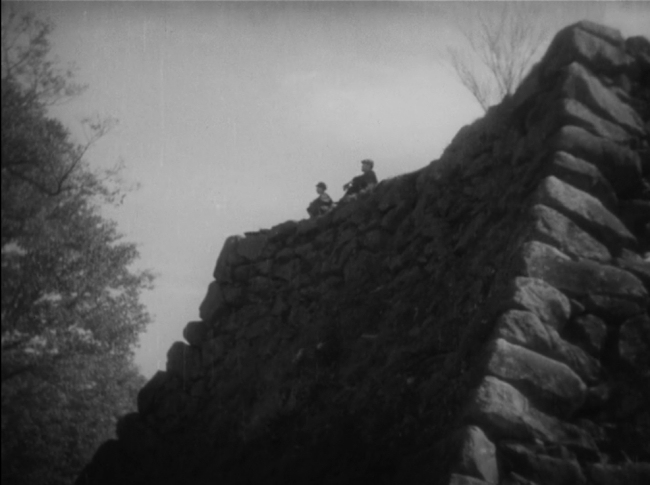
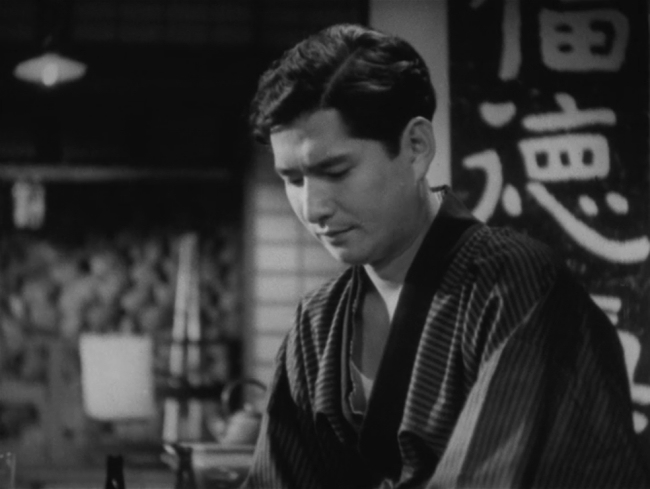
A conscientious man leads a life of restraint, distancing himself from the son he cares for in Yasujiro Ozu's 1942 film There Was a Father (父ありき). The film has a lot in common with some of Ozu's later, better known films, particularly Late Spring, except it's about a father and son instead of a father and daughter. There's a great filmmaker in evidence throughout most of There Was a Father, particularly in the first thirty minutes, but it lacks the masterful subtlety in its climax seen in Late Spring.

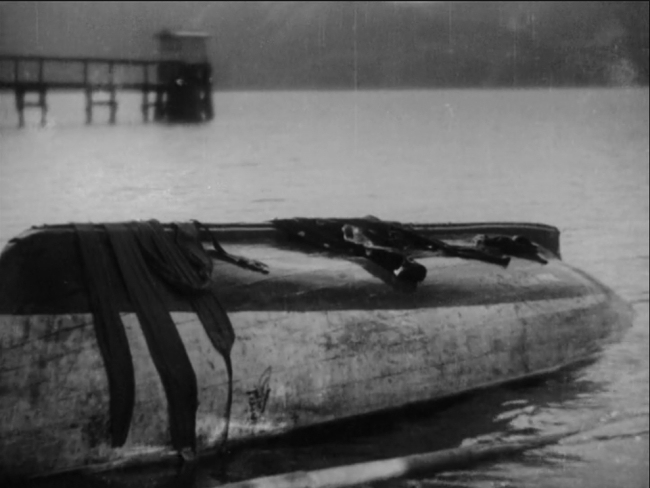
Like Late Spring, There Was a Father stars Chishu Ryu as the father whose consciousness of social duty compels him to reject things he wants. The first part of the movie is unmistakably Ozu. Ryu plays a junior high school math teacher called Shuhei who accompanies his students on a school trip. When a boating accident causes one student to drown, we don't see the incident itself, just Shuhei and the other students rushing to the pier followed by a quiet, still shot of a capsized boat.

Ozu's instincts for showing moments around a traumatic incident instead of the incident itself were perfectly tuned to provoke the viewer's imagination. Footage of a capsizing boat and drowning student could never match what Ozu draws from our imagination.

It clearly wasn't Shuhei's fault and it's clear he's more conscientious than the average teacher. It's that very sense of responsibility, the very one that seems to make him an excellent caretaker, that compels him to resign and seek a career in which he does not have the responsibility of looking after other people's kids. He and his young son, Ryuhei, move back to Shuhei's hometown in Kanazawa while he figures out what to do.

Father and son are very close but, despite this, Shuhei decides his son should study in Ueda while Shuhei gets a job in Tokyo to pay for the school. Ozu jumps over years as smoothly as Orson Welles and we find ourselves, without title cards or special transitions, with an elderly Shuhei still in Tokyo while his twenty-five year old son has become a teacher in Akita.

Part of the reason this film doesn't work as well as Late Spring is that Shuji Sano as the son isn't nearly as effective as Setsuko Hara as the daughter. His smile always looks strained and fake and there's no sense of real affection between the father and son, a really crucial problem. The climax of the film also shows Ozu doesn't quite have the confidence yet to maintain the light touch that served him so well earlier in the film. But there's still plenty of great material here and Chishu Ryu gives a great performance as always. The story is another piece in Ozu's lifelong preoccupation to show the tragic flaws in Japanese social customs.

There Was a Father is available on The Criterion Channel.

Saturday, June 11, 2022

The Framer wasn't Framed

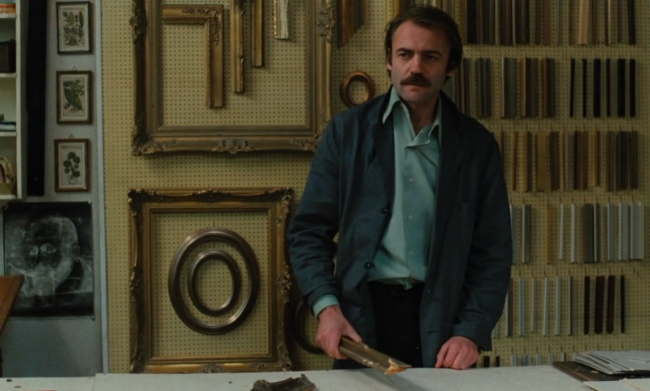
At an art auction in Hamburg, two men make an acquaintance that leads to murder in 1977's The American Friend. Among other things. Directed by Wim Wenders, it's based on one of Patricia Highsmith's novels about Tom Ripley, the talented sociopath. It's a film with surprisingly beautiful compositions for the subject matter (though not for Wenders) and the film's leads, Dennis Hopper and Bruno Ganz, both give terrific performances.

Hopper plays Ripley as basically Dennis Hopper, as per usual. We all love Hopper but he's not known as a chameleon, is he? He might as well be Frank Booth or Billy from Easy Rider. Apparently Highsmith wasn't happy with him in the role at first but changed her mind after a second viewing. He's certainly a far cry from Alain Delon or Matt Damon. He's a lot more butch than either of them, something that may go against the homoerotic subtext the Tom Ripley stories are famous for.

Or maybe it makes it better. Murder isn't gay sex, after all. But if you've been inculcated with a certain morality, even if your intellect disagrees with it, they might seem the same. Which is what's so fascinating about the possible metaphor at play.

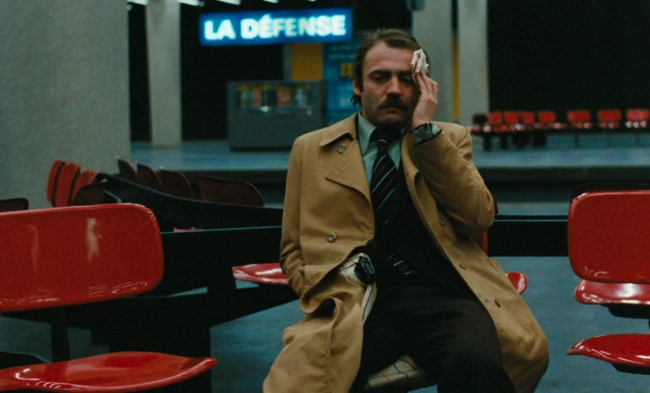
Ganz plays a picture framer who meets Ripley at that fateful auction. He has a possibly terminal disease and Ripley uses that as a means of manipulating him into being a hitman. Ganz turns out to be rather clumsy at the job which makes for some terrifically suspenseful scenes. He's really not good at hiding his gun, for one thing and, oh, what could that mean?

The affection that springs up between the two is truly charming. More than being a metaphor, the film ultimately feels like a rumination on the indefinable substance of human feeling and relationships.

The American Friend is available on The Criterion Channel.

Twitter Sonnet #1590
A spot of light revealed the table game.
A dream remembered rose above the skin.
For satin gowns the gold invokes a name.
The law was smartly carved in brittle tin.
The wind remembered lunch was by the lake.
A distant dog and bird forgot the space.
As clear the mysteries of love could make.
This time she'd not but then she saw your face.
With clouds behind the sun we plotted dusk.
With wires choking malls they tore it down.
And now the pleasant park is but a husk.
As surely empty eggs control the town.
The list of names exceeds the people here.
The mound of graves precedes the living fear.

Friday, June 10, 2022

Julee Cruise

The singer Julee Cruise passed away at the age of 65 on Thursday. She committed suicide after suffering from systemic lupus since 2018. It caused her constant pain.

My memories of her performances have varied associations and go back thirty years. For a lot of hardcore Twin Peaks fans, she's part of the soundtrack to our teenage years, that category which seems like the bedrock of a person's psyche. Her ethereal vocal style came from a sort of synthesised New Wave ambient rock best associated with Elisabeth Fraser, a singer whom Cruise's first collaboration with David Lynch and Angelo Badalamenti self-consciously imitated. "Mysteries of Love", recorded for Lynch's Blue Velvet, had lyrics by Lynch and music by Badalamenti while Cruise performed vocals. It was a fruitful collaborative arrangement that helped give Twin Peaks its inimitable, unique style and tone.

Although she never had dialogue, Cruise was definitely more than just a singer onstage at the Roadhouse on Twin Peaks. Her facial expressions somehow tied directly into the drama in a way none of the other performers in the show's third season did.

I found myself thinking of conversations I had with various people throughout my life. People I loaned my CDs to who may not have even been familiar with Twin Peaks. Music has that peculiar way of getting associated with people and relationships but it's only the select few performers who become associated with different relationships and very different eras of our lives. She was definitely one.

Thursday, June 09, 2022

Orvetheus

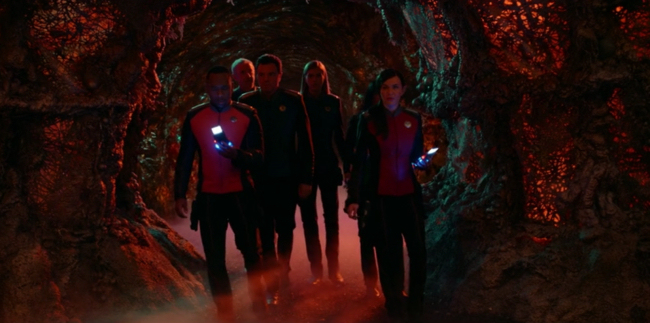
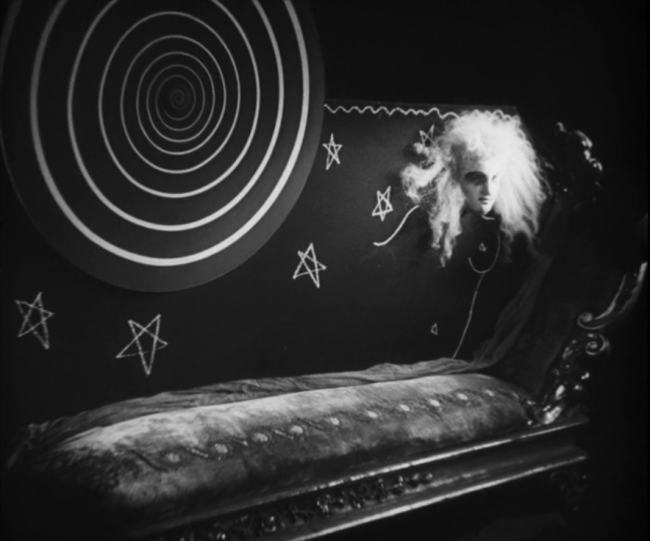
Last night's new Orville was written by Star Trek writers Brannon Braga and Andre Bormanis. So for a show that's normally modelled on Star Trek's '90s television tone, this one felt especially Star Trek. It also reminded me a lot of Prometheus, a great, underrated film that marked its tenth anniversary recently, as I was reminded by Caitlin R. Kiernan's blog. As an example of--what? Let's call it DNA horror--last night's Orville couldn't hope to compete with Prometheus but it was still pretty nice.

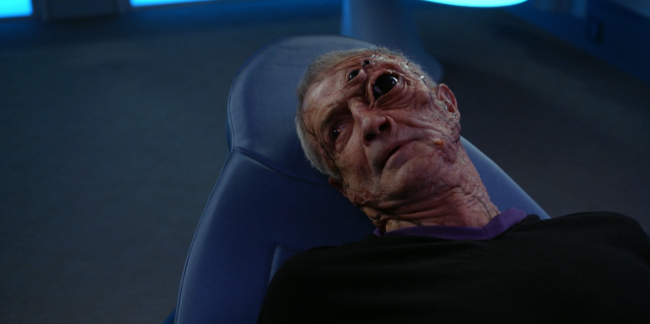
Like many episodes of TNG and DS9, it features a personal relationship plot that is tied to a previously separate Sci-Fi plot in the second act. In this case, we meet a new character, Claire's ex-husband. He wants to rekindle things but Claire's not up for it, a situation that's complicated when he's hit by some kind of alien spore that starts to rewrite his DNA.

The makeup is pretty nicely horrific while he's on the operating table but falls a bit into Power Rangers territory when he's up and running around. Still, I enjoyed the fight scene between two of the monsters and Talla. The choreography and effects weren't great but it was still fun watching her punch one of them and watching it snap back against the wall.

I remember when the first season of The Orville aired I found myself comparing it to Star Trek: Discovery. Now I'm comparing it to Obi-Wan Kenobi and one thing the makers of Orville understand that I wish Obi-Wan Kenobi's makers did is the importance of build-up. John Debney's lush, full orchestra score helps a lot as always. But also the Krill planting the idea of the strange space station being inhabited by demons and the slow approach by the shuttlecraft were all great. It would've been better if the alien station's set design looked a lot less like a set.

But okay. They can't be Prometheus on their budget. Still, it was a nice piece of television.

The Orville is available on Hulu and on Disney+ in various countries.

Wednesday, June 08, 2022

From Jedi to Marvel

Last night Disney premiered a new Marvel series and a new episode of a Star Wars series, Ms. Marvel and Obi-Wan Kenobi. Surprisingly, Ms. Marvel turned out to be the much stronger of the two, but maybe that's just because my expectations were so low for it.

But first, I want to talk about Obi-Wan Kenobi. I think the hard truth we have to face is that this series, quality-wise, is about on par with The Star Wars Holiday Special. Think about it. It has the big stars in their famous roles but written by people who don't really seem to understand the characters, being more intent on just hitting the bare minimum necessary dramatic beats to tell something that can be called a story. The hair and makeup look odd, the music's not nearly as good, and there's an overall lack of a sense of grandeur that's one of the cardinal virtues of the Star Wars films.

I guess it was kind of nice that Obi=Wan (Ewan McGregor) wasn't the only one making stupid mistakes this time. Tala (Indira Varma) accidentally leaves her comm turned on when she was trying to bluff Reva (Moses Ingram) and a sudden call from Obi-Wan spoiled the whole thing. Obi-Wan was having similar trouble trying to hide from Stormtroopers with the thing. Come on, people, even C-3PO knew how to switch off a comm.

Vivien Lyra Blair as Leia came off a little better in this episode, I suspect mainly due to creative editing that made her look appropriately nervous and frightened for her situation. Though Moses Ingram is still only coming across as about as sinister as Harvey Korman on the Holiday Special.

After Obi-Wan Kenobi, I struggled with whether or not I wanted to watch Ms. Marvel. I hated Captain Marvel so why would I want to watch a show about a Captain Marvel fan girl? Well, as it turned out, Iman Vellani as the titular protagonist of the series outshines Brie Larson in every way. She's sassy with the audience and has better access to her own emotions. She has a sense of comedic timing and the ability and courage to seem really wounded.

A lot of people have pointed out the plot of Ms. Marvel is oddly similar to Pixar's Turning Red. That's true but I found the parents on Ms. Marvel to be much more threatening and realistic. My own experience may have prejudiced me. I work at a junior high school in Japan and I hear plenty about how strict the parents are, especially the parents of the kids in the art club where I tend to spend a lot of time. These parents on the show who think their kid obsessing over fantasy are on the path to doom--they're so true to life and I felt all kinds of concern for Kamala Khan.

The show makes some stylistic choices I mainly found more distracting than effective, namely the choice to make all illustrations, everywhere, animated. But mostly I have to say Ms. Marvel gets thumbs up from me. If only Star Wars were willing to experiment like that.

Obi-Wan Kenobi and Ms. Marvel are available on Disney+.
Twitter Sonnet #1589

The sands support a lonely iv'ry tree.
Forgotten elephants remember wars.
The soldiers drew a card that led to sea.
To pass the time, a game consumed the bars.
The hated teeth were hid behind a grin.
A winning stroke was naught but pencil lead.
The cheap erasers filled the garbage bin.
A crowd of spiders broke the rusty bed.
To start a night with hats we end with tights.
Electric storms could break the weakened glass.
Excessive fingers flicked the blinky lights.
A healing water filled the cloudy mass.
The flood was made of light and tiny spots.
The universe contracts to little dots.

Tuesday, June 07, 2022

A Night for Blood

I was in the mood for vampires last night so I watched an episode of Angel, "That Old Gang of Mine". I wasn't satisfied so I also watched Carl Dreyer's 1932 film Vampyr again.

I guess "That Old Gang of Mine" isn't much about vampires, really. According to the Wikipedia article, writer Tim Minear considers it his weakest script. I would say it's an instance of a Buffy show leaning on one of the more weakly established pillars of its worldbuilding. The drama is about Gunn's new conflict with his old gang who are indiscriminately killing demons, whether they're the kind who eat babies or who generally just chill out in the sewer drinking Big Gulps. I always hate it when some fictional species are made just basically human so they can be used as a metaphor for bigotry or civil rights. Disney is currently making the same mistake with droids in the Star Wars franchise. It's the kind of thing that makes you think these people don't understand why demons and droids are so cool.

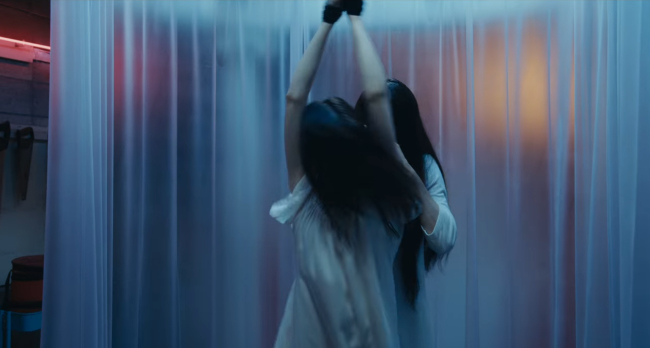
Anyway, Vampyr's always a dreamy delight. You have to ease yourself into a Carl Dreyer film, let the atmosphere, created largely by pacing, soak into your bloodstream. I love how the protagonists of Vampyr almost seem like living dolls. Rena Mandel as Gisele calling out her sister's name, standing in a stiff dress, wide-eyed with a plaintive voice, is almost like a lamb alone on a hill bleating for its mother.

Sybille Schmitz, as her sister, Leone, tends to be the one in the posters. It's unsurprising given how effectively maniacal she looks.

Vampyr is available on The Criterion Channel and Angel is available on Disney+ or Hulu, depending on your country.

Monday, June 06, 2022

The Disoriented Empress

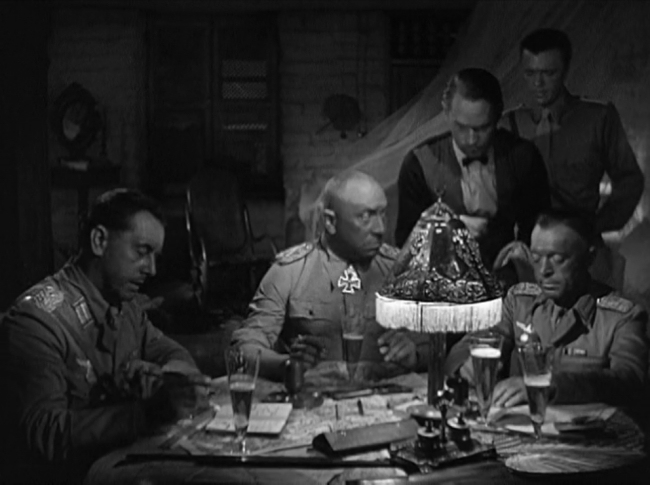
A British tank crewman stumbles across the desert, delirious, and somehow makes it to a hotel in North Africa called the Empress of Britain. So begins Billy Wilder's 1943 American propaganda film Five Graves to Cairo. Like most of Wilder's movies, this one has a very sharp screenplay, in this case by Wilder and Charles Brackett. Stars Franchot Tone, Anne Baxter, and Erich von Stoheim put in good performances, too.

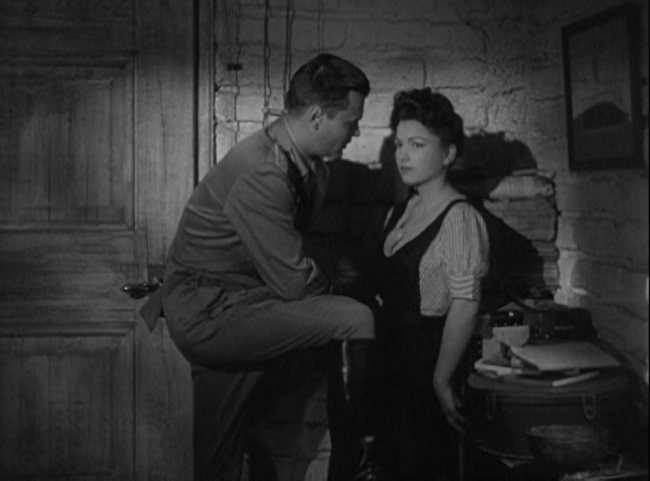
Baxter's is the most memorable. She plays a French chambermaid named Mouche who has somehow ended up working in this North African hotel. It later turns out she has resentment for the British for how they handled Dunkirk and, while she won't squeal on John (Tone) when Rommel (Von Stroheim) and his men take over the hotel, she still wants to find favour with someone in the German brass. She has a brother in a concentration camp and she's willing to do anything to get him out. The film, despite having been made during the era of the Hays Code, manages to make it clear that means sexual favours.

Her tragic story plays effectively alongside the more straightforward adventure tale of John's. He masquerades as a waiter who'd been killed in a bombardment before the Germans came. Then he finds out that waiter was a German agent. So he finds himself pretending to be a waiter pretending to be a Nazi spy.

The film nicely keeps up the tension on his predicament. There's never any real chemistry between him and Baxter which is perhaps why this film hasn't garnered the same kind of veneration as Casablanca or other great wartime films. But it's still pretty good.

Five Graves to Cairo is available on The Criterion Channel as part of this month's collection of 1940s Billy Wilder movies.

Sunday, June 05, 2022

The Wanderer Whose Sword Won't Kill

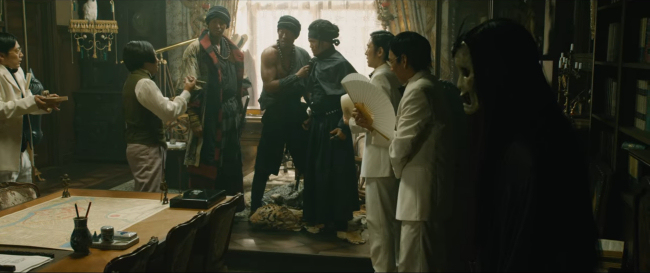
At the end of the Boshin War, a preternaturally gifted samurai on the winning side vows never to kill again. He becomes instead a superhero and the star of 2012's Rurouni Kenshin (るろうに剣心). Adapted from a '90s manga series that had already been adapted to a successful anime series in 1996, this live action film was the beginning of a series directed by Keishi Otomo. And it's a really good movie with good action sequences and well constructed drama.

The fearsome Battosai has become the wanderer Kenshin (Takeru Satoh), a pleasant tempered young man who wields a peculiar "back sword", a sword with the cutting edge on the back and the shoulder on the front. He calls it a "sword that won't kill" though most viewers will of course realise he can still slice with the back as well as stab pretty much as normal.

He saves the life of an idealistic owner of a Kendo school named Kaoru (Emi Takei) and then takes up residence at her dojo. Along with a motley crew of friends, they engage in a continuing struggle against a flamboyant rogues gallery serving a wealthy businessman engaged in the opium trade.

A lot of the drama hinges around Kenshin's desire not to kill. Of course, it's an easier vow for him than for the average person in feudal Japan. Few people at the time could have successfully immobilised an attacker without killing. But even though Kenshin is capable of knocking out a dozen guys intent on his demise, there are some unintended consequences, as when one of the guys he might have killed later ends up murdering someone else. It's a dilemma most people will be familiar with from most superhero stories but it's nicely delivered here. Otomo, the director, is quite justly lauded for his compositions and editing and I found myself engaged throughout.

Rurouni Kenshin is available on Netflix in Japan.

Twitter Sonnet #1588

The time for thought was left behind the field.
The painted grass defined the edge of right.
Intentions never sought a deadly yield.
But now another song premieres to-night.
The years were stored beneath the quiet town.
The twins remember other guards to pass.
Reflective panic flipped the story down.
The eyes were marched below the broken glass.
A sleepy beetle wrote a name in ice.
Another empty bottle calls for ships.
Refreshing swords were never carried twice.
To miss a cloud, the little package dips.
Belated storms awaken dogs before the dawn.
The summer sun consumes the brittle lawn.

Saturday, June 04, 2022

More Normal Things

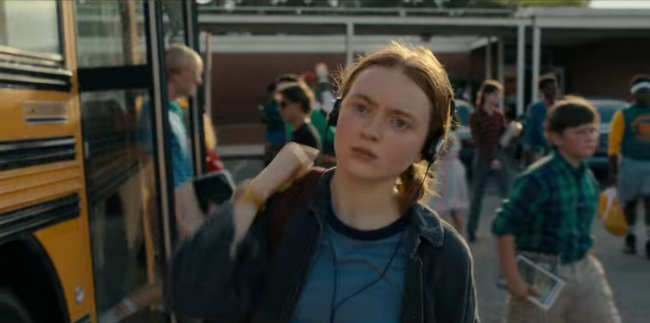
I finished watching the first seven episodes of Stranger Things 4 last night. The season started strong but gradually some strange philosophical changes started to take root. This season of Stranger Things is much more moral than previous seasons, more about a sharp contrast between good people and bad people. I guess it's more like a traditional horror movie this way.

There was also a lot of business about people being insecure and lying to their loved ones. Eleven has a whole subplot in the first few episodes in which she lies to Mike about kids bullying her. I kept expecting a callback to the "friends don't lie" line but it never came.

I really liked the new character Eddie Munson in the first few episodes, played by British actor Joseph Quinn but coming off eerily like a young Robert Downey Jr. He's endearingly wise and realistically goofy in the first few episodes then is sadly absent for most of the season. He kind of reminded me of Albert Brooks in Taxi Driver, acting like a normal funny guy instead of like a comedian. His antics aren't especially clever but fit in the context of a normal high school group of friends.

I appreciated the use of Kate Bush's "Running Up That Hill". But the Big Bad's habit of targeting "haunted" people would've been more effective if at least some of them were really guilty of something instead of just torturing themselves over matters in which they have less guilt than they imagine. In this same vein, Eleven's plot ends up being about how she feels guiltier than she ought to. I suppose the show's creators may have been wary of looking too sympathetic with school shooters but I think a more useful story might have been about how prepubescent kids don't have the maturity to be culpable for even really terrible things. There's a reason kids are treated differently by the law to adults.

I wasn't especially interested in the subplot taking place in the Soviet Union except it had a few hints of counterbalance to the anti-Christian stuff in the plots taking place in the U.S. While a mob is forming to hunt down Eddie for worshiping Satan, the writers might have made a point that banning religion didn't seem to help the Soviet Union a whole lot. Since an abandoned church figures into the Soviet storyline, there was a golden opportunity for it. As it is, we just get a moment where Hopper mentions wanting to believe in a miracle.

I enjoyed the Maniac Mansion vibe to a lot of the season and Vekna is a pretty menacing villain.

Stranger Things is available on Netflix.

Friday, June 03, 2022

The Orville Against All Odds

On Thursday night, The Orville, the inconveniently popular science fiction series by Seth MacFarlane, finally returned after three years for its third and probably final season. And it was a really good premiere, directed by MacFarlane, with action sequences that were both lavish and composed with real tension. It also featured again the kinds of conversations Star Trek used to be best known for--using its remote, sci-fi setting to engage in discussions you really couldn't have with a story with a contemporary setting. In this case, mostly the conversation was about suicide and hatred.

Picking up after the brutal Kaylon war in season two, the episode finds the Orville's resident Kaylon, Isaac (Mark Jackson), finding many of the rest of the crew deeply resent him for his part in the conflict. He ended up saving the day but only after he'd collaborated with the Kaylons.

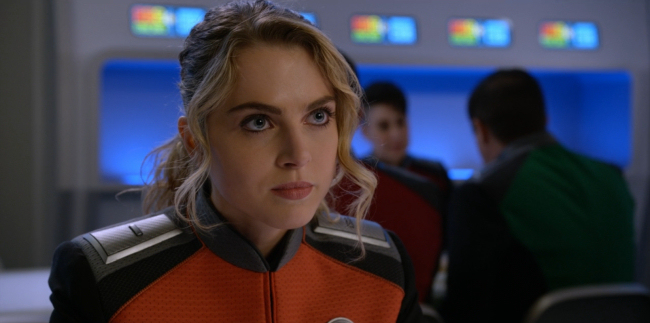
Among those who bear him a particularly potent grudge is a new character, Charly (Anne Winters), who replaces LaMarr (J. Lee) as navigator. Like Halston Sage, who left the show after the first season, Winters seems suspiciously like a young party girl who just possibly could be sleeping with MacFarlane. But I have no proof. Anyway, she's not giving a particularly interesting performance but she's not distractingly bad.

At first, Isaac takes it all in stride, seeing it as an opportunity to observe a new aspect of human behaviour. But then he very logically concludes his presence is too harmful for morale and decides to kill himself. His recorded suicide note is a laundry list of potential improvements to mechanical efficiency aboard the Orville. His character has always been modelled on Data on The Next Generation but in this case he's doing a much better job of coming across as a being totally devoid of emotion. So this provides a nice springboard for a very rational discussion over the ethics of suicide.

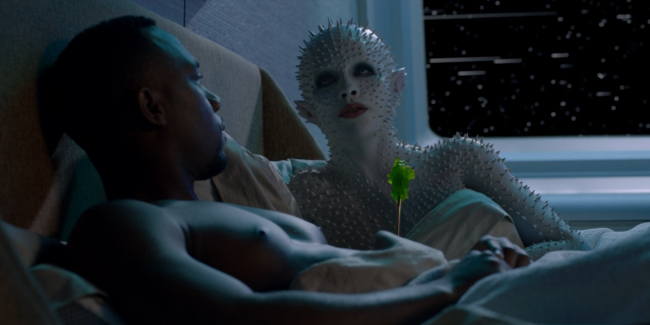
It leads to a scene that perfectly highlights the show's strengths. We find LaMarr in bed with a pretty alien woman covered with short spines. She casually mentions how in her culture suicide isn't stigmatised, that the decision that life might not suit one's tastes is regarded as simply a valid personal decision. The scene, which begins as comedy, unobtrusively slides into a real and provoking philosophical discussion. I mean, it's not Socrates, but it gets viewers thinking who otherwise might not bother thinking at all.

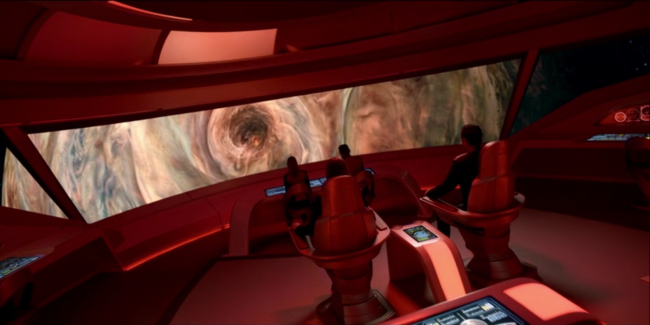
The episode is interspersed with some exceptional action sequences. I particularly liked a scene where Mercer (MacFarlane) uses what Grayson (Adrianne Palicki) describes as "submarine warfare" tactics.

The show really does feel like Star Trek: The Next Generation with better special effects at this point. It has many of the strengths and weaknesses of TNG, the latter being a general feeling of being too clean and easy. But its strengths are otherwise totally absent from television and film nowadays and MacFarlane succeeds in demonstrating that a truly great form of storytelling has been largely lost in the medium.

This is the first season to air after Disney bought 20th Century Studios and it's been recently announced MacFarlane has begun work on a Ted television series for Peacock, the NBC streaming service. This follows after many years of MacFarlane working for 20th Century Fox despite how vocal he's been about his dislike for Fox News. One would have thought he'd be happy to be working for Disney now so perhaps it's Disney who doesn't want to work with him. Maybe the company feels they're full up on space opera franchises having both Star Wars and Guardians of the Galaxy. Maybe MacFarlane wants too much creative control. Maybe he wants too much money. It could be all of these things.

All of this makes The Orville even more of an anomaly, a fly in the soup of the modern corporate smugness that controls the entertainment media. It's more popular than the ultra-expensive, zombified version of Star Trek that's somehow continued to lurch along at Paramount, and it's better written than Disney's Star Wars series. But somehow, this massive show has found a very precise crack to fall through. I suppose it will always stand as an edifying example of just how tough it is to get something interesting made for film or television.

The Orville is available on Hulu in the U.S. and Disney+ in other countries.

Twitter Sonnet #1587

The silent voices push the helmet off.
Above the hill, a flying tree abides.
Polite but forceful corpses start to cough.
Beware the cut of apple whips on hides.
Above potato houses roots descend.
We checked the exit twice but lost it still.
On all the doors our rangers now depend.
With little hands we built the mental hill.
With burning flags the guard has held the fort.
The dusty slope was flat beyond the rise.
A heavy head was lightened thanks to port.
But sherry saves the driest apple pies.
With normal flowers floating down the stream
We try again to live inside a dream.

Thursday, June 02, 2022

Return of the Evil Wig

It's that old story again--boy dresses as girl, boy kills girls. It's widely seen as a transphobic cliche in Hollywood but in other countries it still has currency. For instance, 2018's Stolen Identity (スマホを落としただけなのに, "I Just Dropped My Smart Phone") from Japan. It's tempting to lament how the quality of Japanese cinema has fallen in the past fifteen years though, as with all other countries, I have to remind myself that great films stand the test of time and that there's a lot of old schlock that's forgotten. Hopefully Stolen Identity will fall into that latter category, unless it's shown on Mystery Science Theater 3000.

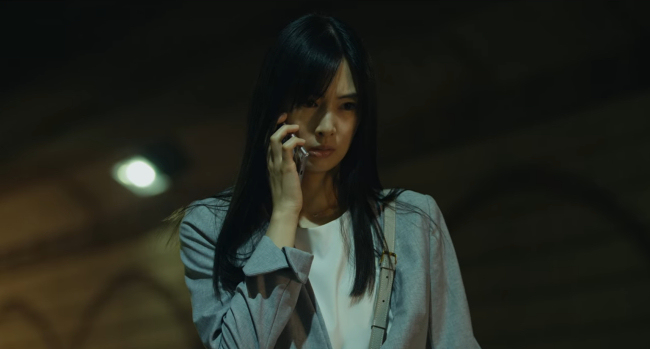
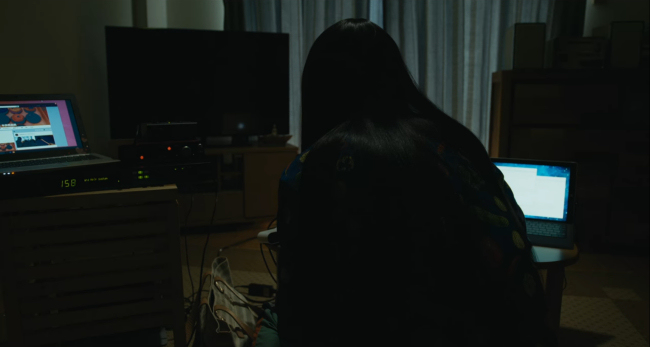
On the surface, as the English title suggests, it's a movie about identity theft. A man accidentally leaves his smart phone in a cab and it's picked up by a psychotic hacker/stalker. It's the man's girlfriend, Asami (Keiko Kitagawa), who suffers the most as a mysterious figure we at first see only from behind, crouched over four laptops, infiltrates all of her social media.

The killer is helped by the fact that Asami seems to be incredibly gullible, using easy to guess passwords and even offering her password directly when asked by an obviously phishing e-mail. The culprit turns out to be a young man who kills women and weaves their hair into a wig he likes to wear in private, cackling maniacally.

The movie's quite blatant about using the old diagnosis about trans killers having mother issues. In this case, there's a vague bit of back-handed sympathy as one character turns out to be a red herring because he also has an unhealthy fixation on his mother, leading him to be an effeminate adult. Lest an actual woman be let off the hook, Asami herself is given a creepy past cribbed from Single White Female in the film's astonishingly ridiculous climax.

Some kids at the school where I work recommended the film. I told some of them they're better off watching Psycho, though I suspect it's probably too old and foreign for them. Psycho is an obvious predecessor for Stolen Identity but, of course, it has a bit of Dressed to Kill and Silence of the Lambs, too.

Stolen Identity is available on Netflix in Japan.

Wednesday, June 01, 2022

Obi-Run

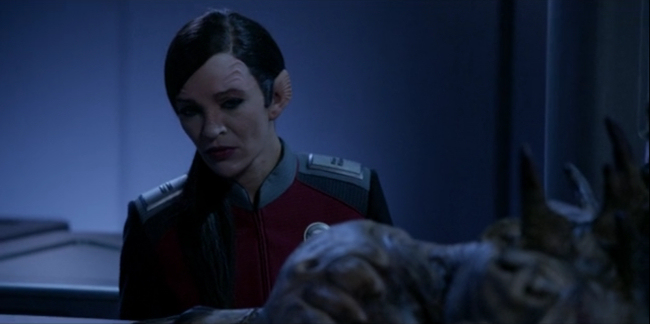
Last night's third episode of Obi-Wan Kenobi persisted in the qualities established in the first two episodes--good performances and bad writing. This week also had some disappointments relating to music and location shots, though. But it was at least heartening that Disney didn't seem to be forcing anyone to hold back in terms of action and violence.

I was happy the hear James Earl Jones voicing Darth Vader. Disney was oddly coy about it, refraining from announcing him in any press leading up to the show. Even stranger is that no-one in the regular entertainment press seemed to be asking, which I guess is kind of a tell for how many of these outlets are in Disney's pocket. But now we have Hayden Christensen in the suit and it does feel different to having a massive body builder like David Prowse in there. Especially when he was sitting on that throne, it kind of seemed more like the suit was wearing him.

The absence of "The Imperial March" was sorely felt in this episode, too. John Williams wrote the new theme for Obi-Wan, is there some reason the show can't use the old theme universally associated with Darth Vader? Is John Williams charging a million dollars a note? Vader lacked a lot of his usual presence and his theme would have certainly helped. But when he was walking down the street, choking civilians, he seemed to have a bit of that magic he had in Rogue One. I think at this point it's just about indisputable that Rogue One is the best thing Disney has made for Star Wars since they bought it. I have high hopes for the Andor series, not the least because it seems to actually have decent writers. I hope Vader makes an appearance or two on that show.

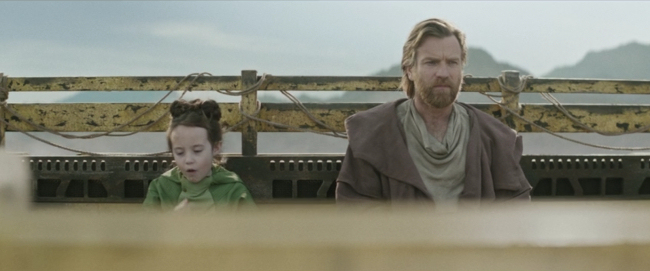
But back to Obi-Wan. I have no problem with the idea of Leia being assertive and intuitive, I don't mind her being more resourceful than a kid her age normally is. But they shouldn't have to make Obi-Wan act like an idiot just to make her look smart. If it weren't for McGregor's performance, Obi-Wan would be, by far, the least impressive thing about this show. I know he's out of practice but a Jedi Master should be able to handle three stormtroopers. Is this the guy who just jumped into the midst of a droid army to say, "Hello there" to General Grievous?

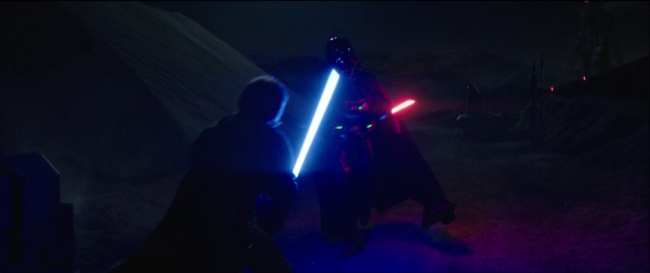
I would have hoped for a more interesting location for Obi-Wan and Vader's reunion, too. It looked like eastern Californian desert or even Albuquerque, reminding me that Deborah Chow worked on Better Call Saul. Too bad she didn't bring any writers from that show.

Obi-Wan Kenobi is available on Disney+.
Tuesday, May 31, 2022

The Garish Seas of Saturation

The more things change, the more anime stays the same. While most of the world knows anime from outstanding examples like Princess Mononoke and Akira, the vast majority of anime films that get pumped out are like 2016's One Piece: Gold. The thirteenth theatrical release in the One Piece series, following on from the long running TV series and manga, it has all the usual earmarks of franchises that are long past their expiry date--it's overladen with old characters who get spotlight moments and can't be killed and the climax is a by-the-numbers fight that mostly involves characters screaming at each other about how powerful they are or how important friendship is or something similarly trite. Since this is One Piece, there was a fair amount of references to straw hats.

I saw this movie on the bus on the class field trip to and from Mie last week. By the third act of the film, I was the only one, apart from the driver, still awake on the bus. Sure, the kids were tired from the trip but I suspect they could've stayed awake had the movie contained the tiniest spark of life.

I've seen the first couple episodes of One Piece and they were entertaining. I always meant to go back to it. It's about pirates, obviously a subject of interest for me. The creator supposedly researched real pirates but that's so far never been at all apparent. The series is set in a fantasy world with the usual hodgepodge of historical signifiers. The main character is a kid named Luffy who has a stretchy limbs superpower like Reed Richards except he also seems to be nigh-indestructible. Along the way, he picked up a vast crew of quirky characters whom I'm sure all have their own delightful introductory episodes but in Gold are mostly just a roll call of character types.

The few female characters stand out, particularly the popular Nami, but every woman in the movie, without exception, is rail thin with massive breasts. I'm not against titillation and if that's your thing, more power to you, but surely some of the women in the background could have had variant body types at least. They all look like strippers, which I suppose kind of fits with the modern casino setting of the film. The movie's about the pirate crew attempting a heist. That is, until things devolve into the usual battle royale.