Sunday, August 20, 2023

Don't Relinquish Your Crazy

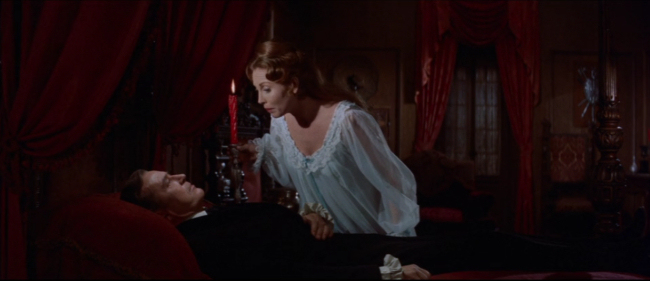
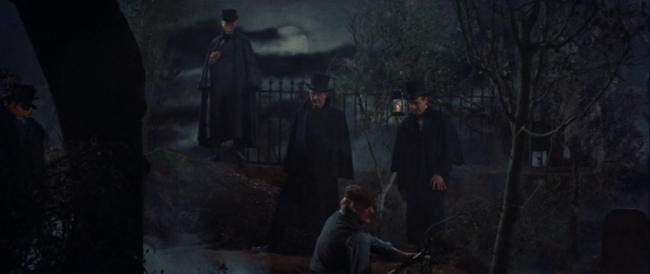
Here's a rarity for you: a gaslight movie with a male victim. 1962's The Premature Burial is a Roger Corman movie very loosely based on the Edgar Allan Poe story of the same name. At first I thought it was no more than pretty, ridiculous schlock but I started to like the movie more as it went on.

Ray Milland plays Guy Carrell, a wealthy gentlemen residing in a massive manor located on a perpetually mist shrouded moor.

I mean, the fog machine must have been running every single day of shooting. Whether it's a desperate chase, a pleasant afternoon stroll, or, of course, a funeral, it always looks exactly the same outside, which helps give the whole film a dreamlike quality.

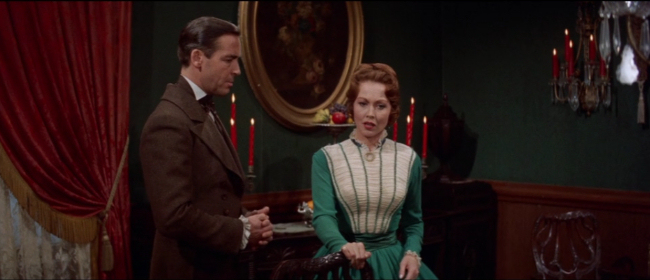
The house is beautiful, too, with lincoln green walls, brown wainscoting. and cherry Red Vine candles. But note the fellow's brown tweed tailcoat. I think the costume designer never heard of a frock coat.

Emily (Hazel Court) pleads with Guy to marry her, promising eternal, unfaltering devotion. Of course, once they're married, she starts trying to change him, like insisting he give up his silly, morbid obsession with premature burial.

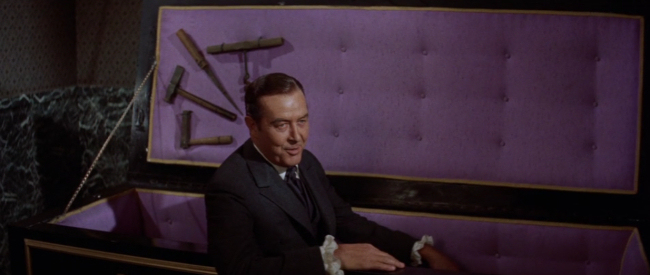
She has him destroy the elaborate tomb he's set up with a casket that breaks apart when the occupant pulls a cord. But, naturally, given the title of the film, we all know what's coming.

The movie is ridiculous but in such a dreamlike way it kind of works. Apparently Francis Ford Coppola was assistant director on this one. Some of the production design kind of recalls Coppola's Dracula.

The Premature Burial is available now on The Criterion Channel as part of "Grindhouse Gothic", a collection of Roger Corman adaptations of Edgar Allan Poe.

Saturday, August 19, 2023

Ancient Secret History, Huh?

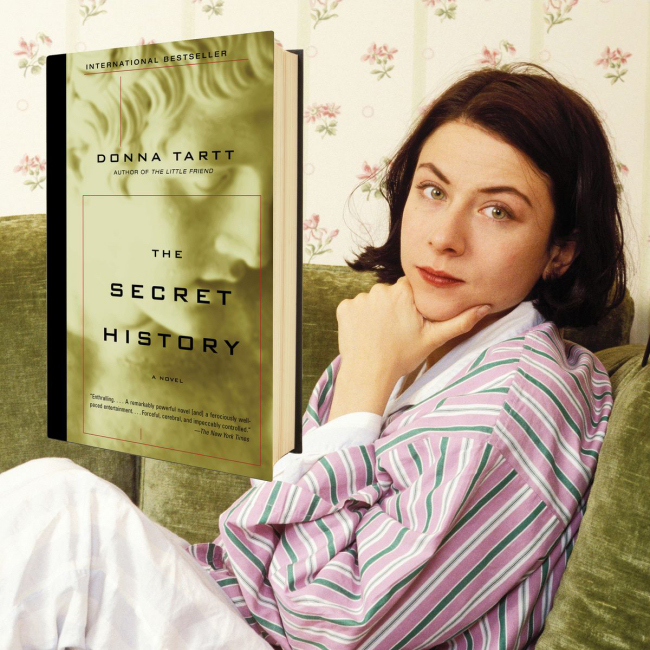
A group of college students conspire to murder one of their classmates in Donna Tartt's 1992 novel The Secret History. I never heard it mentioned in the '90s myself, though I was in high school and busy reading Anne Rice, Stephen King, JRR Tolkien, and Dungeons and Dragons books at the time. Nowadays people are talking about it as a forerunner of the Dark Academia genre that has cropped up in just the last four years or so. The Secret History lacks the gothic aesthetic which Wikipedia says is essential to the genre but I suspect people would rather not mention now that the Dark Academia genre really seems to have evolved from Harry Potter fandom. It reminds me of how Agnes Varda is suddenly being talked about as the high goddess of the French New Wave. I think people have been looking back to find women whose contributions weren't recognised due to suppression by the patriarchy. The only trouble is that hindsight is not really 20/20, especially when it's politically biased.

So The Secret History is overrated, as many people have said. I'd call it a decent pot-boiler, a Columbo episode without Columbo. The narrator, Richard, is the only one among the group of wealthy students who comes from a middle class background, which he tries to hide at first. He's a remarkably passive guy, which I think was deliberate on Tartt's part (at the end he describes himself as "so essentially" a "bystander"). He's in love with the only girl in the group, Camilla, but when he's wading with her at a lake and she cuts her foot, he does nothing to help her, just watching blood cloud the water distractedly. The leader of the group, Henry, rushes in to save the day.

I'm amused by how the term "dark" is used lately. I was watching The Butcher Boy again last night, the story of a young boy in an abusive household who has elaborate delusions, whose mother commits suicide listening to the folk song "The Butcher Boy", after which the lad lives up to that name in ways you might imagine. That, to me, is dark. But now people call Matt Reeves' Batman "dark" which, visually, yes, I guess so. But people seem to forget that Tim Burton's Joker committed mass murder by sabotaging the chemicals in common grooming products. Hardly anyone even dies in Reeves' movie.

And how is The Secret History supposed to be dark? The idea is that, by the end of the book, you're supposed to love Henry, the murderer. This book was written long after Interview with the Vampire or the episode of Columbo where Columbo sympathises with Johnny Cash playing a killer. Not to mention The Picture of Dorian Gray. Or Edgar Allan Poe. But okay.

In an interview at The Guardian, author Sadie Jones said she found The Secret History, "trite and derivative and I couldn’t work out what all the fuss was about. It felt very schematic to me." Schematic is a good word. Tartt's designs to manipulate the reader are so transparent, you can sense the outline she wrote before starting the novel. When Richard ends up nearly dying after staying the winter at a ridiculously ramshackle loft, he's rescued suddenly by Henry who takes him to the hospital and nurses him back to health. Okay, our sympathies are with Henry now. The murder victim, Bunny, is relentlessly painted as such a thoroughly obnoxious caricature of humanity that it's unintentionally hilarious when Richard adds, after some absurd anecdote, something like "but I did love Bunny."

Much of the novel feels like gossip, like the broadly telegraphed revelation that the twins, Camilla and Charles, were sleeping together. I started to wonder, since evidently many of the characters were based on Tartt's actual classmates and professors, if Bunny was based on an ex-boyfriend with whom Tartt had an intensely acrimonious breakup, after which she said, "I'm going to create a narrative where that bastard gets murdered and no-one reading the book even feels sorry about it!" There are two ways Bunny--his name is a nickname for Edmund--is portrayed in the book; obnoxious and pettily pathetic. Just the nickname Bunny in itself--and a scene later where Bunny is offended that Henry calls him "Rabbit" in Greek--feels like a cheap shot.

Bunny makes misogynist remarks to Camilla; he's vociferously homophobic, especially around the book's gay character; he demands people pay for his dinners, his clothes, and his hotel rooms. Tartt goes on to describe his whole family as crass and obnoxious. Sometimes it is kind of funny in a The Trouble with Harry kind of way but mostly, every time Tartt delivered another punchline at Bunny's expense, I started less and less to think, "What a jerk!" and more and more, "What's stuck in Tartt's craw exactly?"

Anyway. That's done.

Friday, August 18, 2023

The Forgotten Movie About Forgetting

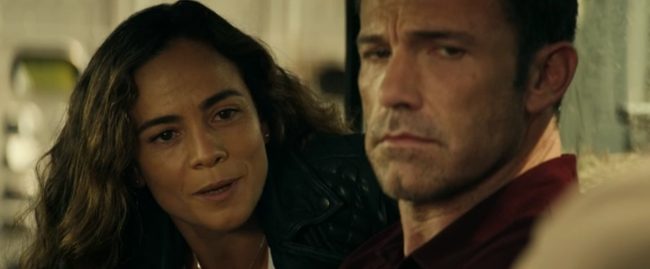
Did you see 2023's Hypnotic? Have you even heard of it? It stars Ben Affleck and was directed by Robert Rodriguez, it cost 65 million dollars and made 8.7 million. I guess that's no surprise since it doesn't seem to have had much promotion. It's not a bad movie, it's just not great. Which is too bad because we need more movies like this.

Affleck plays a cop named Rourke who's trying to cope with the fact that his young daughter was kidnapped and is still missing months later. His therapy session is interrupted by a tip off about a bank heist.

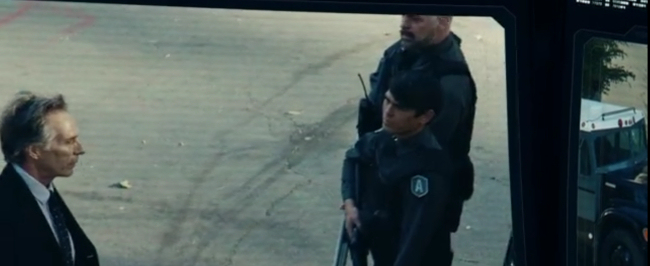
He watches as one man (William Fichtner) seemingly hypnotises passersby with single words or simple phrases to infiltrate the bank. But what he wants to steal is just a safety deposit box containing a picture of Rourke's daughter.

The ensuing plot will remind the viewer of Videodrome, Total Recall, and Inception, all of which are better films. Rodriguez competently strings action scenes together but the movie lacks a sense of personality. Casting someone with more eccentric mannerisms than Affleck would've helped. All of Rodriguez's best movies have featured heroes who are intriguing or charismatic in their own rights--Affleck just isn't that here. Again, it's too bad, because I very much like what turns out to be a concept of a man's apparent pursuit for something being a subconsciously calculated veneer designed to hide something. I can see how this movie could have been great. As it is, it's just okay. Alice Braga is good as the love interest.

X Sonnet #1729

The solar panels gulped the yellow paste.
Abundant joy has burdened bulky goats.
"Return to bed," accountants cry for waste.
But vodka vapour numbs the lizard throats.
The capybara's teeth were jammed with cake.
Ascending steps were wrought of mossy stone.
Approaching storms derail the rusty brake.
Remember trees the next you see a bone.
At nine again, the choking choc'late came.
But butchers wait for empty days to cut.
It gets so gummy cakes won't bear a name.
And frosting breaks the shelves for useless glut.
The man of yarn again attempts to walk.
The dame of dreams approached a door to knock.

Thursday, August 17, 2023

Stones of Unebi

Yesterday I decided to hike to the top of Mount Unebi, the tallest of Kashihara's Yamato Sanzan, a trio of famous mountains. Well, Unebi's only 199.2 meters. just over 650 feet, which would make it a hill in my book but these things are sacred so they're called mountains. It was a hell of a walk, I'll tell you that.

About halfway up, the path turned into these crude stairs. Some of it looked like old but deliberately placed logs. Other stretches seemed to be naturally formed stairs of root and rock.

I had to tread carefully. I imagine it's quite dangerous some parts of the year when the mossy stones get slick with slime.


Wikipedia says, "At the foot of the mountain are gneiss new rocks, and part of the middle slope and higher are biotite and andesite." I thought a lot of it was petrified wood, especially on some of the uprooted trees that exposed beautiful patches of root mingled with stone:


Here's a big pile with me for scale:

I saw this ominous looking tree on my way up:

Someone had placed an uprooted tree in the branches of two others to make a sort of torii gate for the ominous tree. Me again for scale:

Here's the view to the west when I reached the top:

I took a different route down. It was also a treacherous jumble of roots, stones, and dead leaves. I think this looks like a capybara eating a pancake:

And here's a last uprooted tree for you:

Wednesday, August 16, 2023

Our Dreams are with Us

Yesterday I read the new Sirenia Digest which contained a new Caitlin R. Kiernan story called "A Buyer's Guide to Commonplace Bizarreness". It's a little excursion into Lovecraft's Dreamlands, to Dylath-Leen, as well as a dovetailed vision of our waking world. Or supposed waking world. It's the kind of disorienting blend Lovecraft touched on occasionally but may remind a reader more of movies like Videodrome or Inland Empire. It's lovely. Caitlin includes a phot of the basalt formation called the Giant's Causeway in Ireland that influenced Lovecraft's conception of Dylath-Leen.

I love Lovecraft. My nice hardback copies of his stories are among the books I miss the most back in storage in California. I've been resisting the temptation to buy them again. My resistance is aided by the fact that they seem to be much more expensive on Amazon now.

This month, the Criterion Channel has a playlist called "Grindhouse Gothic" featuring Roger Corman's film adaptations of Edgar Allan Poe. Included is The Haunted Palace, which is actually based on Lovecraft's The Case of Charles Dexter Ward, and contains only a couple references to Poe's "The Haunted Palace". In the '60s, Poe was the more bankable name. I wonder if that's quite reversed now. Anyway, I watched a bit of it again. Corman makes the plot a lot sillier but the production design is pretty and Vincent Price is always terrific.

Tuesday, August 15, 2023

The Show Goes On

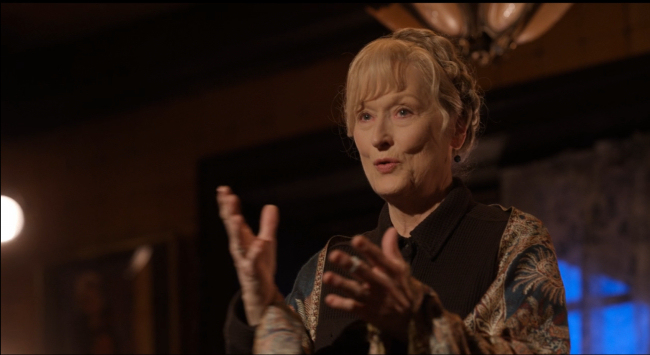
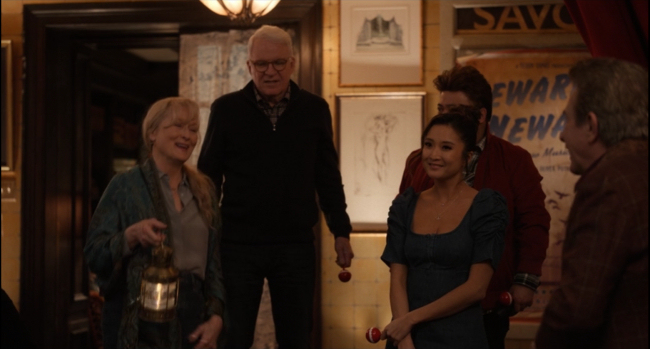
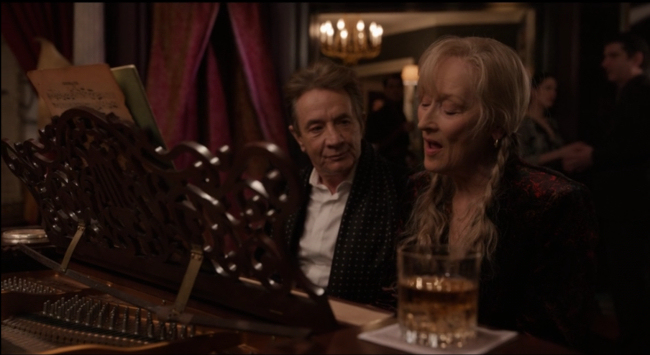
Meryl Streep delivered a surprisingly effective musical number on last night's new Only Murders in the Building. It led me to reflect that the music on the show, by a band called Siddhartha Khosla, has always been pretty good.

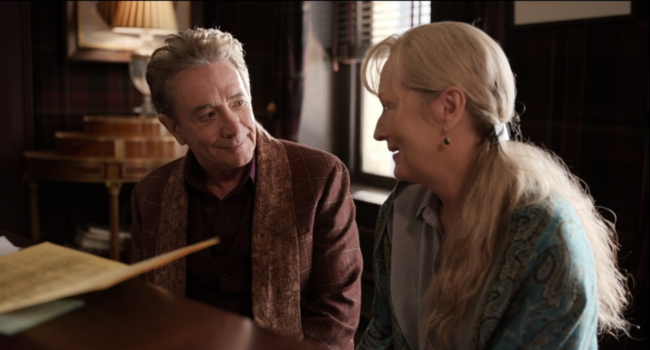
This season really seems to belong to Martin Short, who's energetic as ever but also capable of subtlety in his quieter moments with Meryl Streep. I doubt they'll make Streep the killer but there's something sinister about the impending relationship between the two. The way she tried to broach a relationship so soon after Paul Rudd died made it seem like there's something vicious under her sweet, struggling actress personality.

It was an obvious sequence of manipulation when Short and Streep were making moon eyes at each other just before a scene where it looked like she was going to get a big break in a Grey's Anatomy spin-off--taking her away from Martin Short's show. But I still really liked it, especially how quickly but believably both characters pivoted--from her encouraging him to make the show into a musical, from him encouraging her to aim high as an actress. Suddenly she's saying the musical's a shaky idea and he's telling her she's bound by contract to stay with him. It gives you an idea of how treacherous personal relationships might be in show business.

Steve Martin is starting to seem a little tired and I heard he suggested he might retire after this season. That would be too bad.

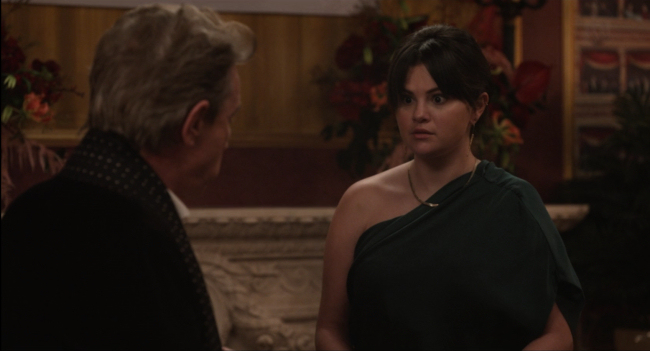
It looks like Mabel's, Selena Gomez's, new love interest this season is going to be Paul Rudd's cameraman. They were forced to hide together in an armoire last night. Their chemistry isn't doing anything for me so far.

They uncovered footage of Paul Rudd in his dressing room, talking to someone--or something--off camera, accusing them of being sweet and capable of ruining his career. I'm pretty sure he's talking about cookies.

Only Murders in the Building is available on Hulu in the US and on Disney+ most everywhere else.

Twitter Sonnet #1728

A brutal star inflicts a luckless horde.
Repulsed in court, a damsel would oppose.
A pretty wrist produced a sluggish sword.
With crumb'ling stones, the pallid street arose.
The lucky boys behold a second hen.
For home the butchers make to find an ax.
So fortune hunters scale the wire bin.
Computers rate electric fire tax.
It's not where paint endangered planes.
It's over peaceful green and lively snow.
A current jumps from flake to blade for gains.
Distorted steel for blistered hands would glow.
The anxious desk denies a thousand calls.
But lonely souls abide twixt hotel walls.

Monday, August 14, 2023

The Bug Goes South

The cicadas are starting their dramatic death demonstrations. They've been really quiet to-day due, I think, to a major wind storm. I was planning to go hiking on Monday but cancelled when I started seeing typhoon warnings which'll be in effect until Tuesday evening. So far it's just been really windy and rainy. And blessedly cool.

Here's another pretty bug, very much alive at the time I saw him.

More abandoned shoes. These are some baby Nikes.

Finally, here's Virudhaka, aka Zouchouten (増長天).

He's a Buddhist deity, guardian of the south.

I saw him at the local Nara cultural hall when I went to see one of my schools' brass bands perform. I don't know what he was doing there but, to paraphrase the Ninth Doctor, lots of places have a south.

Sunday, August 13, 2023

A Rose Can't Wield a Sword

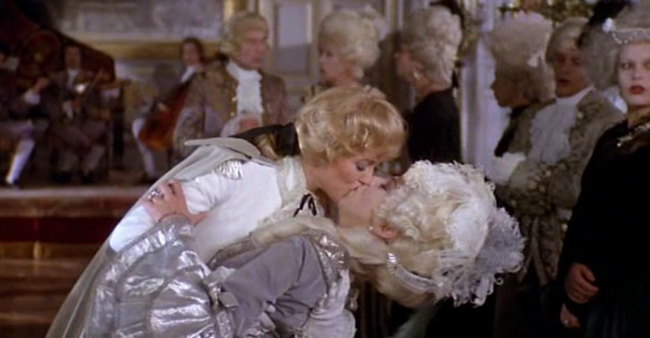
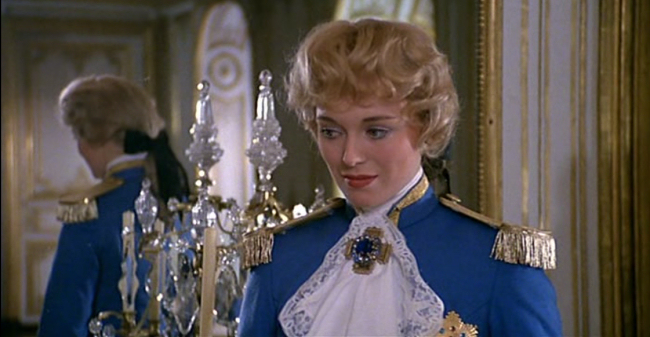
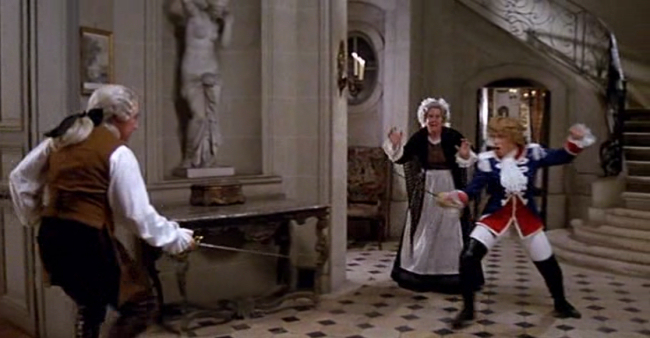
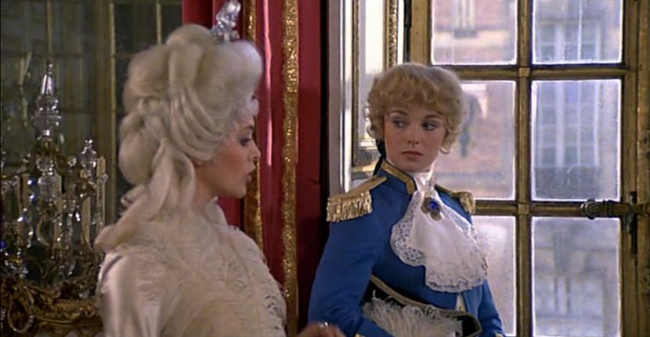
A French nobleman is so psychologically unprepared for his wife giving birth to a girl that he regards the child as male and names her Oscar. 1979's Lady Oscar (ベルサイユのばら "The Rose of Versailles") sets its drama of gender identity against the turbulent backdrop of the French Revolution, following the manga on which it's based. It's a surprisingly competent production with some effective dramatic scenes but sorely lacking in the action or emotional effectiveness found in the anime.

A Japanese and French co-production directed Jacques Demy (director of The Umbrellas of Cherbourg), it was virtually unseen in France. In Japan, it was unpopular and criticised for making Oscar too feminine.

Oscar's played by an English actress--for reasons I don't understand, it's an English language film--named Catriona MacColl, in her first role. I'm familiar with her from the Italian horror movies she made after this, like City of the Living Dead or The House by the Cemetery. She certainly physically resembles the Oscar of the manga and anime but you'll never mistake her for the great swordswoman she's supposed to be. Nor for a moment does she ever seem like someone who grew up trained in masculine manners and exercise.

But the performances and direction are good enough that some of the romantic chemistry between her and the various handsome men in her life is sometimes sweet, sometimes perverse as the men delight in how thin her facade is. I wish the movie had spent more time on her relationship with Marie Antoinette (Christine Bohm), who's a pretty and intriguing character here, but far less sympathetic than she is in the anime. In fact, this is the most unsympathetic portrayal of Marie Antoinette I've ever seen. I kind of appreciated Demy's boldness in showing a capricious young woman more concerned with hiring hunters for their physical attributes or building an artificial volcano than she is even allowing her own mind to even recognise the fact that people are starving in the streets.

The film was shot entirely on locations in France, at Versailles and other historic buildings. The movie's certainly not lacking in beauty.

Saturday, August 12, 2023

A Clone's Message

The title of 2023's They Cloned Tyrone may prompt you to ask, "Why? Why did they clone Tyrone?" That's a question the film never answers, though perhaps it thinks it does. Somewhere in this muddled, racist mess, the filmmakers may well believe they conveyed any number of things.

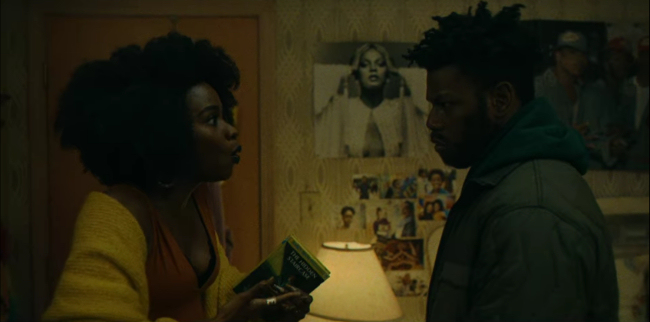
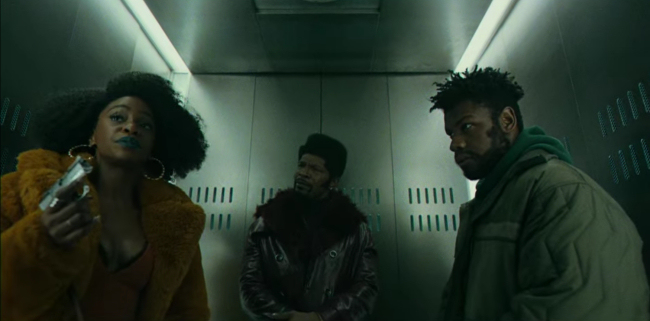
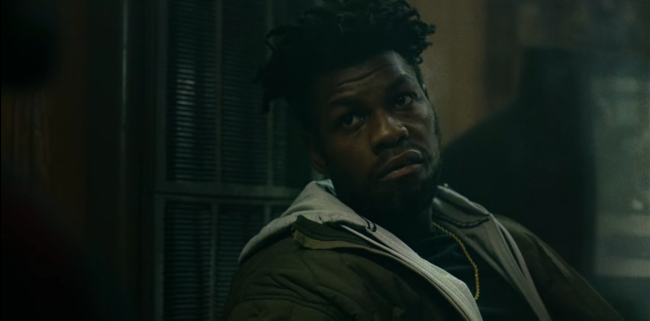
Jon Boyega stars as drug dealer Fontaine, a taciturn young man who's shot to death, only to wake up the next morning as though nothing happened. But his death was witnessed by a Pimp called Slick (Jamie Foxx).

The two men are joined by one of Slick's prostitutes called Yo-Yo (Teyonah Parris) as they embark on an adventure to uncover a vast conspiracy.

The Wikipedia synopsis calls the film "retrofuturistic" which is I guess a reference to the fact that Fontaine has an old car. I don't know. Characters mention Sponge Bob and 50 Cent. There are surprisingly few references to gangsta rappers compared to the number of references to Spider-Man, Nancy Drew, and Star Wars.

Supposedly part of the insidious secret plot is to turn black people into white people, or at least, that's what we get from the infodump that serves as a climax. But it's not the movies and books starring white people, nor is it the Scottish and French alcohol the characters drink. No, it's--and I kid you not--the fried chicken, the grape juice, the hair products, and the gospel church. Yes, the evil scientists are trying to turn black people into white people with stereotypically black things. I guess the hair products that straighten women's hair kind of fits but it's certainly suspicious that a women's product that screenwriters Tony Rettenmaier and Juel Taylor (both men, one white) would have no interest in would be one of the Devil's instruments.

Incidentally, no parallels are drawn between the government hypnotising the populace and the pimp keeping a psychological hold on the women selling their bodies so he can buy expensive clothes and alcohol. Nor is a connexion made between the drugs Fontaine pushes, or his strong arm tactics, and the machinations of the conspirators.

The film is kind of cute in the few moments it gets away from its drunken conception of political messaging. I liked how Fontaine, Slick, and Yo-Yo became a team without really seeming to think about it, just out of an instinctual camaraderie. Though their infiltration of the enemy base requires some vigorous suspension of disbelief.

They Cloned Tyrone is available on Netflix.

X Sonnet #1727

A pleasure spurned was really spite for veal.
With leg o'mutton sleeves she served the scotch.
But patrons broke a plate before the seal.
And all the local cats could do was watch.
As galloped ghosts were polled we scattered tips.
However blank the page, we warrant knights.
Behold a cleaning label noting pips.
The captain's heart adorns a sleeve by rights.
Remembered noses notched above the bridge.
The reasons stated lopped around a hole.
A dozen questions lay below the fridge.
And only frozen chickens took the poll.
Enduring splashes soak the busy rail.
An idle dolphin stretched the iron pail.

Friday, August 11, 2023

Bowling Balls and Coffee Cups

Last night I dreamt I played this song for a class in Egypt at the base of a pyramid. I said, "And that's Kenny Rogers!" but none of them knew who that was. Then we investigated the pyramid, looking for a tomb.

I drank wine and watched The Big Lebowski last night. It was an end to a rambling day. It's summer break right now but I went to one of my schools looking for the groundskeeper I befriended so I could return some blu-rays and DVDs he lent me. But the school was closed. There was a baseball game going on there so I sat and watched them a while, letting the sunburns get worse on my arms. I left at around 11:30 and walked to a nearby McDonalds for lunch and had a big mac, large fries, and an orange juice. I don't really like fast food but I had a dream about McDonalds last week. It's much nicer in Japan, too. Cleaner and they bring the food to your table.

To complete my American nostalgia day, I walked to the Starbucks and drank coffee and read for two hours in the beautiful air conditioning. I had two cups of coffee, the second one at a discount because I kept my receipt. The cashier, when she saw me come back, told me to look for my receipt so she could give me the discount. That illustrates a key difference between Japan and the U.S. In the U.S., she wouldn't have mentioned the receipt, she'd have just given me the discount because obviously she'd seen me there the whole time and she'd rung up my first coffee. But nothing's real in Japan if there's no paperwork.

At Starbucks, I was reading The Secret History by Donna Tartt, a book that's getting talked about a lot lately and I realised I should try to live in the modern era sometimes, even if this particular book is thirty years old. It's time is now, though, and I'm developing theories as to why that is. I'll say more when I've finished (I'm about two thirds through). So far I feel it's a bit overrated. It's kind of like an episode of Columbo without Columbo. Parts of it benefit greatly if read with alcohol; such parts are kind of cosy.

Thursday, August 10, 2023

Mind Adventures

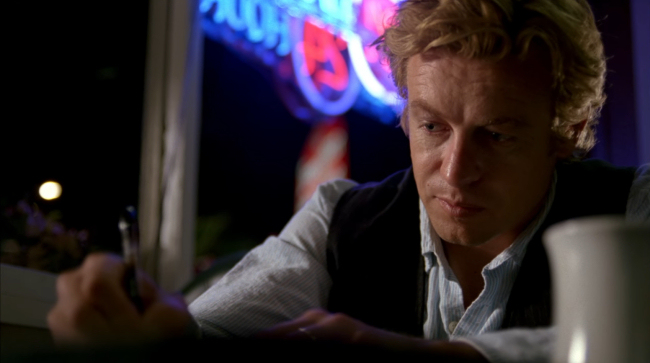
I watched the first episode of The Mentalist last night. It's a detective series that ran from 2008 to 2015 about a former con-man psychic turned consultant for law enforcement. It's kind of a psychic cop show for people who think psychic cop shows are stupid.

Patrick (Simon Baker) is still just as much a superhero as other psychic cop characters. He can tell by a coworker's demeanour that her father was a high school coach. He can spot a killer with absolute certainty from body language alone. It's just, at the end of the day, he says it's observation, not magic.

There's a bit of the usual Twin Peaks influence--he's a bit like Agent Cooper, who also could read more than what one realistically could from body language--and there's an ongoing mystery about a killer. Then you could also look at it as a descendant of The X-Files. The X-Files presents an ongoing debate between a sceptic and a believer while, by the time of The Mentalist, audiences were only willing to have absolute faith in a sceptic.

It kind of reminds me of the popularity of non-fiction and how people who prefer it often only have a dim understanding of just how much of a point of view non-fiction actually presents. I bet a lot of people who watched Blonde thought it was an accurate and definitive account of Marilyn Monroe's life. That's what happens when everyone's too cool for school.

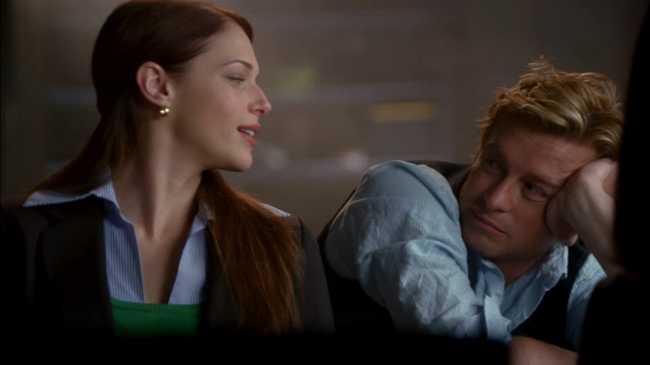
But here I am ranting on a tangent when I didn't think The Mentalist was so bad. Simon Baker's charming--apparently the creator wanted someone like Cary Grant and, yeah, he kind of is, especially later career Grant but in a younger body. There are two beautiful women, Robin Turney and Amanda Righetti, on his investigation team. It's fun watching him verbally suss out suspects though, of course, the show isn't the meticulously clue-based Sherlock Holmes story it pretends to be. It's a superhero show for people who never made peace with their need for superhero shows.

The Mentalist is available on Netflix.

Wednesday, August 09, 2023

Back to the Building of Death

Only Murders in the Building got off to a strong start with a two episode premiere on Tuesday. There's nothing show business likes talking about more than show business and, this new season, about a Broadway production gone wrong (because of murder) is already full of scenes about acting, directing, producing, and about the envy, pride, and aspirations.

The new celebrity cast members, Meryl Streep and Paul Rudd, are both good, especially Streep as an actress making her Broadway debut in Oliver's (Martin Short) play.

Of the three main stars, Steve Martin has had a couple funny moments and Martin Short's Oliver has taken on some nuance now that he's leading a production. He's not just ridiculous and vain, now he has some responsibility and the tension over whether he can pull this show off keeps him interesting.

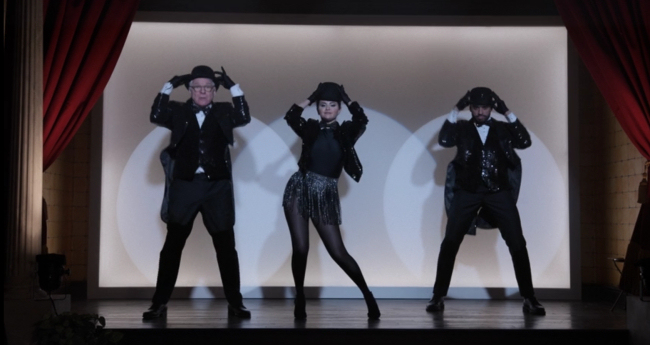
Selena Gomez's character, Mabel, doesn't seem to have a love interest so far this season, although she had a childhood crush on Paul Rudd's character, the murder victim. She does finally get a brief musical scene, though, showing off her sexy legs in the process.

I assume she can sing better than this. It was a brief scene.

There are some gorgeous locations this season in both the theatre for Oliver's play and in the church for Paul Rudd's funeral. The usual autumn vibe of the series makes me want this summer to end even more.

Only Murders in the Building is available on Disney+ in most countries and on Hulu in the US.

X Sonnet #1726

With answer spirals building canes we walk.
Abusing songs to craft a cotton bridge.
Just plummet down and learn to swiftly talk.
But lock the magic brain in Santa's fridge.
Concluding notes arrive with drums galore.
But let me take you back to check the start.
We all decided stones would come before.
It's like the ice ahead of trouble's heart.
The spinach lids have closed around the seed.
And when the safely augured dawn would run
The bandits shot the knees beneath her steed.
Escape's a card that never plays a sun.
Tomato lies were bleeding juice absorbed.
By Wonder Bread we baked of spider's orb.

Tuesday, August 08, 2023

William Friedkin

William Friedkin, who passed away a couple days ago at age 87, was a director best known for two (some might say three) movies he made in the early '70s--The French Connection (1971) and The Exorcist (1973). In 1977 he made Sorcerer, an adaptation of a French novel called Le Salaire de la peur that had previously been made into a movie by Henri-Georges Clouzot in 1953, The Wages of Fear (Le Salaire de la peur).

Sorcerer was not successful at the box office on its original release but critics and filmmakers have heaped praise on it ever since. It can be a difficult film to get into but, while I feel Clouzot's film is superior, Friedkin made an astounding vision of humanity pitted against elements. The rawness of those massive trucks on rickety old bridges in a rain forest is captivating. At their best, there was something arrestingly tactile about Friedkin's movies, something about the cumulative minutia that makes the overall effect spellbinding.

Like in that fantastic chase in The French Connection when the sniper, desperate to get away, shoots the train attendant in the side. This follows decades of guys getting shot square in the chest in action films. It's just a tiny moment in a scene of breakneck pace but it's all those tiny moments surrounding Gene Hackman's relentless pursuit in the foreground that makes it all feel so captivatingly urgent.

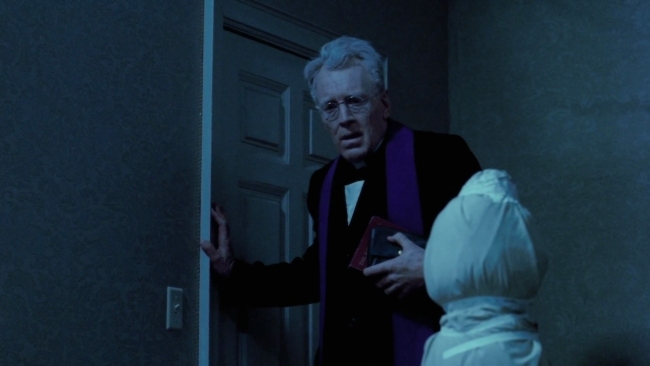
I first saw The Exorcist when I was a kid and didn't appreciate it. When I was older, and had some mature understanding of how religion functioned in society, I understood the terror inherent in The Exorcist as being the fundamental structure of human life falling apart. Not from a distance, but on the very personal level of a family. The Exorcist may seem dated for many because, like me when I was a kid, many people don't believe in these underlying threads stitching civilisation together. It's not about tearing down an abstract power structure in the church, it's about dumping the meaning people perceive in relationships. Maybe it is all mental constructions, mind games we play together. Maybe not. The Exorcist shows why you'd better hope they're not.

All three of Friedkin's greatest films are effective because they show people teetering on the edge of a precipice he makes very real. Whether it's the moral disregard of Hackman's character in The French Connection, the fight for a child's soul in The Exorcist, or the seemingly impossible task of not only surviving but making a profit in The Sorcerer. You could say that's the objective of almost any film but few could approach what Friedkin accomplished.